Chemistry Experiments, S
Last updated 2026-10-14 by Dr John Elfick
Chemistry, S
Spelter, zinc–lead alloy like bronze, but softer and lower MP
Spume, sea foam, surfactants from algae cause foam-tipped waves, whitecaps
Square root, sqrt, √
Sulfosalicyclic acid, C7H6O6S, urine tests, precipitates proteins, measures turbidity source
Quick links — A–Z index
Saccharin, E
Safety, E
Sal ammoniac, E
Salol, Phenyl salicylate
Salts, E
Sand, Silicon dioxide, E
Sanshool, Amides
Saponification, Reactions of esters, (See: 2.)
Saponins,E
Scheele's Green, Copper arsenite
School chalk, E
Sea water, E
Sebacic acid, Decanedioic acid
Secret writing ink invisible ink, E
Self-heating, Heat of crystallization
Self-heating, substances and mixtures
Self-leavened flour, (See 7.), P
Self-reactive substances and mixtures, (See 2.10)
Sensitizing substances, (See: 3.87)
Shrinking volume, lost volume, E
SI, International System of Units
Silica, E
Silicates, E
Silicic acid, P
Silicon, Si
Silicones, E
Siltstone, Mudstone
Silver, Ag
Size of carbon atom, Stearic acid
Size of particles, reaction rate, E
Size of particles, colloidal particles, E
Slaked lime, E
Slime. PVA, P
Smelling salts, Heat ammonium carbonate, E
Soap, P
Soda lime, P
Soft drinks, carbonated beverages
Soft water, Hardness in water, E
Soil science, E
Solder, E
Solid acids, add sodium carbonate, E
Solids, Total dissolved solids, E
Solutions, E
Solvent, E
"Speed" and "Base", drug abuse
Spilanthol, Amides
Spinel, mineral
Spirit burner, alcohol lamp, E
Spontaneous combustion, Sugar + KClO4, E source
Sports drinks, carbonated beverages
Staining techniques, Microscopes, E
Standard temperature and pressure, STP
Starch, E
States of matter, aqueous solutions
Steam distillation, eucalyptus
Steam distillation, water and fat content
Stearic acid, E
Stearin, E
Stearyl alcohol, Octadecan-1-ol
Steel wool, E
Steroidal glycosides, Cardiac glycosides
Steroidal alkaloids "Pseudoalkaloids",
Sterols, List
Stilbenes, List
Stock control, science laboratory
STP, Standard temperature and pressure
Substances, E
Substitution reactions, displacements
Substitution reactions, (organic chemistry)
Succinic acid, butanedioic acid
Sucrose, E
Suet, fat, E
Sugars, E
Sulfates, (Experiments)
Sulfides, E
Sulfites, E
Supercritical, Caffeine extraction
Suspensions and precipitates, E
SVP, Saturation Vapour Pressure
Sylvite, E
Symbol of an element, Hydrogen
7.5.0 Prepare forms of sulfur
7.5.1 Prepare allotropes of sulfur
Physical changes, prepare forms of sulfur, allotropes of sulfur
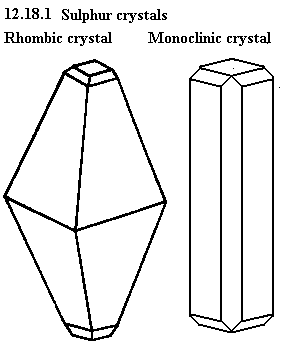
1. Sulfur is a non-metallic element that occurs in several allotropic forms.
Allotropes are variations of the same element with bonding and crystal structure.
2. Sulfur occurs in three forms:
Form 1: Rhombic sulfur is a light yellow powder.
At 100, it changes to:
Form 2: Monoclinic sulfur with a deeper colour.
The monoclinic and rhombic forms differ in the arrangement of the S8 molecules. source
At 160 oC, sulfur melts to form a sticky dark brown liquid that can be cooled quickly to form red brown plastic sulfur.
Form 3: Plastic sulfur contains long chains of S atoms.
Experiments
Put sulfur powder in a test-tube.
Heat the sulfur extremely gently until it slowly melts to a golden yellow liquid.
Continue to heat more strongly until a red gas appears above the liquid.
Leave the test-tube to cool.
Sulfur forms deposits on the sides of the tube and in the bottom of the tube.
7.5.2 Prepare monoclinic sulfur
Prepare monoclinic sulfur from powdered sulfur (flowers of sulfur)
Monoclinic sulfur has a deep yellow colour, m.p. = 119 oC, and density = 1.96.
Heat powdered sulfur extremely gently in an evaporating dish.
The sulfur changes to liquid.
Add more powdered sulfur.
The colour should stay pale yellow.
If the sulfur turns dark, you have overheated it.
Repeat the experiment with gentler heating.
Leave the sulfur to cool, without moving the evaporating dish.
Monoclinic crystals form between 96 oC and 114 oC.
After a thin crust forms, punch two holes through the crust with a nail.
Pour out the hot sulfur through one hole.
Remove the crust and note the monoclinic sulfur crystals on the underside.
7.5.3 Prepare monoclinic sulfur
Prepare monoclinic crystals from roll sulfur
Put small pieces of roll sulfur in a test-tube.
Heat the test-tube extremely gently until the sulfur melts, m.p. = 114.5 oC.
The liquid is lemon yellow.
Pour the liquid sulfur into a folded filter paper.
A crust forms on the surface.
When the crust forms, open the filter paper.
Needle-shaped crystals remain on the filter paper.
7.5.4 Prepare plastic sulfur then rhombic sulfur
When heated to the melting point, sulfur usually ignites and forms sulfur dioxide gas that may distress people suffering from asthma.
Rhombic sulfur is a yellow powder, m.p. = 119 oC, and density = 1.96.
Experiment
1. Put roll sulfur in a test-tube and heat the test-tube slowly.
Note the changes at the melting point from a light yellow colour to a red liquid.
The red brown sulfur becomes viscous and it does not flow out if you hold the test-tube upside down.
Continue heating until the reaction forms a brown black liquid.
Continue to heat until the sulfur boils at 445 oC.
BE CAREFUL!
Pour the melted sulfur into a beaker of cold water.
The reaction forms strands of amorphous sulfur.
When the strands are cool, twist them to show that they are elastic.
Later the sulfur hardens, because it returns to the rhombic form of sulfur as a ring of eight sulfur atoms in tiny crystals.
When heated, the ring breaks open to form long chains.
2. Almost fill a dry test-tube with sulfur powder and heat slowly to boiling, using a safety holder.
Pour the boiling sulfur into a beaker of water.
Immerse any floating sulfur with a stirring rod.
Remove and examine the plastic sulfur.
Note the gradual loss of elasticity as the plastic sulfur changes to rhombic sulfur.
12.0 Prepare serial dilutions
100% solution: Prepare 100 mL of saturated solution, then filter.
0.5% solution: 0.5 mL of saturated solution, add water to 100 mL.
0.1% solution: 20 mL of 0.5% solution, add water to 100 mL.
0.05% solution: 50 mL of 0.1% solution, add water to 100 mL.
0.01% solution: 20 mL of 0.05% solution, add water to 100 mL.
0.005% solution: 50 mL of 0.01% solution, add water to 100 mL.
0.001% solution: 20 mL of 0.005% solution, add water to 100 mL.
Safety
Safety in the school laboratory
Smoke alarms (Safety)
Safety equipment
Safety face shield (chemical, anti-splash face shield)
Safety glasses, safety goggles (polycarbonate lens glasses)
Safety gloves rubber, rubber safety gloves (small/medium/large rubber gloves) (rubber, caoutchouc)
Eye-wash bottle, eye-wash cup
First Aid kit, portable First Aid kit
Safety apron, PVC (resists strong acids)
Safranin
Prepare safranin solution: 7.36
Safranin, (C20H19ClN4), Safranine O, Safranin T, basic red 2, cotton red, gossypimine. source
Safranin gives yellow red colour by reflected light and crimson colour by transmitted light.
It is a biological stain colouring all cell nuclei red.
It is used as a counter stain in a Gram stain in microbiology.
It can also be used for the detection of cartilage and mucin and as a redox indicator in analytical chemistry.
Safranines are the azonium compounds of symmetrical 2,8-dimethyl-3,7-diamino-phenazine.
Salad oil
Salad oil is any vegetable oil used in a salad dressing, including, coconut oil, corn oil, sunflower oil, safflower oil, canola oil, peanut oil, a light olive oil.
Any other fairly bland vegetable oil can be sold as salad oil.
Salicyclic acid
Salicyclic acid: 16.4.7.1
Salicyclic acid, C7H6O3, HOC6H4COOH, hydroxybenzoic acid, harmful, skin irritant source
Salicyclic acid is a bitter-tasting derivative of phenol, used to make fungicides and aspirin.
5.5.6.0 Aspirin, acetylsalicyclic acid
Salts
Alkalis with salts, hydroxide ions: 12.1.8
Basal salt solutions, biology solutions: 3.5
Boiling point of sodium chloride solution: 3.1.3
Crystals of different salts: 12.10.2
Decomposition of hydrates, hydrated salts: 3.7.9
Hydrolysis of ammonium chloride: 12.10.3
Lift ice cube with salt: 24.4.5
pH of salt solutions: 12.10.7
Plants need mineral salts, maize: 9.2.5
Prepare salts 12.6.0
Reactions of salts: 12.10.10
Salt bridge, Voltaic cell with salt bridge: 33.1.7.3
Salting meat, Meat treatments: 19.2.6 (See: 2.)
Saltpetre, KNO3, potassium nitrate source
Salts, (organic salts): 16.7.10
Salts with clay suspensions: 7.6.6
Separate salt and sand mixture: 10.1.7
Separate salt from salt water by evaporation: 10.1.5
Smelling salts, Ammonium carbonate: 12.15.3.5
Table salt and rock salt: 19.1.14
Tests for salt effect on buffer solutions: 12.12.11
Tests for salts with flame tests: 12.11.3.7
Saponins
Saponins Test for saponins, E
Scandium, Sc
Scandium, Sc
Scandium, Table of the Elements
Scandium, RSC
Scandium, Sc (Latin Scandia, 'Scandinavia'), transition metal, silver, but pink-yellow, tarnishes in air, soft, in some tin and tungsten ores.
Scandium, Coelestine, SrSO4 source
Scandium trifluoride, ScF3, negative thermal expansion source
Scarlet red
Scarlet red, C24H20N4O, sudan IV, solvent red 24, stains fats and oils, harmful if ingested source
Schiff reagent
Bis(schiff reagent), C4H8O2S2 source
(Bis: two identical but separate complex groups in one molecule.) Schiff reagent, Schiff's test, is a mixture of fuchsine, C20H19N3·HCl, and sodium bisulfite, NaHSO3, or sulfurous acid, H2SO3, to decolorize it. source
It forms red-violet colour in unknown solution as a test for aldehydes.
Basic fuchsine, C19H17N3.HCl, has variable contents including rosaniline and similar compounds, and may be used in Schiff's reagent test for aldehydes. source
Schiff‘s reagent for microscopy for the periodic acid Schiff, or PAS reaction, is used for the detection of mucopolysaccharides, glycogen, and collagen.
The PAS (periodic acid Schiff) reaction is used for the detection of aldehyde.
In the PAS reaction, the material is first treated with periodic acid, resulting in the oxidation of the 1,2-glycols into aldehyde groups.
Addition of Schiff’s reagent (fuchsin-sulfuric acid) in the second step causes the aldehydes to react to form a brilliant red colour.
The PAS reaction gives a specific color reaction with polysaccharides, and phospholipids.
Scopoletin
Scopoletin, C10H8O4, chrysatropic acid, plant growth factor, occurs in root of | Henbane bell, Scopolia carniolica, Solanaceae |. source
It was a source of former anaesthetic.
Scopolamine, (C17H21NO4)
Scopolamine, (C17H21NO4) source
Scopolamine is a tropane alkaloid isolated from plants of family Solanaceae.
Scopolamine, hyoscine, Hyoscine, Skopolamin, Oscine, syrup, narcotic ("truth drug"), "Devil's breath",sedative
Scopolamine is less toxic than Hyoscyamine.
It is used for anaesthetic premedication, treat urinary incontinence, motion sickness, antispasmodic, anticholinergic, anti-emetic and antivertigo properties.
It is also used control the secretion of saliva and gastric acid, to slow gut motility, mild nausea, motion sickness and prevent vomiting.
It occurs in in (Atropa belladonna), (Datura ferox), (Duboisia myoporoidesi), and in (Duboisia leichhardtii).
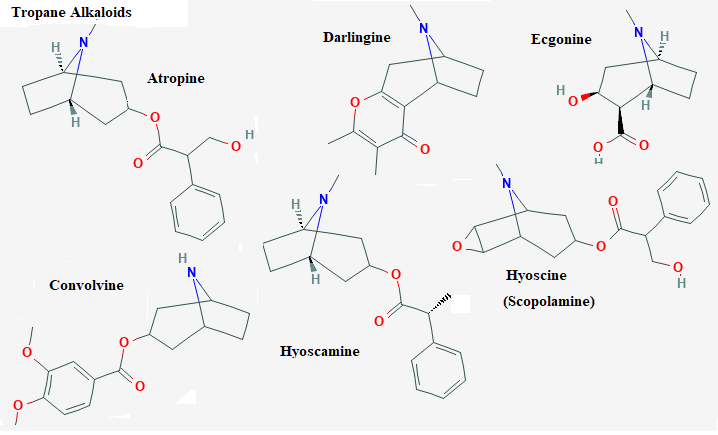
(-)-Scopolamine hydrobromide trihydrate, (C17H21NO4.HBr.3H2O), hyoscine hypobromide source
Samarium, Sm
Samarium, Sm
Samarium Table of the Elements
Samarium, RSC
Samarium, Sm, (V. Samarskiǐ-Vykhovets, 1803-70, Russia), in samarskite and monazite and rare earth minerals, hard, grey.
Samarium-153, reactor-produced medical radioisotope, half-life 46.7 hours, is used to treat pain from primary tumour metastases.
Sea water
Atoll water lens: 6.8.1
Cations and anions in rain, rivers and sea water: 18.7.1
Copper-nickel alloys: 5.1.8, marine corrosion
Distil sea water: 10.3.4
Evaporation of sea water: 7.7.3
Osmosis and osmotic pressure, reverse osmosis: 9.2.1, desalination of sea water
Prepare sea water crystals: 3.1.14
Prepare sea water substitute solution: 3.23
Sebacoyl chloride
Sebacoyl chloride, ClOC(CH2)8COCl, decanedioyl dichloride, (COR 1760), toxic by all routes, skin irritant source
Sebacoyl chloride with water forms hydrogen chloride gas, toxic.
Nylon polyamide: 3.7.6.1
Poisons and First Aid: 1.0 (See: Sebacoyl chloride)
Selenium, Se
Selenium, Se
Selenium Table of the Elements
Selenium, RSC
Selenium, Se, (Greek selēnē 'moon'), powder, AAS solution.
Selenium, powder, Highly toxic by all routes, do not inhale, do not touch fine particles.
Selenium, essential trace element, with vitamin E an antioxidant, nutrient of nervous system, food supplement grow yeast on selenium.
Selenic acid, H2SeO4, alkaloid reagent, oxidizing agent.
Selenium dioxide with water → selenious acid, H2SeO3 source
Selenium dioxide, SeO2, colourless solid, most common selenium compound, Highly toxic by all routes, slightly volatile, avoid inhaling fine particles, to avoid toxic vapour do not heat.
Selenium disulfide, SeS2, called "selenium disulfide", antifungal agent in dandruff shampoo
Selenium hexasulfide, Se2S6, oxidizing agent
Hydrogen selenide, H2Se, colourless gas, irritating horrible smell
Selenium, Se, is a non-metal, obtained from sulfide ores, decolorizes glass, semiconductor that conducts electricity when an EMF is applied, used in photoelectric cells and light meters.
Similar properties: to sulfur.
The Kjeldahl catalyst is sodium sulfate + selenium.
Selenium is a trace mineral used to destroy hydrogen peroxide.
The recommended daily allowance, RDA, is 70 g for males, and 55 g for females.
The Brazil nut (Bertholletia excelsa), is one of the best sources of selenium, an antioxidant that strengthens the immune system.
Atomic number: 34, Relative atomic mass: 78.96, RD 4.81, MP = 217oC, BP = 685oC.
Specific heat capacity: 322 J kg-1 K-1.
Selenium (keep exhibition specimen in sealed container).
Use a fume cupboard or small quantity in well-ventilated area.
The mineral called "selenite" does not contain the atom "Selenium", Se!
Semilepidinoside A
Semilepidinoside A, C16H20N2O6, a glycoside, (phenolic structure attached to a glycosyl), in human cytoplasm, biomarker. source
It occurs in brassicas, in garden cress.
Semipermeable membrane
Cellophane as a semipermeable membrane: 9.1.1
Copper ferrocyanide as a semipermeable membrane: 9.1.2
Measure osmosis: 9.1.7
Prussian blue as a semipermeable membrane: 9.1.8
Root pressure, Fuchsia, busy Lizzie (Impatiens walleriana) : 9.3.15
Cellulose triacetate, TAC, triacetate, C40H54O27, used in clothing fibres, semipermeable membrane source
Semtex
"Semtex", powerful plastic explosive, contains:
PETN, (pentaerythritol tetranitrate, C6H8N4O12, and RDX, C6H8N4O12 source
Senegin
Senegin, C70H104O32, Senegin II, a cinnamate ester, a triterpenoid saponin, hypoglycemic, irritant, hypoglycemic, cancerostatic, expectorant. source
It occurs in Polygala senega root.
Senna
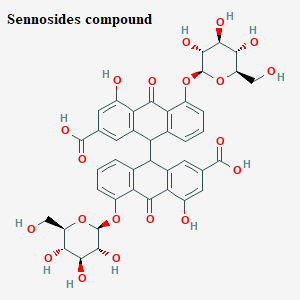
Senna, C42H38O20, senna glycoside, sennoside, anthraquinone glycoside, occurs in Candle bush, (Senna alata), Fabaceae. source
Sennoside, Sennoside G, Sennosides, Pursennid (TN), Anthraquinone glycosides senna plant, laxative diastereoisomeric mixture, contains sennoside A and sennoside B.
It irritates intestine wall lining to cause increased intestinal muscle contractions then, vigorous bowel movement.
It occurs in Senna alexandrina (Cassia angustifolia), in rhubarbs (Rheum rhabarbarum), mainly sennoside A.
Sequester
EDTA, synthetic chelating agent: 2.0
Sequester: 7.4.49, (Chemistry)
Sequestering agent, chelating agent: 18.1.18, swimming pools
Sequestrant food additives: 19.1.22
Sequestrants: 19.1.8
Sesamin
Sesamin, C20H18O6, fagarol, sezamin, a lignan, a benzodioxole, a furofuran, cytotoxic, antineoplastic, neuroprotective, insecticide, synergist. source
It occurs in Cinnamomum camphora, sesame oil Sesamum indicum, Zanthoxylum, Piper, and in Fagara.
Sesamol
Sesamol, C7H6O3, a phenol, a benzodioxole, irritant, white crystalline solid, antioxidant, prevents oil spoilage, in fats and oils. source
It occurs in sesame oil Sesamum indicum.
Sesamolinol
Sesamolinol, , C20H20O7, a lignan, a methoxybenzene, a phenol, antioxidant. source
It occurs in Sesamum indicum seeds.
Sesamose
Sesamose, C24H42O21, oligosaccharide, glucoside, reserve carbohydrate. source
It occurs in Sesamum indicum.
Sesame oil, Composition of edible oils: 3.9.3 (Table)
Sesartemin
Sesartemin, C23H26O8, a lignan, it is used in alcoholic beverages, hallucinogenic snuff, arrow poison. source
It occurs in roots of wormwood, Artemisia absinthium, in Virola elongata bark.
Shellac
Shellac comes from resinous excretions of the lac insects Coccus lacca or Tachardia lacca (varnish, polish, sealing wax).
French polish is shellac solution in methylated spirit), E90
Shellac solvent is highly flammable, may irritate nasal surfaces, and is toxic if ingested.
Shellac is thermoplastic, soluble in alcohol and is a good electrical insulator and is also used for paints.
Shellac is used as a fancy nail polish and is used in extruders or by injection, to make buttons, boxes, frames, dentures and technical articles.
Shellac was used to make gramophone records.
Shellac is sold as dry flakes.
Shikimic acid
Shikimic acid, C7H10O5, unsaturated monocarboxylic acid, tri-hydroxy cyclohexene carboxylic acid, corrosive, irritant, mutagen. source
It occurs in Illicium religiosum fruit, Ribes uva-crispa, gooseberry, cherry, and in strawberry.
Silica
Silicon Si, Silica SiO2. Silicate SiO44- source
Silica, SiO2, silicon dioxide, silicon (IV) oxide, E551, cristobalite, flint, obsidian, opal, quartz, quartz sand. source
Silica gel drying agent (desiccant), is hygroscopic amorphous hydrated silica.
It may have added CoCl2, as a self-indicating moisture test, e.g. "Tell-Tale". source
Bags of silica gel drying agent are usually included in the packaging of food and goods that must be kept dry.
The bags usually have the warning: "DO NOT EAT"!.
Silica powder is used a non-reactive bulking material in medical tablets.
Silica, acid washed, silica gel (orange) self indicating, silica gel desiccant, can be regenerated by heating to 110oC overnight.
Silica, silica gel beads, silica gel self-indicating, (contains cobalt (II) chloride)
Silica, 3-6 mm, silicon fused, Kiesel gel, grade C
Silica (hydrated silica gel)
(Siliceous: contains silica, silicated: combined with silica, silication : rock or mineral replaced by silica).
Silica / Silicon, Reactions of silica, Si / silicon, SiO2 compounds: 12.10.0 source
See: Silicates
See: Silicon
See: Silicon compounds
See: Silicones
Silicates
Silicon, Si | Silicon dioxide, silica, SiO2, quartz | Silicates, (SiO44-) source
Also, the ions orthosilicate, metaselicate and pryosilicate, and any ion or ester containing silicon and oxygen.
Silicates, (SiO44-), (salt or ester of silicic acid), (H4SiO4 orthosilicic acid) source
Crystal Tree (Capillary forces move salt solution up paper tree), (toy product)
Jadeite, Na(Al, Fe)SiO6, NaAl(Si2, O6), pyroxene group, from Myanmar (Burma). Silicates group, polysilicates, polysilicon: 35.8.0
Borosilicate glass: 7.9.10, Pyrex
Kaolinite: 35.2.39
Kyanite: 35.2.40
Rhodonite: 35.2.59
Silicon, Si
Silicon, Si
Silicon Table of the Elements
Silicon, RSC
Silicon, Si | Silicon dioxide, silica, SiO2, quartz | Silicates, (SiO44-) source
Silicon, Si (Latin silic hard stone), metalloid, lumps, AAS solution, Silicon oil 200 Fluid 350 CS.
Fine particles are toxic if inhaled
Silicon powder, lump, granules, burns in air if ignited, violently combustible with oxidizing agents.
Silicon, Si, lump [powder] is a non-metal network solid.
It occurs naturally as a brown powder or grey crystals, 28% of the earth's crust.
It forms a network solid similar to diamond and has valence 4.
It is the second most abundant element and occurs mainly in silicates in rocks.
Silicon is prepared by reduction of silica SiO2 in an electric furnace. source
Silicon is used as a semiconductor, and its conductivity can be increased by increasing its temperature or by adding boron or phosphorus, (doping).
The common form of silicon dioxide is silica, SiO2as in quartz.
A major component of rocks is the silicate ion, SiO44-, as in glass. source
Silicone greases have a polymer network of silicon and oxygen atoms attached to C and H atoms.
Atomic number: 14, Relative atomic mass: 28.0855, RD 2.33, MP = 1410oC, BP = 2360oC.
Specific heat capacity: 711 J kg-1 K-1.
Silicon crystals, metallurgical grade (Industrial)
Reactions of silicon compounds: 12.10.0
Silicon, Silica: 7.4.0
35.8.0 Silicates
Silicic acid, H2SiO3 source
Silicon compounds
Silicon compounds, glass, lump (powder), "Silly Putty™", silicon-based polymer, non-Newtonian dilatant (toy product)
Silicon, Si | Silicon dioxide, silica, SiO2, quartz | Silicates, (SiO44-) source
Silicon alkoxides, silica aerogel, Aerogel (Industrial)
Silicon carbide: 16.2.3.1, Types of carbides, (See: 4.), SiC (carborundum)
Silicon dioxide, silica, silica dust, silica gel, sand, quartz, fine particles toxic by inhalation, causing silicosis lung disease
Silicon dioxide, SiO2, tridymite mineral source
Silicon dioxide, Opal, SiO2.nH2O source
Silicon dioxide, glassy opal, SiO2.H2O, Hyalite mineral source
Silicon tetraacetate, C8H12O8Si, off-white crystalline, sol-gel reactions, rapid gel reaction source
Quartzite, SiO2: 35.3.11 source
Separate sand and lead powder by panning: 10.8.1
Separate a sand and salt mixture: 10.11.5
Zeolite: 18.1.28, swimming pools
Prepare silicon compounds
Prepare silica gel,: 7.4.2
Prepare silicon glass: 7.4.4
Prepare silicon tetrafluoride, SiF4: 12.19.7.2 source
Silicones
Silicones, (-OSiR2-)n, polymeric unbranched siloxanes, Formula: (-OSiR2-)n, (R not equal to H)
"Melting Snowman", silicone-based liquid and solid jumping putty (toy product)
Silicone grease (For burettes, use Vaseline not silicone grease, because it is difficult to remove.)
Silicone, "Silly Putty", polyborosiloxane, bouncing putty (Dow Corning 3179 dilatant compound)
Silicone sealant, "Bathtub Caulk", "Silicone Sealer" for fish tanks
Silicones, plastics, silicone grease, harmful if ingested: 3.8.1
Prepare slime, PVA slime: 3.3.11
Silicone rubbers, PVMQ: 12.10.11
Silver
1. Silver, Ag (Old English siolfor) (Latin argentum, Ag), metal, sheet 30 SWG, strip, sheet, wire, fumes and dust are a heavy metal hazard.
Silver, Ag, is a white transition metal, does not oxidize in air, the best electrical conductor, available as silver wire, occurs as the element.
It is used in coin alloys, electrical conductors, photographic emulsions, jewellery and ornaments.
Silver has low melting point and high malleability, so it is easy to cast and cold forge.
Reacts with concentrated oxidizing acids, HNO3 or H2SO4 to produce high oxidation number ions, and sulfur dioxide SO2, or nitrogen dioxide, NO2, reacts with concentrated HNO3 and hot concentrated H2SO4. source
No reaction with dilute HCl or H2SO4, air, or water. source
Silver compounds | Argentic, Ag (II) compounds | Argentite mineral, e.g. silver glance, Ag2S | Argentous, Ag (I) compounds| source
2. Silver ions and silver compounds have toxic effects on some bacteria, viruses, algae and fungi, as with heavy metals, but without their toxicity.
So silver was reputed to "sterilize" water and formerly, water was kept in silver containers and silver coins were supposed to stop milk spoiling.
Silver has been used to cure smelly socks, but excess silver from ingesting colloidal silver medications can turn the skin blue, argyria.
3. The "silver paper" used in wrapping paper or on chocolates is usually tin foil, not silver.
4. Silver has almost 100% reflectivity for most of the spectrum except in the violet, so slight yellow tinge.
Solid silver can be polished to be highly reflective, but silver nanoparticles form a black substance, e.g. in old photographic negatives.
Atomic number: 47, Relative atomic mass: 107.868, RD 10.5, MP = 961 oC, BP = 2210 oC.
Specific heat capacity: 234 J kg-1 K-1.
Silver Table of the Elements
Silver, RSC
Clean tarnished silver: 15.1.4
Daguerreotypes: 12.19.4.1
Reactions of silver compounds: 12.11.0
Reactions of silver halides, photography: 12.19.2.6
Recover silver from silver chloride, AgCl2: 12.19.8.6 source
Recycle silver: 12.11.0, (See 6.)
Silver, Ag: 35.2.62
Silver acetate, AgC2H3O2, hydrates, silver ethanoate, toxic if ingested, stains skin black, corrosive to skin and eyes source
Silver acetate may be used to test for cations.
Silver bromide Ag Br, silver (I) bromide, Ag Br, yellow solid, dissolves in concentrated ammonia solution (photography emulsions, used in daguerreotypes).
Silver fluoride: [silver (I) fluoride (silver monofluoride), AgF], [silver (II) fluoride (silver difluoride), AgF2], [disilver fluoride, Ag2F] source
Silver fulminate, AgCNO, contact explosion, extremely sensitive so useless, except tiny amounts in children's noise-making toys
Silver hexafluorophosphate, AgPF6, corrosive white-grey powder, chemical agent source
Silver iodate, AgIO3, insoluble white crystals source
Silver lactate, Ag(C2H3O2), photosensitive white crystals, horrible metallic taste, harmful if ingested, corrosive to skin
Silver mirror tests for aldehydes, Tollens' test: 9.3.3
Silver nitride, Ag3N, contact explosive unstable, occasionally unwelcome occurrence in silver experiments source
Sodium nitrite, AgNO2 source
Silver-oxide battery: 33.1.7.9, (a button cell)
Silver perchlorate, AgClO4 (perchlorates can be unstable!) source
Silver plating of copper or nickel: 15.1.5, electroplating
Silver residues: 3.3.6
Silver sulfate, Ag2SO4 source
Silver toxicity: 4.13H
Silvering and desilvering, plating and deplating silver: 15.1.9
Silver tetrafluoroborate, AgBF4, white soluble solid source
Sodium thiosulfate with silver chloride or silver bromide : 12.1.48
Silver trifluoromethanesulphonate, silver triflate, CAgF3O3S source
Tests for silver: 12.12.11.3.8, (See 8.)
Tests for silver, potassium chromate test, rhodanine test: 12.11.3.26
Silver chloride
Silver chloride, AgCl, precipitate in photography: 7.8.13, P
Compare the chloride, bromide and iodide of silver, AgCl, AgBr, AgI: 12.19.6.4
Silver chloride (99.999%), AgCl, silver (I) chloride, white solid, cerargyrite, horn silver, kerargyrite, occurs in silver veins, dissolves in ammonia solution.
It is used for photography emulsions, pottery glaze.
Silver chloride, kerargyrite, cerargyrite, occurs in geological silver veins.
Silver iodide
Cloud seeding, rain making: 37.5.4
Compare silver chloride, silver bromide and silver iodide: 12.19.6.4
Tests for iodides: 12.11.12
Silver iodide
Silver iodide, AgI, silver (I) iodide, does not dissolve in ammonia solution, yellow solid.
Silver iodide crystals similar to ice, so used in cloud seeding.
Ionic solid silver iodide, AgI, is insoluble in water.
Silver nitrate
Silver nitrate, AgNO3, nitric acid silver (I) salt, large, odourless, transparent, rhombic crystals or small white crystals, lunar caustic sticks for cauterizing source
RD 4.35, MP 212oC, water soluble, becomes dark with organic matter, test for halogens, store in dark-coloured dropping bottle in a cool dark place.
Low cost: (but still expensive!), from pottery suppliers, in some test reagents as 1% or 10% aqueous solution.
Silver nitrate, AgNO3, toxic if ingested, stains skin and clothing black, corrosive to skin and eyes. source
Silver (I) nitrate, silver nitrate pure (costs 25 GBP in UK), silver nitrate 0.1 M, solution 2% W / V
Use Tollens' reagent to demonstrate the reduction of silver nitrate solution by formic acid, to form a mirror on the inside of the test-tube.
It forms explosive mixtures with combustibles, e.g. sulfur, phosphorus, ethanol, metal powders.
Silver nitrate is used in redox reactions, metal displacement reactions, testing for chloride ions, preparation of Tollens' reagent.
Silver nitrate, AgNO3, For 0.1 M solution, 17 g in 1 L water or dissolve 10 g of silver nitrate in 100 mL of deionized water source
Silver mirror tests for aldehydes, Tollens' tests for acetaldehydes: 9.3.3
Coloured precipitates, double decomposition reactions: 12.2.4.02
Electrolysis of silver nitrate solution, with an OHP: 15.6.6
Silver chloride precipitate in photography: 7.8.13, P
Magnesium with silver nitrate: 13.3.5
Prepare preserving agents for cut flowers: 19.3.8
Silver sulfate
Silver sulfate, Ag2SO4, is used in silver plating, harmful by inhalation and if swallowed, dust irritates eyes and skin source
Silver sulfate, Soluble in hot water, ammonium hydroxide, nitric acid, sulfuric acid
Simethicone
Simethicone, C6H18O4Si3, phazyme, antifoam A, DC antifoam A, Sentry Simethicone, Mylanta Gas Relief, polymer of dimethylsiloxane + gel, used as an antiflatulent, surfactant, and ointment base, an anti-foaming agent in indigestion tablets to reduce bloating discomfort, decreases surface tension of small gas bubbles, so they combine into big bubbles. source
Sinalbin
Sinalbin, C14H19NO10S2, glucosinalbin, p-hydroxybenzyl glucosinolate, flavour component + hydrolysis products source
Hydrolysis product is thycyanate ion (SCN-), which occurs in white mustard, onion, garlic, mustard oil, radish, charlock.
Sinapine
Sinapine, C16H24NO5+, sinapoylcholine, a phenylpropanoid, alkaloidal amine, choline ester of sinapic acid, an acylcholine, a photosynthetic electron-transport chain inhibitor, antioxidant. source
It occurs in Brassica species seeds, Sisymbrium, Crambe, Lepidum, and in Draha.
Sinapyl alcohol
Sinapyl alcohol, C11H14O4, sinapoyl alcohol, sinapic alcohol, irritant, a primary alcohol, a phenol, a dimethoxybenzene, a monolignol, precursor to lignin, lignans, stilbenes and coumarins. source
Sinigrin
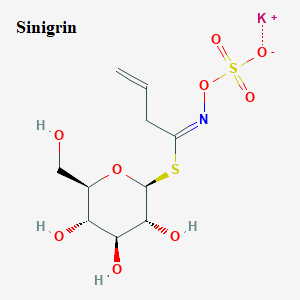
Sinigrin, C10H16KNO9S2, sinigrin hydrate, sinigrin glucosinolate, Allyl glucosinolate, aliphatic derivative, flavour component + breakdown products, occurs in horseradish, in mustards, in cabbage source
sinigrin + myrosinase → glucose + allyl isothiocyanate, so sinigrin is precursor to allyl isothioncyanate. source
Sinigrin hydrate, C10H16HNO9S2.xH2O, sinigrin glucosinate, in black mustard seeds, in horseradish source
Sisomicin
Sisomicin, C19H37N5O7, broad-spectrum aminoglycoside antibiotic, similar to gentamicin C1A, produced by bacterium. source
Micromonospora inyoensis, effective against gram-positive bacteria, Klebsiella, Escherichia, Enterobacter, Proteus3, Pseudomonas aeruginosa.
Sisomicin sulfate salt, [2(C19H37N5O7.5H2SO4]. source
Sitosterol
Sitosterol, C29H50O, beta-sitosterol, cupreol. azuprostat, phytosterol, a sterol methyltransferase inhibitor, an anticholesteremic drug, an antioxidant, 3beta-sterol, a stigmastane sterol, from Solanum trilobatum, reduces side-effects of radiation-induced toxicity. source
β-Sitosterol (beta-sitosterol) is a plant sterol similar to cholesterol, white waxy powder, distinctive smell, in food additive E499, hydrophobic, soluble in alcohols.
It occurs in many plants, in plant cell membranes, including vegetable oil, nuts, avocados and dressings.
It may reduce prostate gland enlargement as men get older and blood cholesterol.
It is a precursor of anabolic steroid boldenone, which may be abused in sports by too much consumption of β-sitosterol.
Sitosterol use is not recommended during pregnancy.
Beta-sitosterol C29H50O, phytosterol, similar to cholesterol, oestrogenic activity, inhibits proliferation of human leukemia cells, reducing serum cholesterol levels. natural prostate health. reduce the growth of human prostate and colon cancer cells. source
Skatole
Skatole, C9H9N, (3-Methyl-1H-indole), a methylindole, produced from metabolism of L-tryptophan in the mammal digestive tract, in humans, white crystalline fine powder browns with aging, irritant, environmental hazard, foul smelling of faeces, additive to cigarettes, flavouring ingredient, mildly toxic, an indole family. source
It occurs in faeces, beets, coal tar, and in essential oils of orange blossoms, jasmine, and Ziziphus mauritiana.
Stigmasterol
Stigmasterol, C29H48O, beta-stigmasterol, stigmasterin, irritant, a stigmastane sterol, an unsaturated phytosterol. source
It is a vitamin and a component of plant cell membranes.
It is a food additive E499, used to increase phytosterol and lower LDL cholesterol, inhibits absorption of cholesterol from food.
It occurs in the fats and oils of soybean, calabar bean, rape seed, legumes, nuts, seeds, unpasteurized milk, and in
Ophiopogon japonicus (Mai men dong), and Mirabilis jalapa.
Scrimshaw
Scrimshaw, carvings by sailors of the teeth of the sperm whale, and tusks of other marine animals
Seaborgium, Sg
Seaborgium, Sg
Seaborgium, Table of the Elements
Seaborgium, RSC
Seaborgium,(Glen Seaborg, USA, 1912-1999), artificially produced unstable radioactive element
Solder
Solder: Soft Pb and Sn alloys, resin-cored solder, wire form (Soldering flux, soldering resin)
Low melting point alloys: 5.1.14
Eutectic mixture: 5.1.12
Soldering, solders, fluxes, methods: 2.6.0
Weight of tin in solder: 17.6.6
Solutions
Prepare solutions: 10.0
Solubility and solutions: 7.7.0, E
Solute: 7.4.50
Solvent
Solvent: 7.4.51
Sealant, non-solvent sealant, Silicone, harmful if ingested
Sealant, solvent-based sealant, e.g. Duraseal, harmful if ingested, skin irritant, do not inhale vapour
Solvent extraction of oil from peanuts: 10.12.0
Sorbitol
Sorbitol, C6H14O6, D-sorbitol, D-glucitol, sugar alcohol, polyhydric alcohol, odourless colourless solid, sinks and mixes with water, diuretic, laxative, cathartic, 60 % sweetening activity of sucrose so diabetes sugar replacement. source
It is used in cosmetic creams and lotions, toothpaste, candy softener, sugar crystallization inhibitor, surfactants, resins, manufacturing of sorbose, acid-base titration of borate and as a food additive: sweetener, humectant, emulsifier, thickener, anticaking agent, dietary supplement.
It occurs in Rosaceae fruits, in Sorbus, in Crataegus, in Cocos.
SPADNS
SPADNS, fluoride reagent solution, 500 mL (HO)2(C10H3(SO3Na)2N=N(C6H4SO3Na, indicator for zirconium, thorium
Sparklers
15.4.15 Sparklers, potassium chlorate
3.3.3, Sparklers in carbon dioxide:
3.77, Sparkler experiment, Reactions of magnesium with carbon dioxide
Speculum
Speculum is a metal, or alloy of brass or copper with tin, polished to make telescope reflective surfaces or mirrors
Spermidine
Spermidine, C7H19N3, triazadecane, azaoctamethylenediamine, corrosive, polyamine, triamine. source
It occurs in many biological processes, in almost all tissues in association with nucleic acids, regulates membrane potential.
Spinasterol
Spinasterol, C29H48O, alpha-spinasterol, alpha-spinasterin, bessisterol, hitodesterol, a phytosterol, a steroid, isomer of Stigmastanol. source
It occurs in spinach, alfalfa (lucerne), Polygala senega root, and in bitter apple Citrullus colocynthis.
Sweeteners
Relative sweetness of some artificial sweeteners
Relative sweetness, mass for mass, is measured by comparing the taste in water to a 4% solution of cane sugar.
Alitame, dipeptide amide, E 956, Relative sweetness 2 000
Aspartame, dipeptide ester, E 951, Relative sweetness 160, e.g. "Equal"
Cyclamate, E 952, Relative sweetness 30 to 80
Dulcin, sucrol, 4-ethoxyphenyl urea, relative sweetness 250
Ethylene glycol, anti-freeze, Toxic, Relative sweetness 1.3
Glycerol, glycerine, E 422, Relative sweetness 0.6
Lead acetate, sugar of lead, Toxic, Relative sweetness 1.0
Miraculin, not itself sweet
Saccharin, o-toluene sulfonamide, E 954, Relative sweetness 300 to 500, e.g. "Sweet 'N Low"
Stevioside, relative sweetness 250 to 300.
Sucralose, Relative sweetness 650
Sucrose, cane sugar, food, Relative sweetness 1.0
Thaumatin, E 957, Relative sweetness 750 to 1 600
D-tryptophan, amino acid, Relative sweetness 35
Starch
Starch, soluble starch, corn starch, tapioca starch, sorghum gum, amylodextrin, amylopectin, amylum, arrowroot starch, soluble laundry starch, gums adhesives
Starch, amylum, (C6H10O5)n, where n = 40 to 50. source
Starch is used as a test for iodine, forms blue colour.
Starch, like glucose, is a carbohydrate and contains carbon, hydrogen and oxygen in the proportion C6H10O5, in a very complex molecule. source
Starch is present in nearly all plants.
Potatoes, barley, wheat, and rice are used as industrial sources.
Starch is used for stiffening linen in laundries, adhesive pastes and manufacture of glucose.
Cornflour starch is a powdery starch synthesized from maize and used as a cooking thickener, in USA "cornstarch",
in Australia "cornflour" is actually "wheaten starch".
Starch, (C6H10O5)n, starch maize, starch potato, soluble starch, starch solution 2% W / V source
Amylase: 4.5.1
Breakdown of starch by micro-organisms: 4.3.3
Breakdown starch during germination: 9.4.1
Cornstarch, cornflour slime, isotropy and thixotropy 13.4.1
Food allergies and intolerances (See 6. Starch allergy): 19.2.01
Mashed potato, pommes purée: 19.2.13, (starch granules)
Secret writing inks, starch, cornstarch suspension: 3.2.14
Starch nutrient agar solution: 1.16
Tests for starch: 12.11.8
Stearin
Stearin, C57H110O6, glyceryl ester of stearic acid, white crystalline substance. in fatty acids, (C16-C18) source
It occurs mostly in animal fats, least in vegetable oils, in palms. (in soap, suet, food products and cosmetics)
8.1.9, Burning candle, rising water, (See: 2.), E
Stearic acid
Stearic acid, C18H36O2, CH3(CH2)16CO2H, octadecanoic acid, saturated fatty acid source
Stearic acid, powder, E570 fatty acid, MP 68oC to 69.5oC, occurs in fats, tallow, used in anti-caking agent, soaps, waxes
Stearic acid with basic solutions forms soaps.
Electrical conductivity of melted solids, fused solids: 32.2.20
Fatty acids in oils of natural products: 5.1.3
Fatty acids in coconut oil: 5.1.4
Fatty acids: 3.9.5
Hydrogenation, cis-trans fatty acids: 3.9.8
Melting point and cooling curve of stearic acid: 3.3.4
Prepare crystals from a melt: 3.1.6
Size of carbon atom in stearic acid molecule: 11.3.5
Size of stearic acid molecule: 11.3.8
Soaps and synthetic detergents, (syndets): 12.5.1
Steel wool
Low cost: from hardware stores, soapless steel wool as steel wool pads for paint removal
New types of steel wool, e.g. stainless steel soap pads "STEELO", made from stainless steel wool, are guaranteed not to rust,
but are not suitable for non-stick cookware or other delicate surfaces.
Burn steel wool and burn iron filings: 11.1.1
Burn steel wool and weigh the products: 7.1.6.5
Burn steel wool, change in weight: 11.1.2
Burn steel wool in chlorine: 12.4.8.1
Dilute sulfuric acid with steel wool: 12.3.3
Heat of rusting, steel wool: 14.1.4
Heat steel wool with iodine crystals (synthesis reaction): 12.2.10.6
Rusting of steel wool: 15.5.8.
Reactions of chlorine with steel wool: 12.4.16.
Rusting of steel wool: 15.5.8
Sterols
Sterols are solid, waxy, unsaturated steroid alcohols, anti-inflammatory, analgesic agents.
Sterols (steroids) occurs in animal sex hormones, squalene (in shark liver oil), cephalosporin, gonane, hopane, diplotene, lupeol.
Plant sterols are called phytosterols, some existing naturally free and some exist occurs in combination as esters or glycosides.
β-sitosterol, C29H50O, oestrogenic activity, occurs in human leukemia cells, occurs in vegetable oils, occurs in nuts, occurs in avocado. source
Naturally occurring non-delta-5 plant sterols: | Cycloartenol | 24-methylene cycloartenol | cycloeucalenol | obtusifoliol|.
List of sterols:
Beta-Sitosterol, C29H50O source
Cholesterol C27H46O source
Sterols, cholesterol
Cycloastragenol C30H50O5 source
Ecdysone C27H44O6 source
Ergosterol C28H44O source
Fucosterol C29H48O source
Lupeol C30H50O source
Sitosterol C29H50O source
Stigmasterol C29H48O source
Stilbenes
Stilbene, trans-stilbene, C6H5CH=CHC6H5 is a diarylethene polyphenol. source
Stilbenoids are derivatives of stilbene and the products of heartwood formation occurs in trees.
Phyllodulcin, C16H14O5, a hydroxybenzoic acid source
Piceid stilbenoid glucoside
Piceatannol a stilbenol, occurs in grapes.
Resveratrol occurs in grape (skins and seeds, grape wine), nuts, peanuts, Japanese Knotweed root.
Rhaponticin, C21H24O9, stilbenoid glucoside, phytoestrogen, occurs in rhubarb rhizomes. source
Sudan IV
Sudan IV, C24H20N4O, scarlet red, solvent red 24, stains fats and oils, harmful if ingested source
Sudan black B, C29H24N6, ceres black BN, fat back HB, solvent black 3, histology stain source
Syringic acid
Syringic acid, C9H10O5, cedar acid, a dimethoxybenzene source
It is a benzoic acid, a phenol, high antioxidant activity, inhibits LDL oxidation.
It is used in some distilled alcohol beverages.
It is a product of microbial gut metabolism of polyphenols consumed in fruits and alcoholic beverages.
Styrene
Styrene, C8H8, C6H5CH:CH2, plastics, monomer, phenyl ethene, vinyl benzene, toxic by all routes, do not inhale fumes, skin irritant source
ABS, acrylonitrile, butadiene and styrene, thermoset plastics, mixed polymer: 3.7.28
Aromatic hydrocarbons, e.g. benzene, anthracene: 16.3.4.0.1
Collapse polystyrene beads with propanone: 3.3.3
Phenylethene, styrene, monomer styrene, Styrenes: 3.7.29
Styrene, Mixture < 12.5%, Not hazardous, do not ingest, use fume cupboard or well-ventilated area.
Styrofoam: 3.7.29
Substances
Classify substances: 7.2.1
Heat substances, sublimation, melting, decrepitation: 12.11.3.4
Low-cost chemicals and common substances: 16.0.0
Pure substances and impure substances: 7.2.0
Separation of substances: 10.0.0
Substances, Tests for all substances
Thermal decomposition: 3.7.0
Subtilisin
Subtilisin, serine endopeptidase, protease from Bacillus subtilis, in laundry powders, e.g. Clorox 2 laundry bleach
Sudan III
Sudan III, C22H16N4O source
Sudan III, Solvent red 23, fat-soluble dye, histological dye used for demonstrating triglycerides, fluorochrome, carcinogenic agent
Sudan III, Sudan III solution alcoholic, (C.I. 261000), C.I. Solvent Red 23)
Sudan III, 1-[4-(Phenylazo)phenylazo]-2-naphthol, Cerasin Red, Fat Ponceau G, Fat Soluble Sudan, Scarlet B, Solvent Red 23
Sudan G, Sudan Red BK, Tony Red (tests for fats, oils, waxes), harmful if ingested
Sudan III, Tests for fats and oils: 9.3.11, (See: 2.)
Sudan III, Epigeal germination: 9.4.7, (See: 3.)
Sugars
Beet sugar, sucrose extracted from sugar beet: | Sugar beet, Beta vulgaris var. saccharifera, Amaranthaceae |.
Blood constituents: 9.1.2
Breakdown starch to sugars during germination: 9.6.1
Brix, sucrose concentration: 6.2.3
Browning reactions of fruits and vegetables: 19.2.3.0
Burning sugar cube, combustible cube: 17.3.12
Cane sugar, invisible writing ink: 3.2.2
Cellophane as a semipermeable membrane: 9.1,1
Children with diarrhoea: 9.3.5
Glycaemic index: 9.2.9
Heat glycerine with sugar to form carbon: 12.1.7
Icing sugar, confectioner's sugar, very fine table sugar, large surface / volume ratio, is used in sugar rockets.
Monosaccharides: 16.5.2, List
Monosaccharides, D sugars and L sugars: 16.5.3
Disaccharides16.5.4
Oligosaccharides: 16.5.6
Polysaccharides: 16.5.7
Prepare invert sugar: 3.1.17
Prepare sugar crystals from brown sugar: 3.1.17
Prepare sugar crystals from sugar cane juice: 3.1.18
Prepare sugaring mixture: 5.7, insect fixing fluid
Prepare white sugar from brown sugar: 10.14.3
Sucralose, Relative sweetness 650
Sugar acids: 16.5.9
Sugars: 16.5.1
Sugar acids: 16.5.9
Sugarcane, Saccharum officinarium, Poaceae
Syrups: , Solubility of sucrose, (Cooking)
Tests for breakdown of starch to sugars: 9.3.6
Tests for reducing sugars, Benedict's test: 9.4.1
Tests for reducing sugars, Fehling's test: 9.5.1
Thermal decomposition of sucr ose crystals: 12.2.3.7
Treacle, molasses, golden syrup, uncrystallized syrup drained from partly-refined raw sugar
Treacle, in Bible Jer, viii, 22, "Is there no tryacle in Gilead."
Formerly, children were given a dose of "brimstone (sulfur) and treacle", as a regular medicine, which they did not like!
Sulfamic acid
Reactions of sulfamic acid, NH2.SO2OH: 12.18.6.3 source
Sulfamic acid, , NH2.SO2OH, amidosulfonic acid, harmful if ingested, skin irritant source
Sulfamic acid, Solution < 20%, Not hazardous
Sulfamic acid is a strong crystalline acid used in cleaning agents
Sulfamide compounds, SO2(NH2)2 source
Sulfanilamide, p-aminobenzenesulfonamide, toxic if ingested, livertoxin
Sulfanilic acid
Sulfanilic acid, C6H7NO3S, sulfonilic acid, 4-amonobenzene sulfonic acid, C6H7NO3S, NH2C6H4SO3H, toxic if ingested, skin irritant source
Sulfanilic acid, Solution < 25%, Not hazardous, but should not be ingested
Sulfanilic acid (used to make methyl orange)
Sulfates
Aluminium sulfate: 13.1.14
Alums: 13.1.16, aluminium sulfates
Sulfate ion, (SO42-), sulphate (UK) source
Sulfates: 7.4.54, battery sulfation
Decomposition of sulfates: 3.7.17
Sulfate hazards: 3.7.15
List of sulfates: 1.23
Sulfate of ammonia, fertizer
Sulfation: Sulfation, , lead-acid battery electrolyte
Tests for sulfates: 12.11.16
Tests for sulfates in groundwater: 18.2.2.3
Sulfides
Sulfide ion: S2-
Sulfides: 16.10.10
Sulfides: 7.4.55
Sulfide (thio), S2-, monodentate ligand or bidentate ligand
Hazards: 3.7.16
Hydrogen sulfide waste bottle: 3.3.2
List of sulfides: 1.24
Organic sulfides "16.10.1, Allicin
Prepare sulfides, S2-: 12.18.2.0
Tests for sulfides: 12.11.17
Sulfites
Sulfite ion: -SO2−3 source
sulfite ion, (sulfate(IV) ion), SO2−3. source
Sulfites: 7.4.56
Sulfite hazards: 3.7.17
List of sulfites: 1.25
Decomposition of sulfites: 3.7.18
Tests for sulfites: 12.11.18
Sulfonic acids
Aromatic sulfonic acids: 16.2.11
Electroplating, zinc plating of copper: 15.1.6
Ionic surfactants in washing powders: 12.6.9
Non-ionic surfactants: 12.6.10
Sulfonic acids, group: R-SO2OH, e.g. methanesulfonic acid, CH3SO2OH, Salts or esters: sulfonates source
Sulfonic acids, HS(=O)2OH / sulfonate, organic compound with functional group (-SO3H) / (-SO3- ) source
Sulfonic acids (acid fuchsine is mixture of basic fuchsine +sulfonic groups to decolorize it.)
Sulfonic acids (sunscreen, phenylbenzimidazole sulfonic acid)
SulfurS
SulfurS
Sulfur Table of Elements
Sulfur, RSC
Sulfur, sulphur, is a mineral with formula of S, the IMA symbol is S.
Sulfur, S (Latin 'sulfur'), brimstone, bright yellow powder, sublimed sulfur, flowers of sulfur, roll sulfur, brimstone, sulfur sticks, roll sulfur,
Sulfur is a non-metal occurs as S8 molecule rings and has rhombic and monoclinic forms. source
Sulfur is insoluble in water, slightly soluble in ethanol, and soluble in benzene.
Above 160oC, the S8 molecule rings break to form long chains of plastic sulfur, polymeric sulfur, that is not soluble in any solvents. source
Sulfur is not toxic, but can be dangerous, because of its flammability and hazardous, because of the formation of sulfur dioxide gas as a product of combustion.
Sulfur is used as example of a non-metal element.
Brimstone
Brimstone is the word for sulfur in the King James version of the Bible: Genesis 19: 24: "Then the LORD rained upon Sodom and Gomorrah brimstone and fire from the LORD out of heaven;"
Formerly, children were give "brimstone and treacle", as a regular medicine, sulfur deficiency does not occur in humans.
Sulfur is in external medicines to treat skin problems.
Sulfur is in hair, nails, and skin.
Liver of sulfur, K2S, potassium sulfide, alkaline mixture of mainly potassium polysulfides that turns silver black. source
Low cost: garden supply stores as fertilizer, fungicide, soil additive, "wettable sulfur".
The main allotropes of sulfur are as follows:
1. α sulfur, rhombic sulfur, with yellow octahedral crystals,
2. β sulfur with monoclinic prismatic pale yellow crystals.
Do not mix sulfur with oxidizing agents, e.g. potassium nitrate or potassium permanganate, or mercury (II) oxide, because the mixtures are explosive.
Do not prepare mixtures of sulfur with active metal powders, e.g. aluminium and magnesium, because they are also violently reactive.
Sulfur usually ignites when it is heated, forming sulfur dioxide gas, which is highly irritant to the lungs and should not be inhaled.
Use a fume cupboard for that produce sulfur dioxide.
Some asthmatics are particularly sensitive to sulfur dioxide.
Atomic number: 16, Relative atomic mass: 32.06, RD 2.07 (α), 1.96 (β), MP = 113oC (α) 119oC (β), BP = 445oC (α),
Specific heat capacity: 0.71.
Sulfur
Sulfur experiments
Sulfur allotropes: 7.9.4.2
Sulfur deficiency in soils: 6.12.6
"Sulfur" in coal, iron (II) sulfide (pyrite): 12.6.0.2
Sulfur mineral: 35.2.75
Sulfur organic compounds: 16.10.0
Prepare sulfur dioxide: 13.10.0
Wettable sulfur: 4.3.8, (agricultural fungicide
Sulfur experiments
Aluminium with sulfur: 13.1.16, aluminium sulfates
Bromine catalyses the oxidation of sulfur to sulfuric acid: 17.3.4
Burn sulfur in oxygen: 11.1.3
Dilute acids with non-metals, carbon and sulfur: 12.4.4
Heat copper with sulfur: 12.2.10.3, (synthesis reaction)
Heat iron with sulfur: 12.2.10.5, (synthesis reaction)
Heat zinc with sulfur: 12.2.10.7, (synthesis reaction)
Heat sulfur to form sulfur dioxide: 13.10.0
Prepare sulfides: 12.18.2.0
Prepare forms of sulfur: 7.1.5, allotropes of sulfur
Prepare sulfur dioxide by heating sulfur: 7.1.6
Sulfur compounds
Acid rain, SOx, from burning sulfur or sulfur compounds: 12.6.0.1
Phenylthiocarbamide: 3.19
Lime sulfur: 4.3.1, CaSx
Prepare sodium thiosulfate crystals: 12.18.6.1
Prepare sulfides: 12.18.2.0
Prepare sulfur monochloride: 12.18.3.1
Prepare sulfuric acid with iron (II) sulfate: 12.16.12
Reactions of sodium thiosulfate: 12.18.6.2
Reactions of sulfamic acid: 12.18.6.3
Sulfur in methylated spirits; 7.8.7.3 (colloidal sulfur)
Sulfur dichloride, SCl2 source
Sulfur dichloride oxide: Thionyl chloride
Sulfur dioxide: 13.10.0
Sulfur hexafluoride, SF6, density 6.12 g / litre, inert gaseous dielectric source
Sulfur trioxide: 13.10.9
Sulfur dichloride
Sulfur dichloride, SCl2, cherry red liquid, Highly toxic by all routes, use a fume cupboard source
Sulfur dichloride with water forms hydrogen chloride gas in a violent reaction
Sulfurous acid
Sulfurous acid, H2SO3, 6% SO2 solution in water, clear, colourless solution, penetrating SO2 odour source
Sulfur trioxide with water forms sulfurous acid
Sulfurous acid is highly toxic if ingested, very corrosive
Sulfurous acid oxidizes in air to sulfuric acid
Sulfurous acid as a reducing agent, ionization reaction: 15.4.10
Sulfuryl chloride, SO2Cl2, sulfur dichloride, toxic by all routes, extremely irritant vapour, highly corrosive source
Sulfuryl chloride with water forms hydrogen chloride gas and sulfuric acid
Tetrasulfur tetanitride, S4N4, unstable contact explosive source
Swertiajaponin
Swertiajaponin, C22H22O11, leucanthoside A, triterpenoid saponin, tyrosinase inhibitor, in Cephalaria leucantha source
Synthetic fibres
Experiments
Synthetic fibres, polymers, plastics: 3.6.14
Burning tests for synthetic fibres: 4.3.0
Sabinene
Sabinene, C10H16, bicyclic monoterpene source
It occurs in Horsewood, (Clausena anisata) | and Black pepper, (Piper nigrum), Piperaceae |
Sabinene hydrate, C10H18O, 4-Thujanol
Sabinene hydrate, C10H18O, 4-Thujanol source
Safranal
Safranal, C10H14O, (2,3-dihydro-2,2,6-trimethylbenzaldehyde), bitter taste, hay-like fragrance, antioxidant, anticonvulsant, antidepressant source
It occurs in | Saffron species | Tea plant, Camellia species | Cumin species | fig, Ficus species | and Lemon, Citrus species |.
Santamarin
Santamarin, C15H20O3, balchanin, a sesquiterpene lactone, an eudesmanolide, cytotoxic, antitumour source
It occurs in Ambrosia confertiflora, Artemisia species, feverfew Tanacetum parthenium, and in Michelia compressa.
Scutellarein
Scutellarein, C15H10O6, a flavone, occurs in Centaurea. and in Scutellaria lateriflora. source
Selinene
Selinene, C15H24, sesquiterpene (group of 4 isomers), alpha- and beta-Selinene source
It occurs in celery seed oil.
Solavetivone
Solavetivone, C15H22O, katahdinone, a sesquiterpenoid, a cyclic ketone, a spiro compound, antifungal, phytoalexin, antifungal source
It occurs in fungus-infected Solanum tuberosum tubers, and in Nicotiana tabacum infested by tobacco mosaic virus.
Spathulenol
Spathulenol, C15H24O, tricyclic sesquiterpenoid, carbotricyclic compound, tertiary alcohol olefinic compound, volatile oil component, anaesthetic vasodilator agent source
Squalene
Squalene, C30H50, spinacene, supraene, a triterpene, clear slightly yellow liquid, faint odour, originally from shark liver oil, skin protection source
It is used in cosmetics, used as precursor to sterol biosynthesis
It occurs in human tissues, amaranth seed, rice bran, wheat germ, olives, and in yeast cells.
Squaline is the precursor to all steroids, including cholesterol and steroid hormones.
Staphyloxanthin
Staphyloxanthin, C51H78O8, carotenoid pigment, produced by Staphylococcus aureus ("golden staph") source
Steviol
Steviol, C20H30O3, a monocarboxylic acid, a tetracyclic diterpenoid, antineoplastic source
It occurs in Stevia rebaudiana
Steviol glycosides are used as artificial sweeteners.
Phenyl salicylate, C13H10O3, phenyl-2-hydroxybenzoate, salol, toxic if ingested, flammable.
Phenyl salicylate, C13H10O3, phenyl-2-hydroxybenzoate, salol, toxic if ingested, flammable. source
Salol, phenyl salicylate is prepared by heating salicylic acid with phenol.
It is used in experiments to show cooling rates affect crystal size, formerly in sunscreens.
Saturated hydrocarbons
Saturated hydrocarbons, e.g. hexane, C6H14 source
All carbon atoms in the compound have either four or three hydrogens bonded to them and no double bonds, triple bonds or rings.
They react in almost the same way, as in ignition test and bromine water test.
Sesquiterpenoids
Sesquiterpenoids C15H24, Natural sesquiterpenoids. source
C15H22, Cuparene, in (Perilla frutescens). source
C15H24, Allo-aromadendrane, woody odour, in allspice, Tasmanian gum, (Eucalyptus globulus). source
C15H24, Alpha-bisabolene, Caryophyllane, (Cedrene in essential oil of cedar). source
C15H24, Beta-bisabolene, balsamic odour, food additive. source
C15H28, (Cadinane, cadinene, from cade oil in (Juniperus oxycedrus), prickly juniper, sharp cedar. source
C15H26O2, Debneyol, C15H26O2, a sesquiterpenoid propane-1,2-diol source
It occurs in (Nicotiana fragrans), and (Nicotiana debneyi), and in cigarette tobacco
.
Sesquiterpene lactones
Sesquiterpene lactones, (3 isoprene units + lactone ring), bitter taste, nonvolatile crystalline solids, allergy reactions, livestock toxicity, most in Asteraceae family.
Steroid saponins
Agavoside A, C33H52O9, a steroid saponin, anti-leukaemic, in green vegetables, in Agave americana source
Asparagoside B, C33H56O9, a steroid saponin,in Aspagus officinalis source
Avenacoside A, C53H82O23, a steroid saponin, in cereals, in oats aerials Avena sativa source
Digitogenin, C27H44O5, a sapogenin, a 2alpha-hydroxy steroid source
Digitonin, Digitin, C56H92O29, a steroid saponin, toxic, solubilizes lipids, a glycoside source
It occurs in (Digitalis purpurea).
Diosgenin, C27H42O3, a steroid sapogenin, nitogenin, a hexacyclic triterpenoid source
It occurs in bark of wild yam, Discorea villosa.
It is used to synthesise steroids, e.g. cortisone, pregnenolone and progesterone, apoptosis inducer, antiviral, antineoplastic.
Gitoxygenin, C23H34O5, an hydroxy steroid, acute toxic. source
Nuatigenin, C27H42O4, an hydroxy-steroid, in oats Avena sativa source
Osladin, C45H74O17, a steroid saponin, very sweet taste, in fern rhizome Polypodium vulgare source
Paclitaxel, (C45H51NO14) source
Protodioscin
Ruscogenin, C27H42O4, a triterpenoid, irritant, used to treat haemorrhoids, anti-hypertensive source
It occurs in Ruscus rhizomes.
Ruscoside, C50H80O23, a steroid saponin, anti-inflammatory source
It occurs in (Ruscus aculeatus).
SarsaparillosideH">Sarsaparilloside, C57H96O28, a steroid saponin, used to flavour confectionary It occurs in sarsaparilla roots and Smilax rhizomes. source
Sarsasapogenin, C27H44O3, a sapogenin. source
It occurs in Spanish sarsasparilla (Smilax aspera), in asparagus, and in Sarsaparilla root (Radix sarsaparilla)
This page was generated automatically from the original page on John Elfick's School Science Lessons website. If something looks wrong, please check the original.