Appendix C, List of Chemicals
Last updated 2026-04-12 by Dr John Elfick
5.0 List of chemicals
1.1 Mineral acids
Chromium (VI) chromium trioxide, CrO
1.2 Organic acids
Acetic acid, Ethanoic acid
Acroleic acid, acrylic acid
Adipic acid, hexandioic acid
Benzoic acid, benzenecarboxylic acid
Butanoic acid, butyric acid
Butanedioic acid, succinic acid
Dichloroacetic acid, DCA
Decanoic acid, Capric acid
Formic acid, Methanoic acid
Fumaric acid, Butanedioic acid
Gibberellic acid, Gibberellin A3
Indole-3-acetic acid, IAA
Lauric acid, dodecanoic acid
Malic acid 2-hydroxycarboxylic acid
Malonic acid, propanedioic acid
Oxalic acid, ethanedioic acid
Salicyclic acid, hydroxybenzoic acid
Stearic acid, octadecanoic acid
Tannic acid, tannin, C76H52O46, (Some chemists do not regard tannic acid as an acid.) source
1.3 Adhesives
List of adhesives
Adhesive, paper glue, "Bostik"
Adhesive, rubber solution, cow gum, contact or shoe glue
Animal glues
Araldite
Building adhesives, liquid nails, max bond
Contact cement
Ethyl cyanoacrylate, C6H7NO2, ethyl 2-cyanoacrylate, "Superglue": 16.2.4.7 source
Epoxy resins, uncured resins used for fibreglass, may contain isocyanate residues, strong irritants to eye nose / respiratory
Evo-Stik
Hot melt adhesives
Loctite GO2: polyurethane, benzene C10-13 alkyl derivatives, 3-(Trimethoxysilyl)propylamine, trimethoxyvinylsilane, methanol
PVA, "Aquadhere"
Resorcinol, spray adhesives
Starch gums
Urea / formaldehyde, "Araldite"
Wall paper adhesive
Woodworking adhesive, wood glue, "Aquadhere"
1.4 Alcohols
Alcohol lamp, Spirit burner
List of alcohols
Amyl alcohol, C5H12O, CH3(CH2)3CH2OH, pentan-1-ol, n-amyl alcohol, normal amyl alcohol, 1-pentanol source
Dodecanol, lauryl alcohol
Isoamyl alcohol, 3-methylbutanol, 3-methyl-1-butanol, isopentyl alcohol, (CH3)2CHCH2CH2OH, Toxic
Octadecan-1-ol, C18H38O source
Octanol, CH3(CH2)7OH source
1.5 Aldehydes
Acetaldehyde, ethanal
Butyraldehyde, butanal
Formaldehyde, methanal
Alkaloids
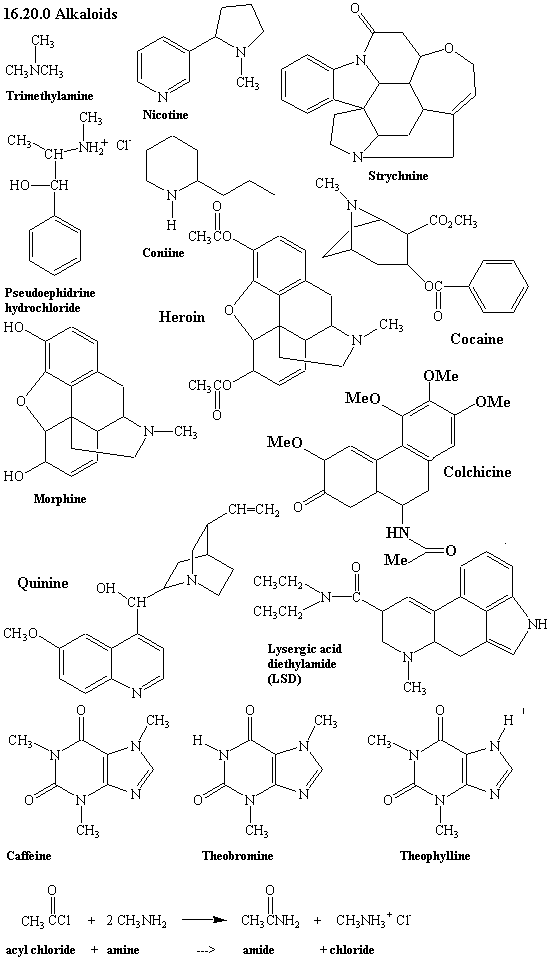
16.4.0 Alkaloids
The classification systems in this document is based on: "Phytochemical Dictionary: A Handbook of Bioactive Compounds from Plants", Second Edition.
by Herbert Baxter, J.B. Harborne, Gerald P. Moss, December 16, 1998, CRC Press, Taylor and Francis Group.
Reference - 992 Pages
ISBN 9780748406203 - CAT# TF2051
Alkaloids are secondary metabolites, so are not essential to the organism, usually occurring in only a few vascular plants and some fungi.
Alkaloids are complex organic bases of vegetable origin.
Alkaloids are basic organic nitrogen compounds in plants with powerful action on animals, e.g. nicotine, morphine, quinine, strychnine.
Alkaloids have the properties of amines and are natural bitter, alkaline, nitrogenous compounds.
The names of alkaloids usually end in "ine".
The function of alkaloids is probably to defend against grazing animals or being eaten by insects.
Many alkaloids are plant metabolic by-products derived from amino acids.
More than 10 000 different alkaloids may exist in more than 300 plant families.
Alkaloids usually contain at least one nitrogen atom in a heterocyclic ring structure, phenolic or indole rings.
The term "alkaloid" was first used to describe chemical bases from plants used in medicines, but now there is no exact definition of alkaloids.
16.5.0 Alkaloid classifications
Alkaloid classifications are usually based on structure or origin.
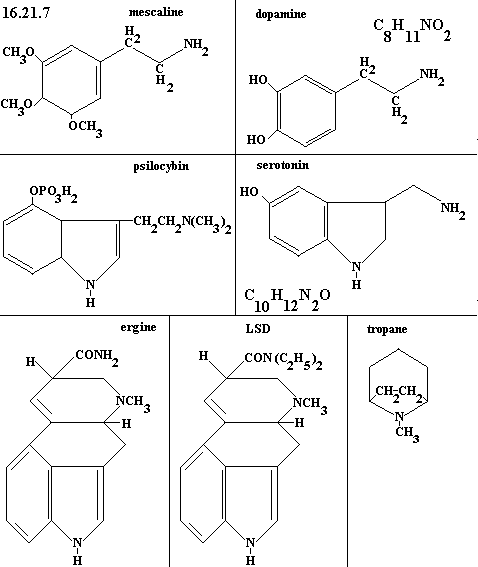
16.6.0 Alkaloid diagrams

1.6 Amides
Acrylamide: 16.1.5.6.1
Benzamide, C6H5CONH2, Harmful if ingested source
Sulfanilamides, sulfa drugs, H2NC6H4SO2NH2, p-Aminobenzenesulfonamide source
1.7 Amines
1.9 Chlorides
13.1.5 Aluminium chloride
Ammonium copper (II) chloride, tetramine copper (II) chloride
Calcium hypochlorite, chlorinated lime
Chromium (II) chloride, chromic chloride, Cl2Cr source
Chromium (III) chloride, Cl3Cr source
Chromium (III) chloride hexahydrate, Cl3Cr.6H2O source
Phosphorus (III) chloride, phosphorus trichloride
1.10 Chloro-compounds
1-chlorobutane, C4H9Cl, butyl chloride, chlorobutane, n-butyl chloride, Highly flammable, Toxic by all routes source
1,1,2-trichlorotrifluoroethane, C2H3Cl3, Irritant, environmental danger, harmful if inhaled, ozone-depleting chemical being phased out source
1,2-dichloroethane, C2H4Cl2, ethylene dichloride, dichloroethylene, Freon 150, Toxic, highly flammable source
2-chlorotoluene, benzyl chloride
2,2-dichlorodiethyl ether, dichloroether, dichlorodiethyl ether, Toxic by all routes, Not permitted in schools
2,4-dinitrochlorobenzene
2,6-dichlorophenol, 2,6-dichlorophenolindophenol, dichloroindophenol, dichlorophenol, DCPIP, DIP, Toxic if ingested
3-chloropropane, allyl chloride
3,3-dichlorobenzidine, 3,3'-dichlorobenzidine, dichlorobiphenyl-4,4'-diamine, Toxic by all routes, Not permitted in schools
Acetyl chloride, CH3COCl source
Adipoyl chloride, C6H8Cl2O2, adipyl chloride, hexanedioly dichloride, Toxic by all routes source
Allyl chloride, CH2: CHCH2Cl,3-chloropropene, (plastics production) Toxic by all routes source
Aniline hydrochloride, C6H8ClN source
Benzoyl chloride, benzene carbonyl chloride, C7H5COCl source
Benzyl chloride, α-chlorotoluene, C6H5CH2Cl source
"Butyl chloride", (C4H9Cl): n-butyl chloride, (1-chlorobutane), tert-butyl chloride, (2-chloro-2-methylpropane), sec-butyl chloride source
(2-chlorobutane), isobutyl chloride, (1-chloro-2-methylpropane)
Carbon tetrachloride, CCl4, tetrachloromethane, perchloromethane, "dry cleaning fluid", "carbon tet", Not permitted in schools source
Chlorethene, H2C: CHCl, vinyl chloride, vinyl chloride monomer VCM source
Chloroacetic acid, chloroethanoic acid, monochloroacetic acid, (use small quantities < 10 mL)
Chloroacetic acid, solution < 0.2%, Not hazardous
Chloroacetic anhydride
Chlorobenzene, C6H5Cl, monochlorobenzene, Toxic by all routes source
Chlorobenzene, Solution < 5%, Not hazardous
Chloroethane, C2H5Cl, ethyl chloride source
CFCs, chlorofluorocarbons, "Freons": 12.19.5.0
Chloroform, CHCl3, trichloromethane, Toxic by all routes, Not permitted in schools source
Chloromethane, CH3Cl, methyl chloride, Methane with chlorine: 16.1.1a.2 source
Chloromethylbenzene, benzyl chloride
Chloromethyldimethylsilane
Chlorophenol, C6H4ClOH, p-chlorophenol, Phenols: 16.1.3.2 source
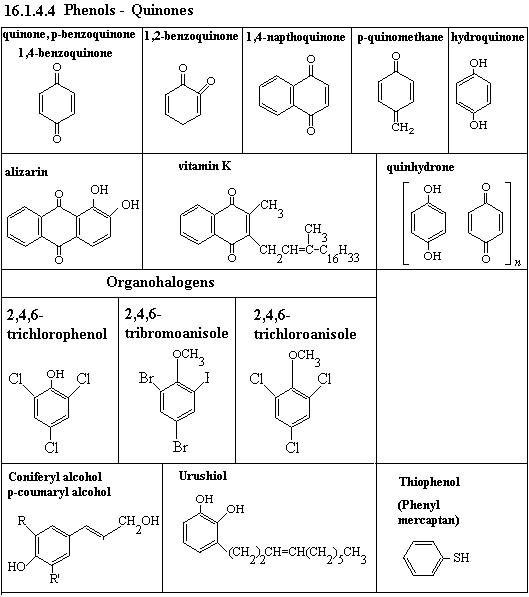
Chlorophenol red: 8.0
Chlorine: 7.2.2.12
Chlorophyll a and chlorophyll b: 6.5.2.3, Photosynthetic pigments
Chloroplatinic acid, hexachloroplatinic acid, H2PtCl6(H2O)6 or [H3O]2[PtCl6]4H2O, [platinic chloride PtCl4], (dust may trigger asthma, skin sensitivity) source
Chloroprene, CH2CClCH: CH2,2-chlorobuta-1,3-diene, (make elastomeric polymers and copolymers, synthetic rubber) source
Chlorosulfonic acid, HSO3Cl., Toxic by all routes source
Chlorotoluene, ortho-, meta-, and para-, C7H7Cl, C6H4ClCH3 source
Chlorous acid, Oxyacids, oxoacids: 13.3.6
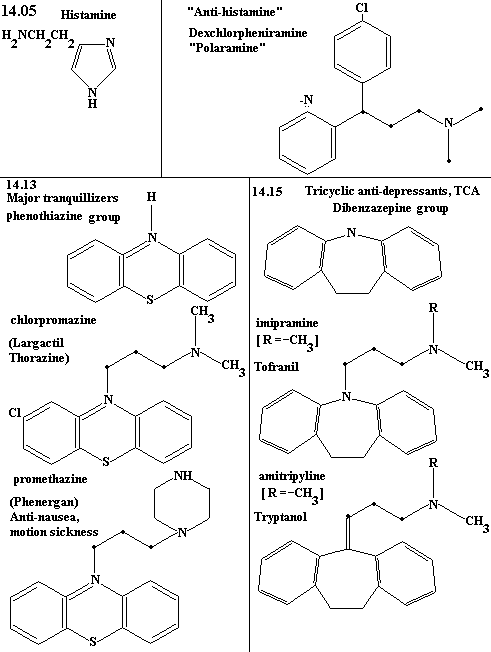
Dichloroacetic acid, dichloroethanoic acid, DCA, CHCl2COOH, Toxic, Vapour irritates lungs source
Trichloroethanoic acid, trichloroacetic acid, CCl3COOH source
Trichloroethane, CH3CCl3,1,1,1-trichloroethane, methyl chloroform, Toxic if ingested source
Trichlorethylene, trichlorethene, TCE, C2HCl3, Toxic if ingested or inhaled, carcinogenic source
1.11 Carbonates
Ammonium carbonate, smelling salts: 12.16.3.5
Bismuth (III) carbonate, basic, CBi2O5 source
Bismuth carbonate, bismuth subcarbonate, Harmful if ingested
Cadmium carbonate, CdCO3, Not permitted in schools source
Calcium magnesium carbonate, CaCO3MgCO3, dolomite, CaMg(CO3)2: 35.19.1 source
Lead (II) carbonate, PbCO3, lead carbonate, lead carbonate basic, white lead ore, cerussite, ceruse, Highly toxic by all routes source
Lithium carbonate, Li2CO3 for craft, flux, glaze, tranquillizer for mental disorders, white solid, Toxic, Irritant source
Lithium carbonate, Low cost: from pottery supplies stores
Nickel (II) carbonate, basic hydrate, nickel carbonate pigment, Toxic if ingested, allergic reaction, use only < 2g of wet solid
Nickel (II) carbonate, Low cost: from pottery supplies stores
Potassium hydrogen carbonate, KHCO3, potassium bicarbonate source
Strontium carbonate, SrCO3, in strontianite mineral, Harmful if ingested, skin irritant source
Strontium carbonate, Low cost: from pottery supplies stores
Zinc carbonate, ZnCO3, Harmful if ingested source
1.12 Esters
n-amyl acetate
Ethyl acetate, ethyl ethanoate
Ethyl benzoate, Toxic if ingested, Flammable
Ethyl cinnamate, 3-phenylpropenoate, Toxic, Flammable
Ethyl formate, Toxic by all routes, Highly flammable
Ethyl propionate, ethyl propanoate, Toxic by all routes, flammable
Isoamyl acetate
Methyl acetate, methyl ethanoate, Toxic by all routes, Highly flammable, skin irritant
Methyl benzoate, C6H5COOCH3, Toxic if ingested source
Methyl methacrylate, CH2=C(CH3)COOCH3, 2-methyl-2-propenoic acid, methyl ester, Toxic by all routes source
Methyl salicylate, C6H4OHCO.OCH3 source
Phenyl benzoate, Toxic if ingested, skin irritant, flammable
Phenyl salicylate, phenyl-2-hydroxybenzoate, salol, Toxic if ingested, flammable
Propyl acetate, propyl ethanoate, n-propyl acetate, Toxic by all routes, Highly flammable
1.13 Ethers
Ethers are compounds having two alkyl or aryl groups bonded to an oxygen atom, as in the formula R1–O–R2. The ether functional group does not have a characteristic IUPAC nomenclature suffix, so it is necessary to designate it as a substituent. To do so the common alkoxy substituents are given names derived from their alkyl component (below):
Alkyl Group CH3- Methyl, Alkoxy Group: CH3O- Methoxy CH3CH2- Ethyl, Alkoxy Group: CH3CH2O- Ethoxy (CH3)2CH- Isopropyl, Alkoxy Group: (CH3)2CHO- Isopropoxy (CH3)3C- tert-Butyl, Alkoxy Group; (CH3)3CO- tert-Butoxy C6H5- Phenyl, Alkoxy Group: C6H5O- Phenoxy Ethers can be named in two ways: 1. Name each of the two carbon groups as a separate word followed by a space and the word ether. 2. The -OR group can also be named as a substituent using the group name, e.g. Methoxy CH3-CH2-O-CH3 may be called 'ethyl methyl ether' or 'methoxyethane'. CH3CH2OCH2CH3, diethyl ether, may be called just 'ether' Ethers 2,2-dichlorodiethyl ether, dichloroether, dichlorodiethyl ether, Toxic by all routes, Not permitted in schools source
Anisole, CH3OC6H5, methyoxybenzene, smells like anise seed, skin irritant, Harmful if ingested. source
Anisole is a clear straw-coloured liquid, aromatic odour, insoluble in water and same density, used to make perfumes, flavourings and as a solvent.
Ethoxyethane, C2H5OC2H5, (C2H5)2O, diethyl ether, anaesthetic "ether", Toxic by all routes, Not permitted in schools source
Phenetole, ethoxybenzene, use in fume cupboard or < 10 g in cross ventilation, Toxic by all routes
1.14 Heavy metals
List of heavy metal compounds
3.1.0 Mercury compounds
1.15 Hydrides
List of hydrides
Hydrides, compound with hydrogen, e.g. sodium hydride, NaH, or covalent compound, e.g. borane, B2H6 source
Calcium hydride, CaH2, hydrolith, Toxic if ingested or by skin contact source
Lithium aluminium hydride, LiAlH4, lithium tetrahydroaluminate, Toxic by all routes, Not permitted in schools source
Lithium hydride, LiH, Toxic by all routes, fine particles with air explosive, reacts violently with water forming dangerous hydrogen
Sodium hydride, NaH, Highly toxic if ingested, corrosive to skin, with water forms sodium hydroxide and hydrogen gas that may ignite or explode if mixed with air.
1.17 Metals
List of active metals
1.18 Metal powders
List of metal powders
1.19 Nitrates
List of nitrates
1.20 Oxidants
Oxidants are reactants that oxidizes or removes electrons from other reactants in a redox reaction.
Oxidants may be called oxidizers or oxidizing agents or oxygenation reagents if they include oxygen.
List of oxidants
Barium peroxide, BaO2, barium dioxide, bleaching agent source
Benzoyl peroxide, C14H10O4, dibenzoyl peroxide, Harmful by skin contact, highly flammable, Not permitted in schools source
Chromium (IV) oxide, CrO2, insoluble black powder source
Hydrogen peroxide
Iron (II) nitrate, Fe(NO3)2, ferrous nitrate, oxidant, Fe(NO3)2, 6H2O source
MEKP, Methyl ethyl ketone peroxide
1.21 Redox indicators
List of redox indicators
Xylenols, Xylenol orange
1.22 Reductants
List of chemical reductants
Aluminium powder
Barium metal
Calcium metal | Calcium carbide | Calcium hydride | Calcium phosphide
Carbon C graphite
Lithium metal | Lithium aluminium hydride | Lithium hydride
Magnesium powder
Phosphorus
Potassium metal | Potassium amide | Potassium sulfide
Selenium metal
Sodium metal | Sodium amalgam | Sodium amide | Sodium borohydride | Sodium hydrosulfite | Sodium hydrogen sulfite | Sodium sulfide
Strontium metal
Thorium
Zinc metal
1.23 Sulfates
List of sulfates
Ammonium sulfate, (NH4)2SO4, sulfate of ammonia
Chromium sulfate, chromium (III) sulfate
Potassium sulfate, K2SO4 source
1.24 Sulfides
Ammonium sulfide solution
Barium sulfide
Butyl 1-propenyl disulfide
Copper (I) sulfide
Iron (II) sulfide
Lead (II) sulfide
Potassium sulfide
Sodium sulfide
Zinc sulfide
1.25 Sulfites
List of sulfites
Sodium hydrosulfite
Sodium sulfite, Toxic if ingested
1.26 Thiosulfates
List of thiosulfates, (not containing heavy metal ions, e.g. lead thiosulfate)
Ammonium thiosulfate
Barium thiosulfate
Sodium thiosulfate
1.27 Table 8.0 Pigment names, C.I. numbers
(Sample of list of dyes from supplier, not full list of C.I. numbers)
| Serial number | Pigment name | C.I. number |
| 1. | C.I. Pigment Green 7 (Y) | 74260 |
| 2. | C.I. Pigment Green 7 (B) | 74260 |
| 3. | C.I. Pigment Blue 15.0 | 74160 |
| 4. | C.I. Pigment Blue 15.3 (G) | 74160 |
| 5. | C.I. Pigment Blue 15.3 (R) | 74160 |
| 6. | C.I. Pigment Yellow 1 | 11680 |
| 7. | C.I. Pigment Yellow 3 | 11710 |
| 8. | C.I. Pigment Yellow 12 | 21090 |
| 9. | C.I. Pigment Yellow 13 | 21100 |
| 10. | C.I. Pigment Yellow 14 | 21095 |
| 11. | C.I. Pigment Yellow 17 | 21105 |
| 12. | C.I. Pigment Yellow 62 | . |
| 13. | C.I. Pigment Yellow 74 | 11741 |
| 14. | C.I. Pigment Yellow 83 | 21108 |
| 15. | C.I. Pigment Red 2 | 12310 |
| 16. | C.I. Pigment Red 3 (Y) | 12120 |
| 17. | C.I. Pigment Red 3 (B) | 12120 |
| 18. | C.I. Pigment Red 4 | 12085 |
| 19. | C.I. Pigment Red 48.1 | 15865.2 |
| 20. | C.I. Pigment Red 48.2 | 15865.2 |
| 21. | C.I. Pigment Red 48.3 | 15865.3 |
| 22. | C.I. Pigment Red 48.4 | 15865.4 |
| 23. | C.I. Pigment Red 52.2 | 15860.2 |
| 24. | C.I. Pigment Red 49.1 | 15630.1 |
| 25. | C.I. Pigment Red 53.1 | 15585.1 |
| 26. | C.I. Pigment Red 57.1 (Y) | 15850.1 |
| 27. | C.I. Pigment Red 57.1 (B) | 15850.1 |
| 28. | C.I. Pigment Red 112 | 12370 |
| 29. | C.I. Pigment Red 146 | 12485 |
| 30. | C.I. Pigment Red 170 | 12475 |
| 31. | C.I. Pigment Orange 5 | 12075 |
| 32. | C.I. Pigment Orange 13 | 21110 |
| 33. | C.I. Pigment Orange 34 | 21115 |
| 34. | C.I. Pigment Violet 23 (R) | 51319 |
| 35. | C.I. Pigment Violet 23(B) | 51319 |
16.3.1 True alkaloids are derived from amino acids, have nitrogen in a heterocyclic ring, e.g. atropine.
16.3.2 Protoalkaloids are derived from amino acids, no nitrogen in a heterocyclic ring, e.g. Adrenaline, Ephedrine and Mescaline.
16.3.3 Pseudoalkaloids are not derived from amino acids, but have nitrogen in a heterocyclic ring, e.g. Caffeine.
This page was generated automatically from the original page on John Elfick's School Science Lessons website. If something looks wrong, please check the original.