Acacetin to Yuanhuacine
Last updated 2026-07-28 by Dr John Elfick
appendix G
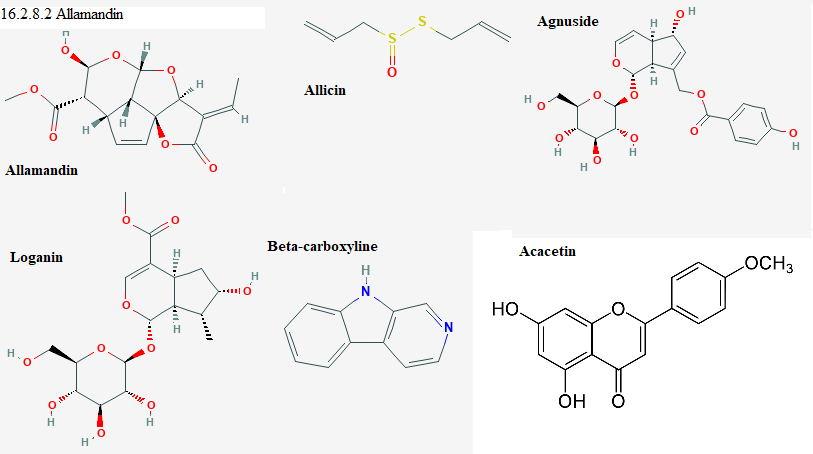
Acacetin
Acacetin, C16H12O5, (5,7-Dihydroxy-4'-methoxyflavone), buddleoflavonol, antiperoxidative, antiinflammatory source
It blocks oestrogen synthesis, antiproliferative, induces apoptosis of cancer cells.
It is used in traditional Chinese medicine and by athletes and body-builders as dietary supplement to maintain testosterone levels.
It is used by women and prevent increasing estrogen levels, provide relief from menopause symptoms, prevent tumour growth.
It occurs in (Robinia pseudoacacia), (Betula pendula), (Robinia pseudoacacia), (Turnera diffusa), (Caragana frute), and in (Crocus heuffelianus>
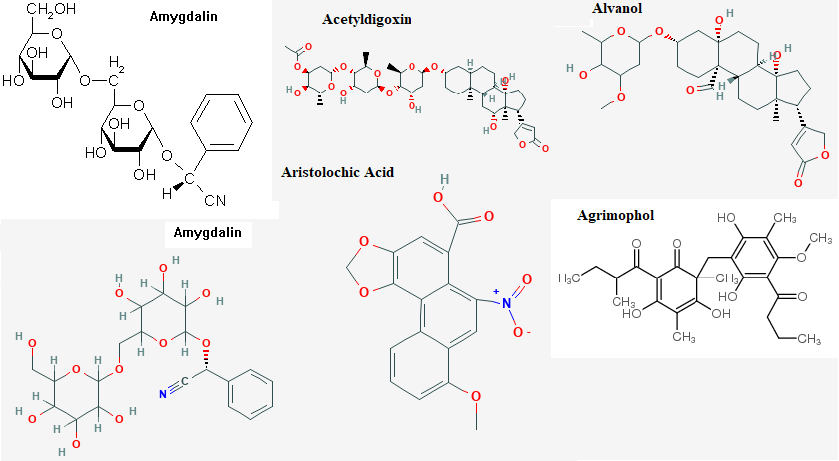
Acetyldigoxin
Acetyldigoxin, C43H66O15, cardiac glycoside source
Acetyl derivatives of digoxin from (Digitalis lanata) are better absorbed and longer acting than digoxin, used to treat congestive heart failure.
Acolongifloroside
Acolongifloroside, C29H44O12, cardioactive glycoside source
Acolongifloroside K consists of rhamnose and ouabagenin.
It is used like Digitalis and in cell biological research.
It occurs in (Strophanthus gratus), seeds.
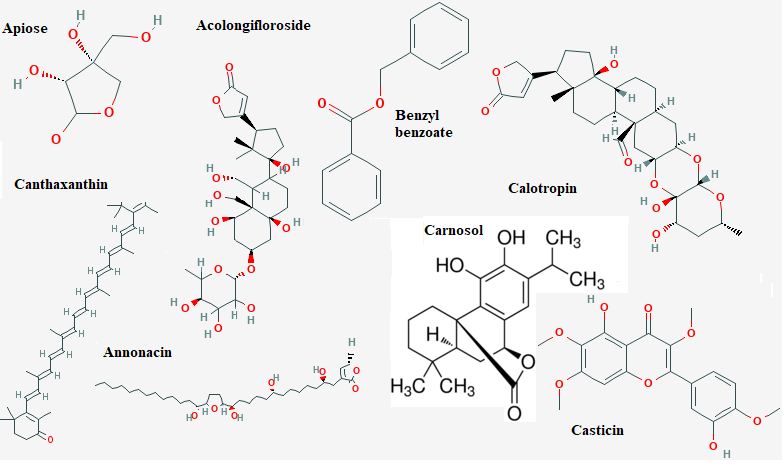
Acolongifloroside compounds: Apiose, Acolongifloroside, Annonin, Benzyl benzoate, Calotropin, Carnosol
Agnuside
Agnuside, C22H26O11, iridoid glycoside, ester of aucubin and hydroxybenzoic acid source
It is used to treat premenstrual syndrome.
It occurs in (Vitex agnus-castus).
Agnuside compounds: Allamandin, Allicin, Agnuside, Acacetin. Beta-carboxyline, Loganin
Agrimophol
Agrimophol, C26H34O8, phenolic ketone, phloroglucinol, toxic, antibacterial. anthelmintic source
It kills maggots.
It is used in research on Mycobacterial tuberculosis.
It occurs in roots of (Agrimonia eupatoria).
Allamandin
Allamandin, C15H16O7, nonglucosidic iridoid, terpene lactone, antileukaemic, tumour inhibiting, wound healing source
It occurs in (Allamanda cathartica).
Alvonal
Alvonal MR, C30H44O9, cymarine, cymarin, cardiac glycoside, cardiotonic glycoside, cardioprotective source
It occurs in (Strophanthus gratus), and in (Apocynum cannabinum).
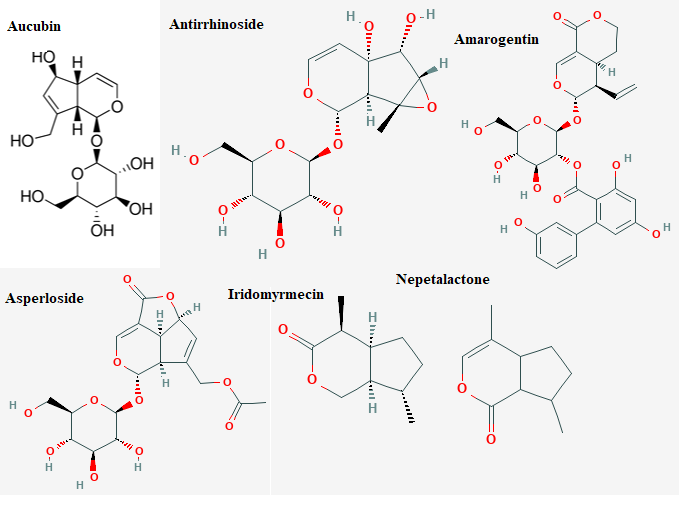
Amarogentin
Amarogentin, C29H30O13, secoiridoid glycoside, the most bitter substance, standard of bitterness in different kinds of bitters. source
It occurs in (Gentiana lutea), and in (Swertia chirata).
Amygdalin
Amygdalin, C20H27NO11, cyanogenic glycoside, cyanide poisoning source
Neither amygdalin nor modified form called "Laetrile" are anticancer agents and they are NOT vitamins, so "Vitamin B17" is a misnomer!
Hydrolysis with dilute hydrochloric acid.
C20H27NO11 + H2O → C6H6CHO + HCN + 2C6H12O6 source
amygdalin + water → benzaldehyde + hydrogen cyanide + D-glucose source
It occurs in Rosaceae seeds, e.g. apricot kernels, bitter almonds, apple seeds, peach, plum, and in bitter almond (Prunus dulcis var. amara).
Annonacin
Annonacin, C35H64O7, polyketide, neurotoxic acetogenin, acetogenins, is found only in Annonaceae. source
It has been found to cause significant cell death in various cancers, e.g. bladder cancer.
It occurs in Asparagus, (Asimina triloba), soursop, custard apple, and in cherimoya.
Antirrhinoside
Antirrhinoside, C15H22O10, iridoid glycoside source
It occurs in (Antirrhinum majus), and in (Linaria kurdica).
Antirhinoside
Antirhinoside, C15H22O10, iridoid glycoside. source
It occurs in Antirrhinum, Linaria, and leaves of common snapdragon.
Apiin
Apiin, C26H28O14, flavone O-glycoside, apioside, β-D-glucoside, flavonoid (aglycone of apinogen), anti-inflammatory source
It occurs in (Petroselenium crispum), and (Apium graveolens).
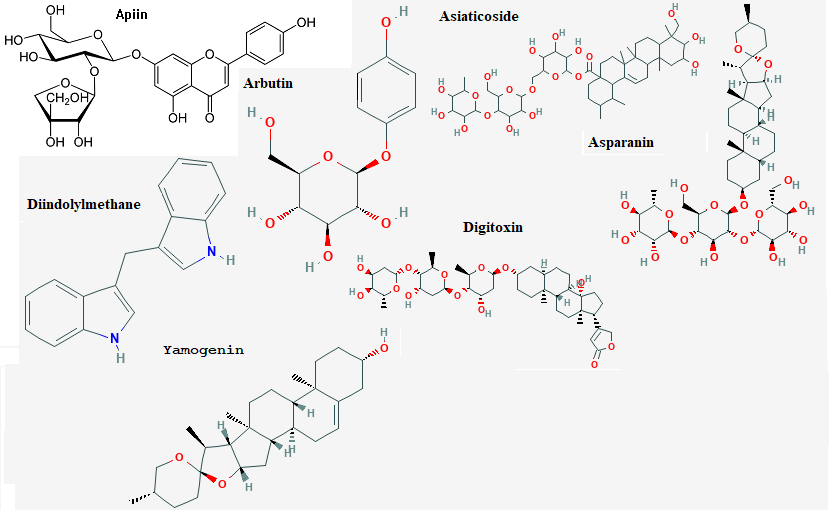
Apiose
Apiose, C5H10O5, monosaccharide source
It occurs in (Petroselenium crispum), aquatic plants, Lemna, Posidonia, Wolffia, and in Zostera.
Arbutin
Arbutin, C12H16O7, glycoside, glucopyranoside, glycolsylated hydroquinone source
It inhibits melanin formation by inhibiting tyrosinase.
It is used as a Chinese medicine.
It occurs in bearberry, pear skin, wheat, Bergenia, and in Arctostaphylos.
Aristolochic acid
Aristolochic acid, C17H11NO7, aromatic nitro derivative source
Aristolochic acid A, is carcinogenic, mutagenic, toxic to birds, antiinflammatory, antifertility, carcinogenic in animals.
It is used as a Chinese medicine, ma dou ling.
It occurs in (Aristolochia indica) root, birthwort, Dutchman's pipe.
Aristolindiquinone, C12H10O4, napthoquinone source
It occurs in (Asparagus officinalis).
Asiaticoside
Asiaticoside, C48H78O19, oleanane-type triterpene glycoside, O-glucose-glucose-rhamnose, madecassol, fine white and odourless, toxic to birds, antiinflammatory, antifertility, antibiotic, tumour growth inhibitor, carcinogenic in animals, powder. source
It is used for wound healing tissue repair in "Madecassol" healing ointment, and antidepressant.
It occurs in green vegetables, (Centella asiatica), Asiatic pennywort (Aristolochia tagala), (Aristolochia clematis), and in (Asarum canadense).
Asiatic acid
Asiatic acid, C30H48O5, dammarolic acid, Asiantic acid, pentacyclic triterpenoid, monocarboxylic acid, antiinflammatory, analgesic. source
It occurs in (Centella asiatica), (Potentilla chinensis), (Symplocos lancifolia), and in (Vateria indica).
Asparanin A and B.
Asparanin A, C39H64O13, schidigerasaponin D5, steroidal saponin, nematocidal, anticancer source
It occurs in roots of (Asparagus racemosus).
Asparanin B, C45H74O17, Shatavarin, IV, triterpenoid, Chinese medicine source
It occurs in (Asparagus officinalis).
Asperuloside
Asperuloside, C18H22O11, ubichloric acid, iridoid glucoside, iridoid monoterpenoid, beta-D-glucoside, acetate ester, gamma-lactone laxative, inhibits germination and plant growth. source
It occurs in Asperla, (Gallium verum), Escallonia, and in (Daphniphyllum macropodium).
Aucubin
Aucubin, C15H22O9, aucubiside, rhinanthin, most common iridoid glucoside, laxative, diuretic, poisonous fungus antidote. source
It occurs in (Aucuba japonica), (Eucommia ulmoides), Plantago, and in (Galium aparin).
It is used in traditional Chinese folk medicine, laxative, diuretic, antidote to toxin from Amanita virosa.
Aucubin aglycone Aucubigenin, antimicrobial, antitumour, toxic to mammals.
Benzyl benzoate
Benzyl benzoate, C14H12O2, ascabiol, benylate, novoscabin, benzoic acid, ester of benzyl alcohol + benzoic acid, acaricide, scabicide, insect repellent. source
It occurs in tuberose, and hyacinth.
It was formerly used to treat scabies and lice infestation of the head and body, but it has irritant properties.
It occurs in Myroxylon.
Calotropin
Calotropin, C29H40O9, pecilocerin, cardiac glycoside, cardenolide, cardioprotective agent. source
It occurs in Calotropis.
Canthaxanthin
Canthaxanthin, C40H52O2, xanthophyll carotenoid, keto-carotenoid pigment (ketone), terpenoid, antioxidant, pink keto-carotenoid, and occurs in crustaceans. source
Canthaxanthin is a lipid-soluble antioxidant that may protect cells from ultraviolet rays, and so may be an ingredient in oral suntanning agents.
However, these products can be very dangerous leading to vision and skin colour disorders, artificial tanning produces orange skin.
It is an oral suntanning agent, but causes damage to the retina, canthaxanthin retinopathy.
E161g Canthaxanthin, a pink xanthophyll, from β-carotene or crustaceans, banned in some countries, may cause vision and skin colour problems.
Canthaxanthin is widely distributed in nature, fat soluble, antioxidant, and is used as a food and drug colouring agent.
It occurs in algae, mushrooms, bacteria, in Planktothrix and is widely distributed in nature.
It is used to give farmed salmon a pink colour similar to wild salmon and acts as antibiotic, so is used to determine the origin of salmons in food compounds.
E161g: Canthaxanthin food additive, occurs in paprika, algae, lobsters, fish and chanterelle mushrooms.
Carnosol
Carnosol, C20H26O4, diterpenoid, antioxidant, phenolic diterpene, may inhibit breast cancer, antiinflammatory, antimicrobial anticancer chemopreventive, high antioxidative activity, neuroprotective. source
It occurs in Rosmarinus, and in Spachyphyllas.
It is used as an aromatic bitter, extract of rosemary leaves contains high antioxidative activity to carnosol and carnosic acid, converted to carnosol by oxidation.
It is possibly neuroprotective effects by promoting synthesis of nerve growth factor in glial cells.
It activates enzymes involved in primary metabolism leading to lower blood levels of fatty acids and glucose, so possibly to be used to treat type 2 diabetes.
Carthamin
Carthamin, C43H42O22, hydroxycinnamic acid, food additive Natural Red 26, Safflower Yellow, formerly known as carthamine, red quinonoid glycoside, flavonoid, colouring matter of Safflower source
It is used as dye and a food colouring, cosmetic, and was ancient Egypt wool dye.
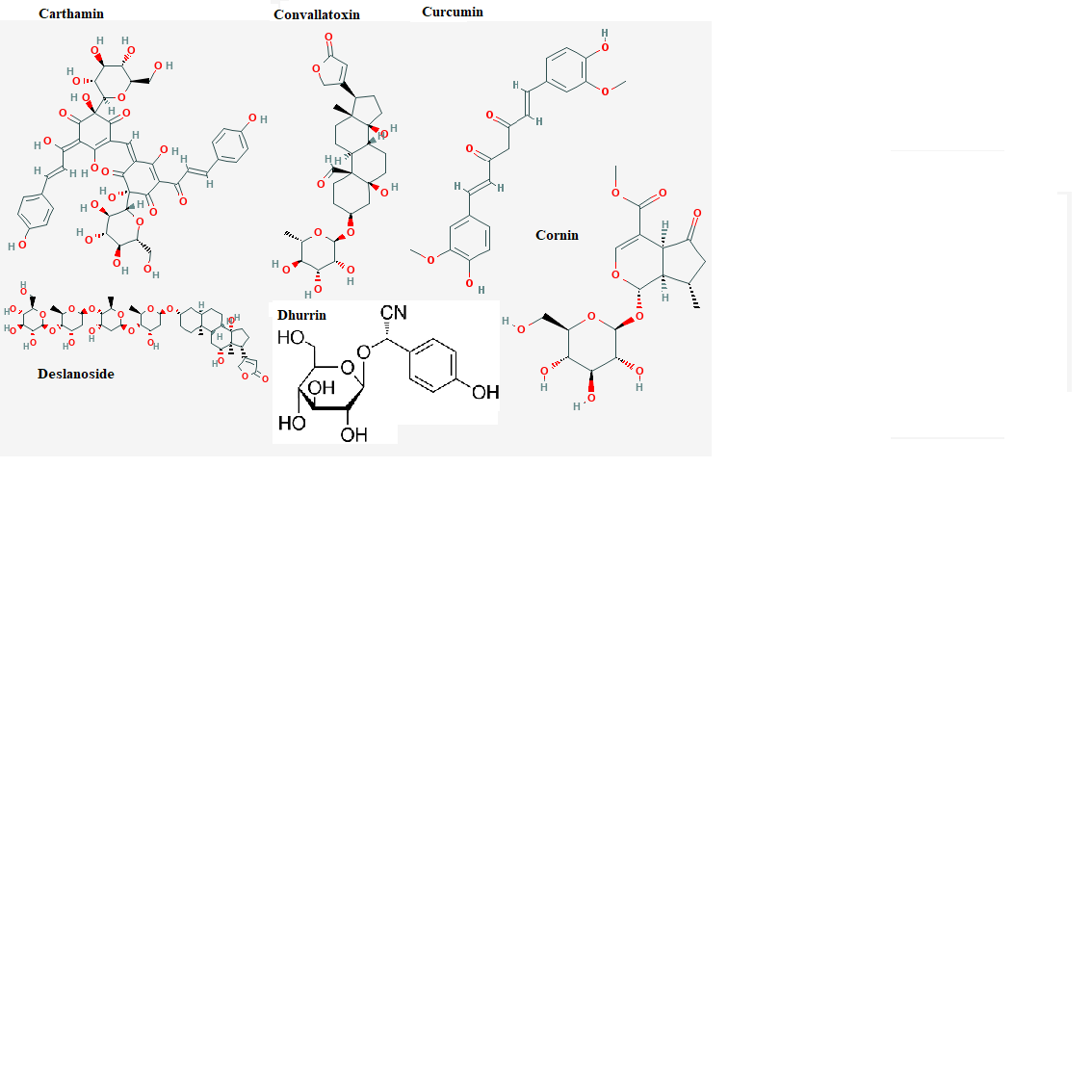
Catalpol
Catalpol, C15H22O10, catalpinoside, de(p-hydroxybenzoyl),catalposide, iridoid glucoside, organic molecular entity, diuretic, laxative. source
It occurs in Catalpa, Veronica, Plantago, and in Buddleja.
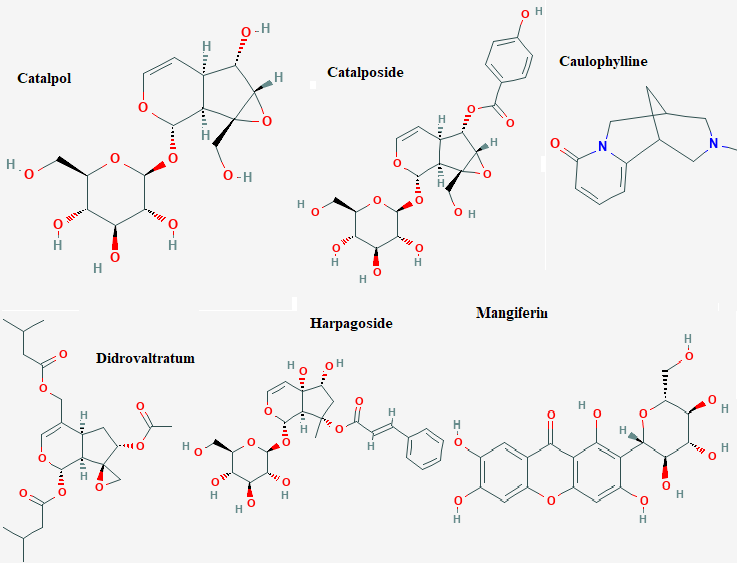
Catalposide
Catalposide, C22H26O12, iridoid glucoside. source
Catalposide, Hydroxybenzoyl catalpol, Catalpin, diuretic, laxative,| attracts some moths but deters others.
It occurs in Catalpa and in Veronica. |
Catechol
Catechol, C6H6O2, C6H4(OH)2, pyrocatechol, (1,2-dihydroxybenzene), (benzene-1,2-diol), simple phenol, benzenediol, colourless crystalline phenol, harmful, irritant, pyrocatechol, powder, genotoxin, allelochemical, white odourless solid, sinks and mixes with water, flavan-3-ol, from catechin, causes dermatitis, possible carcinogen, in Argania spinosa powder, prepared from catechin Mimosa catechu juice, prepared as precursors to pesticides, flavours, and fragrances. source
The enzyme is inactivated by adding an acid, such as lemon juice, or by refrigeration.
It is used as a medicine and an expectorant.
It occurs in fruits and vegetables with the enzyme polyphenol oxidase (PPO), if exposed to oxygen, when colourless catechol oxidizes to reddish-brown benzoquinone derivatives.
Undesirable PPO skin browning in mango, rapid browning in avocado, browning of the cut surfaces and juices of apple, apricot browning, browning of potato tuber peel and outer cortex.
Desirable PPO skin browning in avocados, prunes, sultana grapes, black tea, green coffee beans.
Cascarosides
Cascarosides, C27H32O14, cascaroside A and cascaroside B, hydroxyanthracene glycosides, laxatives acting on the large intestines. source
Cascaroside A and Cascaroside B occurs in Rhamnus.
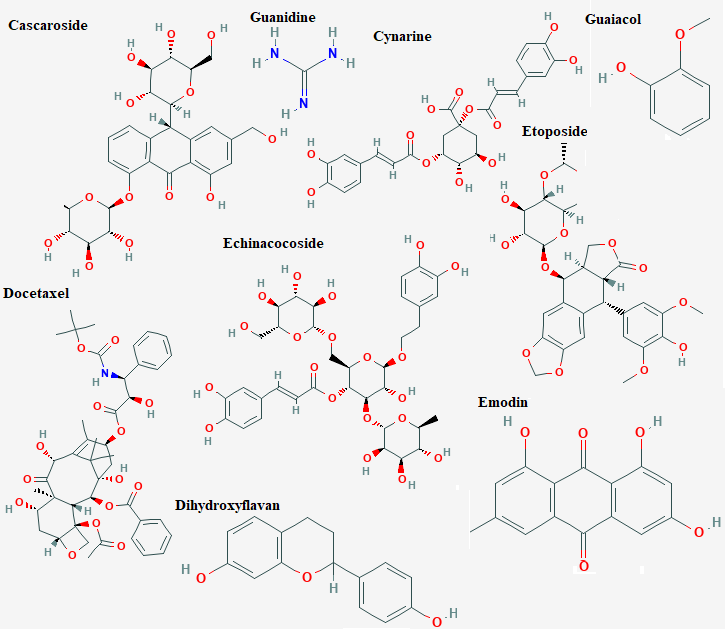
Casticin
Casticin, C19H18O8, vitexicarpin, tetramethoxyflavone, methyoxalated flavonol (two attached methyl groups), from quercetagetin, apotosis inducer. source
It occurs in (Vitex trifoliata), (Vitex agnus-castus) seeds, and in Eremophila.
Convallatoxin
Convallatoxin, C29H42O10, cardiac glycoside. source
It occurs in (Convallaria majalis).
Curcumin
Curcumin is a bright yellow natural dyestuff, found in the yellow roots of the turmeric plant, Curcuma longa.
Curcumin, C21H20O6, diferuloylmethane, Turmeric yellow, Kacha haldi, Natural yellow 3, is a phenolic compound, and a beta-diketone. source
It is antiinflammatory, cytotoxic, antioxidant, antineoplastic,and hepatoprotective, but rapid systemic elimination limits the therapeutic efficacy of curcumin.
It is used to prepare curcuma paper for the detection of boron.
E100 Curcumin.
Curcumin dietary supplements may cause heartburn.
Cynarine
Cynarine, C25H24O12, 1,5-Dicaffeoylquinic acid), phenylpropanoid, phenolic compound, hydroxycinnamic acid source
ester of quinic acid, C7H12O6, + caffeic acid inhibits taste receptors so water tastes sweet source
aids digestion, choleretic, antihepatotoxic, lowers serum cholesterol, disorders of liver and gallbladder
choleretic, aids cholesterol levels, possibly immunosuppressive agent.
It occurs in (Cynara cardunculus var scolymus).
Deslanoside
Deslanoside, C47H74O19, deacetyllanatoside C, desacetyllanatoside, cardiac glycoside. source
It occurs in leaves of (Digitalis lanata).
It is used to treat heart disorders by increasing intracellular sodium and calcium concentrations.
They may promote activation of contractile proteins (e.g. actin, myosin), and acts on the electrical activity of the heart.
Dhurrin
Dhurrin, C14H17NO7, cyanogenic glycoside, a beta-D-glucoside source
It occurs in leaves, and later stems of Sorghum and can cause HCN cattle poisoning.
Cymarine
Cymarine, C30H44O9, alvonal MR, cymarin, stropheantin K, tsimarin, a cardiac glycoside, acute toxic health hazard. source
It occurs in (Apocynum cannabium), (Strophanthus hispidus), and (Adonis amurensis).
It is used for the treatment or prevention of cardiac arrhythmia.
Didrovaltratum
Didrovaltratum, C22H32O8, didrovaltrate, dihydroisovaltrate, nonglucosidic iridoid, iridoid monoterpenoid. tranquilizer, sedative. source
It occurs in Valeriana, and in Centrathus.
Digitoxin
Digitoxin, C41H64O13, cardiac glycoside, cardenolide, lipid-soluble, in plasma membrane, anticancer, odourless powder, and causes: source
1. increased intracellular sodium and calcium levels and decreased intracellular potassium levels, to apoptosis and inhibition of cancer cell growth.
2. increased intracellular concentrations of calcium to promote activation of contractile proteins, (e.g. actin, myosin), acts on heart electrical activity.
It occurs in (Digitalis lanata).
Digitoxin has similar toxic effects to digoxin, sometimes used in place of it and has a longer half life.
Digitoxigenin, C23H34O4, cardiac glycoside, cardenolide, from hydrolysis of digitoxin. source
Digoxin
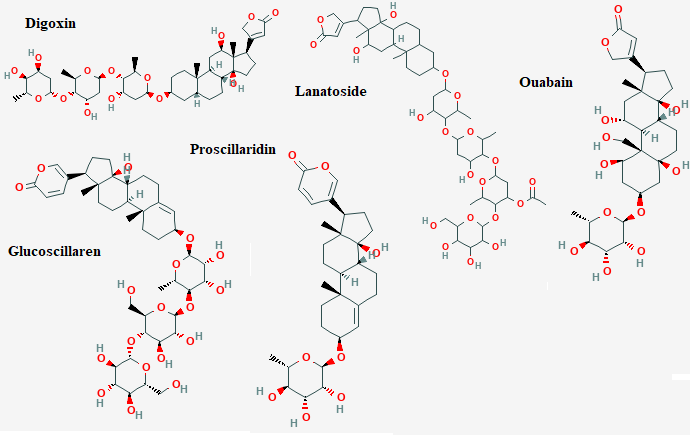
Digoxin, C41H64O14, (12beta-Hydroxydigitoxin), Digoxine, Lanoxicaps, cardiac glycoside, cardenolide source
It controls the ventricular rate.
It is used to treat congestive heart failure and control ventricular rate, toxic if drug dose is too large.
It occurs in (Digitalis lanata).
Dihydroxyflavan
Dihydroxyflavan, C15H14O3, (7,4'-Dihydroxyflavan), hydroxyflavonoid compound, antifungal, antibacterial, causes diarrhoea. source
It occurs in Narcissus and Broussonetia in response to infection.
It occurs in butterfly tree, Bauhinia.
Diindolylmethane
Diindolylmethane, C17H14N2, (3,3'-diindolylmethane), (DIM), an indole source
Produced from the glucosinolate Glucobrassicin. inhibits neoplasms, apotosis inducer.
It occurs in Brassicaceae vegetables.
It is used to treat prostate cancer and abnormal changes in cervix cells caused by human papilloma virus, but effectiveness not clear.
Disogenin
Disogenin, C27H42O3, steroid sapogenin. source
It is used to treat rheumatoid arthritis, and may cause death of human colon carcinoma cells.
It occurs in yams as the isomer yamogenin in the herb fenugreek.
Natural derivatives of disogenin are solasodine and solanine, yamogenin is different only in stereoisomerism at one C.
Docetaxel
Docetaxel, C43H53NO14, taxotere, tetracyclic diterpenoid, anticancer, prevents mitosis, microtubule inhibitor, related to Paclitaxel. source
The anhydrous form is used as a common chemotherapy drug as an inhibitor of cellular mitosis to treat solid tumours, e.g. breast and lung cancer.
It occurs in bark of (Taxus brevifolia), (rare Pacific yew tree), or similar chemical in (Taxus baccata), (common European yew tree).
Echinacoside
Echinacoside, C35H46O20, caffeic acid glycoside. source
It is used in herbal medicine and used to treat Parkinson's disease.
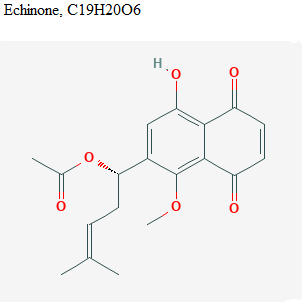
Echinone
Echinone, C19H20O6, (1,4-Naphthalenedione), an acetate ester, an hydroxy-1,4-naphthoquinone source
Emodin
Emodin, C15H10O5, (a trihydroxyanththraquinone), anthraquinone, purgative, laxative, catharctic, excites large intestine and smooth muscle. source
It occurs in (Rheum emodi), and in (Rhamnus cathartica).
Ethylphenol
Ethylphenol, C8H10O, C2H5(C6H4OH, 2-Ethylphenol, p-Ethylphenol, 4-Ethylphenol (4-EP). source
Etoposide
Etoposide, C29H32O13, (VP-16), glycoside, topoisomerase inhibitor, irritant, antitumour agent, derivative of Podophyllotoxin source
It occurs in (Podophyllum peltatum), (mayapple, American mandrake, ground lemon).
Etoposide phosphate is used as an anticancer drug.
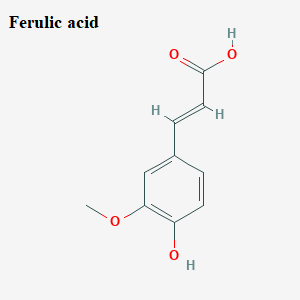
Ferulic acid
Ferulic acid, C10H10O4, trans-Ferulic acid, caffeic acid 3-methyl ether, (4-Hydroxy-3-methoxycinnamic acid), an hydroxycinnamic acid, antioxidant, anti-inflammatory, apoptosis inhibitor, cardioprotective, highly abundant phenolic phytochemical, common, because in plant cell walls in pectin and lignin, accumulates in leaves of Beta vulgaris, beetroot, can be absorbed by the small intestine and excreted through the urine, 5 g / Kg in wheat bran, free form is rare, because usually covalently linked to lignin and other biopolymers. source
Used as a food supplement with curcumin to reduce oxidative damage, and treat Alzheimer disease.
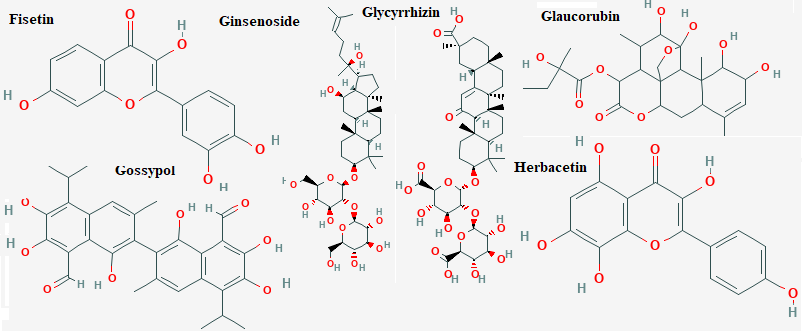
Fisetin
Fisetin, C15H10O6, a tetrahydroxyflavone, antioxidant, colouring agent, anticarcinogenic, neuroprotective, antiinflammatory. source
It occurs in highest concentrations in strawberry, apple, persimmon, lotus root, onion, grapes, Fisetin.
Gentisin
Gentisin, C14H10O5, gentisine, gentianin, (1,7-dihydroxy-3-methoxy-9H-xanthen-9-one), polyphenol, aromatic ether. source
It occurs in alcoholic beverages, pigment in (Gentiana lutea) root.
Isogentisin
Isogentisin, C14H10O5, isogentisine, (1,3-Dihydroxy-7-methoxy-9H-xanthen-9-one), xanthone, aromatic ether. source
It occurs in alcoholic beverages and in (Gentiana lutea).
Ginsenoside
Ginsenosides, C30H52O2, a triterpene saponin, root triterpenoid saponin, cardioprotective agent. source
It occurs in Ginseng, (Panax ginseng), and other Panax.
It is used to improve spatial learning, and has estrogen-like activity.
Ginsenosides are a class of steroid glycosides, and triterpene saponins, only in Panax (ginseng), which affect multiple physiological pathways.
Notoginsenoside-R1
Notoginsenoside-R1, C47H80O18, sanchinoside R1, ginsenoside, antioxidant, neuroprotective, apoptosis inducer, phytoestrogen source
It is an hydroxy steroid, disaccharide derivative, tetracyclic triterpenoid.
It occurs in (Panax notoginseng).
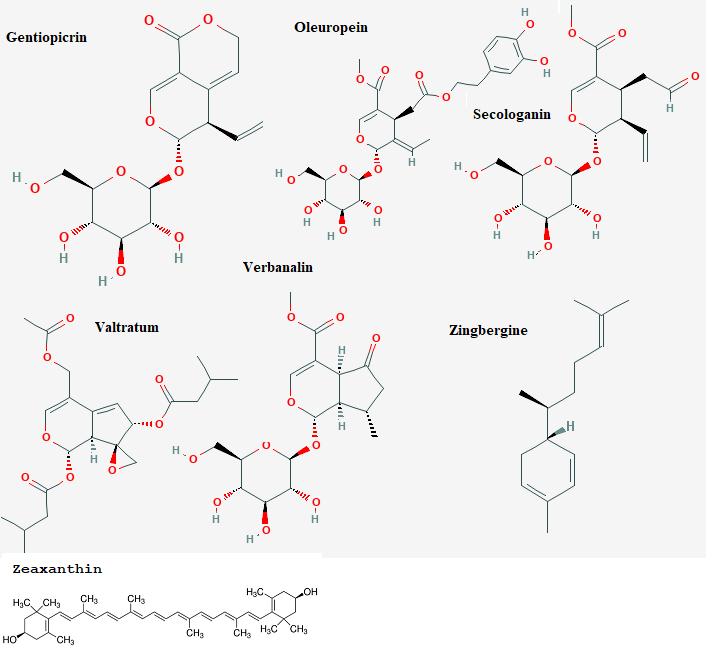
Gentiopicrin
Gentiopicrin, C16H20O9, iridoid glycoside, gentiopicrocide, component of secoiridoid glycosides. source
It occurs in gentian, anticonvulsant, anti-addiction, in (Gentiana lutea), (Swertia chirata), and (Aesculus hippocastanum).
Geniposidic acid (GA), C16H22O10, antiinflammatory, anticancer, jaundice, hepatic disorders. source
It occurs in (Gardenia jasminoides).
Glaucarubin
Glaucarubin, C25H36O10, alpha-Kirondrin, triterpenoid, amoebicide, cytotoxic, possibly anticancer. source
It occurs in Simarouba glauca.
Glycyrrhizin
Glycyrrhizin, C42H62O16, glycyrrhizinic acid, a triterpenoid saponin, a tricarboxylic acid, sweet tasting, causes sweet flavour of (Glycyrrhiza glabra), liquorice root. source
It is used in food and drug industry.
It is used as a hepatoprotective drug to treat hepatitis, and was used formerly to treat peptic ulcer.
Gossypol
Gossypol phenol, C30H30O8, terpenoid alkaloid, sesquiterpenoid, inhibits some dehydrogenase enzymes, yellow pigment. source
It occurs in the cotton plant, Gossypium, and was formerly used as a male contraceptive, but causes low blood potassium.
Guaiacol
Guaiacol, C7H8O2, C6H4(OH),OCH3, 2-Methoxyphenol, phenolic compound, in gaiac oil, formerly used to treat syphilis, from Guaiacum officinale, ("Lignum vitae"), Zygophyllaceae. source
Guanidine
Guanidine, CH5N3, HNC(NH2)2, Iminourea, Aminomethanamidine, Carbamidine, Carbamamidine, biguanide, flammable, corrosive, acute toxic, irritant, health hazard an aminocarboxamidine, parent compound of the guanidines, an acetylcholine releasing agent, polyamine, crystalline compound, colourless solid, dissolves in polar solvents. source
Guanidine is protonated (addition of hydrogen), as guanidinium cation (C(NH2), + so guanidine is very strong organic base in water.
It occurs in urine from protein metabolism, isolated from Peruvian guano in Galega officinalis.
It is used in the manufacture of plastics and explosives.
Guanidinium nitrate is used as a propellant in air bags.
Guanidinium chloride is used to denature proteins.
Guanidinium hydroxide is in some hair relaxers.
Harpagoside
Harpagoside, C24H30O11, iridoid glucoside, terpene glycoside, bitter taste, analgesic. source
It is used to treat fever, diabetes, hypertension, blood diseases.
It occurs in Scrophularia buergeriana rhizomes, in Lamium, and in Harpagophytum procumbens roots, folk medicine.
Herbacetin
Herbacetin, C15H10O7, flavonol, possible cancer therapy. source
It occurs in Rhodiola rosea root.
Hesperidin
Hesperidin, C28H34O15, hesperidoside, flavanone glycoside, and a disaccharide derivative source
(Flavanones are ketones derived from a flavone).
It occurs in citrus fruit peels, bitter orange, orange juice, tangerine peel, (Humulus lupulus), and in (Ficus erecta var. beecheyana).
It is used to treat capillary fragility.
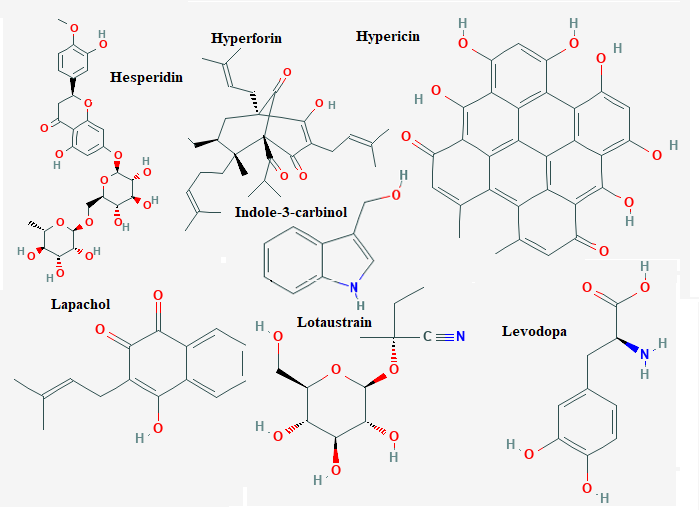
Hyperforin
Hyperforin, C35H52O4.C12H23N, dicylohexylammonium salt, cyclic terpene ketone, sesquarterpenoid, carbobicyclic compound, antiinflammatory, antidepressant, anxiolytic, antibacterial, antineoplastic, apoptosis inducer. source
It occurs in St John's wort, (Hypericum perforatum).
Hypericin
Hypericin, C30H16O8, anthroqinone glycoside, anthroqinone-derivative, antibacteria, Gram-positive and Gram-negative. source
It occurs in Hypericum perforatum (St John's wort).
Indole-3-carbinol
Indole-3-carbinol, C9H9NO, (I3C), 3-Indolemethanol, an alcohol, natural phytochemical, off-white solid source
It is forms in cabbage family after crushing or during cooking.
It is produced by action of myrosinase on the glucosinolate glucobrassicin, C16H20N2O9S2, in Brassicaceae, e.g. cabbage, cauliflower, and Brussels sprouts. source
It is metabolized to the indole, 3,3'-diindolylmethane, C17H14N2. source
Indole-3-carbinol is naturally chemopreventive, anticarcinogenic, antitumourgenic, and it may prevent estrogen-enhanced breast, endometrial and cervical cancers.
Iridomyrmecin
Iridomyrmecin, C10H16O2, simple iridoid, terpene lactone, antibiotic. source
It occurs in (Actinidia polygama), and in (Plantago lanceolata).
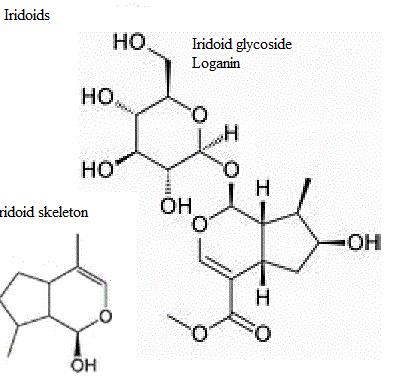
Iridoids are cyclic monoterpenoids.
The iridoid Iridomyrmecin, C10H16O2, in Iridomyrmex ants, in (Actinidia polygama). source
Kainic acid
Kainic acid, C10H15NO4, dicarboxylic acid, amino acid agonist, cause neurotoxicity. source
It is used as an ascaricide.
It occurs in the algae (Digenea simplex).
Excess kainic acid monohydrate, C10H15NO4.H2O, induces neurocytosis and epileptic seizures. source
Kawain
Kawain, C14H14O3, DL-kawain, Kavain, aromatic ether, 2-pyranone, antianxiety, anticonvulsant, hypnotic, sleep-quality enhancing, tranquillizer, kavalactone. source
It occurs in kava kava (Piper methysticum).
Kheltin
Kheltin, C14H12O5, pyrone, gamma-pyrone, furanochromone derivative, bronchodilator, smooth muscle relaxant. source
It is used to treat vitiligo, kidney stones.
It occurs in (Ammi visnaga).
Lamiidoside
Lamiidoside, C26H32O14, iridoid glucoside. source
It occurs in (Phlomis fructicosa), and in (Bouchea fluminensis).
Loganin
Loganin, C17H26O10, iridoid glucoside, iridoid monoterpenoid. source
It is used in bitter tonic folk medicines, and as a laxative.
It occurs in (Strychnos nux-vomica), Hydrangea, (Catharanthus roseus), and in Menyanthes.
Lanatoside C
Lanatoside C, C49H76O20, celadigal, celanid, cetosanol, digilanide C, is a cardiac glycoside. source
It is used to treat heart failure, arrhythmia.
It occurs in (Digitalis lanata).
Lapachol
Lapachol, C15H14O3, tecomin, Bethabarra wood, greenhartin, a hydroxy-1,4-naphthoquinone source
It is antimicrobial, antiinflammatory, analgesic, anticancer, and antitumour.
It occurs in the bark of Tabebuia avellanedae.
Levodopa
Levodopa, C9H11NO4, L-dopa, dihydroxyphenylalinine, aromatic amino acid, in the brain Levodapa is decarboxylated to dopamine, C8H11NO2,a psychoactive drug. source
Used to treat stiffness, spasms, and the poor muscle control of Parkinson's disease.
It occurs in (Mucuna pruriens), (Vicia faba), Dalbergia, and in Lupinus.
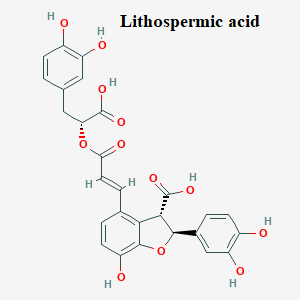
Lithospermic acid
Lithospermic acid, C27H22O12, a phenylpropanoid, 2-arylbenzofuran flavonoid, almost insoluble in water, moderately acidic. source
It occurs in (Echium plantaginium), (Salvia miltiorrhiza), Lycopus, Symphytum, and in common thyme and peppermint.
Lotaustrain
Lotaustrain, C11H19NO6, is a cyanogenic glycoside. source
It occurs in (Lotus australis), Lima bean (Phaseolus lunatus), (Rhodolia rosea), white clover, and in Cassava.
Mangiferin
Mangiferin, C19H17O11, alpizarin, aphloiol, chinomin, euanthogen, hedysarid, xanthonoid, glucosylxanthone, antimicrobial, antioxidant, hypoglycemic source
It is a glucoside of norathyriol, C13H8O6. source
It occurs in kernels of (Mangifera indica), rhizomes of (Anemarrhena asphodeloides), leaves of (Bombax ceiba), and in (Asplenium montanum).
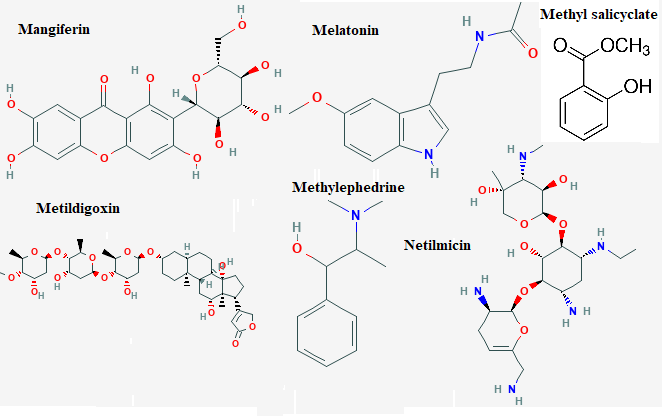
Melatonin
Melatonin, Circadin C13H16N2O2, amine antioxidant, hormone secreted by the human pineal gland, size of a rice grain, shaped like a pine cone (pineal), secretion increases in darkness and decreases during exposure to light, regulates the circadian rhythms of sleep-wake cycle, causes drowsiness and lowers body temperature, regulates mood and dreaming, and reproduction, antioxidant. source
It is used to treat insomnia disorders, sleep disorders, jet lag, headaches.
It occurs in coffee, in walnuts, and in most plants.
Methyl salicylate
Methyl salicylate, C8H8O3, gaultheria oil, oil of wintergreen. 2-hydroxybenzoic acid methyl ester, methyl ester of salicylic acid, irritant, colourless / yellow / red liquid, odour and taste of wintergreen, flavouring agent, insect attractant, food fragrance source
It occurs in vanilla, tea, clary sage, red sage, cherry, apple, raspberry, papaya, plum, wintergreen, and in leaves of (Gaultheria procumbens).
It is used as flavouring agent in beverages, white wine, chewing gums mints, antiseptic in mouthwash solutions.
It is used as a rubefacient and analgesic in deep heating liniments to treat joint and muscular pain.
Prepare methyl salicylate: 16.4.9
Metildigoxin
Metildigoxin, C42H66O14, methyldigoxin, lanitop, cardenolide glycoside, semisynthetic digitalis glycoside source
A small molecule drug, with properties similar to Digoxin, but more rapid onset.
It is used to treat congestive heart failure.
It occurs in (Digitalis lanata).
Methylephedrine
Methylephedrine, C11H17NO, an amphetamine, a sympathomimetic amine source
It is used in popular cough and cold medications, not legally available in the US, may lead to drug abuse.
It occurs in (Ephedra distachya), and in (Ephedra minuta).
Myricetin
Myricetin, C15H10O8, an hexahydroxyflavone, antibacterial, anticarcinogen, antineoplastic, antioxidant, antiviral source
It occurs in cranberry (Vaccinium), (Myrica rubra), grapes, walnuts, and parsley red onion, blueberry, (Soymidia febrifuga), and in (Haplopappus canescens).
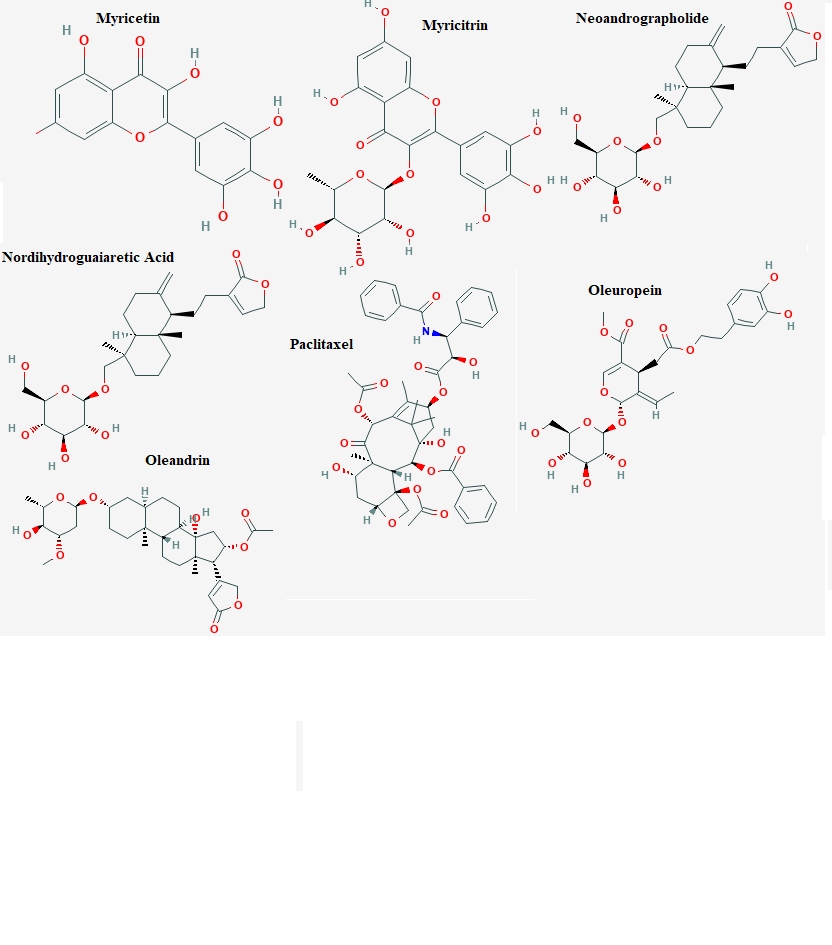
Myricitrin
Myricitrin, C21H20O12, myocetin, a flavonol-O-glycoside, bioflavonoid, pentahydroxyflavone source
It is antiallergic, antiatherosclerotic, antibacterial, anticarcinogenic, anti-diabetic, antiinflammatory, antioxidant, antithrombic, antiviral.
It occurs in bark of (Myrica rubra), and in (Myrica cerifera).
Neoandrographolide
Neoandrographolide, C26H40O8, glucopyranoside, diterpenoid source
It is immunosuppressant, antithrombotic, antiinflammatory, antineoplastic, antibacterial, anti-diabetic, antioxidative stress, antipyretic.
It shows viricidal activity against herpes simplex virus (HSV-1).
It occurs in (Andrographis paniculata).
It is used to treat dysentery.
Neomatatabiol
Neomatatabiol, C10H18O2, a simple iridoid, occurs in (Actinidia polygama). source
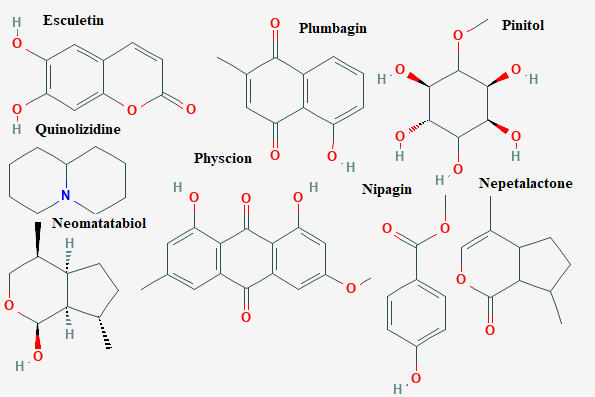
Nepetalactone
Nepetalactone, C10H14O2, epinepetalactone, a simple iridoid, repels insects and excites cats. source
It occurs in the oil of catnip of the Catnip plant (Nepeta cataria).
Netilmicin
Netilmicin, Netilmicinum, (1-N-Ethylsisomicin), Netilmicinum, C21H41N5O7, aminoglycoside, semisynthetic, antibiotic, antibacterial, (derivative of sisimycin), action similar to gentamicin, but less ear / kidney toxicity source
Nipagin
Nipagin, Methyl 4-hydroxybenzoate, Methyl paraben, C8H8O3, 4-hydroxybenzoate ester, hydroxybenzoic acid, derivative (benzene ring + carboxylic acid, methyl-4-hydroxy-benzoate, antimicrobial, allegen, increases histamine release and cell-mediated immunity. source
It occurs in alcoholic beverages, cloudberry, yellow passionfruit, and in white wine.
Nipagin A, propyl paraben, sodium salt, sensitizer (food preservative against fungi).
Nipagin A, Parabens: 16.3.4.0.12
Nipagin B, methyl p-hydroxybenzoate (antifungal agent), Parabens: 16.3.4.0.12
Nordihydroguaiaretic acid
Nordihydroguaiaretic acid, (NDGA), Dihydronorguaiaretic acid, C18H22O4, lignan, antioxidant, substituted butane, antitumour, antimicrobial, antifungal, tetrol, inhibitor of broad bean lipoxygenase. source
It occurs in the resinous exudates of creosote bush, chaparra (Larrea divaricata), and in the wood resin of (Guaiacum sanctum). It was formerly used to treat rheumatic diseases, detect blood in faeces, and used as a herbal medicine, but it may be toxic if used in excess.
Oleandrigenin
Oleandrigenin, C25H36O6, Gitoxigenin 16-acetate, steroid ester, toxic sap, for suicide, and it formerly had therapeutic uses. source
It occurs in (Mandevilla pentlandiana), and in (Cryptostegia madagascariensis).
Oleandrin
Oleandrin, C32H48O9, Foliandrin, Neriostene, Folinerin, Acute Toxic, Health Hazard, cardiac glycoside, steroid saponin, steroid ester. source
It occurs in (Nerium oleander), and in (Daphnis nerii).
Nerium oleander, commonly called "oleanders" in Australia, and it is grown there in suburban gardens.
The NSW Departmen of Primary Industries warns that all parts of the plant are poisonous, causing vomiting, diarrhoea and respiratory distress.
Also, smoke from burning plants is toxic.
Its toxic sap was used for suicide, but this is rare because of the foul taste, but it formerly had therapeutic uses.
Oleuropein
Oleuropein, C25H32O13, secoiridoid glycoside, is an antioxidant, beta-D-glucoside, methyl ester, phenolic compound. source
It is the most important phenolic compound in olive cultivars, and is antiinflammatory, antineoplastic, antihypertensive, and a radical scavenger.
Oleuropein in pharnacology products inhibits lactic acid bacteria.
It occurs in the bark of olive (Olea europaea), Ligustrum, and Fraxinus.
Ouabain
Ouabain, C29H24O12, G-Strophanthin, cardiac glycoside, cardenolide, toxic, steroidal hormone, arrow poison. source
It appears as odourless, white crystals, and it is used to treat tachycardia and hypertension arrhythmia, but it is a dangerous drug.
It occurs in the seeds of the ouabain tree, (Strophanthus gratus).
Ouabagenin, C23H34O8, (G-Strophanthidin), cardenolide, cardioactive steroid, steroidal lactone, cardiotonic effects. source
Paclitaxel
Paclitaxel, C47H51NO14, Taxol A, "taxol", a tetracyclic diterpenoid, mitotic inhibitor, seen as needles or fine white powder, sold as "TAXOL" source
It is anticancer, antineoplastic, stabilizes microtubules to cause cell death, kills B-cell Leukemia 2, and prevents carotid artery narrowing.
Paclitaxel can cause male and female reproductive toxicity.
It occurs in the bark of the Pacific yew (Taxus brevicola), and the European yew (Taxus braccata).
Paeonol
Paeonol, C9H10O3, phenolic, antimutagenic, analgesic, protects liver, anti-inflammatory. source
It occurs in Paeonia, Arisaema, and in Dioscorea.
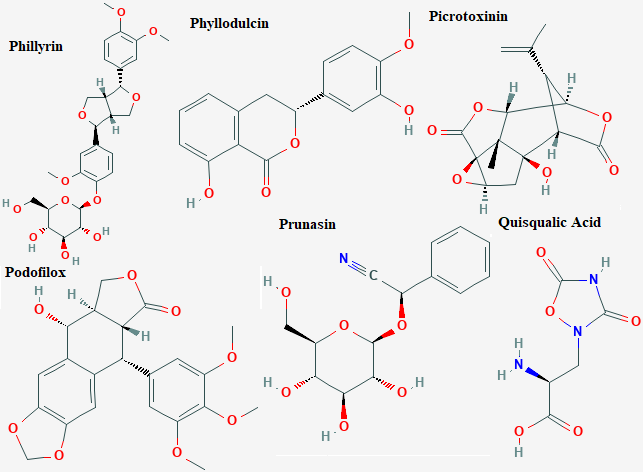
Phillyrin
Phillyrin, C27H34O11, forsythin, a lignan, anti-obesity, antioxidant, antiinflammatory source
It occurs in fruit of (Forsythia suspensa).
Physcion
Physcion, C16H12O5, anthraquinone derivative, antibiotic, antiinflammatory source
It promotes antibacterial activity against Staphylococcus, Pseudomonas and Escherichia, and antifungal activity against Candida and Aspergillus.
It occurs in Rheum, Microsporum, Psorospermum, (Cassia toroso), (Maesopsis eminii), and in Rhamnus.
Physicon 8-glucoside
Physicon 8-glucoside, C22H22O10, Physcionin, Rheochrysin, quinone, an anthraquinone, cathartic. source
It occurs in Rheum root, Polygonum root, and in Ramnus root.
Piceatannol
Piceatannol, C14H12O4, (3-Hydroxyresveratol), astringinin, is a polyhydroxylated stilbene and a polyphenol. source
It is antineoplastic, hypoglycemic, and it induces apoptosis, (normal cell death), and helps to regulate cell activity.
Piceatannol occurs in red wine, the root of (Picea abies), the spiny palm (Aiphanes horrida), and the seeds of (Euphorbia lagascae).
Picrotoxin
Picrotoxin, C30H34O13, (C15H18O7.C15H16O6), picrotoxinum, a sesquiterpene lactone. source
It occurs in the poison berry Cocculus (Anamirta cocculus).
Picrotoxin is really an equal mixture of picrotoxinin C15H16O6 and picrotin C15H18O7. source
Picrotoxin, shiny leaflets or powder, intensely bitter taste, CNS stimulant, convulsant, inhibits neurotransmission, desensitizing, barbiturate poisoning antidote.
It has been used to flavour beer, skin contact is dangerous, not now used as a therapeutic agent, blocks nervous system, convulsant, affects GABA receptor channels.
It is CNS stimulant, poisoning antidote, for CNS depressants. e.g. barbiturates, analeptic, non-medical use is illegal.
It occurs in Fish berry (Anamirta cocculus), which is a dried fruit and poisonous berry.
Plumbagin
Plumbagin, C11H8O3, plumbagine, plumbaein, naphthoquinone derivative, (5-Hydroxy-2-methyl-1,4-naphthoquinone), genotoxic, mutagenic, from naphthoquinone, yellow pigment, antiinflammatory, antifungal, antiviral, antibacterial, immunological adjuvant, anticoagulant, antineoplastic. source
It occurs in (Plumbago europa), Drosera, (Nepenthes khasiana), (Juglans nigra), (Dionaea muscipula), root bark of (Pera ferruginea), and in (Diospyros anisandra).
Podophyllotoxin
Podophyllotoxin, C22H22O8, PPT, podofilox, condylox, condyline, non-alkaloid toxic lignan, decreases mitosis, antitumour, anticancer agent. source
It is used to treat genital warts and molluscum contagiosum.
It occurs in the roots and rhizomes, of May apple (Podophyllum peltatum), and in (Dysosma pleianthus).
It a component of the Chinese medicine Ba Jiao Lian, (may apple), but it may cause liver injury.
Also podophyllum resin.
Deoxypodophyllotoxin
Deoxypodophyllotoxin, C22H22O7, hernandion, silicicolin, anthricin, hernandin, lignan, possibly antitumour, antiinflammatory. source
It occurs in (Juniperus sabina).
Proscillaridin A
Proscillaridin A, C30H42O8, caradrin, scillarenin, (3-O-rhamnoside), cardiac glycoside, cytotoxic, anticancer, triggers cell death and blocks cell proliferation. source
It occurs Squill (Scilla maritima var. alba), Drimia maritima, (sugar + steroid), roots of (Asclepias curassavica), and in (Hoodia gordonii).
Prunasin
Prunasin, C14H17NO6, cyanogenic glycoside, mandelonitrile glucoside, acute toxic, health hazard. source
It occurs in (Pteridium aquilinum), leaves of (Olinia ventosa), kernals of Prunus, immature fruits of Passiflora, and in leaves of (Perilla frutescens).
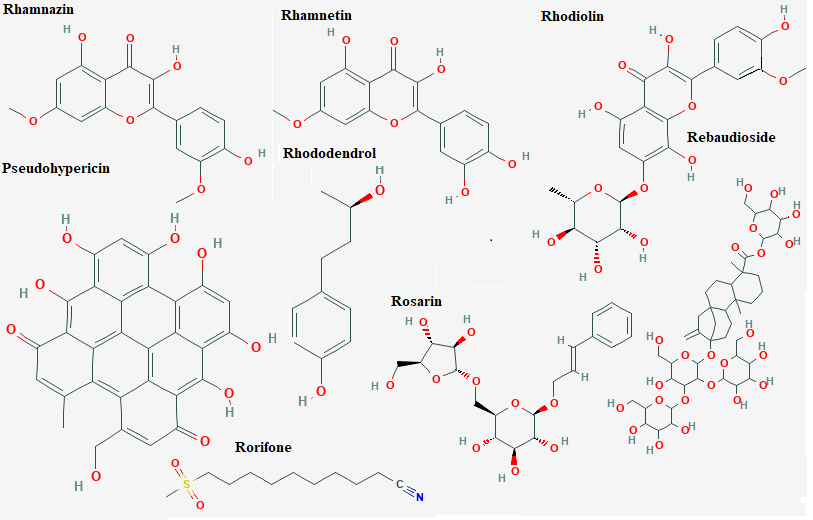
Pseudohypericin
Pseudohypericin, C30H16O9, bianthraquinone, quinone, antidepressant, anxiolytic, antiretroviral. source
It occurs in Hypericum.
Quinolizidine
Quinolizidine, C9H17N, norlupinane, octahydro-2H-quinolizine, an organic heterobicyclic compound, parent of quinolizidines, e.g. Cytisine, Sparteine. source
It occurs in Lupinus, (Genista hirsuta), and in Lotus (Nelumbo nucifera).
Quisqualic acid
Quisqualic acid, C5H7N3O5, non-protogenic alpha-amino acid, anthelmintic. source
It occurs in (Quisqualis indica).
Raspberry ketone
Raspberry ketone, C10H12O2, used in perfumes, as food additive, synthetic much cheaper than natural product. source
It occurs in (Rideaus speies), and in Rubus.
Rebaudioside
Rebaudioside, C44H70O13, REBA, glycoside, molecule structure based only on glucose molecules, sweetener. source
It occurs in (Stevia rebaudiana).
Rhamnazin
Rhamnazin, C17H14O7, flavonol glycoside, O-methylated flavonol. source
It occurs in Rhamnus.
Rhamnetin
Rhamnetin, C16H12O7, flavonol glycoside, O-methylated flavonol, from cloves. source
It occurs in Rhamnus.
Rhodiolin
Rhodiolin, C25H20O10. source
It occurs in Rhodiola.
Rhodionin
Rhodionin, C21H20O11, flavonolignan, herbacetin rhamnoside. source
It occurs in the rhizome of (Rhodiola rosea).
Rhododendrol
Rhododendrol, C10H14O2, phenol, may reduce fat-induced body weight gain. source
It occurs in (Rhododendron aureum).
Rhomitoxin
Rhomitoxin, C6416H9874N1688O1987S4, white needle crystals, an analgesic, antihypertensive, antitachcardiac, tranquillizer, lowers blood pressure. source
It occurs in (Rhododendron molle).
Rorifone
Rorifone, C11H21NO2S, antitussive. source
It occurs in (Rorippa indica).
Rosarin
Rosarin, C20H28O10, cinnamyl alcohol glycoside, glucopyranoside, used to reduce fatigue, increase endurance and mental performance. source
It occurs in (Rhodiola rosea).
Rosmarinic acid
Rosmarinic acid, C18H16O8, rosemary acid, phenolic compound, ester of caffeic acid, red-orange powder, antioxidant, anti-inflammatory, antimicrobial. source
It occurs in (Perilla frutescens), (Rosmarinus officinalis), (Salvia officinalis), (Mentha arvense), and in (Ocimum basilicumin).
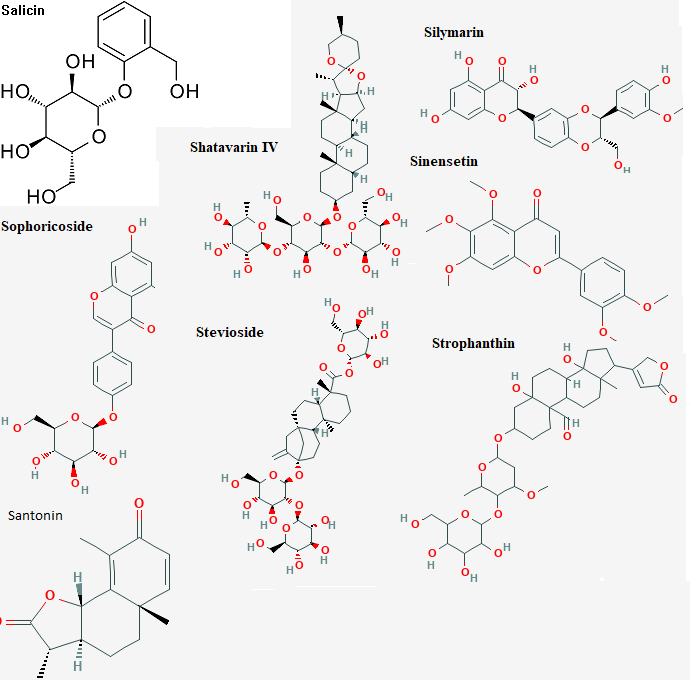
Salicin
Salicin, C13H18O7, salicoside, salicine, salicyl alcohol glucoside, irritant, an aryl beta-D-glucoside, prodrug, antipyretic, non-narcotic analgesic source
It is a non-steroidal antiinflammatory drug, aromatic primary alcohol, alcoholic β-glycoside that contains D-glucose, similar to aspirin action in the human body.
It occurs in white willow bark (Salix alba).
Salvianolic acid B
Salvianolic acid B, C36H30O16, lithospermic acid B, polyphenol, 1-benzofuran, dicarboxylic acid, catechol source
It is antiinflammatory, antioxidant, free radical scavenger, hypoglycemic, neuroprotective, cardioprotective, autophagy inhibitor, antidepressant, antineoplastic.
It occurs in (Salvia miltiorrhiza).
Santonin
Santonin, C15H18O3, ascaricide, antihelminthic, white crystals. source
It occurs in dried flower heads of wormwood (Artemisia maritma), and Levant wormseed (Artemisia cima).
Scillaren
Scillaren, C36H52O13, powder is a very bitter mixture of glycosides, Scillaren A and Scillaren B. source
Scillaren A, (Scillarenin 3-O-glucosylrhamnoside), Glucoproscillaridin A, Transvaalin, bufadienolide, cariotonic, hair disorders, anticancer, rodenticide.
Scillaren B, amorphous, granular powder with a very bitter taste, is an undefined water-sol mixture of glucosides remaining after extraction of Scillaren A.
Glucoscillaren A is Scillaren + rhamnose + glucose + glucose, C42H62O18. source
Secologanin
Secologanin, C17H24O10, loniceroside, secoiridoid glucoside. source
It occurs in Lonicera and in Catharanthus.
Shatavarin IV
Shatavarin IV, C45H74O17, asparanin B, glucopyranoside. source
Shikonin
Shikonin, C16H16O5, naphthaquinone, anti-inflammatory, traditional chinese medicine, zicao, anti-cancer. source
It occurs in (Lithospermum erythrorhizon).
Silibinin A
Silibinin A, C25H22O10, silimarin, (mixture of two diastereomers, silybin A and silybin B), polyphenol, aromatic ether, benzodioxine source
It is anti-cancer, flavonolignan, antioxidant, antineoplastic, hepatoprotective (protect liver cells against toxins).
It occurs in Milk thistle (Silybum marianum).
Silymarin
Silymarin, C25H22O10, flavonolignan, a mixture of flavonoids, polyphenol, aromatic ether, benzodioxine, secondary alpha-hydroxy ketone source
It is antihepatotoxic, antioxidant, antineoplastic.
It is used to aid digestion, treat disorders of liver and gallbladder, aid cholesterol levels.
It occurs in Milk thistle (Silybum marianum).
Sinapinic acid
Sinapinic acid, C11H12O5, a hydroxycinnamic acid, phenylpropanoid, irritant, antibacterial, antifungal irritant. source
It occurs in peel of (Citrus limon), (Vaccinium macrocarpon), and in black mustard seed (Brassica nigra).
Sinensetin
Sinensetin, C20H20O7, methylated flavone, pentamethoxyflavone. source
It occurs in Orthosiphon, and in Citrus Orange oil, and orange peel.
Sophoricoside
Sophoricoside, C21H20O10, an isoflavone glycoside. source
| Genistein | antiinflammatory, anticancer, immunosuppressive, traditional Chinese medicine.
It occurs in the dried fruit of the Japanese pagoda tree (Sophora japonica).
Stevioside
Stevioside, C38H60O18, steviol diterpene glycoside. source
Stevia is the "calorie-free sweetener"and "lower sugar Coca-Cola with Stevia".
Asteraceae + glucose → steviocide sweetener, relative sweetness 250 to 300. source
It occurs in leaves of (Stevia rebaudiana).
Strophanthin
Strophanthin, C36H54O14, cardioactive glycoside. source
It occurs in Strophanthus.
Strophanthus, g-Strophanthin, Ouabain
Strophanthus, k-Strophanthin, Strophanthin K, (beta.-k-Strophanthin), Strophanthin K (crystalline), Alvonal MR
Swertianin
Swertianin, C14H10O6, gentiakochianin, xanthone, antioxidant, polyphenol, aromatic ether. source
It occurs in Swertia.
Teniposide
Teniposide, C32H32O13S, vehem, an ataxane, derivative of podophyllotoxin, antitumour agent, inhibits DNA synthesis, prevents mitosis, and causes cell death. source
It is used to treat childhood acute lymphocytic leukemia, Hodgkin's lymphoma, and other types of cancer.
It occurs in (Podophyllum peltatum).
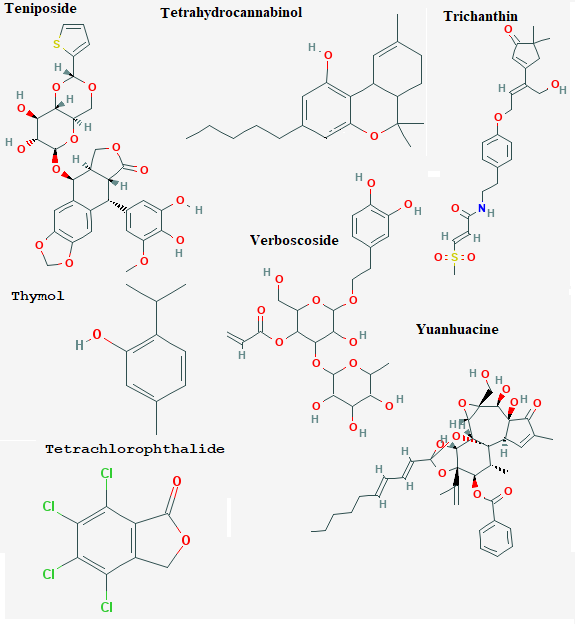
Tetrahydrocannabinol
Tetrahydrocannabinol, C21H30O2, THC, phenol, dronabinol, cannabinoid, active principle of marijuana, antiinflammatory, antiemetic, hallucinogenic source
Delta-9-tetrahydrocannabinol, the most active form, causes mood and perceptual change centres in the brain to stimulate appetite and prevent vomiting
It decreases ocular tension, so used to treat hypotensive glaucoma, and it has possibly antiviral activity against herpes simplex complex 1 and 2.
It occurs in the resin and in the dried tips of shoots of (Cannabis sativa).
Trichanthin A and B
Trichanthin A and B, C22H27NO7S It occurs in the tem and root of (Glycosmis trichanthera). source
Tyrosol
Tyrosol, C8H10O2, [(C6-(C2], an antioxidant phenolic compound It occurs, in red and white wines, olive oil, vermouth, beer, and in bark of (Olea europaea). source
Urushiol
Urushiol, is a mixture of substituted catechol molecules.
It occurs in poison ivy and other of Toxicodendronm Anacardiaceae, in skin of mango fruits and mango leaves, and in fruit of the cashew tree.
Urushiol II, C21H34O2, catechol. source
Urushiol III, C21H32O2, catechol. source
Valtratum
Valtratum, C22H30O8, valtrate, valepotriate, nonglucosidic iridoid, fatty acid ester. source
It occurs in Valeriana, and in roots of Centranthus.
Verbascoside
Verbascoside, C29H36O15, acteoside, kusaginin, glycoside, antileishmanial, antibacterial, cinnamate ester, catechol, polyphenol, antimicrobial, antiinflammatory. source
It occurs in (Olea europaea), Verbascum, and in Phlomis.
The main hydroxycinnamic derivative occurs in vervain, plantago, and in bitter gourd.
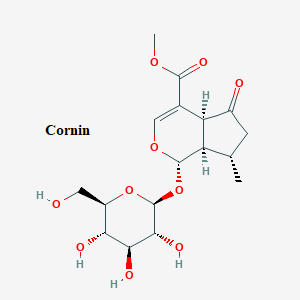
Verbenalin
Verbenalin, C17H24O10, cornin, verbenaloside, an iridoid glucoside, toxic, very bitter, crystalline glucoside hepato-protective, sleep inducing. source
It is used to treat menstrual cramping.
It occurs in (Verbena officinalis), and in Viburnum prunifolium.
Xanthone
Xanthone, C13H8O2, Xanthenone, 9H-Xanthen-9-one, a xanthonoid compound, insecticide, ovicide. source
It is prepared from the ester phenyl salicylate, C13H10O3, salol. source
It occurs in Iris, and in mangosteen fruit pericarp.
It is used to prepare xanthydrol to determine urea levels in blood, photocatalyst.
The parent compound of xanthone derivatives are called xanthones or xanthonoids.
It occurs mainly in Gentianaceae and Gutterferae.
List of xanthones
Athyriol C14H10O6, occurs in the fern (Athyrium mesosorum). source
Bellidifolin C14H10O6, anti-heptotoxic, mutagenic, occurs in Gentiana lutea. source
Gambogic acid C33H44O3, occurs in gamboge the gum resin of Garcinia hamburgyi. source
Gentisein, C13H8O5, occurs in Garciniama. source
Gentisin C14H10O5, occurs in (Garcinia lutea). source
Gartanin C24H27O10, antifungal, antibacterial, occurs in Garciniama source
Mangiferin C19H18O11, Aphloid, Chimonin, Euxanthogen, widespread occurrence with Isomangiferin, occurs in (Mangifera indica). source
Mangostin C24H26O6, mainly occurs in Garciniama source
Morellin C33H36O7, antibiotic, occurs in Garcinia morella. source
Norathyriol C13H8O6, tuberculostatic, occurs in Garciniama source
Swertianin C14H10O6 source
Yuanhuacine
Yuanhuacine, C37H44O10, gnidilatidin, yuanhuacium ester, is a daphnane diterpenoid, abortifacient, anticancer, diuretic, expectorant. source
It occurs in (Daphne genkwa).
Phytochemicals
Phytochemicals are biologically active plant-based compounds, produced by plants for their protection against grazing.
There is no agreed classification of phytochemicals, but may include carotenoids, flavonoids, isoprenoids, phenolic acids, polyphenols, saponins and stilbenes.
They may improve human health by strong antioxidant activities and be antimicrobial, antidiarrheal, anthelmintic, antiallergic, antispasmodic, and antiviral.
Phytochemicals may include essential nutrients, but also may include non-digestible dietary fibres and phytotoxins.
Consumption of plant-based diets containing phytochemicals, has been associated with reduced degenerative diseases, and improved health.
Phytochemicals are not necessary for human nutrition, but are often recommended for "healthy diets"!
This page was generated automatically from the original page on John Elfick's School Science Lessons website. If something looks wrong, please check the original.