Plant Oils
Last updated 2026-03-07 by Dr John Elfick
16.3.0 Aldehydes, alkanals
Tests for aldehydes with Fehling's solution
1. Aldehydes contain the group CH.O, -CHO, and are formed by partial oxidation of primary alcohols.
2. Name "aldehyde" from (Latin aldehyde dehydrogenated alcohols).
3. Names ending in (-al), alkanals, e.g. methanal (formaldehyde) CH2=O, HCHO, and ethanal (acetaldehyde) CH3CHO, the simplest aldehydes. source
4. Aldehydes are compounds in the form RC(=O)H, a carbonyl group C=O is bonded to one hydrogen atom attached to the carbon atom and to one R group.
5. Aldehydes are reducing agents and can be detected with Tollens' test or Fehling's test.
16.3.1 Ambrettolide
Ambrettolide, C16H28O2, isoambrettolide, a macrocyclic musk, flavour and fragrance agent, colourless to pale yellow liquid source
It has a sweet soapy musk odour and taste, and is used as a food additive.
16.3.1.0 Ricinoleic acid
Ricinoleic acid, C18H34O3, castor oil, ricinolic acid, ricinic acid, 2-hydroxyoctadec-9-enoic acid, Irritant. source
(Greek castor beaver, because sacs in the groin contains substance similar to castor oil and formerly used to treat constipation).
Ricinus oil, a fixed oil, from Ricinus communis, Euphorbiaceae, castor oil bush, castor bean, castor oil plant, kikayon
Ricinus communis endosperm has aleurone grains and oil globules, fatty reserves as a liquid oil, mainly Ricinoleic acid, laxative, herbal remedy.
The fruit of the castor bean, Ricinus, suddenly split apart to throw out seeds.
Seeds contain | Ricin | a highly toxic protein, LD50 22 micrograms per kg.
It was used for warfare and poisoning prominent people.
1. Ricinoleic acid, 12-Hydroxy-cis-9-octadecenoic acid, 12-Hydroxyoleic acid, CAS Number 141-22-0, Molecular Weight 298.46, C17H32(OH)COOH,
CH3(CH2)5CH(OH)CH2CH=CH(CH2)7COOH source
2. E476 Polyglycerol polyricinoleate, (polyglycerol esters of inter-esterified ricinoleic acid from mature castor plant) (emulsifier)
Saturated carboxylic acids, Decanedioic acid, HOOC(CH2)8COOH, sebacic acid, from castor oil source
3. Castor beans contain two toxic proteins, so the castor plant is a poisoning hazard to children and pets.
A single castor bean seed may be fatal for a child if the seed masticated and chewed.
Ricin is a very toxic protein, because one milligram can kill a human adult.
Ricin may be both a chemical and biological weapon and is explicitly prohibited by the Biological and Toxin Weapons Convention, (BTWC).
4. RCA (Ricinus communis agglutinin) is a toxic protein that agglutinates red blood cells.
Injection of RCA into the bloodstream causes blood to coagulate.
Ingestion of a castor bean or its products will release Ricin, but the RCA cannot cross the intestinal wall.
Castor oil contains very little Ricin or RCA.
16.3.3 Apiole
Apiole, C12H14O4, apioline, parsley apiole, parsley camphor, phenylpropene derivative, a benzodioxole, green crystals source
It is used to treat menstrual disorders, and may be toxic in high doses causing liver and kidney damage.
It is reduced by steam from green oil of parsley.
It occurs in fennel, celery, parsley seeds, dill, cinnamon, Sassafras albidum, Matico (Piper angustifolium).
16.3.4 Asarone
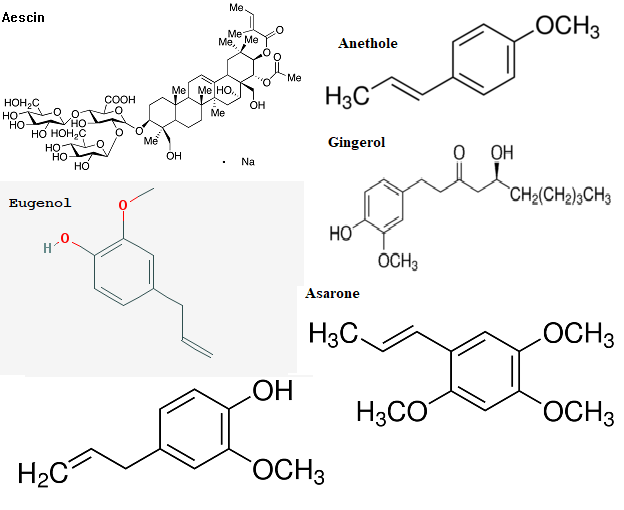
Asarone, C12H16O3, is a phenylpropanoid, volatile fragrant oil, fungicide, bactericide, spasmolytic, anti-algal, animal carcinogen, insect attractant. source
It occurs in Sweet flag.
Alpha-asarone (trans-isoasarone), occurs in carrot seed.
Beta-asarone, is antifungal, and occurs in Acoris bitters, but may be carcinogenic.
In Acorus calamus, (calamus oil banned in USA), Asarum europaeum, in Matico (Piper angustifolium).
16.3.5 Bergenin
Bergenin, C14H16O9, cuscutin (a trihydroxybenzoic acid glycoside), antitussive, anti-inflammatory, protects against liver disorders. source
It occurs in Bergenia, and in (Ardisia japonica).
16.3.5.8 Fluorescence spectroscopy of quinine
Fluorescence spectroscopy can be used to determine the percentage quinine content in samples of tonic water or bitter lemon It compares fluorescence of sample in UV light to the fluorescence of quinine sulfate solution containing 10 mg of quinine sulfate in 1L of deionized water.
Large doses of quinine may cause heart problems, but small doses in a small bottle of tonic water have been effective in treating leg muscle cramps.
The quinine alkaloid, C20H24N2O2.3H2O, was first extracted from the bark of Cinchona officinalis, Rubiaceae. source
Common names include quinine bark, China bark, Peruvian bark, Jesuit's bark, fever tree.
Cinchona ledgeriana and C. succirubra produce the highest quantity of quinine alkaloids, but now mostly synthetic quinine dihydrochloride monohydrate.
Benzoquinone, C6H4O2, para-quinine, cyclohexadiene-1,4-dione, occurs in coal smoke. source
Quinidine, antiarrhythmic, in quinine tree (Cinchona ledgeriana).
Experiments
Quinine bitter taste experiment - replace quinine with cold tea solution and note the difference in taste.
Quinine iodosulfate, Dichroic polarization colours: 27.9.1
Sense of taste, the gustatory system, dilute quinine solution (tonic water), or raw almond for bitter taste
Taste, smell, flavour: 19.2.11, (See: 3.)
16.3.6 Caffeic acid
Caffeic acid, C9H8O4, C9H8O4 (HO)2C6H3CH=CHCO2H, a hydroxycinnamic acid, antioxidant, anti-inflammatory. source
Caffeic acid occurs in burdock, hawthorn, artichoke, pear, basil, thyme, oregano, apple, olive oil.
Caffeic acid 3-glucosidem (C15H18O9), hydroxycinnamic acid, monosaccharide derivative, beta-D-glucoside source
Caffeic acid occurs in burdock, hawthorn, artichoke, pear, basil, thyme, oregano, apple, olive oil.
16.3.7 Camphor
Camphor, C10H16O, bicyclic monoterpene ketone, DL-Camphor, colourless to white crystalline powder, "mothball" odour. source
It is skin antipruritic, anti-infective, moth-proofing safer alternative to naphthalene and 1,4-dichlorobenzene mothballs.
Cinnamon, (Cinnamomum verum), Lauraceae
Natural camphor was distilled from the clippings, wood and roots of the Camphor laurel tree, (Cinnamomum camphora), camphor laurel tree.
Nowadays camphor is a synthetic aromatic, produced from vinyl chloride and cyclopentadiene.
Camphor is a crystalline terpenic ketone, complex chemical composition, highly flammable, harmful if ingested.
DL-camphor is natural camphor.
Camphor oil | Borneol | Camphene | Carvacrol | Cineole | Citronellol |.
Do not inhale hot fumes of camphor, because the terpenic ketone camphor can be highly toxic.
Camphor types:
Brown camphor contains Safrole and Terpineol.
White camphor contains Cineole and Pinene, but not Safrole.
Yellow camphor contains Safrole and sesquiterpenes |.
Camphor is used as a topical rubefacient / counter-irritant medication.
It is a common ingredient of anti-itch and heat-rub medicines, e.g. Haw Par Tiger Balm.
Camphor, rubefacient, (Cinnamomum camphora) (camphor tree), harmful if ingested.
Camphor repels clothes' moths and cats and is used to make gunpowder and celluloid.
Celluloid is cellulose nitrate plasticized with camphor.
Use D-Camphor instead of naphthalene moth balls to protect clothes from moths and silverfish.
Experiments
Prepare camphor oil
Prepare thionyl chloride, SOCl2 source
Drive a boat with surface tension, camphor boat, spinning dancers
16.3.8 Carpacin
Carpacin, C11H12O3, is a phenylpropanoid, isosafrole methyl ether, insecticide, weakly sedative. source
It occurs in Carpano tree, Cinnamon, (Cinnamomum verum), Lauraceae, in Prostrate justicia (Justicia prostrata).
It is used as a folk medicine as an antidepressant.
16.3.9 Castor oil
Castor bean: 9.5.1
Castor oil bush: Ricinus communis
Decanedioic acid: Decanedioicacid
Castor oil, Ricinoleic acid: 16.3.1.0
Saturated carboxylic acid, decanedioic acid, HOOC(CH2)8COOH, sebacic acid, from castor oil. source
Butanedioic acid (succinic acid): 16.1.4
Castor oil drop: 19.3.9
Iron filings on the overhead projector: 29.2.2.12
Lectins: 16.2.6
Lipstick: 19.1.2
Polyglycerol polyricinoleate: E476
Tests for lipase: 9.3.13
16.3.10 Chavicol
Chavicol, C9H10O, p-allylphenol, a phenylpropene, occurs in betel oil from (Areca catechu), the betel nut palm. source
16.3.11 Chebulagic acid
Chebulagic acid, C41H30O27, benzopyran tannin, antioxidant, immunosuppressive, hepatoprotective, alpha-glucosidase inhibitor source
It is used against Staphylococcus aureus and Candida albicans.
It occurs in Terminalia.
16.3.12 Chevibetol
Chevibetol, C10H12O2, is a phenylpropanoid, m-eugenol, a methoxybenzene, a phenol source
It occurs in Betel pepper, (Agastache rugosa), and in (Thymus camphoratus).
16.3.13 Chloral
Chloral, CCl3CHO, chloral hydrate, trichloroacetaldehyde, trichlorethanal, harmful if ingested, Not permitted in schools source
It is pungent volatile liquid, hypnotic used as its crystalline hydrate, chloral hydrate.
Chloral hydrate, Cl3CCH(OH)2, trichloroacetaldehyde hydrate, sedative, hypnotic, "prescription only" drug in Australia. source
Tests for amylose and amylopectin: 9.8.5
16.3.15 Cucumber aldehyde
Cucumber aldehyde, C9H14O, violet leaf aldehyde, 2,6-nonadienal, flavour and fragrance agent, odour of violet leaf, green vegetable odour source
It occurs in cereals, cherry, melon, peas, cooked potato, milk, fish, black tea, oyster, clam.
Cucumber aldehyde has cucumber smell, occurs in cucumber juice, and is used as flavouring agent.
16.3.16 Decanal
Decanal, C10H20O, C9H19CHO, CH3(CH2)8CHO, decyl aldehyde, colourless, clear oily liquid, fragrance and flavouring agent. source
It has a fatty or soapy smell, fatty or fried or citrus taste, and it breaks down on heating.
It occurs in coriander, orange peel, citrus, buckwheat
16.3.17 Diacetyl
Diacetyl, CH3COCOCH3, butanedione, dimethyldiketone source
It is used in the popcorn industry to give a butter or butterscotch flavour and creamy odour to popcorn sold in bags.
Workers in the popcorn industry have reported medical problems with their respiratory systems, particularly the lungs, leading to workers' compensation.
Heating bags of popcorn in a microwave oven may cause similar problems.
The popcorn industry is considering not using diacetyl in bagged products.
16.3.18 Dillapiole
Dillapiole, C12H14O4, is a phenylpropanoid, benzodioxole and is related to Apiole. source
It occurs in dill, fennel, coriander, Piper, and in seeds of Bunium persicum (black caraway).
16.3.19 Elemicin
Elemicin, C12H16O3, is a phenylpropene, and occurs in carrot, elemi oil and nutmeg. source
In Aniba, Boronia, Croton, Cymbopogon, Dalbergia, Melaleuca, Monopteryx.
16.3.20 Ellagic acid
Ellagic acid, C14H6O8, is an organic heterotetracyclic compound source
Ellagic acid is from hydrolysis of tannins, and is an antioxidant, antiproliferative, dietary supplement.
It occurs in oak trees and foods, e.g. walnuts.
16.3.22 Escin
Escin, C55H86O24, aescin, a pentacyclic triterpenoid saponin, the main saponin of more than 30 different saponins. source
It occurs in the leaves and seeds of the horse chestnut, Aesculus hippocastanum, Sapindaceae.
It is used to treat blood vessel disorders, reduce inflammation, oedema, pain, inhibits edema, treats vascular fragility.
16.3.24 Clove oil, eugenol
Oil of cloves, C10H12O2, eugenol, 2-methoxy-4-(2-propenyl) phenol, an allyl benzene produced from dried flower buds. source
It contains a high concentration of antioxidants.
It is used as a spice, fish killer, to repels ants, and a herbicide.
Oil of cloves is toxic at low concentrations, and harmful if large quantity is ingested.
The relative density is 1.04 -1.06, so it does not float on water.
Clove oil contains eugenol and caryophyllene from (Eugenia caryophyllus)
It occurs in essential oils, e.g. cinnamon, clove oil, pimento, nutmeg, bay leaf.
It is an analgesic and antiseptic.
It is used in dentistry for its main ingredient eugenol, home remedy for toothache, in Indonesian clove and tobacco cigarettes, inhibit mould, cooking ingredient.
It has a pleasant, spicy, clove-like odour and taste, but will darken and thicken when exposed to air, slightly soluble in water.
It is used in perfume, flavourings, medicine, local antiseptic and anaesthetic in dentistry.
Eugenol may cause liver damage and some people are allergic to it.
Formerly it was used in the production of isoeugenol for the manufacture of Vanillin
Eugenol acetate
Eugenol acetate, C12H14O3, eugenyl acetate, acetyl eugenol, is colourless to pale yellow, flavouring agent, floral flavour, spicy odour. source
It occurs in clove oil, caraway, cinnamon leaf.
16.3.28 Fluorescent liquids
Safranin, (safranine, safranin O)
16.3.2 Amido phthalic acid
Amido phthalic acid, C14H10BrNO3, amido-tarephthalic acid, 4-aminophthalic acid source
It gives pale violet colour by reflected light and pale yellow colour by transmitted light.
Amido-tarephthalic acid gives bright green colour by reflected light and pale green colour by transmitted light.
16.3.21 Eosin
Eosin, C20H6Br4Na2O5, Eosin Y, bromoeosin, tetrabromofluorescein, Solvent Red 43, Japan red 223, red fluorescent dye source
Eosin, eosine, bromoeosin, gives yellow green colour by reflected light and orange colour by transmitted light.
It is formed by reaction of bromine with fluorescein, the potassium salt of tetrabromo-fluorescein, sodium-2,4,5,7-tetrabromofluorescein.
Eosin Y has yellowish colour, and Eosin B (Acid red), has bluish colour.
It is used as a counter stain to hematoxylin for microscopic examination.
Eosin, an acidic dye, stains cytoplasm stained orange pink and haematoxylin, a basic dye, stains nuclei blue or purple where nucleic acids occur.
Eosin stains red blood cells intensely red.
16.3.27 Fluorescein
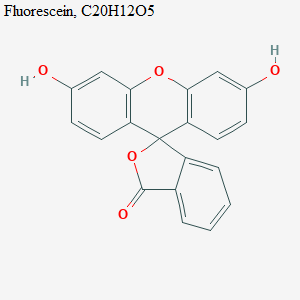
Fluorescein, C20H12O51, 3-dihydoxybenzene phthalein, 2-(6-hydroxy-3-oxo-xanthen-9-yl) source
Fluorescein, gives intense green colour by reflected light and orange yellow colour by transmitted light.
The red crystals that can dissolve in alkali to form a red colour and green fluorescence.
3.9: Prepare fluorescein solution.
16.3.37 Magdala red
Magdala red, C30H20N3+, phloxine B (tetrabromotetrachloro-fluorescein), acid red 92 source
It gives opaque scarlet colour by reflected light and brilliant carmine colour by transmitted light.
It is used to identify unhealthy yeast cells.
16.3.49 Quinine
Quinine, C20H24N2O2, is an antimalarial, antipyretic, gives a pale blue colour by reflected light and no colour by transmitted light. source
It is extracted from the bark of (Cinchona ledgeriana), quinine tree, "fever tree", and Remijia in South America.
It was formerly an anti-malarial medicine and is still used for treatment of some heart conditions.
As a medicine it was taken in carbonated mineral water, but nowadays is still taken as a beverage called "tonic water".
Commercial tonic water, is valued for the slightly bitter taste of "gin and tonic", but tonic water is not a medicine.
Quinine must be identified on the label of commercial products containing it, because some people are hypersensitive to quinine.
Cinchona was discovered in the 1630s as a treatment for malaria and was the only effective cure known in Europe until synthetic replacements in the 1940s.
Malaria remains today one of the deadliest diseases known throughout the tropics, and until the 20th century the disease was prevalent throughout Europe.
The Cinchona tree is native to the eastern slopes of the Andes, across Ecuador, Peru and Bolivia, so inaccessible for most Europeans during the 17th century.
In the 18th and 19th centuries, demand outstriped supply and threats of overharvesting and the desire to control the source caused empires to source this plant.
The Spanish tried to prevent this access, but failed to establish their own successful plantations.
The Dutch, in Indonesia, and the British, in India, founded government controlled plantations for mass production of quinine.
16.3.5.8 Fluorescence spectroscopy of quinine
16.3.29 Gallic acid
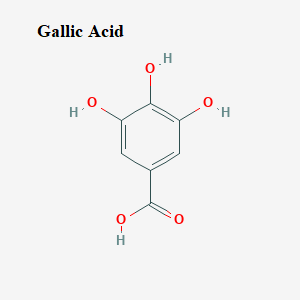
Gallic acid, C7H6O5, C6H2(OH)3COOH, pyrogallol-5-carboxylic acid, water-soluble phenolic acid, colourless yellow crystals, astringent source
It is toxic if ingested, antioxidant, antineoplastic, apoptosis inducer, anticarcinogenic, anti-inflammatory, anti-fungal, anti-viral, found free and as part of tannins.
It is used in the pharmaceutical industry, to synthesize mescaline (3,4,5-trimethoxyphenethylamine), used used in photography and as an analytical reagent.
It occurs in oak bark, gall nuts, rhus, witch hazel, and tea plant.
Gallic acid is formed by fermentation of tannic acid in nature.
Gallates are salts and esters of gallic acid.
The esters and polyesters of gallic acid occur in angiosperms, as gallotannins, tannins, catechin gallates, aliphatic gallates, and are similar to gallic acid.
Dodecyl gallate, C19H30O5, E312, (ester of gallic acid) (antioxidant), allergic reactions, hyperactivity). source
Octyl gallate, C15H22O5E311, (synthetic salt of gallic acid) (antioxidant) (Health risk, allergic reactions).
Geraniin, C41H28O27, a tannin dehydroellagitannin, folk medicine, antidiarrheic drug, causes apoptosis in human melanoma cells. source
It occurs in Nephelium lappaceum (rambutan) rind, and in (Geranium thunbergii).
16.3.31 Hydroquinone
Hydroquinone, C6H4(OH), 2hydroquinol, 1,4-dihydroxybenzene, 1,4-benzenediol quinol, is toxic if ingested.
Hydroquinone, benzene-1,4-diol, quinol, Solution < 25% Not hazardous.
It is used in photography developers and in skin whitening compounds to reduce colour of skin.
It occurs in coenzymes in animal and plant cells, and plastoquinones involved in photosynthesis, and vitamin K,
16.3.32 Isoeugenol
Isoeugenol, C10H12O2, phenylpropanoid, 4-propenylguaicol, related to phenylpropene, clear to pale yellow oily liquid, extracted from clove oil and cinnamon oil source
It is slightly soluble in water, spicy odour and tastes of cloves.
It is prepared from eugenol by heating.
It is used in perfumes, flavourings, local antiseptic and analgesic, used to make Vanillin
Eugenol derivatives are used in perfumers and flavourings, insect attractants, UV absorbers, analgesics, biocides and antiseptics.
It occurs in Ylang ylang essential oil, nutmeg fruit, Rocky Mountain juniper, (Juniperus scopulorum) pine needles.
16.3.33 Isoafrole
Isoafrole, C10H10O2, phenylpropanoid, related to phenylpropene, colourless fragrant liquid, anise odour of anise. source
It is used to make heliotropin and in oriental perfumes, e.g. Safrole, herbal remedy used for liver regeneration, but is a moderate poison.
It occurs in root beer, sarsaparilla flavours, ylang ylang essential oil, (Ligusticum acutiloba) essential oil, curry tree (Murraya koenigii) leaves.
16.3.34 Juglone
Juglone, C10H6O, 5-Hydroxy-1,4-naphthoquinone, C.I. Natural brown 7, C.I. 7550. source
It is produced by some trees in the walnut family, e.g. black walnut, Persian walnut, butternut, and pecan, and is leached or released into the soil.
Juglone has fungicide and insecticide properties, but it is toxic to many plant, so may be used as a herbicide. It occurs in (Talaromyces diversus), and (Pterocarya fraxinifolia).
16.3.35 Ketones
Ketones =CO (-one), e.g. propanone, (acetone). CH3C=OCH3 source
9.5.2 Tests for aldehydes with Fehling's solution
Ketones have a carbonyl group C=O, bonded to two carbon atoms in the form R2C=O, but neither R may be H.
Ketones contain the ketone group -CO-.
It is a carbonyl group with two single bonds to other carbon atoms.
Propanone (acetone, CH3COCH3, and butanone CH3COC2H5, methyl ethyl ketone), are the simplest saturated ketones (R1COR2). source
Ketone names end with "-oneH">
Ketones cannot be detected with Tollens' test or Fehling's test.
16.3.36 Lawsone
Lawsone, C10H6O3, 2-Hydroxynaphthoquinone, hennotannic acid, yellow powder, protective agent, antifungal agent, ultraviolet filter. source
It is used for synthesis of biologically active compounds, as a dye and in cosmetics
It was the principle constituent of the ancient dye "henna", (Bible, Song of Solomon 1:14 "cluster of henna blossoms").
It occurs in leaves of (Lawsonia inermis) henna, and in the flower (EicHornia crassipes) water hyacinth.
Experiment: Kill black mould.
Grow mould on bread and place a few drops of a solution of it on a nutrient agar plate and then incubate it.
Measure the size of the colony after a few days.
Place a square of filter paper on the agar with various amounts of clove oil added and note the growth over the next week.
A solution of 2.5 mL of clove oil to 1 litre of water should kill the spores 24 to 48 hours.
Grow moulds at different concentrations of clove oil, from zero to 100% oil.
16.3.38 Methyl eugenol
Methyl eugenol, C11H14O2, allylveratrol, methyl ether of eugenol, clear colorless to pale yellow liquid, spicy earthy odor, bitter burning taste, can cause cancer source
Methyl isoeugenol, C11H14O2, phenylpropene, may cause allergic skin reaction. source
16.3.40 Muscone
Muscone, C16H3O, methylcyclopentadecanone, musky smell, flavouring ingredient, perfume fixative source
Musk was orignally derived from the musk deer, Moschus moschiferus, but is now produced artificially.
16.3.41 Myristicin
Myristicin, C11H12O3, phenylpropene occurs in clove oil, caraway, cinnamon leaf, nutmeg essential oil. source
Myristic acid, Tetradecanoic acid, C14H28O2, saturated long-chain fatty acid, straight-chain saturated fatty acid, oily white crystalline solid. source
It occurs in palm oil, coconut oil, and butter fat.
16.3.42 Nonanal
Nonanal, C9H18O, CH3(CH2)7CHO, nonanaldehyde, pelagonaldehyde, flavouring agent, colourless to pale yellow, oily liquid, in some perfumes source
It has rose-orange waxy odour, citrus taste.
It occurs in rose and citrus oils and pine oils
16.3.43 Nothiapole
Nothiapole, C13H16O5, phenylpropene, occurs in perilla, (Perilla frutescens), Lamiaceae source
16.3.44 Plant oils, essential oils, fixed oils, vegetable oils
16.3.23 Essential oils, volatile oils, ethereal oils.
Essential oils are not really "oils", i.e. not smooth, sticky liquids, immiscible in water, but are volatile oils obtained by distillation and having the characteristic odour of the plant from which it is extracted.
A "note" is a term used in perfumery, meaning any of the basic components of a fragrance of a perfume which give it its character.
Reference: The Encyclopedia of Essential Oils, by Julia Lawless, Thorsons, Harper Collins, 2002, ISBN 0 00 7145187.
1. An essential oil is a concentrated, hydrophobic liquid that volatilizes on heating without decomposition to form the distinctive scents of plants.
Essential oils are used in aromatherapy and in religious ceremonies requiring the burning of incense.
2. They are usually liquid, but may be solid, e.g. orris, or semi-solid, e.g. rose.
3. On exposure to air, they do not harden, but, unlike fixed oils, evaporate, leaving no oily residue.
4. They dissolve in alcohol, fats and oils, but not in water.
5. They are mainly volatile mixtures of terpenes and terpenoids, and may contain aliphatic and aromatic esters, phenolics and hydrocarbons from plant oil glands.
6. Essential oils are not recommended for pregnant women.
7. For consumption recipes, buy only top quality essential oils from a reputable source.
Buy "Therapeutic" grade or "Food Grade" and never buy perfume grade or diluted or solvent extracted essential oils.
8. Essential oils include rose oil, jasmine oil, oil of cloves, lavender oil, peppermint oil, eucalyptus oil, ylang-ylang oil (Cananga odorata),
and the cheap citrus oils, e.g. lemon oil, sweet orange oil.
They are extracted by distillation, expression and solvent extraction.
They cause plant odours, to be be distilled to form perfumes, cosmetics, bath products, flavouring food and drink flavourings, incense scents.
They may also contain substances that deter insects and herbivores
from damage or grazing.
9. Volatile oils.
An essential oil is usually regarded as a volatile oil produced by distillation with the odour characteristic of the distilled plant material.
However, the term is often used loosely in the herbalist and aromatherapy industries to describe any usually aromatic extracts from plant material.
10. Extraction.
Plant material → (distillation) → "distilled essential oilsH"> source
Plant material → (expression, i.e. pressing and squeezing) → "citrus oilsH"> source
Plant material → (solvent extraction) → "concretes" → "absolutesH"> source
Plant material → (solvent extraction) → "resinoidsH"> source
Plant material → ("enfleurage") → "pomades → "enfleurage absolutesH"> source
Concretes.
The "concretes" are extracted from raw previously-living plant material with hydrocarbon solvents, not steam distillation.
They are usually about 50% wax and 50% volatile oil, e.g. jasmine.
The oil ylang ylang is 20% wax and 80% essential oil.
The term "concretes" may refer to the fact that they are more concentrated and stable than distilled essential oils.
Resinoids.
The "resinoids " are extracted from dead resinous material with hydrocarbon solvents to produce balsams, resins, oleoresins, oleo gum resins.
Absolutes.
The "absolutes" are extracted from the "concretes" by further solvent extraction using "absolute alcohol" (pure ethanol) to remove most of the wax.
Nowadays more pure "absolutes" are produced with liquid carbon dioxide.
Pomades.
The "pomades" were once produced by pressing cut flowers onto a glass plate covered with odourless fat, a process called "enfleurageH">
The volatile oils from the flowers that had diffused into the fat were extracted with alcohol to produce "enfleurage absolutesH">
Nature identical.
The pharmacy industry can produce most essential oils 96% synthetically, labelling them "nature identical" products.
However, the 4% of natural constituents may be important to the herbalist and aromatherapy.
List of essential oils:
Agar oil, (Aquilaria malaccensis), oodh, Thymelaeaceae.
Ajwain oil, (Trachyspermum ammi), Thymol, Apiaceae.
Allspice oil, (Pimenta dioica), Myrtaceae.
Almond oil, (Prunus amygdalus), Rosaceae
Angelica root oil, (Angelica archangelica), Apiaceae.
Anise oil, (Pimpinella anisum), licorice odour, Apiaceae.
Asafoetida oil, (Ferula assafoetida), to flavour food, Apiaceae.
Abies balsama, balsam fir needle oil, Pinaceae.
Abies alba), silver fir oil, Pinaceae
(Pseudotsuga menziesii), Douglas fir oil, Pinaceae
Lemon balm oil, (Melissa officinalis), Lamiaceae.
Balm of Gilead oil, (Commiphora gileadensis), Burseraceae.
Balsum of Peru oil, (Myroxylon balsamum), flavour food and drink, Fabaceae.
Balsam torchwood, (Amyris balsamifera), Rutaceae.
Basil oil, (Ocimum basilicum), make perfumes, aromatherapy, Lamiaceae.
Bay oil, (Laurus nobilis), make perfumes, aromatherapy, Lauraceae.
Benzoin balsamic resin oil, (Styrax benzoin), Styracaceae.
Bergamot oil, (Citrus x aurantium subsp. bergamia), make perfumes, aromatherapy, Rutaceae.
Birch oil, oil of wintergreen, (Betula lenta), aromatherapy, Betulaceae.
Black pepper oil, (Piper nigrum), distilled from berries, Piperaceae.
Bois de rose oil, rosewood oil (Aniba rosaeodora), Lauraceae.
Borage seed oil, (Borago officinalis), Boraginaceae, Borago officinalis seeds, anti-inflammatory, highest source of γ-linoleic acid.
Boldo oil, (Peumus boldus).
Boronia oil, absolute oil (Boronia megastigma), Rutaceae.
Buchu oil, (Agathosma betulina), buchu shrub, toxic | Diosphenol | Rutaceae.
Cade oil, Juniperus oxycedrus contains | Cadinene | Cadinol | Guaiacol | distilled from wood, dark, aromatic, smoky smell.
It is used in cosmetics, incense, folk medicine, skin ailments, allergic reactions possible.
Cajeput oil contains | Cineole | Terpineol | Pinene | Nerolidol |and is distilled from leaves of Melaleuca cajuputi.
Catmint oil contains | Calamint | from Calamintha sylvatica, Lamiaceae Cat mint contains | Citral | Nerol | Citronellol | Limonene | Geraniol | Metatabilacetone | and it attracts cats.
Calamus oil, from Acorus calamus contains | beta-asarone | Eugenol | and is banned in USA.
Camphor oil contains | Borneol | Camphene | Carvacrol | Cineole | Citronellol |.
Cananga oil contains | Caryophyllene | Safrole | Methyl salicylate |.
Capers (Capparis spinosa), Capparaceae contains | Carvone |.
Cannabis flower oil, essential oil, food flavouring.
Caraway seed oil contains carvone terpenoid and has its taste, Carveol, food flavouring.
Cardamom, (Elattaria cardamomum), Zingiberaceae contains | Terpinyl acetate | Cineole |.
Carrot seed oil contains | Pinene | Daucol C15H26O2, an oxane C5H10O | Carotol | Geraniol | Caryophyllene | and it is used in aromatherapy. source
Cascarilla bark oil contains | Cymene | Diterpene |. Cassia contains | Cinnamic aldehyde | Methyl eugenol | and is a dark brown liquid.
Cassia oil contains | Benzyl alcohol | Methyl salicylate | Fernesol | Geraniol |.
Cabreuva oil contains | Nerolidol |.
Calamansi oil.
Calamus oil contains | Calamus |
Camphor oil, perfume, food additive, 16.3.7 Camphor oil.
Cedarwood, Atlas Cedarwood contains | Atlantone | Caryophellene |.
Cedarwood, Texas Cedarwood contains | Cedrene | Cedrol|.
Celery seed oil (Apium graveolens var. dulce), Apiaceae, contains | Limonene |.
Chamomile oil (Matricaria chamomilla), Asteraceae.
German Chamomile contains | Chamazulene, C14H16 (a product of distillation) | Farnesene |. source
Roman Chamomile contains | Angelic acid esters | Tiglic acid | Pinene | Nerolidol | Cineole | Farnesol |.
Chervil (Anthriscus cerefolium), Apiaceae contains | Methyl chavicol | Anethole| Anise camphor.
Cinnamon, (Cinnamomum verum), inner bark for cinnamon sticks, Cinnamon leaf oil contains | Eugenol |Cinnamaldehyde | Benzyl benzoate|.
Cinnamon bark oil contains | Cinnamaldehyde | Eugenol | Benzyl benzaldehyde | Pinene |, and it occurs in Coca Cola.
Cistus oil, Cistus labdanum, essential oil for aromatherapy, Cistaceae.
Citron oil (Citrus medica), Ayurvedic aromatherapy, Rutaceae.
Citronella grass, (Cymbopogon nardus), lemon grass oil, insect repellent, Poaceae.
Clove oil, (Syzygium aromaticum), Myrtaceae
Clove oil,16.3.6.10 Eugenol
Clove, (Syzygium aromaticum), Myrtaceae
Clary sage oil, Salvia sclarea, ancient essential oil, perfume, flavouring, aromatherapy, Lamiaceae.
Coconut oil (Cocos nucifera), food, skin and hair, Arecaceae.
Coffee oil, (Caffea arabica), Rubiaceae
Coriander oil, (Coriandrum sativum), Apiaceae | Linalool | Borneol | Geraniol | Carvone | Anethole |.
It occurs in Chartreuse and Benedictine liqueurs.
Costus root oil contains | Sesquiterpene lactones, e.g. dihyrocostus lactone | Cartophyllene | Costaceae.
Cranberry oil, large cranberry, (Vaccinium macrocarpon), Ericaceae contains high omega-3 and omega-6 fatty acids.
Piper cubeba, Cubeb oil contains | Sesquiterpenes | Monoterpenes | and is used to treats amoebic dysentery and flavour foods.
Cumin oil, (Cuminum cyminum) contains | Cuminaldehyde | Pinene | Farnesine | Caryophellene |.
Cypress oil contains | Pinene | Camphene | and is used for cosmetics.
Curry leaf oil (Murraya koenigii), Rutaceae contains | Borneol | Pinene | Camphene | and is used to flavour food.
Davana oil, Artemisia pallens, davanam, is grown for its fragrant leaves and flowers, Asteraceae.
Deertongue oil, essential oil from the leaves of vanilla leaf, (Liatris odoratissima), Asteraceae contains | Coumarin |.
Dill, (Anethum graveolens) contains carvone.
Elecampane, (Inula helenium), Asteraceae, contains sesquiterpene lactones.
Elemi oil, Canarium luzonicum and Canarium ovatum contains | Phellandrene | Dipentene | Carvone | perfume oleoresins |.
Eucalyptus, Blue Gum contains | Cineole | Cymene | Pinene| Limonene | Phellandrene |.
Eucalyptus, Broad-leaved Peppermint contains | Piperitone | Phellandrene | Camphene | Terpinenes | Thujune |.
Eucalyptus, Lemon-Scented Eucalyptus contains | Citronellal | Citronellol | Geranol | Pinene |.
Fennel, (Foeniculum vulgare), Apiaceae contains | Anethole | Limonene | Phellandrene | Pinene | Camphene | Limonene | and Fenchone occurs in some varieties |.
Fir Needle oil, contains | Santene | Pinene | Limonene | Borneol | Bornyl acetate | Lauraldehyde |.
Frankincense oil, (Boswellia sacra), Bursuraceae, (oleo gum resin) contains | Monoterpene hydrocarbons | Pinene | Dipentene | Limonene | Thujene | Phellandrine | Octanol |.
Galangal, (Alpinia ), Zingiberaceae contains | Pinene | Cineole | Eugenol | and Sesquiterpenes |.
Galbanum oil contains | Pinene | Edinol | Cadinene | Myrcene |.
Gardenia oil contains benzyl acetate, phenyl acetate, linalool, terpineol.
Garlic, (Allium sativum var. sativum), Garlic oil, distilled oil of garlic, Amaryllidaceae.
Garlic contains | Allicin | Allylpropyl disulfide | Diallyl disulfide | Citral | Geraniol | Linalool | Phellandrene |.
Geranium oil contains | Citronellol | Geraniol | Linalool | Menthone | Phellandrene | Limonene |.
Ginger oil, (Zingiber officinale), Zingiberaceae, contains | Gingerin | Gingenol | Gingerone | Zingiberine | Linalool | Camphene | Phellandrene | Citral | Cineole | Borneol |.
Grapefruit oil contains | Limonene | Cadinene | Neral | Geraniol | Fucocoumarins |.
Guaiacwood oil contains | Guaiol | Bulnesol | Bulnesene | Guaiene |.
Helichrysum oil contains | Nerol | Neryl acetate | Geraniol | Pinene | Linalool | Sesquiterpenes | Furfurol | Eugenol |.
Hops oil, (Humulus lupulus) contains | Humulene | Caryophellene | Myrcene | Farnesene |.
Horseradish oil, (Armoracia rusticana), Brassicaceae contains | Isothiocyanate | Phenylethyl isothiocyanate | from bruised plant.
Hyacinth contains | Phenylethyl alcohol | Benzaldehyde | Benzoic acid |.
Hyssop oil (Hyssopus officinalis), Lamiaceae contains | Pinocamphone | Borneol | Geranol | Limonene | Thujone | Myrcene | Caryophellene |.
(Cistus ladaniferus), Cistaceae contains | Pinene | Camphene | Myrcene | Phellandrene | Limonene | Cineole | Borneol | and Geraniol|.
Lemonoil, citron lemon (Citrus x limon), Rutaceae contains | Limonene | Terpinene | Pinene | Linalool | Geraniol |.
Lemon grass, (Cymbopogon citratus), Poaceae contains | Citral | Myrcene |Linalool | Geraniol | Nerol | Farnesol.
Mugwort oil, (Artemisia vulgaris), Asteraceae contains | Thujone | Cineole | Pinene |.
Myrrh (oleo gum resin) contains | Heerabolene | Limonene | Dipentene | Pinene | Eugenol | resins and gums |.
16.3.26 Fixed oils
Fixed oils (non-volatile oils, true oils, vegetable oils, aromatherapy carrier oils) are extracted from seeds or nuts by different methods.
They can be classed as "unrefined", "cold-pressed", "expeller-pressed", "refined", and extracted using solvents, heat and/or steam.
Fixed oils:
- make a permanent greasy mark on paper,
- cannot be distilled unchanged,
- do not evaporate at room temperature, so are called "carrier oils", but do not volatilize on heating without decomposition,
- are glycerides of fatty acids,
- harden on exposure to the air.
Fixed oils, base oils, carrier oils are oily, non-volatile, usually from the seed or nut.
They are called "fixed oils", because they have large molecules so do not evaporate like essential oils.
Carrier oils are mixtures of unsaturated and saturated fatty acids with some traces of vitamins, minerals and other trace plant constituents.
List of fixed oils:
Aguaje oil (Buriti oil), Almond butter, Almond oil sweet, Andiroba oil, Apricot kernel oil, Arachis oil (peanut oil), Argane oil, Avocado butter, Avocado oil.
Babassu nut oil, Baobab oil, Bayberry oil (Laurel seed oil), Beeswax, Ben oil (Moringa oil), Bilberry seed oil, Blackcurrant seed oil, Bois de rose oil, rosewood oil (Aniba rosaeodora), Lauraceae, Borage oil, Brazil nut oil.
Calendula oil, Calophyllum inophylum oil (Tamanu nut oil), Camelina sativa oil, Camellia oil, Candlenut oil (Aleurites moluccana), Canola oil (Brassica napus), Cape Chestnut oil, Capuacu butter, Caraway black oil, Carrot oil, Cashew kernel oil, Castor oil, chaulmoogra seed oil, Cherry kernel oil, Chia oil, Cocoa butter, Cocoa oil organic, Coconut oil, Cod liver oil, Coffee oil, Corn oil corn oil (Zea mays), Cotton seed oil, cottonseed oil, Crabwood oil (Andiroba seed), Cranberry seed oil, Cumin black oil.
Dhupa butter
Echium seed oil, Emu oil from the Emu bird, Evening primrose oil
Flax seed oil (Linseed oil).
Gold of pleasure oil (Camelina sativa), Grape seed oil, Groundnut oil (Peanut oil).
Hazelnut oil, Hempseed oil
Illipe butter, Jojoba oil, Kalahari oil, Karanja oil, Kemiri oil, (Kukui nut oil), Kiwifruit oil, Kokum butter (Garcinia indica), Krabwood oil, (Andiroba oil), Kukui nut oil
Lard (pig fat), Laurel seed oil, Lettuce seed oil, Lingonberry oil, Linseed oil.
Macadamia nut oil, Mango kernel butter, Mango seed oil, Manketti nut oil, Margosa oil, Marigold oil (Calendula oil), Marula oil, Meadow foam seed oil, Mobola plum oil, Mongongo seed oil, Moringa oil, Mowrah butter, Mustard oil (Brassica campestris)
Neem tree, (Azadirachta indica), Meliaceae, Meliaceae, Ngali nut oil.
Olives, Olea europaea, olive oil, Ootanga oil (Watermelon oil), Orchid oil.
Palm kernel oil (from kernel of oil palm, Elaeis guineensis), Palm oil (from mesocarp of oil palm, Elaeis guineensis), Papaya seed oil, Parinari oil, Passionflower oil, Peach kernel oil, Peanut oil, Pecan nut oil, Perilla oil.
Phulwara butter, Pistachio nut oil, Plum kernel oil, Pomegranate oil, Poppy seed oil, Pumpkin seed oil.
Rapeseed oil (Canola oil), Raspberry seed oil, Rice bran oil, Rocket seed oil, Rosehip seed oil.
Safflower seed oil (Carthamus tinctorius), Sal butter, Salmon oil, Sea buck thorn oil, Seaside plum oil (Ximenia oil), Sesame seed oil, Sesame oil (Sesamum indicum), Shark liver oil, Shea oil, Shea butter, Soya bean oil, soybean oil (Glycine max), Squalene oil (vegetable oil), St John's Wort oil, Strawberry seed oil, Sunflower oil (Helianthus annuus), Sunflower seed oil.
Tamanu nut oil, Tucuma butter, Tung oil (Aleurites fordii)
Urucum oil, Walnut oil, Watermelon seed oil, Wheat germ oil (cold pressed and refined), Ximenia oil (Seaside plum oil), Yangu oil (Cape Chestnut oil).
16.3.54 Vegetable oils.
Vegetable oils, plant oils, are triglycerides extracted from plants by pressure or maceration that are usually liquid at room temperature.
Vegetable oils include cooking oils, e.g. canola oil, solid oils, e.g. cocoa butter, oils in paint, e.g. linseed oil, and industrial oils.
Pressed vegetable oils are extracted from the plants, usually seed, using a screw press or a ram press, which forces oil out, leaving seed cake.
Note that castor oil, linseed oil and tung oil are not edible.
List of vegetable oils.
Aniline oil, a poisonous, liquid amine, is used to make dyes, plastics, medicines.
|| Castor oil | Clove oil | Coconut oil | Eucalyptus oil | Evening primrose oil |r Lavender oil | Lemon oil | Linseed oil | Neatsfoot oil | Oil of wintergreen | Pear oil | Pennyroyal oil | Salad oil | Tea tree oil | Tung oil | Vanilla oil
Experiment
Prepare soap with vegetable oils: 12.12.2
16.3.45 Phenylpropenes
Phenylpropenes, phenylpolypropanoids, allylbenzenes
Phenylpropenes have a propene substituent bound to a phenyl group.
16.3.46 Pindone
Pindone, C14H14O3, (ISO 1750) (2-pivaloylindan-1,3-dione). source
It is an anticoagulant drug used to control rodents and rabbits, e.g. "Bunnybait" is 0.5 g / kg sodium salt of pindone is used as an oat bait for rabbits, C14H13NaO3. source
16.3.48 Propyl gallate
Propyl gallate, C10H12O5, propyl 3,4,5-trihydroxybenzoate, ester from condensation of gallic acid and propanol, food additive E310, radical scavenger functions source
It is a white to creamy-white crystalline powder, odourless or faint odour, insoluble in water, slightly bitter taste,
It is antioxidant added to foods containing oils and fats to prevent oxidation.
It occurs in maize, vegetable oils, animal fats.
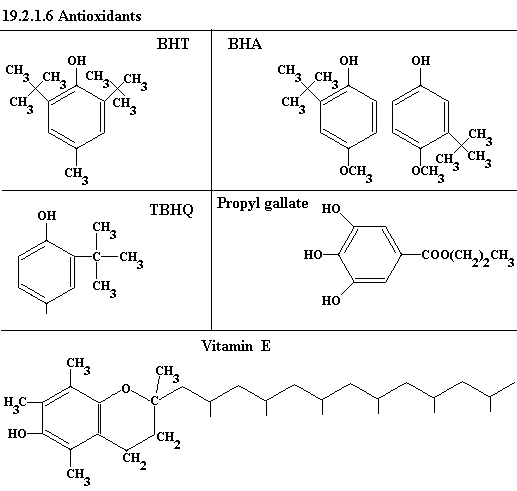
Propyl gallate, anti-fade reagent reduces photobleaching of fluorescence microscopy probes, e.g. fluorescein.
16.3.50 Quinone
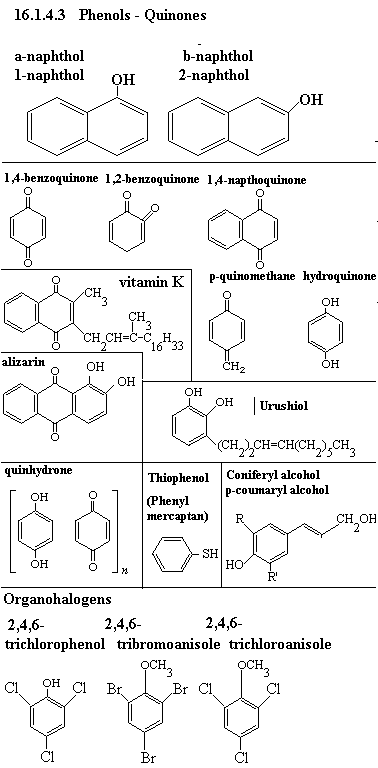
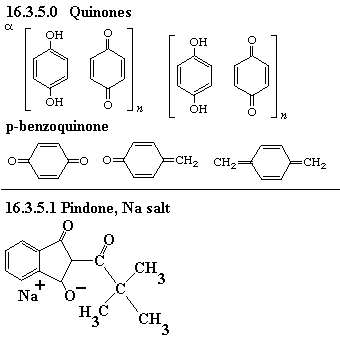
1. Quinone, C6H4O2, 1,4-benzoquinone, p -benzoquinone, para-quinine, para-quinone, cyclohexadiene-1,4-dione. source
The chemical called "quinone" usually refers to the simplest quinone, the yellow crystalline molecule
It is used for preparing dyes, tanning hides, and photography, bright yellow crystals.
It occurs in coal and tobacco smoke, in Iris kemaonensis.
2. Quinones contain the C=O groups in an unsaturated ring, as 1,2-quinones and 1,4-quinones (e.g. cyclohexandiene-1,4-dione).
3. Quinones are aromatic compounds in plants.
All quinones are coloured, many are plant pigments, e.g. lawsone from Lawsonia inermis the orange dye henna, and juglone from walnut shells, Juglans regia.
4. Quinones are formed from oxidation of hydroquinone and in pecan nuts, and are used in dyes.
5. Quinones are phenolics, polyphenols, e.g. Benzoquinones, Naphthoquinones, Anthraquinones.
6. Quinones occur in Aloe-emodin, Alkannin, Chrysophanol, Emodin, Juglone, Physcion, Primin, Plastoquinine-9, Ubiquinone-10.
16.3.51 Safrole
Safrole, C10H10O2, a phenylpropene, colourless-yellow oil, aroma of "sweet shops", a heptocarcinogen that cause permanent liver damage. source
Safrole is a genotoxic compound.
It occurs in root of Sassafras tree (Sassafras albidum), Brazilian sassafras (Octea odorifera), and quid of Betel leaf, (Piper sarmentosum), Piperaceae
Safrole-DNA adducts, which induce chromosomal variations.
It is found in oral cancers of Areca users.
Safrole is the principle constituent of sassafras oil and brown camphor oil.
16.3.52 Salicyclic acid
Salicyclic acid, C7H6O3, HOC6H4COOH, 2-Hydroxybenzoic acid, odourless white to light tan solid, sinks and mixes slowly with water. source
Salicyclic acid is a bitter-tasting derivative of phenol, and is a plant hormone.
It has bacteriostatic, fungicidal, and is used to soften the epidermis.
The salicylate salts, are used as analgesics, and it is used to make Aspirin, acetylsalicyclic acid.
16.3.53 Gingerol
Gingerol, C17H26O4, 6-Gingerol, 8-Gingerol, 10-Gingerol, 12-Gingerol source
6-gingerol in ginger rhizome, a phenol, yellow oil, antioxidant, anti-inflammatory, antitumour, anti-nausea, anti-carcinogenic.
6-gingerol, C17H26O4 → zingerone, vanillyl acetone, C11H14O3. source
Te 6-, 8-, 10-, 12- gingerols are easily altered by cooking or drying.
Cooked ginger is less pungent than fresh ginger, gingerols → zingerones. source
Dried ginger is more pungent than fresh ginger, gingerols → shogaols, 6-gingerol, C17H26O4 → 6-shogaol, C17H24O3. source
16.3.55 Zingerone
Zingerone, C11H14O3, Vanillylacetone, a methyl ketone, is the pungent principle of ginger, only slightly pungent, sweet spicy aroma. source
It is used in imitation fruit flavours, ginger beer, ginger ale, gingerbread.
It occurs in fruits, e.g. cranberry, raspberry, mango, (Alpinia officinarum) and (Vitis vinifera).
Zingerone occurs in (Saccharomyces cerevisiae).
This page was generated automatically from the original page on John Elfick's School Science Lessons website. If something looks wrong, please check the original.