Chemistry Experiments, L
Last updated 2026-10-14 by Dr John Elfick
Chemistry, L
Quick links — A–Z index
Lampblack, P
Lanthanides, Rare earth elements
LCB stain, P
See diagram 10.01.10ch: Liebig condenser
Lime, chemical
Lipase, T
Liquids with different viscosity
Liver with catalase, Disproportionation
Low-cost, chemicals, equipment
LSD, Lysergic acid diethylamide
3.61.0 Prepare lead-tin alloys in a casting mould
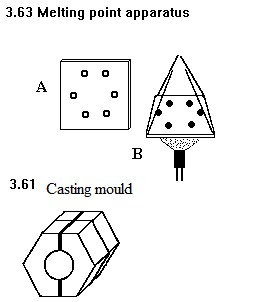
Make a casting mould by drilling out the thread of a nut to leave a smooth hole of about 0.6 cm diameter.
Then cut the nut into two halves with a hacksaw.
Use wire to bind the two halves together for casting, then put this caste on sand.
Pure tin melts at 232 oC and pure lead melts at 327 oC.
Weigh out pieces of lead and tin to make four alloys so that the percentage of tin by weight is 20% tin, 40% tin, 60% tin and 80% tin.
Put each mixture of lead and tin in a crucible or Pyrex test-tube.
Cover each mixture with powdered charcoal to prevent oxidation of the metals, then heat with a Bunsen burner until they melt.
Stir the melt with a wood splint to help the metals dissolve.
Pour each mixture of molten metal into the mould until it is full.
Be careful! Hold back the carbon from the charcoal with a wooden splint while pouring.
When the cast alloy is cool, knock away the two halves of the nut.
3.61.2 Prepare lead dioxide and lead (II) nitrate
Slowly add 20 g of red lead to 50 mL of dilute nitric acid and boil for 1 minute.
Be careful! Filter the solution while hot.
Leave the filtrate to cool and form lead (II) nitrate crystals.
Wash the residue of lead dioxide twice with hot water and dry it by gentle heating in an evaporating basin.
Pb3O4 + 4HNO3 → PbO2 + 2Pb(NO3)2 + 2H2O source
3.61.3 Reactions of lead (II) salts
Reactions of lead (II) salts, Pb2+
1. Add dilute hydrochloric to lead (II) nitrate solution.
Note the white precipitate of lead chloride.
Wash the precipitate, add four times its volume of water and heat.
The precipitate dissolves and precipitates again cooling.
Pb2+ + 2Cl → PbCl2 (s) source
2. Add dilute sulfuric acid to lead (II) nitrate solution.
Note the white precipitate of lead sulfate.
Wash the precipitate, concentrated ammonium acetate solution and heat.
The lead sulfate dissolves.
Pb2+ + SO42 → PbSO4 (s) source
3. Add potassium chromate solution to 3 mL of lead nitrate solution.
Note the yellow precipitate of lead chromate.
Pb2+ + CrO42 → PbCrO4 (s) source
4. Add potassium iodide solution to 3 mL of lead nitrate solution
Note the yellow precipitate of lead iodide that is soluble in hot water
Pb2+ + 2I → PbI2 source
5. Add drops of sodium hydroxide solution to lead nitrate solution.
Note the white precipitate of lead hydroxide that is soluble in excess sodium hydroxide solution.
Pb2+ + 2OH → Pb(OH)2 (s) source
2 Pb(OH)2 + 2OH → PbO22- + 2HO source
(Note: PbO22- = plumbite ion) source
6. Pass hydrogen sulfide through lead (II) nitrate solution.
Note the black precipitate of lead sulfide.
Wash the precipitate, transfer to an evaporating dish, add dilute nitric acid and heat the solution until it boils.
Some lead sulfide dissolves forming lead (II) nitrate solution, and some lead sulfide is oxidized to lead sulfate.
Pb2+ + S2- → PbS (s) source
7. Add drops of dilute sodium hydroxide solution to lead acetate solution until a precipitate forms, then disappears.
Add hydrogen peroxide solution and heat the solution.
Note the brown precipitate of lead dioxide.
8. Add sodium carbonate solution to lead (II) nitrate solution.
Note the white precipitate of basic lead carbonate, Pb(OH)2.2PbCO3. source
3Pb2+ + 3CO32- + H2O → Pb(OH)2.2PbCO3 (s) + CO2 (g) source
Add sodium hydrogen carbonate solution to lead (II) nitrate solution.
Note the white precipitate of lead carbonate.
Pb2+ + 2HCO3 → PbCO3 (s) + CO2 (g) + H2O source
3.61.4 Reactions of lead (IV) salts
Reactions of lead (IV) salts, Pb4+
1. Add 2 cc of red lead to 2 cm with glacial acetic acid.
Heat the mixture and the red lead dissolves.
If a brown precipitate occurs, repeat the experiment using less red lead.
Cool under the tap to precipitate white crystals of lead tetraacetate, lead(IV) acetate.
Pb3O4 + 8CH3COOH → Pb(CH3COO)4 + 2Pb(CH3COO)2 + 4H2O source
Add three times the volume of water to the mixture and heat it to hydrolyse the lead tetraacetate, lead(IV) acetate.
Note the brown precipitate of lead dioxide.
Pb(CH3COO)4 + 2H2O → PbO2 (s) + 4CH3COOH source
2. Add 2 cc of lead dioxide to 2 cm of concentrated hydrochloric acid and cool under the tap.
Filter the mixture and note the golden yellow solution containing lead (IV) chloride.
Divide the solution into 3 parts.
PbO2 + 4HCl → PbCl4 + 2H2O source
Heat part A of the yellow lead (IV) chloride solution and test for chlorine.
Cool the remaining solution under the tap and leave to crystallize.
Note the white crystals of lead (II) chloride.
PbCl4 → PbCl2 + Cl2 (g) source
Add drops of part B of the yellow lead (IV) chloride solution to 880 ammonia solution, NH3 (aq) ("ammonium hydroxide"). source
Note the fine yellow crystals of ammonium chloroplumbate.
PbCl4 + 2NH3 + 2HCl → (NH4)2PbCl6 (ammonium chloroplumbate) source
Add drops of sodium hydroxide solution part B of the yellow lead (IV) chloride solution.
Note the red gelatinous precipitate that on heating forms lead dioxide as a brown powder.
PbCl4 + 2H2O → PbO2 (s) + 4HCl source
3.61.5 Tests for hardness of lead, tin, and lead-tin alloys
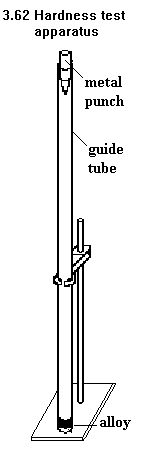
Test the hardness of the four lead-tin alloys and two pure metals, lead and tin.
Use a metal punch with a pointed end and a 1 metre plastic tube to guide the punch as it falls on to the alloy and makes a small hole.
The softer the alloy the larger the hole.
Measure the diameters of the holes with vernier calipers and a magnifying glass.
The pure metals should be less hard than the alloys.
The 60% tin alloy should be the hardest alloy.
This test is a kind of dynamic hardness test, e.g. Vickers hardness test.
Geologists test the hardness of minerals with a scratch hardness test, Mohs' test.
3.61.6 Tests for lead ions
Prepare separate solutions of lead (II) nitrate, iron (III) chloride and barium chloride.
Test a small portion of each solution in turn with dilute hydrochloric acid, dilute sulfuric acid and sodium hydroxide solution.
Tabulate your results.
Note that lead (II) nitrate solution always produces a precipitate.
Also, iron (III) chloride solution gives a precipitate only when sodium hydroxide solution is added.
Barium chloride solution gives a precipitate with both sulfuric acid and sodium hydroxide solutions.
3.61.7 Tests for melting point of lead, tin, and lead-tin alloys
A metal plate, B suspended metal plate
Cut a metal plate from a 12 cm X 12 cm piece of iron, 0.2 to 0.4 cm thick.
Draw a hexagon on the metal plate, then drill a small equal depth depressions at each corner of the hexagon.
Drill holes through the four corners of the metal plate.
Thread wire through the four holes and suspend the metal plate horizontally.
Pour a few globules of four alloys and the two pure metals into separate porcelain bowls.
Be careful! Put one pellet of each alloy or metal into a depression on the metal plate.
Heat the middle of the metal plate with a Bunsen burner.
Touch the pellets with a wood splint to check when they melt.
When all the pellets are all molten, use the wooden splint to remove excess molten metal from bigger pellets so that they are all the same size.
Remove the Bunsen burner flame, leave the metal plate to cool and note the time to form crystals.
Make a table of time to crystallize and plot the results on graph paper.
Pure lead solidifies first, then 20% tin, then 40% tin, then 60% tin.
The alloy that takes the longest time to solidify has the lowest melting point.
The 60% tin alloy should have the lowest melting point.
3.61.8 Lead tetra-ethyl
Lead tetra-ethyl, tetraethyl lead, tetraethylplumbane, Pb(C2H5)4 or C8H20Pb, lead tetra-ethyl (in "leaded" gasoline) source
| 16.7.9: Octane C8H18, Octane number source
| 32.5.5.8: Spark plugs, operating temperature, pre ignition, spark plug gap
| 5.5.22 Petrol sniffing
The "anti-knock" additive to petroleum, the lead alkyl lead (IV) tetraethyl, Pb(C2H5)4, lessens pre-ignition, "knocking" by inhibiting combustion reactions. source
It improves the octane rating of the petrol.
This "leaded petrol" is no longer made or used in Australias, because the compound causes lead poisoning and environmental pollution.
It is replaced by "unleaded petrol" that contains additional hydrocarbons to improve its octane rating, e.g. methanol and methyl tertiary butyl ether (MTBE).
However, some pollution is still produced by unleaded petrol.
3.61.9 Lead paint
Lead (II/IV) oxide, red lead, rust-proof primer paints
Lead paint formerly contained the white pigment "white lead", basic lead carbonate, Pb(OH)2PBCO3, nowadays replaced by titanium dioxide, (TiO2). source
Ingestion and skin absorption of lead caused "lead poisoning", especially in young children sucking lead paint peeling off old walls.
Lead-based paints deteriorate leaving lead in the dust that can be inhaled.
Children can be exposed by eating lead-based paint chips, chewing on objects painted with lead-based paint, or swallowing house dust that contains lead.
"Lead in Paint" from the World Health Organization:
"No level of exposure to lead is considered safe.
The poisonous properties: of lead have been recognized since ancient times.
Today, lead is recognized as one of the twenty leading risk factors contributing to the global burden of disease.
Eliminating lead exposure from petrol has been one of the most significant environment health improvements in recent times.
Products containing lead are still widely made and sold across much of the developing world.
It is very likely that most of the world's people live in countries where exposure to high lead levels in paint is frequent.
Lead in paint is the second largest source of exposure to lead following exposure from petrol.
Paint containing lead is used in infrastructure like bridges, industry (car parts) and for marine uses, and also domestically.
The evidence of neurological damage, especially to children (whose intelligence can be impaired) and to workers in the lead industry is beyond doubt.
Adults can suffer renal and cardiovascular damage.
Some studies suggest a link to behavioural problems as well.
Lead damage is irreversible, and its effects appear to persist into adolescence and adulthood.
House dust is the commonest way in which children are harmed by lead in paint.
The lead remains a risk for many years after the paint has been used.".
12.7.11 Tests for lactic acid solution
1. Add lactic acid solution to the solution to sodium hydrogen carbonate (baking soda) in a test-tube.
Note the effervescence, because of the formation of carbon dioxide gas.
Test for carbon dioxide with limewater.
2. Heat lactic acid solution with iron filings.
Note the effervescence, because of the formation of hydrogen gas.
Increase the reaction by adding drops of copper sulfate solution.
However, it is difficult to obtain sufficient hydrogen to test by explosion with a glowing splint.
3. Boil 5 ml of lactic acid solution with two drops of dilute sulfuric acid.
Leave the solution to cool, then add it to a copper hydroxide precipitate from the reaction of copper sulfate with sodium hydroxide.
Heat the solution and observe a yellow precipitate, which turns red as copper (I) oxide (cuprous oxide) forms.
12.9.2 Reactions of lithium with water
Lithium reacts violently with water to form corrosive lithium hydroxide and hydrogen gas that, if mixed with air, may explode if ignited.
Lithium reacts vigorously with water and acids and so is usually stored under oil.
Lithium floats on paraffin oil so when returning a piece of lithium to the storage container shake the container to recoat the surface with the oil.
Handle lithium in the same way as you would handle sodium metal.
However, lithium is harder to cut than sodium so used a single piece strong scalpel, but do NOT use a scalpel with a disposable blade!
Lithium is toxic if ingested and corrosive to the skin.
2Li (s) + 2H2O (l) → 2LiOH (aq) + H2 (g) source
LPG, Liquefied Petroleum Gas
Ethyl mercaptan: 16.9.2, (odorant in LPG)
LPG, LP-gas (bottled gas), hazards: 3.8.8
Petroleum gas: 16.8.8
Propane: 16.6.2.0
Thiophene: 16.10.14, (odorant in LPG)
Liquefied petroleum gas, LPG
LPG, Liquefied Petroleum Gas, LP gas, LPG gas, LP-gas, compressed gas, bottled gas, is a clean burning fuel and is stored in gas cylinders as bottled gas.
LPG is a simple asphyxiant.
LPG consists of propane (about 95%), together with varying proportions of butane, propylene and butylene.
A rank smelling compound, odorant, e.g. ethyl mercaptan, is added so that the presence of the gas can be easily detected.
Incomplete combustion forms carbon monoxide.
Do not search for a gas leak with a lighted match or lighted taper. but use a soap solution.
LP Gas is highly flammable, violently explosive mixture with air, toxic if inhaled, purchased as cylinders containing the liquefied gas.
Fill cylinders by weight only.
Hazchem Code 2YE
UN number 1075. Keep container upright in a well-ventilated place away from sources of ignition.
Bottled gas
Bottled gas, compressed gas, is gas in metal cylinders under pressure e.g. O2 and N2, and gas liquefied under pressure, e.g. C4H10 source
UK standard colours on cylinder shoulders (EN 1089-3):
| black (N2) | blue (N2O) | brown (He) | dark green (Ar) | grey CO2 | light blue (oxidizing gas) | maroon C2H2 | red (flammable gas) | white (O2) | yellow (toxic gas and corrosive gas) source
See the internet for colours in your country e.g. EU Compressed Gas Cylinder colour codes.
Laboratory
Laboratory gas Piped gas, "lab gas", Household gas
Laboratory gas
In a laboratory, the pilot light should burn with a 90% blue flame.
If the flame is yellow, the gas may be contaminated with condensates.
Do not use such a gas, but immediately inform the local gas authority.
The heating values of fuels: | town gas 88 MJ / kg | natural gas 55.6 MJ / kg | LPG gas 49 MJ / kg | diesel fuel oil 38 MJ / L | kerosene 36.7 MJ / L | coke or coal 27 MJ / kg | dry split wood 12.5 MJ/ kg |.
Lactic acid, C3H6O3, CH3CHOHCOOH
Lactic acid, C3H6O3, CH3CHOHCOOH source
L-(+)-Lactic acid, 2-Hydroxypropionic acid, Sarcolactic acid, in sour milk, an α-hydroxy acid, skin irritant
16.1.2 Clot on boiling test (C.O.B test) (milk)
16.1.3 Alcohol test (milk)
16.1.5 Acidity test (milk)
16.1.10 Inhibitor test (milk)
16.2.4 Cheese making
19.2.1 Anatomy and physiology of meat:
E270 Lactic acid, Food acids, food additives)
E472b Lactic acid esters of monoglycerides
E326 Potassium lactate (Humectant, bulking agent, acidity regulator)
E328 Ammonium lactate (Humectant, bulking agent)
E329 Magnesium lactate (Humectant, bulking agent)
4.5.2 Lactase
19.1.6 Leavening agents
12.7.10 Prepare lactic acid with milk
4.4.3 Prepare lactic acid with sourdough
4.4.4 Prepare lactose from milk or whey using immobilized lactase
4.3.17 Prepare yoghurt, test milk quality
12.7.11 Tests for lactic acid solution
8.5.28 Yoghurt and lactic acid bacteria, "Yakult"
Lactucin
Lactucin, C15H16O5, lactucine, a secondary alcohol, a cyclic terpene ketone, a sesquiterpene lactone, a sedative, an antimalarial It occurs in chicory Cichoriumin, least lettuce (Lactuca saligna), and in wild lettuce (Lactuca virosa). source
Laminarin
Laminarin, C19H36O16, β-1,3- and β-1,6-glucan, linear glucose polysaccharide produced by photosynthesis and used as food reserve by phytoplankton, e.g. diatoms. source
It occurs in oarweed, (Laminaria digitata), kombu, kelp horsetail, Family Laminariaceae, Class Phaeophyceae, Morocco.
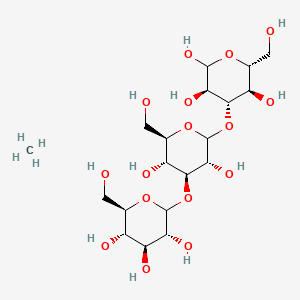
(Laminaria japonica) was formerly the source of MSG, monosodium glutamate.
Lanthanum
Lanthanum, Table of the Elements
Lanthanum, RSC
Lanthanum, La, (Greek lanthanein 'lie hidden'), phosphorescent in energy-saving light bulbs
Lanthanum with Cerium, Ce, in mischmetal: negative electrode NiH battery, cigarette lighter ignition element
Lanthanum chloride | Lanthanum nitrate | Lanthanum oxide | Lanthanum perchlorate
2.11.0 Rare earth elements, Lanthanides
Latex
5.3.5 Condom
23.6.1 Natural rubber, rubber
3.6.11, Vulcanization
23.6.1 Natural rubber, rubber
Natural rubber,from latex, C5H8)n, [n = 4, 0005, 000], polyterpenes in milky latex sap from Brazilian rubber tree (Hevea brasiliensis), Euphorbiaceae, and India rubber tree (Ficus elastica) , Moraceae. source
Polyisoprene, elastomer, diene polymer, natural rubber is mainly cis-1,4-polyisprene, from Hevea brasiliensis, main monomer isoprene, -CH2=C(CH3)CH=CH2-, 2-methyl-1,3-butadiene, also made synthetically, cis polyisoprene, isoprene rubber source
Gutta-percha is mainly trans-1,4-polyisprene
1. Natural polymers occur as brittle glassy gums and resins in plants, e.g. conifers, and as polysaccharides, e.g. starch.
Natural rubber, para rubber, hevea rubber obtained from the milky latex sap of Hevea braziliensis, Euphorbiaceae, contains polyterpenes with linked isoprene units CH2=C(CH3)CH=CH2, [cis-1,4-polyisoprene], in which all the -CH=CH-= groups are cis. source
2. The polymer chains in natural rubber are elastic in the sense that the chains can be unravelled without coming apart, i.e. the rubber can stretch.
Elasticity was improved by cross-linking with sulfur, using the Goodyear process to produce vulcanized rubber.
Stretching aligns the random chains, and temporarily crystallizes and toughens rubber, so that rubber tyres do not form cracks.
Natural rubber is not very elastic in the Hooke's law sense of stress being proportional to strain.
The transisoprene polymer, trans-1,4-polyisoprene, occurs in the latex of Palaquium oblongifolium, Sapotaceae family, the same chemical as natural rubber, polyisoprene, but with trans, not cis, bonding.
3. Test for strength of cross-linkages, add toluene then measure the increase in volume
Rubber bands are made mostly of natural rubber cured by heat.
Petrol can dissolve the cross-linkages between the polyisoprene molecules to allow water molecules to move in between them and swell the rubber band.
4. Hard rubber was made by Charles Goodyear and shown at the 1851 exhibition at Crystal Palace, London.
During the vulcanization process, 30-40% sulfur is added to the natural rubber to form a compound with high dielectric power, high resistance to chemical products, hardness and rigidity up to 50C, and a bright shiny appearance.
It is processed with extruders then worked on machines or compression moulds to make battery separators, telephone receivers, tyres.
23.6.2 Negative thermal expansion (NTE) of rubber, entropy
Negative thermal expansion (NTE) materials contract on heating within certain temperature ranges.
They are not called "thermal contraction" materials.
A rubber band contracts on heating, because when long polymer chains in rubber absorb energy, adopt a more contorted configuration, reducing the volume.
A cooled rubber band, becomes stretchier and expands slightly, because the molecules become more organized into a more efficient stretching shape.
A common explanation of this phenomenon is that the arrangement of long polymer chains in rubber is like a ball of mixed up threads of string.
By grabbing hold of each end of the tangle and pulling it in opposite directions, the threads of string become more horizontal as the ball of string is elongated.
So the arrangement of threads becomes more ordered and the entropy of the system becomes lower.
Reduced entropy, more orderly alignment of molecules, causes the rubber band to lose heat.
A stretched rubber band feels hotter as it expands with heat lost in an exothermic process.
A contracting rubber band feels cooler with heat gained in an endothermic process.
The particles making up rubber in its natural state are more disordered than when the rubber is stretched and is under tension.
When tension is removed the rubber contracts back with the particles returning to their initial disordered state.
Entropy is a measure of the amount of disorder in a system, so the entropy of a rubber band increases when it changes from a stretched state to a natural state.
The change of entropy of a system in a reversible process = the amount of heat absorbed or emitted / absolute temperature of the system.
23.6.3 Heat and cool rubber bands, rubber band heat engine
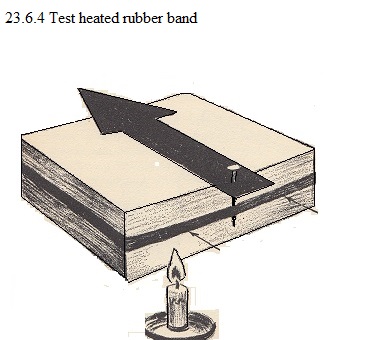
1. To demonstrate the effect of heating rubber bands, stretch a rubber band around a wooden box.
Cut out an arrow shape from a piece of cardboard.
Mount the arrow on a pin and then push the pin under the middle of the elastic band.
If the elastic band is heated at the left of the pin, it contracts, pulling the pin towards it and the point of the arrow moves to the right.
2. Rubber band heat engine is a bicycle wheel with rubber bands instead of spokes.
Set up the bicycle wheel vertically.
Rubber contracts on heating so a lamp or a hair dryer placed on one side of the wheel shift the centre of gravity, resulting in rotation.
Cooler rubber spokes move into the irradiated region to repeat the process.
To achieve a smoother rotation the wheel is balanced using small pieces of Plasticine placed around the rim.
3. To make more space in a freezer, you might collect scattered items, e.g. ice lollies, and put an elastic band around them.
However, after some time the originally stretched elastic band become loose and slacker, than when first applied to the ice lollies at room temperature.
4. To observe the thermal properties of rubber, hang a 1 kg mass from four rubber bands, so it touches the table.
Heat with a radiant heater for 20 seconds and the mass will lift.
Enclose a rubber tube in a copper cylinder and heat with a Bunsen burner.
The rubber tubing contracts as it is heated.
Stretch and unstretch rubber bands on the lips to feel the changes in temperature.
23.6.4 Stretch rubber bands
Hooke's law does not apply to polymers or rubber.
1. Stretch a thick rubber bandit (> 0.5 cm wide) quickly against the forehead, lips, or wrist and note the increase in temperature.
Hold it stretched, allow it to cool back to room temperature.
Then let it suddenly contract against the lips to its original length and note the temperature drop.
2. Use a hair dryer to heat a stretched rubber band, e.g. 1 cm wide, with a weight on the end, e.g. 2 kg.
3. Stretch a wide rubber band between the index finger of your two hands.
Let the rubber band touch the lips.
Stretch the rubber band (not so far that it breaks!) then slowly release the tension.
Feel heat in your lips when the rubber band stretches, because of friction between the rubber molecules.
The stretched rubber band feels cooler when the tension is released.
4. Hold each end of the rubber band with the fingers of your hands, press your lips firmly to the middle of the rubber band, and maintain contact as you quickly stretch the rubber band in opposite directions outward.
Your lips you will feel a sudden heat from the rubber band.
5. Suspend a 100 g weight from a rubber band attached to a clamp stand.
Adjust the height of the 100 g weight until it just touches the table.
Use a vertical ruler to measure the length of the suspended rubber band.
Bring a heat source, e.g. a lighted match or hair dryer close to the middle of the stretched rubber band.
Note that the heated rubber band contracts.
Laudanum
Laudanum, opium, diluted in wine with cloves and other spices, former common medicine, e.g."poppy-head tea" given to noisy babies
Laudanum is an opium tincture made from poppy seeds and contains almost all the 20 opium alkaloids, including morphine and codeine. It slows transmission of signals within the central nervous system, and slows respiratory rate and heart function. Laudanum may be used to treat severe diarrhoea, neonatal abstinence syndrome (NAS), i.e. ddiction to opiates babys whose mothers used opiates during pregnancy.
Lauric acid
Lauric acid, C12H24O2, CH3(CH2)10COOH, dodecanoic acid, medium chain, saturated fatty acid source
It occurs in milk (human, cow, goat), laurel oil, palm oil, coconut oil.
It has high MP 43.2 oC, increases high density lipoprotein (HDL), the "good" cholesterol
Fatty acids in oils of natural products: 5.1.3 (Table)
Fats in food: 3.90
Lavandulol
Lavandulol, C10H18O, is a monoterpenoid primary alcohol. source
It occurs in lavender oil, in the essential oil of Poljakov, (Tanacetum gracile), and in Achillea.
It is used as a fragrance in pheromone perfumes, which are perfumes infused with lab-created ingredients meant to mimic the chemical signals our bodies naturally emit to make a person smell enticing to other persons.
Lawrencium
Lawrencium, Lr, atomic number 103, radioactive actinide atom, d-block element atom. discovered in 1961, twelve isotopes with mass numbers 252 to 266.
Lead, Pb
Lead, Pb
Lead Table of Elements
57 Lead, RSC
Lead, element, Lead foil, Lead shot, Lead Plate Electrodes 100 x 50 x 1.5 mm, 100 x 50 x 3 mm, 75 x 25 x 1.5 mm, Lead cube, 10 mm, 20 mm
Lead, Pb (plumbum) (Old English leād), metal foil 0.3 mm, powder, filings, strip, sheet, grain, lead AAS std, lead cell test kit, (0.5-5 mg / L),
lead shot, fishing sinkers, roof guttering, Harmful, chronic poison if long-term exposure from pipe work, pottery glazes, containers, dusts.
Lead poisoning kills many people every year from long-term effects such as kidney failure, high blood pressure, heart disease, stroke and brain damage.
Lead type (lead, tin, antimony alloy), invented by Johannes Gutenberg (1395-1468, Germany), first printed Bible using moveable lead type, lead shot,
fishing sinkers, roof guttering, foil, powder, filings, strip, is a soft, dense, and unreactive metal, available as lead foil, powder and lead shot
It is extracted from the ore galena (PbS), used in fishing sinkers, solder, lead glazes and X-ray protective shields
It holds the pieces of glass together in stained glass windows, used in bullets, lead shot, building construction, lead cell accumulators, pewter, bearings and alloys.
Formerly, ladies used lead carbonate to whiten their laces and some may have died from such use.
Lead reacts with concentrated oxidizing acids, HNO3 or H2SO4 to produce high oxidation number ions, and sulfur dioxide. source
SO2 or nitrogen dioxide, NO2. source
Lead has no reaction with dilute HCl or H2SO4or with water.
Heated lead powder forms lead oxide.
Inorganic Pb2+is an accumulated poison and can replace calcium in bone.
A "lead pencil" contains graphite, not lead.
Lead is a metal with a silvery appearance that is resistant to attack by acids, because of the formation of a protective oxidized layer on its surface.
The metal melts at low temperature and is a good conductor of electricity, so it is used in solders.
The vapours of molten lead are extremely toxic and the effect of inhaling them is cumulative.
Lead salts are toxic by inhalation and can be absorbed through the skin, so should be handled with great care.
Wash laboratory areas where lead salts have been used with a dilute detergent solution to prevent exposure to any residual dust containing lead.
Do not heat lead oxide on a charcoal block.
Lead is used in the production of batteries, ammunition, metal products (solder and pipes), and devices to shield X-rays.
Lead was present in petroleum, paints and ceramic products, caulking and pipe solder.
Hhowever, because of health concerns, it is now prohibited to include lead in these products.
Water pipes in some older buildings may contain lead solder.
Atomic number: 82, Relative atomic mass: 207.2, RD 11.3 g cm-3 MP = 327 oC, BP = 1744 oC.
Specific heat capacity: 130 J kg-1 K-1.
Leadbr> Lead, Pb: 35.2.42, (Geology)
"Lead pencils": 35.3.5, (Geology)
Aquadag: 35.3.6, (Geology)
Graphite: 35.3.4 (See: 4.), (Geology)
3.61.9 Lead paint
3.61.8 Lead tetra-ethyl, tetraethyl lead
Lead ore, galena: 35.2.33, (Geology)
Lead residues: 3.3.3 (Disposal)
Prepare lead-acid battery electrolyte: 32.5.3.6
Prepare lead-tin alloys in a casting mould: 3.61.1
Prepare lead dioxide and lead (II) nitrate: 3.61.2
Reactions of lead (II) salts, Pb2+: 3.61.3
Reactions of lead (IV) salts, Pb4+: 3.61.4
Separate sand and lead powder by panning: 10.8.1
Lead tests
Tests for hardness of lead, tin, and lead-tin alloys: 3.61.5
Tests for lead: 12.11.3.21
Tests for lead ions: 3.61.6
Tests for melting point of lead, tin, and lead-tin alloys: 3.61.7
Lead compounds Lead compounds are cumulative poisons
All lead salts are highly toxic if ingested or particles inhaled.
Wash hands after handling.
Use < 10 mL or g of lead compounds per activity.
Bright orange pottery glazes usually contain lead salts.
The pigments white 1, white 2, white 16, mixed white, chrome yellow, chrome green, and chrome orange are highly toxic cumulative poisons.
Chrome red, PbO.PbCrO4, basic lead chromate source
Chrome yellow, PbCrO4, lead chromate pigment source
Crocoite, PbCrO4, Red lead ore source
Lead paint detection kit to detect lead in paint
Lead (II) acetate, Lead (II) ethanoate, lead acetate
Lead (II) bromide, PbBr2, lead bromide, highly toxic by all routes source
Lead azide, Pb(N3)2, is a contact explosive, in detonators source
Lead (II) iodide, PbI2, lead iodide, lead diiodide, highly toxic, is a cumulative poison source
Lead (II) iodide, Solution < 1%, Not hazardous
Lead (IV) acetate, lead (IV) ethanoate, Pb(CH3COO)4, lead tetraacetate source
Lead (IV) tetraethyl, Pb(C2H5)4: 3.61.8 Lead tetraethyl source
Lead antimonate, Naples yellow for craft, antimonate of lead
Lead manganese oxide, coronadite, Pb2Mn8O16: 35.2.26, (Geology) source
Lead residues: 3.3.3 (Laboratory disposal)
Pyromorphite: 35.2.56, Pb5(PO4)3Cl (lead phosphate), (Geology) source
Lead acetate
Lead (II) acetate, Pb(CH3COO)2, lead (II) ethanoate source
Lead (II) acetate, Toxic by all routes, cumulative poison
Lead (II) ethanoate, Solution < 0.5%, Not hazardous
Lead (II) acetate, m.p. 75 oC, white to colourless, monoclinic crystals or granules, slowly efflorescent, absorbs CO2 from air and becomes insoluble source
Lead (II) acetate dissociation: Pb(CH3COO)2 (aq) < → Pb2+ + 3CH3COO- source
Lead (II) acetate, "sugar of lead" (HARM 1616)
Lead (II) acetate trihydrate crystals, (Pb(CH3COO)2.3H2O source
Lead (II) acetate trihydrate, C4H6O4Pb.3H2O source
Lead (II) acetate, For 0.1 M solution, 38 g in 1 L water + dilute ethanoic acid to clear
Lead (II) acetate test paper for H2S (for testing anions) source
Lead (II) acetate basic, anhydrous, Pb(CH3COO)2, 72% for sugar analysis source
Lead antimonate
Lead antimonate, Pb3Sb4O3, Pb(SbO3).Pb3(SbO4)2, "Naples yellow", antimony yellow, ancient mineral pigment, for craft, antimonate of lead, toxic source
Lead (II) bromide
Lead (II) bromide, PbBr2, Solution < 1% Not hazardous source
Electrolysis of lead (II) bromide melt: 5.6.1
Lead (II) carbonate
Lead (II) carbonate, PbCO3 source
Lead (II) carbonate, PbCO3, cerussite, basic lead carbonate, (PbCO3 + Pb(OH)2, white lead source
Lead (II) carbonate, PbCO3, lead carbonate, lead carbonate basic, white lead flux, paint pigment, Toxic source
Lead (II) carbonate, cerussite, ceruse: 35.2.20, (Geology)
Lead (II) carbonate Solution / mixture < 1%, Not hazardous
Lead (II) carbonate hydroxide, PbCO3.Pb(OH)2, white lead, basic lead carbonate, flux, paint pigment, Low cost: pottery supplies source
Lead (II) chloride
Lead (II) chloride, PbCl2, lead chloride, highly toxic by all routes source
Lead (II) chloride, Solution < 1%, Not hazardous
Lead (II) chromate
Lead (II) chromate, PbCrO4, lead chromate, very insoluble in water, highly toxic by all routes, highly corrosive, strong oxidizing agent source
Lead chromate, orange-yellow powder, crystalline, SG 6.3, insoluble in water, acetic acid, and ammonia, but soluble in acid and alkalis.
It is possibly the most insoluble salt in water.
If heated to decomposition emits toxic chromium fumes which affect the lungs, possibly lung cancer.
Lead chromate pigment, (Naples yellow), is a highly toxic cumulative poison.
Lead (II) chromate, Solution < 1%, Not hazardous
Chrome red, PbO.PbCrO4, basic lead chromate pigment source
Chrome yellow, PbCrO4, lead chromate pigment source
Use in printing inks, paints, to colour vinyl and rubber.
Lead (II) nitrate
Lead (II) nitrate, Pb(NO3)2, white to colourless large crystals, reactivity series, lead (II) nitrate, Toxic, cumulative poison source
Lead (II) nitrate, Solution < 1%, Not hazardous
Lead (II) nitrate, Pb(NO3)2, lead dinitrate, lead nitrate, white to colourless, translucent cubic or monoclinic crystals, decomposes at 470 oC. source
It is the only common soluble lead compound, forms explosive mixture with combustible materials, e.g. S, P, metal powders
The heated solid forms highly toxic nitrogen dioxide, test for anions: forms bright yellow precipitate of lead iodide, with sodium or potassium iodide
Lead (II) nitrate, For 0.1 M solution, 33 g in 1 L water
Coloured precipitates: 12.2.4.02, (See: 1. and 3.)
Tests for hydrogen sulfide solution: 13.3.26 (See: 2. Lead (II) nitrate test
Zinc displaces lead from lead (II) nitrate solution: 12.14.16
Lead (II) sulfate
Lead (II) sulfate, PbSO4, lead sulfate, green vitriol, blue lead, white lead, Toxic, cumulative poison source
Lead (II) sulfate was previously in white lead paint.
Lead (II) sulfate, Solution < 1%, Not hazardous
Prepare lead acid battery electrolyte: 32.5.3.6
Anglesite: 35.2.6, (Geology)
Lead (II) sulfide
Lead (II) sulfide, PbS, lead sulfide, lead glance, blue lead, Toxic, cumulative poison
Galena: 35.2.33, (Geology)
Lead (II) sulfide, Solid mixture < 1%, Not hazardous
Lead (II) oxide
Lead (II) oxide, PbO, lead oxide, lead monoxide, plumbous oxide, amphoteric, litharge, massicot, Toxic
Lead (II) oxide mono, yellow lead oxide, litharge, massicot, flux, lead monoxide, lead protoxide, yellow amorphous powder, fused and crystalline form called litharge, used as pigment in glass and enamels
Lead monoxide pigment (yellow 46), is a highly toxic cumulative poison
Solution < 1%, Not hazardous
Lithage, PbO, lead (II) oxide, lead monoxide, lead oxide, massicot (amphoteric)
Battery capacity: 32.5.3.7
Lead (II/IV) oxide
Lead (II/IV) oxide, Pb3O4, triplumbic tetroxide, red oxide of lead, lead tetroxide, red lead, minium, Toxic by all routes, cumulative poison source
Lead (II/IV) oxide, red lead oxide, Pb3O4, 2PbO.PbO2, dilead (II) lead (IV) oxide (red lead, anticorrosive paint pigment) source
Lead (II/IV) oxide, Solid mixture < 1%, Not hazardous, trilead tetroxide, red, lead, triplumbic tetroxide, lead tetroxide
Toxic by all routes, cumulative poison
Two valence states: Pb2+ and Pb4+ (Pb4+)(Pb2+)2O4)
It reacts violently with Al and Mg powders and some organic materials.
Do NOT heat lead (II, IV) oxide on a charcoal block.
Old paints may contain > 30% lead, but nowadays may contain only < 1% lead, bright red or orange, pigment.
Lead (II/IV) oxide forms insoluble iron (II) plumbate and iron (III) plumbate with iron and iron oxides.
It is used in anti-corrosive lead paints, especially rustproof primer paints.
Lead tetroxide is soluble in dilute hydrochloric acid, so it can dissolve in the hydrochloric acid in the stomach and act as a lead poison.
Lead (II/IV) oxide is NOT soluble in water, so it can be used in lead glass.
It is used to make lead cell accumulators (car batteries, lead-acid batteries), and flux.
Minium stone is used for craft and smelting.
Lead (II/IV) oxide, Reduce red lead to lead and oxygen: 10.10.1
Lead (IV) oxide
Lead (IV) oxide, PbO2, lead dioxide, lead peroxide, highly toxic by all routes, cumulative poison source
Lead (IV) oxide, Solid mixture < 1%, Not hazardous
Lead (IV) oxide, PbO2, lead dioxide, car battery plates, lead-acid accumulator (+ve accumulator electrode) source
Lead (IV) oxide, lead tetroxide pigment (red 105), is a highly toxic cumulative poison
Lamotrigine
Lamotrigine, C9H7Cl2N5, a dichlorobenzene, a non-narcotic analgesic, an antidepressant and anticonvulsant drug. source
Its physiology effect is to decrease central nervous system disorganized electrical activity, and is available in Australia on prescription.
It is widely used in the treatment of both epilepsy and as a mood stabilizer in bipolar disorder, and it has relatively few side-effects, but may cause serious rashes in children.
Lemons
(Italian limone 'lemon')
Lemons, lemon juice, 5-8% citric acid
Lemon, (Citrus x limon), (lemon citrus fruit), Rutaceae
Acid-base indicators in the home: 19.1.1, (lemonade)
Citric acid, C6H8O7 source
Lemon cell, (electricity from lemons)
Lemon juice: 3.2.6, invisible ink
Isolation of benzoic acid in lemonade: 9.1.9
Prepare citric acid crystals with lemon juice: 12.6.1
Prepare mayonnaise and salad dressing emulsions: 7.5.7
Soft drinks, carbonated beverages, fizzy drinks, sports drinks
Tests for lemon juice effect on apple browning: 19.2.3.4 (Cooking)
Tests for pH of water in the laboratory: 18.1.2 (lemonade)
Lemon juice
Lemon juice is rich in vitamin C (100g of lemon juice contains 38 mg of vitamin C), pH 2-3, because of citric acid content.
It can break down the amines in fish into non-volatile ammonium salts to neutralize the fishy odour.
It can hydrolyse the tough collagen fibres in meat to tenderize it.
Lemon juice does not dissolve fat.
Use lemon juice to treat dandruff, blackheads, facial blemishes, rough hands, sore feet, constipation, itches, minor wounds.
Use with honey and olive oil relieve coughing, unclog ketchup bottles, write with invisible ink, blonde hair, deodorize cooked fish, fish cooking utensils.
Use it on microwave ovens and refrigerators, remove fruit stains, rust, mineral discoloration, ink spots from clothing, whiten fingernails.
Use it with salt to clean brass and stainless steel sink.
Use lemon juice to prepare bathtub rust stains cleaner.
Lemon oil
Lemon oil is oil from lemon peel, D-limonene, a terpene, used for furniture polish, inhibits spiders and insects, stain remover.
Limonene
Limonene, C10H16, is an aliphatic hydrocarbon, cyclic monoterpene, colorless liquid, fragrance, flammable. source
It is a major flavour component in many species, including the essential oils of citrus fruit peels.
It occurs in pine trees, resins, and many other species, including, Eucalyptus, yarrow, celery, lipstick tree, caraway.
Also, limonene monoterpenoids, e.g. Perilla alcohol, C10H16O. source
Lepidine
Lepidine, C20H18N4O2, lepidine B is an aromatic ether, which can be isolated from seeds of the garden cress, (Lepidium sativum). The garden cress is used in the sandwich filling called 'mustard and cress': white mustard (Sinapis alba), (Brassica alba) + cress (Lepidium sativum). source
Leucine
Leucine, (Table of amino acids)
Leucine, DNA codons
Leucine, (See: a3)
Linoleic acid
Linoleic acid, C18H32O2, CH3(CH2)4CH=CHCH2CH=CH(CH2)7COOH, polyunsaturated omega-6 fatty acid, has cis and trans forms. source
In the cis configuration, the four hydrogen atoms adjacent to the double bonds occur on the same side of the carbon axis.
In the trans configuration, the four hydrogen atoms adjacent to the double bonds occur on alternate sides of the main carbon axis, 2 on one side and 2 on the other.
The more stable trans configuration may be produced from the cis configuration during hydrogenation of polyunsaturated vegetable oils to improve their texture.
Trans fatty acids tend to raise the level of low density lipoproteins (bad LDLs) and lower the level of high density lipoproteins, (good HDLs)
These actions may result in changes in cholesterol levels that may increase the risk of the heart disease atherosclerosis.
Mono-unsaturated, unhydrogenated oils, e.g. olive oil, are preferable to the trans fatty acids in French fries, chips, and doughnuts.
The first double bond is on carbon #6, counting from left to right so this is an omega-6 fatty acid, typical of the unsaturated fatty acids in plant oils and seeds.
However, fish oils contain omega-3 fatty acids, i.e. the first double bond in on carbon #3.
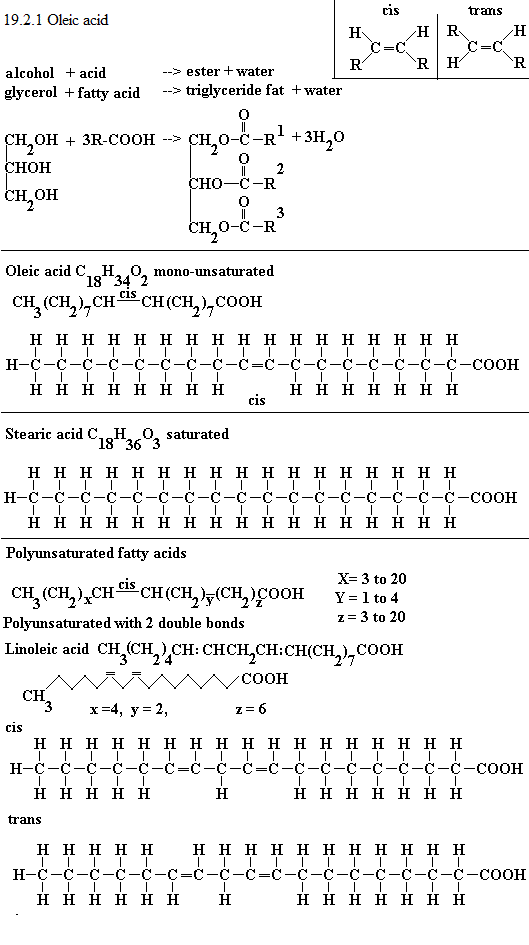
19.2.1.7.2 Trans fats, Omega-fatty acids
Linolenic acid
Linolenic acid, C18H30O2, α-linolenic acid, Alpha linolenic acid, (ALA), polyunsaturated fatty acid (PUFA), essential fatty acid in diet because not synthesized by mammals. source
It occurs in omega-3 fatty acids group, in plant oils, e.g. canola, soybean, linseed, olive.
English walnut, may inhibit synthesis of prostaglandin, so reducing inflammation and some chronic health problems.
Linolenic acid, polyunsaturated omega-3 fatty acid
Two isomers in common vegetable oils:
1. Alpha-linolenic acid (ALA), C18H30O2, is a polyunsaturated omega-3-fatty acid, essential fatty acid not produced in the human body. source
High concentration occurs in lants, nuts, vegetable oils, including:
| Chia, (Salvia hispanica) | Kiwi fruit, (Actinidia deliciosa)
| Perilla, (Perilla frutescens)
| Flaxseed, (Linum usitatissimum)
2. Gamma-linolenic acid (GLA), C18H30O2, a polyunsaturated omega-6-fatty acid. source
High concentration in and seed oils of blackcurrent and borage and Evening primrose
Lignin
Lignin, (C18H13N3Na2O8S2), is an organic polymer in wood fibres and grass cell walls of vascular plants. source
It is composed of coniferyl, p-coumaryl, and sinapyl alcohols in varying ratios.
Lignin, cellulose, hemicellulose, are copolymers of phenyl propane units with side chains.
Copper is involved in the formation of lignin for strong shoots and stems.
Filter paper contains lignin, but cigarette paper does not contain lignin.
Lignans, polyphenols from degradation of lignin, e.g. Sesamin
Cellulose digestion: 9.1.10
Lignotuber, Banksia, Eucalyptus
Microbial decomposition of cigarette paper: 4.2.8
Tests for lignin: 9.3.12
Tests for lignin, Microscope staining techniques: 9.1.10 (See: 3.)
Tests for wood: 9.3.22
Xylem: 9.1.5
Lighted splint tests
Lighters, matches, tapers, (Commercial)
Burn wood splints in chlorine: 12.4.8.6
Dinitrogen oxide (nitrous oxide): 13.3.22
Prepare hydrogen gas bubbles: 13.3.15, (See: 8.)
Prepare sunbeam mists: 7.8.15, methylene chloride mist
Tests for acetylene: 16.4.2
Tests for carbon dioxide with lighted splints: 3.5.4
Tests for dinitrogen oxide, nitrous oxide, N2O: 13.3.23 source
Tests for hydrogen chloride: 13.3.24
Tests for dinitrogen oxide, nitrous oxide: 13.3.23
Tests for oxygen: 3.49.1
Lime, chemical
Lime, chemical
Lime, CaO, Ca(OH)2, CaCO3, ambiguous name, usually CaO, lump, lime, quicklime, powder, Toxic if ingested or by skin contact source
"Lime" may be also Ca(OH)2 or CaCO3. source
Chalk: 35.4.0, (Geology)
Chalk (lime) content of the soil: 6.9.02, (Agriculture)
Heat calcium metal to form calcium oxide: 8.2.14
Lime sulfur, CaSx: 4.3.1 (Agriculture)
Limestone: 35.4.12. (Geology)
Marble: 35.3.9, (Geology)
Prepare quicklime, CaO: 34.2.7
Prepare slaked lime, Ca(OH)2: 34.2.8 source
Prepare soda lime: 34.2.12
Tests for limestone: 35.6.14 (Geology)
Lime sulfur, CaSx, (Agriculture)
Limewater
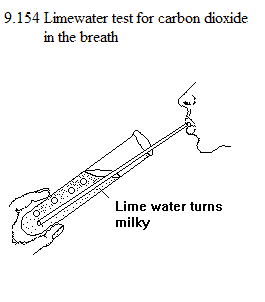
Limewater, saturated calcium hydroxide solution
Calcium hydroxide, Ca(OH)2, limewater, 10 g in 1 L water, shake, allow it to settle, decant clear liquid. source
Weaker bases, e.g. calcium hydroxide (limewater, slaked lime), can cause burns if they are left in contact with the skin.
If poison ingested = Ammonium oxalate, Buffer solution tablets pH 2, Oxalic acid, Potassium hydrogen oxalate, Sodium oxalate, give milk or water, weak limewater, chalk solution
Experiments
Calcium hydroxide with cobalt chloride 12.2.4.1, (See: Below 12.2.4.1, limewater experiments)
Candle flame forms carbon dioxide: 8.1.13
Carbon dioxide is a product of combustion: 8.2.1
Effervescent tablets, health salts, sodium bicarbonate, (baking soda): 11.1.5 See: 1.
Elements in food: 19.4.33.0, See: 2.
Heat different carbonates, carbonates of Cu, Mg, Na, Pb and Zn: 12.16.3
Hydrogen peroxide with potassium sodium tartrate, cobalt (II) chloride catalyst: 17.7.6.3
Precipitation: 10.11.01
Prepare ethyl acetate, (ethyl ethanoate): 16.4.2
Prepare hard water: 12.2.4
Prepare limewater: 5.4.5
Reactions of metals with water, Cu, Zn, Fe, Mg, Al: 12.15.1
Respiration, limewater tests for carbon dioxide: 9.155
Respiration is a form of combustion: 8.2.4
Tea with limewater: 12.2.11
Tests for acetates: 12.11.5.1
Tests for carbon dioxide in the breath with limewater : 9.6.10
Tests for carbon dioxide through calcium hydroxide solution, limewater: 12.16.1.1
Tests for gases from burning hydrocarbons: 16.4.6.0
Tests for lactic acid solution: 12.7.11
Tests for respiration of soaked peas with limewater, respiration apparatus: 9.155
Tests for soap: 12.5.12
Linalool
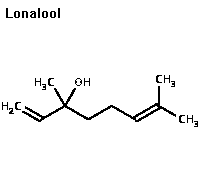
Linalool, C10H18O, (CH3)2C=CH(CH2)2C(CH3)(OH)CH=CH2, is a monoterpenoid, a tertiary alcohol. source
It is used as a volatile oil component, an antimicrobial agent, and a fragrance.
It occurs in basil (Ocimum basilicum), coriander (Coriandrum sativum), Indian hemp (Cannabis sativa), linaloe tree (Bursera linaloe), mugwort (Artemisia vulgaris), yarrow, (Achillea millefolium).
Linseed oil
Linseed oil, from seeds of flax Linum usitatissimum, contains glycerides of oleic acid and other unsaturated acids.
Linseed oil, conditions and seals bare wood in putty, paints, varnishes for cricket bats, linoleum, outdoor furniture.
Use linseed oil to stop splitting in chopping boards, wooden bowls, and cricket bats.
Use linseed oil, boiled with ground resin, to make sticky flypaper paste.
Linustatin
Linustatin, C16H27NO11, cyanogenic glycoside, diglucoside of acetone cyanohydrin, methylpropanenitrile, toxic. source
It occurs in flaxseed meal, and in Passiflora
Lipoproteins
A lipoprotein is a combination of a triglyceride around a cholesterol, surrounded by a phospholipid.
Lipoproteins are divided onto these classes: | HDL, high-density lipoprotein (the good cholesterol) | LDL, low-density lipoprotein (bad cholesterol) | IDL, intermediate-density lipoprotein | VLDL, very low density lipoprotein, and | Chylomicrons |. Chylomicrons are very small particles of proteins and fats, which transport the insoluble fats away from the small intestine, then into the bloodstream.
Lithium, Li
Lithium, Li
Lithium Li, Table of the Elements
Lithium, RSC
Lithium, Li, (Greek lithos stone), lithium metal, lithium ribbon, lithium in paraffin liquid
Lithium is a least dense, soft and shiny surface metal.
When cut by knife it tarnishes, and it is a very reactive alkali metal with acids.
It is stored under oil, because it reacts with air and water, but least reactive element in group I, red flame test colour.
It is a rare element, found in some granite pegmatite, and used in Al and Mg alloys, batteries and anti-depressant medicines.
Lithium reacts with oxygen gas and water, and, on heating, it reacts with nitrogen and hydrogen gas.
Lithium carbonate is used for a craft flux.
Atomic number: 3, Relative atomic mass: 6.941, RD 0.53 g cm-3 MP = 180 oC, BP = 1330 oC.
Specific heat capacity: 3.39 × 10³ J kg-1 K-1.
Lithium compounds
Prepare lithium oxide: 12.9.1
Lithium-ion battery: 33.1.8.4, Li-ion battery
Reactions of lithium with water: 12.9.2
Lithium compounds: (very toxic)
Lithium aluminium hydride, LiAlH, lithium tetrahydroaluminate, Toxic by all routes, Not permitted in schools
Lithium aluminium silicate, LiAlSi2O6, spodumene, forms 6 m crystals, grey-white ash when ignited source
Lithium carbonate, Li2CO3 for craft, flux, glaze, tranquillizer for mental disorders, white solid, Toxic, Irritant source
Lithium carbonate, Low cost: from pottery supplies stores
Lithium hydride, Toxic by all routes, fine particles mixed with air is explosive, reacts violently with water to form dangerous hydrogen
12.9.1Prepare lithium oxide
12.9.1Prepare lithium oxide
Heat pieces of lithium metal shot on a metal spoon (deflagrating spoon).
Note the violet glow when it starts to burn, then put the burning lithium in oxygen gas.
4Li + O2 → 2LiO2 source
Lithium oxide is used in some ceramic glazes as a flux and colorant.
Lotoaustralin
Lotaustralin, C11H19NO6, is a cyanogenic glycoside. source
It occurs in passionfruit (Passiflora edulis) and white clover, (Trifolium repens), cassava, (Rhodiola sachalinensis), and (Phaseolus lunatus).
Epilotaustralin, C11H19NO6, is found in Rhodiola, and Einkorn (Triticum monococcum), an ancient diploid wheat, and in other cereals. source
Low-cost, chemicals, equipment
Low-cost chemicals, and common substances
Low-cost equipment, simple equipment: 1.12.0
Consumables low cost equipment
Luminescence
Luminescence is the property of substances that can emit light without any heat being applied and they include fluorescent and phosphorescent substances
Luminescence means emitting light from an object without its being heated and may refer to the glow from that object.
Luminescence is emission of light for any reason other than a rise in temperature, e.g. excited photons returning to a ground state.
However, thermoluminescence and candoluminescence refers to a substance emitting light when heated.
28.101 Candoluminescence
Chemiluminescence Chemiluminescence
28.104 Luminance and illuminance
This page was generated automatically from the original page on John Elfick's School Science Lessons website. If something looks wrong, please check the original.