Chemistry Experiments, P
Last updated 2026-10-14 by Dr John Elfick
Chemistry, P
Quick links — A–Z index
Paradichlorbenzene, chlorine with benzene
Paris Green, Copper (II) acetoarsenite
PBDE, Pentabromodiphenyl ether
Pectin, E
Pencil sharpener galvanic cell E
Pentose, C5H10O5 source
Peptides, E
Perfluorooctanesulfonic acid, PFOS
Periodic Table, RSC
Table 1. Periodic Table
Table 2. Terms, Table of the Elements:
Perlon plastic, Nylon polyamide
Peru balsam, P
PET, Birefringent clear plastic, E
Petroleum, E
PFOS, perfluorooctanesulfonic acid
Phenylamine, P
Phosphates, E
Phosphatidylcholine group, Lecithin
Phospholipids, phosphoglycerides, E
Phosphorus, P
Photography, E
Physical changes, magnetize and demagnetize iron wire
Pig iron, cast iron
Pigments, E
Plant dyes, Prepare, (Primary)
Pitch, (Chemistry)
Plagioclase feldspar, Group 2.
Perlon plastic, Nylon polyamide
Porphyrins, haeme, chlorophyll
Poultices, P
Practical work, student learning
Precipitates, E
Prohibited High Risk Chemicals
Propanal, Propionaldehyde
Propanethiol, Propane-1-thiol
Propanedioic acid, Malonic acid
Propanoic acid, Propionic acid
Propylene glycol, non-toxic antifreeze
Protective clothing and safety equipment
PTFE, Polytetrafluoroetheylene, "Teflon"
Pumpkin seed oil, Dichromatism
Pure substances and impure substances
Putty, P
Pyrene, Reactions of benzene, E
Pyridine-3-carboxylic acid, nicotinic acid, Niacin
Pyrogallol, E
Pyrolusite, manganese (IV) oxide
12.3.6 pH
Water can transfer a proton from one molecule to another, autionization.
2H2O → H3O+ + OH- source
and
H2O → H+ + OH- source
The product of hydrogen ion concentration, [H+] and hydroxide ion concentration, [OH-] = the constant, Kw.
Kw = [H+] × [OH-] = 1.00 × 10⁻¹⁴
So [H+] = 10-7 and [OH-] = 10-7
The hydrogen ion concentration is very small in pure water, so the concentration is describes in terms of its negative log.
pH is the negative log of the hydrogen ion concentration, pH = -log[H+], so hydrogen ion concentration, [H+] = 10-pH.
So acidic solutions have a high [H+] and low pH values.
Basic solutions have low [H+] and high pH values.
A solution that is neither acidic nor basic, a neutral solution, has [H+] = [OH-], so pH = 7.
A more acid solution has pH approaching 1.
A more basic solution has pH approaching 14.
Pachypodol
Pachypodol, C18H16O7, a trimethoxyflavone, anti-emetic source
It occurs in Korean mint (Agastache rugosa), (Combretum quadrangulare), and in (Euodia elleryana).
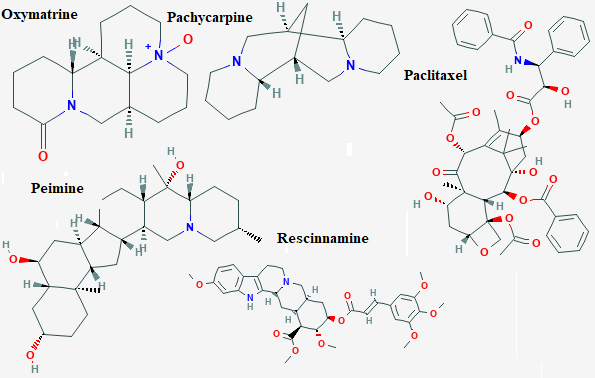
Paclitaxel
Paclitaxel, (C45H51NO14), taxol A, yewtaxan, "taxol", is a tetracyclic diterpenoid, which appears as needles or fine white powder. source
It inhibits mitosis, stabilizes microtubules leading to cell death, so it is an antileukaemia and antitumour medicine.
Paclitaxel can cause female reproductive toxicity and male reproductive toxicity.
The name "Taxol" is now a registered trade mark.
It occurs in the bark of the Pacific yew tree, (Taxus brevifolia).
Palladium, Pd
Palladium, Pd
Palladium Table of the Elements
Palladium, RSC
Palladium, Pd (Greek Pallas (Athene) goddess), white metal, hard, ductile, transition metal, free element, similar to silver. was called "new silver".
It was used for contact points for flintlock pistols, boiling vessels and crucibles.
Now used as foil, powder and wire, in low voltage electrical contacts, and as catalysts for organic chemical synthesis and carbon bond forming reactions, e.g. C-C.
It is a lustrous silver-white metal.
It is resistant to corrosion in air and acids, but is attacked by hot acids, and dissolves in aqua regia.
It can absorb up to 900 times its own volume of hydrogen.
It is used in jewellery as "white gold" alloys with platinum.
It is now the main ingredient of catalytic converters to reduce emissions from car exhausts, replacing platinum.
Also, it is used in wide screen televisions, computers and mobile phones, as tiny multi-layer ceramic capacitors.
Atomic number 46, Atomic mass 106.42 g. mol-1, Density 11.9 g.cm-3 at 20C
M. P, 1560 oC, 9 isotopes, Standard electrode potential + 0.85 V (Pd2+/ Pd )
Palladium (II) acetate, Palladium (II) chloride, Palladium AAS Solution
Palmitic acid
Palmitic acid, CH3(CH2)14COOH, saturated fatty acid, hexadecanoic acid, cetylic acid source
It occurs in olive oil, coconut oil and palm oil.
Palmitic alcohol, hexadecanoic, cetyl alcohol, 1-hexadecanol, CH3(CH2)15OH source
Palmityl alcohol, CH3(CH2)14CH2OH, hexadecanol source
Palmitoleic acid
Palmitoleic acid, C16H30O2, CH3(CH2)5CH=CH(CH 2)7COOH, irritant, unsaturated fatty acid, carboxylesterase inhibitor source
It occurs in glycerides of human adipose tissue, and in human blood serum.
It is possibly anti-thrombotic to prevent stroke.
It occurs in (Macadamia integrifolia).
Pancreatin
Pancreatin, (commercial product), is an alcohol extract of hog pancreas used as enzyme replacement therapy.
Pancreatin contains pancreatic enzymes, trypsin, amylase, and lipase, and is used as a digestive aid.
Pancreatin is used to replace digestive enzymes when the body does not have enough of its own.
9.2.5 Digestion in the intestines, pancreatin suspension
Pancracine
Pancracine, C16H17NO4, is an isoquinoline alkaloid. source
It occurs in (Pancratium maritimum), and in (Amaryllis belladonna).
Pantothenic acid
Pantothenic acid, C9H17NO5, Vitamin B5, is an essential nutrient for many animals, and an antidote to curare poisoning. source
Pantothenic acid, an antioxidant, is a component of coenzyme A (CoA) and a part of the vitamin B2 complex.
It is an essential nutrient to synthesize coenzyme-A (CoA),proteins, carbohydrates, and fats.
The D-isomer is a water-soluble essential nutrient in most food, especially egg yolks, sunflower seeds, blueberries, mulberries, and cherry tomatoes.
Calcium pantothenate, C18H32CaN2O10, is used as a stable dietary supplement. source
19.2.5 Freezing, thawing and cold storage of meat
13.12 Nutritional value of eggs
Paracetamol
Paracetamol, C8H9NO2, CH3CONHC6H4OH, acetaminophen, 4-Acetamidophenol, Tylenol, odourless, white crystalline solid, bitter taste. aqueous solution pH 6 source
It is a non-narcotic, antipyretic, anti-inflammatory, the most commonly taken analgesic, and helps to reduce fever.br> It occurs in varios forms including effervescent tablets and in other medications where dosage may vary.
The suggested dose of paracetamol for adults and children 12 years and over is: no more than 1g every 4 to 6 hours, a total of 4g daily
Paraldehyde
Paraldehyde, C6H12O3, colourless liquid, hypnotic, sedative, anticonvulsant, but seldom used, because administration difficult, so now a former sedative. source
Parchment
Parchment, treated animal skin, (French parchemin, pergumin, 'writing material')
Particles
Particles of matter, Diffusion
Particles, matter as particles, size of particles
Particles, Surface / volume ratio
Parts per million, (Measurement)
11.5.6 Movement of suspended aluminium powder
11.3.6 Size of colloidal particles
11.3.7 Size of oil molecule
Patuletin
Patuletin, C16H12O8, (6-Methoxyquercetin), Quercetagetin 6-methyl ether, Trimethoxyflavone, antioxidant, analgesic, lipoxygenase inhibitor source
It occurs in German camomile, and in pigment from flowers of French marigold, (Tagetes patul).
Pectin
Pectin, (β-D-Galactopyranuronic acid)n, a heteropolysaccharide, from cell walls of plants, (C6H10O7)n source
It is composed of linked methylated polygalacturonic acid units.
Pectin is a safe food substance.
16.1.9 Pectin
4.3.2 Pectins and pectinases
Pectins, E440, Emulsifiers, food additives
16.5.8, Tests for pectin in jelly and jam
Pedalitin
Pedalitin, C16H12O7, flavone, tetrahydroxyflavone, monomethoxyflavone, xanthine oxidase inhibitor, inhibits lipogenase source
It occurs in (Eremosparton songoricum), (Rabdosia japonica), (Ruellia tuberosa), (Sesamum indicum), and in Sullivantia.
Pelargonidin
Pelargonidin, C15H11O5, an anthocyanin, (produced from flavylium,C15H11O+, grape skin extract), orange pigment source
It occurs in human gut microbiota, berries, kidney beans, philodendron, and in snapdragon (Antirrhinum majus).
Pelargonin
Pelargonin, C27H31O15, pelargonidin, (3,5-di-beta-D-glucoside), anthocyanin source
It occurs in the Mukul myrrh tree, (Comiphora mukul).
Pentan
Pentan-1-ol, colourless liquid, bad smell
Pentan-1-ol, C5H12O, 1-pentanol, n-amyl alcohol, n-amyl alcohol, normal amyl alcohol, toxic, Flammable source
Pentan-1-ol, Solution < 25%, Not hazardous
Pentan-2-ol, C5H12O, 2-pentanol, sec-amyl alcohol, n-pentyl alcohol, toxic by all routes, Flammable source
Pentan-2-one, methyl propyl ketone, toxic by all routes, Highly flammable
Pentan-3-one, diethyl ketone, toxic by all routes, Highly flammable
Pentyl
Pentyl -(C5H11) source
Pentyl alcohol, C5H11OH, pentan-1-ol (amyl alcohol, n-pentyl alcohol) source
Pentyl butyrate, n-amyl butyrate (apricot odour), moderate flammability
Pentyl ethanoate, C5H12O, n-amyl acetate, normal amyl acetate, pentyl acetate, 1-pentanol source
Pentyl propanoate, n-amyl propionate, Highly flammable
Prepare amyl acetate, (pear oil): 16.3.7, n-pentyl acetate
Peonidin
Peonidin, C16H13O6, anthocyanin source
It occurs in Lowbush blueberry, (Vaccinium angustifolium).
Peonidin chloride, C16H13ClO6, anthocyanidin chloride, antineoplastic, apoptosis induce, antioxidant source
Penetrating oil
For example:WD-40
1. To treat parasitic mites mange, remove toe stuck in the bathtub faucet, remove substances stuck on surfaces, remove oil spots from driveways.
2, Prevent dead insects and mud sticking to bicycles and cars, clean clogged spray paint can nozzles, thread electrical wire to push through conduits.
3. Clean gardening equipment, prevent squeaks in door hinges and new shoes, remove grease from clothing, polish wood furniture, remove crayonmarks.
Pepper
Pepper, black pepper, spice, Piper nigrum
Black pepper, (Piper nigrum), "pepper", commercial pepper
Separate pepper from salt and pepper: Chilli Project
Chilli pepper, Capsicum annuum, Solanaceae
In the U.S. the Capsicum species are called "peppers".
Peptides
7.1.13 Peptides
ATP, adenosine triphosphate: 16.2.4
Blood constituents (humans): 9.1.2
Construct molecular models: 11.2.3
Glycoproteins and glycolipids: 16.1.16
LSD (lysergic acid diethylamide): 5.5.18
Peptides: 16.1.26
Tests for proteins, biuret test: 9.4.2
Tests for proteins, heat test for proteins: 9.4.4
Peptone
Peptone is a soluble protein formed during protein breakdown in the digestive tract.
Peptone is a water-soluble mixture of polypeptides and amino acids from partial hydrolysis of protein, e.g. beef peptone.
Perchloric acid
Perchloric acid, HClO4, ClHO4, chloric (VII) acid, 70% W/W (strong acid), clear, colourless, odourless aqueous solution, toxic by all routes. source
Perchloric acid, strong oxidizing agent if hot, spontaneous explosion of soaked wood, explosive mixture with combustibles or organic compounds
It is corrosive to metals and tissues, closed containers may rupture. violently if heated.
Perchloric acid should not be used or stored in a school science laboratory.
Perchlorates, (ClO4-) source
Storing oxidizing agents: 3.7.8.
Perillyl alcohol
Perilla alcohol, C10H16O, Perillol, monoterpene alcohol, a limonene monoterpenoid, woody odour, may be anticancer source
It occurs in essential oils of, lavender, bergamot, Tetradenia, Magnolia, citrus oils, hops, caraway, and in mints.
Perillaldehyde
Perillaldehyde, C10H14O, sushi flavour, terpene aroma, perilla sugar It occurs in Perilla, (Perilla frutescens), Lamiaceae. source
Perillene
Perillene C10H14O, a monoterpenoid, it may be anti-inflammatory. source
It has a flowery, citrus-like flavour, and is secreted by thrips, (order Thysanoptera), for defence.
It occurs in Perilla, (Perilla frutescens), and in (Humulus lupulus).
Periodic acid
Periodic acid, HIO4 and H5IO6, toxic by all routes, explosive mixture with combustibles or organic compounds. source
ACS reagent, 100 g in glass bottle
Permanganate ion
Permanganate ion, manganate (VII) ion, (MnO4-) source
Permanganates have purple colour and are soluble in water, noncombustible.
They accelerate burning of combustible material, especially finely divided material when permanganates may spontaneously ignite.
Contact of permanganates with sulfuric acid may cause fire or explosion.
Permethrin
Permethrin, C21H20Cl2O3, ester, pale brown liquid. Relatively water insoluble, sold as: "Nix, Ambush, Pounce, Transpermethrin" source
Pyrethrins occur in pyrethruµm extract from chrysantheµmuµm flowers.
The pyrethrins are used in household insecticides and products to control insects on pets or livestock.
Pyrethroids are similar manufactured chemicals, which are ore toxic and last longer in the environment.
Permitted in schools
Quantity of chemical to be used in experiments: 3.4.11, (5 mL of solution)
Chemical residues: 3.3.0
Chemical Standards National Formulary, NF
Chemical vapours and smelling chemicals3.4.4
Petroleum
Petroleum, petrol, gasoline, "gas", Highly flammable, toxic by all routes.
Do not inhale vapour and do not use petrol as a paint "thinner".
Distil crude oil and collect the fractions: : 10.3.9
Fractional distillation of crude oil: 16.8.1
Petrol, "gas", gasoline, motor fuel: 16.8.10
Petroleum (crude oil and gas): 35.3.10
Petrol-sniffing (Abuse of volatile substances): 5.5.2
Petroleum-based spray oils, + emulsifying agent, horticultural oils, block insect spiracles, e.g. "PestOil"
Petroleum gas; 16.8.10
Petroleum fraction: 7.4.45
Petroleum spirit: 7.4.46
Petroleum jelly, "Vaseline", petrolatum
Experiment
Separate by fractional distillation: 10.3.6
Petroselenic acid
Petroselenic acid, C18H34O2, (6-Octadecenoic acid), irritant, and is used as a major seed oil constituent. source
It occurs in parsley seed, (Petroselenium crispum), ( Agaricus blazei), and in (Angelica ternata).
Petunidin
Petunidin, C16H13ClO7, petunidin chloride, an anthocyanidin chloride source
It occurs in Aronia, (Amelanchier alnifolia), (Vitis vinifera), (Vitis rotundifolia), (Vicia faba), and in the petal colours of Sweet pea, (Lathyrus odoratus).
Petunidol chloride, C16H13ClO7, anthocyanidin chloride, petunidin is the cationic component. source
Pewter
Pewter, malleable, alloy of mostly Sn, + some Cu, Sb, and Bi, previously used for cheap mugs and dishes.
pH tests
pH tests: 18.2.0, pH tests of the environment
Adjusting the pH of swimming pool water
Change in pH near the equivalence point: 12.2.2
pH: 12.3.6
pH of salt solutions: 12.10.7
pH of solid acids: 19.1.11
pH of swimming pools: 18.3.0
pH soil test: 6.10.7
Prepare acid-base plant extract indicators: 5.6.3
Soil acidity: 6.1.0
Tests with multiple reagent strips: 19.5.6, (See: pH tests)
Phase
7.9.15 Phase, Continuous phase / outer phase
24.10.0 Phase changes, liquid / solid, M P, and F P
24.11.0 Phase changes, liquid / gas, boiling point, B P
Phaseolic acid
Phaseolic acid, C13H12O8, phenylpropanoid, an oxybutanedioic acid, hydroxycinnamic acid source
It occurs in leaves of (Phaseolus vulgaris), (Trifolium pratense), and in (Raphanus sativus).
Phaseolin, C20H10O4, phytoalexin, occurs in the French bean, (Phaseolus vulgaris), Fabaceae, and in the stems of Erythrina. source
Phenyl group, (C6H5)
Phenyl group, (C6H5) source
1-phenylazo-2-naphthol, C16H12N2O, Sudan I, Solvent Yellow 14, toxic. skin irritant, purchase solution source
3-phenylpropenoate, C11H12O2, (Ethyl cinnamate, 3-phenylpropenoate, toxic, Flammable) source
3-phenyl propenoic acid, C9H8O2, C9H10O2, C6H5CH:CHCOOH, cinnamic acid, toxic if ingested source
Phenyl benzoate, C13H10O2 (recrystallization experiments, ethanol solvent), benzene substitute, toxic, Irritant, Flammable source
Phenyl bromide, C6H5Br, Bromobenzene: 12.6.3 source
Phenylpropenes: 16.3.45
Phenylalanine, C9H11NO2
Phenylalanine, C9H11NO2 source
Phenylalanine, C9H11NO2, L-phenylalanine, a phenylpropanoic acid, odourless white crystalline powder, slightly bitter taste source
Phenylalanine is an essential aromatic amino acid and is a precursor of melanin, C18H10N2O4. source
Phenylalanine, DNA codons
Phenylalanine, sweetener: 19.2.6
Phenylalanine (Table of amino acids)
Phenylalanine, DNA codons
Aniline, C6H5NH2, phenylamine source
Phenylethene, (C6H5CH,CH2), vinyl benzene, styrene source
Phenylhydrazine, C6H8N2, Highly toxic by all routes source
Phenylhydrazine, C6H8N2, Solution / mixture < 1%, Not hazardous source
Phenylhydrazine hydrochloride, phenylhydrazinium chloride, Highly toxic by all routes
Phenylthiocarbamide, C7H8N2S, PTC, phenylthiourea, (PTU), tasters: 9.9.5 source
Phenylthiocarbamide, C7H8N2S, PTC: 3.19 source
Phenylthiourea, C7H8N2S, phenylthiocarbamide, 1-phenyl-2-thiourea (rat poison), Highly toxic if ingested, asthmatics may be allergic source
Phenylthiourea, C7H8N2S, 0.1% solution soaked in paper used for taster / non-taster genetic test, Experiment Not permitted in schools source
Phenylurea, C6H5NHCONH2, phenylcarbamate, toxic if ingested source
Phytoalexins
Phytoalexins are toxic substances, usually isoflavonoids or terpenoids, produced in plants only after stimulation by pathogenic fung, bacteria, and nematodes.
The phytoalexins are produced by healthy cells near damaged cells in response to substances diffusing from the damaged cells.
Phytoalexins: Phaseollin C20H10O4, Pisatin C17H14O6, Glyceollin C20H18O5, Rishitin,C14H22O2, Gossypol C30H30O8, and Capsidiol C15H24O2. source
Phenanthroline
16.1.27 Phenolphthalein
1,10-phenanthroline monohydrate, use in fume cupboard or < 10 g in cross ventilation (redox indicator), toxic
1,10-phenanthroline iron complex, ferroin solution (redox indicator), toxic if ingested
1,10-phenanthroline iron complex, [10-phenanthroline with iron (II) salt], purchase already diluted solution
Phenethyl alcohol
Phenethyl alcohol, C8H10O or C6H5CH2CH2OH, benzeneethanol, benzyl carbinol, phenol, benzene, primary alcohol, irritant source
It is used as a fragrance in rose perfume, plant growth retardant, antimicrobial, antiseptic, disinfectant, aromatic essence and preservative in pharmaceutics.
It occurs in almond flavouring ingredient, ylang-ylang oil, citrus essential oils, Zanthoxylum, (Rosa rugosa), Pinus, (Piper longum), and in Populus.
Perovskite
Perovskite, calcium titanate mineral, CaTiO3, used in newer solar cells, source
Phenylpropanolamine
Phenylpropanolamine, (PPA). Norephedrine, β-hydroxyamphetamine, C9H13NO, irritant, stimulates release of norepinephrine. source
It acts in the mucosa of the respiratory tract causing vasoconstriction and reduction in swelling of nasal mucous membranes.
It is used as a decongestant and appetite suppressant, formerly in commercial cough and cold medicine, but no longer used in USA and Canada.
β-hydroxyamphetamine has 4 isomers,d- and l-norephedrine and d- and l-norpseudoephedrine.
d-Norpseudoephedrine is Cathine, and it occurs in Khat (Catha edulis).
Phenyl salicylate
Phenyl salicylate, C13H10O3, phenyl-2-hydroxybenzoate, salol, toxic if ingested, flammable. source
Phenyl salicylate is prepared by heating salicylic acid with phenol.
It is used in experiments to show how cooling rates affect crystal size.
It was formerly used in sunscreens.
Phenoxyethanol
Phenoxyethanol, C8H10O2, ethylene glycol monophenyl ether, colorless oily liquid. faint aromatic pleasant odour source
It is used as a perfume fixative, insect repellent, antiseptic, solvent, preservative, to inactivate bacteria, and yeast, and a fish anesthetic!
It is the most commonly used preservative in personal care formulations. sunscreens, and cosmetics.
It occurs in green tea and it is produced chemically by: phenol + ethylene oxide (EU).
Phloroglucinol
Phloroglucinol, C6H6O3, (1,3,5-trihydroxybenzene), harmful if ingested, corrosive to skin source
It is used as wood stain.
It occurs in (Cytospora ceratosperma), and in (Humulus lupulus).
Prepare phloroglucinol solution: 7.35
Phosphine
Phosphine, PH3, gas, colourless, flammable, high toxic, rotten fish garlic smell, silicon solid state device doping agent, grain insecticidem, "QuickPhos" source
It occurs in marsh lights, (will-o'-the-wisp), from decayed organic matter.
Diphosphane, P2H4 source
Phosphorescence
"Glow in Dark Sheet and Pen", UV light pen on GID phosphorescent sheet, (toy product)
"Glow Jumping Putty", phosphorescence (toy product)
Phosphorescence is the green glow from the slow oxidation of white phosphorus, an example of chemiluminescence.
However, the term phosphorescence is also used to describe a situation when the luminescence persists although the exciting cause has been removed.
A phosphorescent material irradiated with UV light will emit light of a lower energy for an appreciable interval of time.
If a phosphorescent powder is irradiated with another fluorescent material, when radiation source is removed the phosphorescent powder emits light.
Marine phosphorescence is not caused by phosphorus, but by chemical reactions in bioluminescent bacteria.
However, rotting herring glows, caused by combustion of rotting products, Diphosphane, P2H4. source
Phosphorescent minerals continue to emit light after the ultraviolet light ceases.
Phosphorus Europium, Eu
Yttrium, Y
Terbium, Tb
14.3.2 Fluorophores
Phosphorus
Phosphorus Table of Elements
Phosphorus, RSC
Phosphorus, P, (Greek phōsphoros, 'light-bringing'), non-metal, allotropes, white waxy solid, in minerals and organisms.
It occurs mainly as phosphates and in many minerals, e.g. apatite.
Phosphorus has 2 main allotropes:
1. White phosphorus, yellow phosphorus, translucent, white-yellow, very reactive, poisonous, not permitted in schools.
2. Red phosphorus, high mp. low reactivity, low toxicity.
Phosphorus-32, reactor-produced medical radioisotope, half-life 14.28 days, used to treat excess red blood cells.
Phosphates are important agricultural fertilizers, e.g. the P in NPK fertilizer.
Phosphorus occurs as inorganic calcium phosphate in bones and teeth, in tissue and in the ATP molecule, and in urine.
The recommended daily allowance, RDA, is 1200 mg.
Phosphoric acid, H3PO4, behaves as a tribasic acid, although the normal salts are much hydrolysed in solution. source
Phosphorescence is the green glow from the slow oxidation of white phosphorus and is an example of chemiluminescence.
Phosphorus deficiency in soils: 6.12.4
Phosphorus deficiency: 1.11.0
Phosphorus soil tests, Bray test and Colwell test: 6.10.8
Red phosphorus, P4 source
Red phosphorus: Safety matches
White phosphorus, P4, yellow phosphorus source
Phosphorus compounds
Reactions of phosphorus compounds: 12.9.0
Decomposition of phosphates: 3.7.16 Detergent phosphates: 12.5.4
Diphosphane, P2H4 source
Matches, safety matches
Phosphine, PH3 source
Phosphorous compounds, organophosphorus insecticides: 16.7.14
Phosphorus oxychloride, phosphoryl chloride, Highly toxic by all routes
Phosphorus oxychloride, Solution / mixture < 5%, Not hazardous
Phosphorus pentachloride with water: 12.19.8.8
Phosphorus sesquisulfide, P4S3, yellow solid, in "strike anywhere" matches source
Phosphorus tribromide, phosphorus (III) bromide, Highly toxic by all routes, Highly corrosive
Phosphorus tribromide, reacts with moisture to form toxic fumes and heat, so use in fume cupboard or small quantities in cross-ventilation
Phosphorus tribromide, Solution / mixture <5%, Not hazardous
Phosphorus trichloride with water: 12.9.8
Phosphonates, Ethephon: 4.4.8
Phosphonates, Glyphosate: 4.4.9
Prepare microcosmic salt: 12.9.1
Reactions of phosphorus compounds: 12.9.0
Superphosphate: 20.4.16
Tests for phosphate ions in water: 18.4.1
Tests for phosphates: 12.11.15
Phosphates
Phosphates are essential for development of bones and teeth, genetic material, Phosphate ion, PO43- source
Ammonium phosphate, (NH4)3PO4, triammonium phosphate (V)-3-water, ammonium phosphate tribasic, nitrogen and phosphorus garden fertilizer, flame retardant, added to baking powders to promote yeast growth.
Ammonium sodium hydrogen phosphate (V)-4-water, Na(NH4)HPO4.4H2O, ammonium sodium hydrogen orthophosphate, microsmic salt (from urine). source
Ammonium sodium hydrogen orthophosphate, Na(NH4)HPO4.4H2O, microsmic salt (from urine) source
ATP, adenosine triphosphate: 16.2.4
Bone phosphate: E542
Calcium phosphate:20.4.12, Ca3(PO4)2 source
Chromium (III) phosphate, CrH8O8P, Chromium (III) phosphate tetrahydrate source
Decomposition of phosphates: 3.30.13
Detergent phosphates: 12.5.4
Detergents use polyphosphates or zeolite to make calcium inactive in the system
Diammonium phosphate, diammonium hydrogen phosphate (DAP) (NH4)2HPO4
Inorganic builders in washing powders: 12.6.8
Monoammonium phosphate (MAP)
Monopotassium phosphate (MKP)
"Yates Anti Rot Phosacid": 4.3.4, (Agriculture)
Phosphate ions in water: 18.4.1,Tests for
Phosphates hazards: 3.7.14
Phospholipids (phosphoglycerides): 16.1.10
Phosphorous compounds, organophosphorus insecticides: 16.2.6
Prepare solutions: 3.0
Reactions of phosphorus and phosphates: 12.13.1
Remove water hardness: 12.2.5
Soaps and synthetic detergents, "syndets": 12.5.1
Sodium acid pyrophosphate food grade
Sodium dihydrogen phosphate (V)
Sodium hexametaphosphate (SHMP)
Sodium tripolyphosphate (STPP), Na5P3O10 source
Soil-less culture, Knop's, hydroponics: 9.2.3
Struvite mineral, (NH4)MgPO4.6H2O, ammonium magnesium phosphate source
Superphosphate: 12.4.16
Teeth and toothpaste: 9.3.13.1, calcium hydroxyapatite
Tests for phosphate ions in water: 18.4.1
Tests for phosphates: 12.11.15
Tetrapotassium pyrophosphate (TKPP )
Na3PO4 (TSP), "sodium phosphate": E339 source
Urea phosphate, UP, CH7N2O5P, urea phosphoric acid source
Phosphoric acid
Phosphoric acid, H3PO4, orthophosphoric acid, phosphoric (V) acid, crystalline, as solution is colourless, odourless liquid, conc. 14.7.M, RD 1.71 to 1.75 source
It is miscible with water and ethanol, "Kill-rust", E33, weak acid, or, white rhombic solid, 85% W /W, 90% W / W, toilet bowl cleaner.
Phosphoric acid is prepared in industry by heating calcium phosphate rock with sulfuric acid, prepare by red phosphorus with nitric acid.
Low cost from hardware stores, rust remover, e.g. "Naval Jelly", "Killrust", or, for cleaning concrete, from brewing suppliers, from hydroponics suppliers.
Phosphoric acid sequestering agent binds divalent cations, including Fe++, Cu++, Ca++, and Mg++.
Phosphoric acid, concentrated, 16 M, 95%, Phosphoric acid 85% min food grade 130 mL of concentrated solution for 1 litre of 2 M solution
Phosphoric acid, > 4 M (72%) (may be supplied as 85%) (used in rust converters), toxic. Highly corrosive to skin
Phosphoric acid, < 4 M (72%), > 2 M (36%), toxic. Highly corrosive to skin
Phosphoric acid, < 2 M (36%), > 0.5 M (10%), toxic. skin irritant
Phosphoric acid, < 0.5 M (10%), Not hazardous, but do not ingest
Phosphoric acid, ionization reaction: 12.3.7
Ionization reaction:
H3PO4 + H2O < → H3O+ + H2PO4- source
H2PO4- + H2O < → H3O+ + HPO42- source
HPO42-+ H2O < → H3O+ + PO43- source
Phosphorus (III) chloride
Phosphorus (III) chloride, PCl3, phosphorus trichloride, + water → phosphorous acid, H3PO3 source
Phosphorus (V) chloride PCl5, garlic-like odour, very soluble in water source
Prepare phosphorus trichloride, PCl3: 12.9.2 source
Phosphorus pentoxide
Phosphorus pentoxide, P2O5, phosphoric anhydride, P4O10, phosphorus (V) oxide, phosphoric oxide, white powder, hexagonal crystals, deliquescent source
It is thermoluminescent, toxic by ingestion, highly corrosive.
Phosphorus pentoxide reacts violently with water to form phosphoric acid, liberating a large amount of heat, reacts violently with iodides.
With sodium and potassium metals ignition on contact.
With formic acid forms highly toxic carbon monoxide gas.
It is used as a dehydrating agent.
The crust on the surface of old samples is mostly phosphoric acid, but remove it before using the phosphorus pentoxide beneath.
Prepare phosphorus pentoxide: 12.9.4
Phosphorylation
Phosphorylation means adding a phosphate group to a molecule, e.g. when a phosphate molecule is added to an organic compound.
For example: adenosine diphosphate (ADP) + Phosphate → adenosine triphosphate (ATP) source
ATP, adenosine triphosphate: 16.2.4
Tests for glucose, urine test: 19.1.31
Tetrapyrroles, bilin, bilirubin, biliverdin, haeme: Tetrapyrroles
Phosphorus (V) chloride
Phosphorus (V) chloride, PCl5, phosphorus pentachloride, light yellow colour, + hot water → ortho-phosphoric acid, H3PO4 source
Phosphorus (V) chloride, PCl5, phosphorus pentachloride source
Phosphorus (V) chloride, phosphorus pentachloride, Highly toxic by all routes, highly corrosive
Phosphorus (V) chloride, Solution / mixture < 5%, Not hazardous
Prepare phosphorus pentachloride, PCl5: 12.13.3 source
Photochemical reactions
"Sun Blueprint Paper", photochemical reactions (toy product)
Chloramines in swimming pools: 18.1.5
Chlorofluorocarbons, CFCs, "Freons": 12.19.5.0
Ozone and photochemical smog: 13.5.1
Photolysis: 7.4.47
Photography
Disposal of photography wastes: 15.1.9.1
Reactions of silver halides: 12.19.2.6
Phyllanthin
Phyllanthin, C24H34O6, lignan, bitter taste, in Phyllanthus niruri leaves source
Phyllanthostatin A
Phyllanthostatin A, C29H30O13, phyllanthocide, lignan, cytostatic, in Phyllanthus acuminatus source
Phloxine B
Phloxine B, antibacterial fluorescent dye, (2,4,5,7-Tetrabromo-4,5,6,7-tetrachlorofluorescein disodium salt)
Phytolaccoside B
Phytolaccoside B, C36H56O11, esculentoside B, triterpenoid saponin, anti-rheumatic, anti-inflammatory source
It occurs in Pokeweed, (Phytolacca americana).
Phytoene
Phytoene, C40H64, Phytofluene, C40H62, fatty acids, carotenoid biosynthesis, may prevent UV sun damage to the skin and carcinogenesis, occurs in tomatoes and apricots. source
Picric acid
Picric acid, C6H3N3O7, C6H2(NO2)3OH, (2,4,6-trinitrophenol), trinitrophenol, carbazotic acid, toxic. skin irritant. source
It is Not permitted in schools.
Picric acid, yellow crystals stain skin yellow.
Explosive when dry and compacted.
Do not open bottles, because crust may explode.
Picric acid, (stains yellow, unstable explosive. used in Gram stain and Bouin's picro-formol preservative solution.
Picrates, salts of picric acid (2,4,6-trinitrophenol)
Piceid
Piceid, C20H22O8, Polydatin, a stilbenoid glucoside, a natural precursor and glycoside form of resveratrol, antioxidant, anti-inflammatory, neuroprotective. source
It occurs in the bark of Sitka spruce, (Picea sitchensis), Pinaceae, Japanese knotweed, (Polygonum cuspidatum), Polygonaceae, and in Hops, (Humulus lupulus).
It occurs in False hellebore, (Veratrum dahuricum), Melanthiaceae, and also in red wines and cocoa.
It is used to treat colorectal cancer.
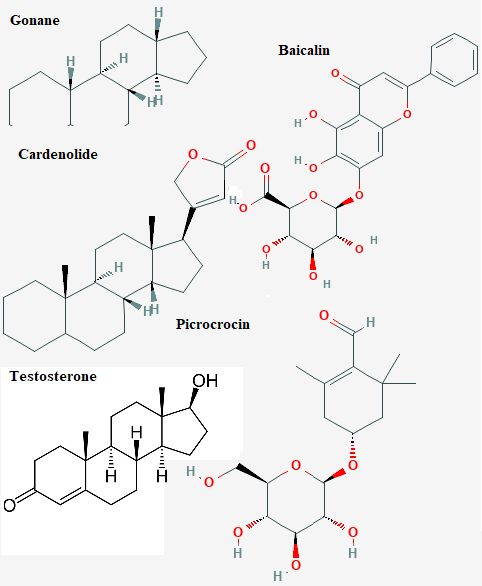
Picrocrocin
Picrocrocin, C16H26O7, is an ester, a monoterpene glucoside, (Saffron-bitter), with a bitter taste, and an hay-like fragrance. source
Picrocrocin is the beta-D-glucoside most responsible for the bitter taste of saffron.
Piezoelectric
Ammonium dihydrogen phosphate, monobasic ammonium phosphate (piezoelectric crystal in microphones and transducers)
Earphones, crystal microphones: 38.2.1
Piezoelectricity: 32.1.2.1
Piezoelectricity with red lead and sulfur: 35.33.0
Transducer, carbon microphone: 26.4.8
Pimpinellin
Pimpinellin, C13H10O5, chromen-2-one, furanocoumarin, tuberculostatic source
It occurs in roots of (Pimpinella saxifraga), Heracleum, Angelica, Cyperus, and in Artemisia.
Pinocembrin
Pinocembrin, C15H12O4, dihydrochrysin, dihydroxyflavanone, antioxidant, antineoplastic, vasodilator, neuroprotective source
It occurs in human gut microbiota, and in (Piper sarmentosum).
Piperonal
Piperonal, C8H6O3, piperonyl aldehyde, heliotropine, benzodioxole, colourless lustrous crystals, irritant, fragrance, insect repellent, flavouring agent source
It occurs in cherry, and in Highbush blueberry, (Vaccinium corymbosum).
Pipettes
Pipettes: 3.4.9 (Safety)
Pipettes, Microbiology: 4.2.10 (Safety)
Inoculate with a Pasteur pipette: 4.2.6 (Safety)
Pitch
Pitch, (Chemistry), resinous semi-liquid distillate from wood tar, for caulking wooden ships, link torches were used in dark streets.
Plantamajoside
Plantamajoside, C29H36O16, phenylpropanoid, hydroxycinnamic acid, anti-inflammatory, anti-asthmatic, against plant pathogenic bacteria. source
It occurs in Plantago, and in (Rehmania glutinosa).
Planteose
Planteose, C18H32O16, (6F-alpha-D-Galactosylsucrose), trisaccharide, occurs in (Sesamum indicum). source
Plaster of Paris
Make casts of bird footprints: 9.4.6
Make objects and moulds with plaster of Paris: 3.6.4
Plaster of Paris, calcium sulfate hemihydrate, hygroscopic, CaSO4.H2O, Harmful, very hot when water added to dry sulfate. source
Plaster of Paris, Gypsum, calcium sulfate: 35.4.11
(Geology) Prepare fibrous plaster board with plaster of Paris: 3.6.5
Separate by melting points, tin from a tin and carbon mixture: 10.19.0
Tests for strength of plaster of Paris bricks: 34.2.11
Use cornstarch + plaster of Paris to kill cockroaches when they eat the mixture.
Pleuran
Pleuran, Β–Glucans, insoluble polysaccharide, C6H10O5)x, C18H32O16, anti-tumour drug. source
It occurs in cell walls of oyster mushroom, (leurotus ostreatus), white-rot fungus, (Phanerochaete chrysosporium), and in Oats, (Avena sativa).
Plutonium, Pu
Plutonium, Pu
Plutonium, Table of the Elements
Plutonium, RSC
Plutonium, Pu, (Greek Ploutōn 'underworld god'), alloyed with Gallium in nuclear weapons core
Said to be "the most complex element in the periodic table", isolated from uranium by Glen Seaborg in Chicago, 1942 in the Manhattan Project.
It was later used in the first atomic bomb dropped on Hiroshima, Japan.
Pollution
18.1.0 Air pollution
18.3.0 Water pollution
Polonium, Po
Polonium, Po
Polonium, Table of the Elements
Polonium, RSC
(Latin Polonia 'Poland', native country of Marie Curie), radioactive poison used to treat lung cancer
Polymethyl methacrylate
Polymethyl methacrylate, poly(methyl methacrylate), C17H23NO6, CH2C(CH3)CO2CH3)n source
Methyl methacrylate, C5H8O2 or CH2C(CH3)COOH3. methyl ester of methylacrylic acid, CH2=C(CH3)COOH source
Trade names: "Lucite", "Perspex". "Plexiglass", C5O2H8)n, PMMA, acrylic glass, e.g, acrylic resin, thermoplastic transparent polymer source
Polymethyl methacrylate, PMMA, is a rigid, transparent material that transmits light better than glass.
It is used for acrylic "glass" glazing, optical devices, perspex chips, perspex stirring rod, plexiglass, reflectors, domes, safety glass, baby baths, traffic signs.
Perspex is made by the polymerization of the monomer methyl methacrylate with lauroyl peroxide as a catalyst.
This reaction is highly exothermic if the concentration of the organic peroxide < 1% by weight.
It has very high molecular mass when in sheet form.
Breakdown polymers into small molecules: 3.4.4.0
Polyvinyl acetate
Polyvinyl acetate, (C4H6O2)n, synthetic polymer, a polyvinyl ester, a thermoplastic, has rubbery consistency, used in adhesives for porous materials, an ingredient of chewing gum. source
PVA, wood glue, school glue, Elmer's Glue, is widely used, but it can be degraded by microorganisms, e.g. fungi.
The glass transition temperature of polyvinyl acetate is 30 oC to 45 oC.
.
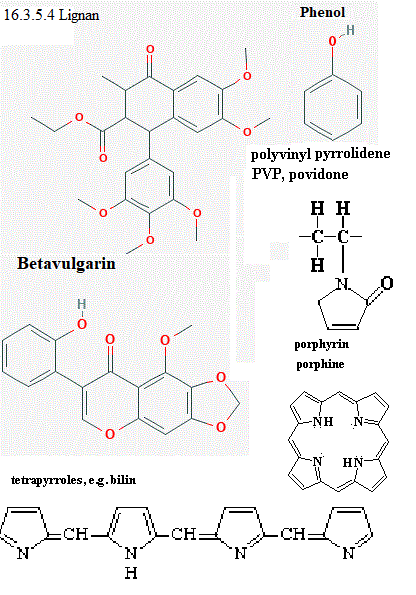
Polyvinyl pyrrolidene
Polyvinyl pyrrolidene, C6H9NO, n-vinyl-2-pyrrolidone, "Povidone", PVP, is a water-soluble polymer, used as a coating or binder in medical tablets. source
The povidone-iodine complex (PVD-iodine) is in the antiseptic "Betadine".
It has replaced tincture of iodine solution for the topical application of iodine as an antiseptic.
Poncirin
Poncirin, C28H34O14, flavanone glycoside, monomethoxyflavanone, disaccharide derivative, neohesperidoside. source
It occurs in fruit of (Poncirus trifoliata), and in Rock thyme, (Acinos alpinus).
Praseodymium, Pr
Praseodymium, Table of the Elements
Praseodymium, RSC
Praseodymium, Pr (Greek prasios green, didumos twin, didymium mineral), green compounds, used in ceramics, glass
Precipitates, Precipitation
Precipitates,substances deposited as a solid from a solution, and precipitation as rainfall
Coloured precipitates, double decomposition reactions: 12.2.4.02
Separate by precipitation: 10.11.3
Weather
Moisture leaves the air, precipitation: 37.8.0
Prednisolone
Prednisolone, C21H28O5, metacortandralone, hydroretrocortine, predonine, corticosteroid, synthetic glucocorticosteroid, anti-inflammatory source
It decreases the number of circulating lymphocytes, induces cell differentiation, stimulates apoptosis in tumour cells, and is an environmental contaminant.
Prenylnaringenin
Prenylnaringenin, C20H20O5, 8-PN, flavaprenin, dimethylallylnaringenin, hopein, sophoraflavanone B, "minor flavonoid", prenylflavonoid, phytoestrogen, similar effects to estradiol, antifungal. source
It occurs in resin of Hops, (Humulus lupulus), beer, and in in Wyethia, and it is produced from the flavonone isoxanthohumol, C21H22O5, in fungal cells culture. source
Proactinium, Pa
Proactinium, Pa
Proactinium, Table of the Elements
Protactium, RSC
Pa, 91Pa, (proactinium "parent of actinium", because radioactive decay to Actinium), radioactive, toxic, no uses, most stable isotope is Protactinium-231.
Producer gas
Producer gas, air gas, similar to water gas, formed by passing air and steam over hot carbon
Progoitrin
Progoitrin, C11H19NO10S2, Glucorapiferin, a glucosinolate source
It occurs in cabbage, (Brassica oleracea var. capitata), Brassicaceae, Peanut, (Arachis hypogaea), Fabaceae, and in Horseradish, (Armoracia rusticana), Brassicaceae.
After digestion, it is processed to Goitrin, C5H7NOS which decreases production of thyroid hormone, flavour component + breakdown hydrolysis products. source
This precursor of goitrin causing bitter taste in Brassica vegetables and epigoitrin which affects thyroxin secretion.
Epigoitrin, C5H7NOS, D-Goitrin, is a constituent of a traditional Chinese herbal medicine, as an antiviral agent. source
Phenethyl glucosinolate potassium salt, C15H20NO9S2K, occurs in Brassica, including red cabbage, Brussel sprouts, and in Savoy cabbage. source
Promethazine
Promethazine, C17H20N2S, phenothiazine derivative drug, sedative, antiallergic source
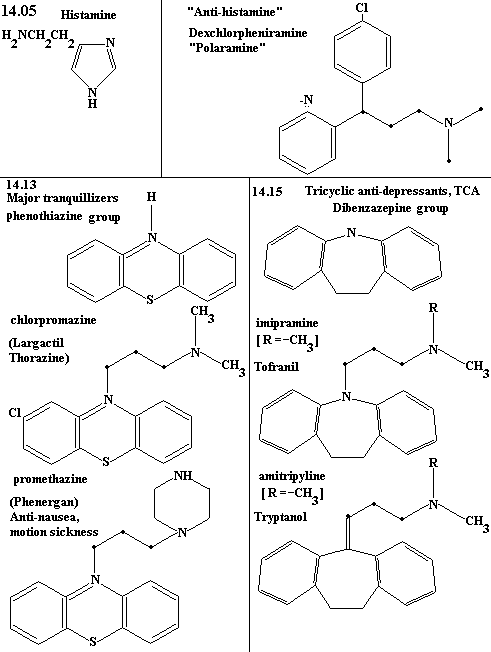
It is used to treat motion sickness, allergic reactions, nausea, and vomiting.
Promethium, Pm
Promethium, Pm
Promethium, Table of the Elements
Promethium, RSC
Promethium, Pm (Greek Prometheus, 'who stole fire from the gods'), synthesized in radiation laboratory
Propanethiol
Propanethiol, C3H8S, CH3(CH2)2SH, propane-1-thiol, n-propylthiol, propyl mercaptan source
Propanethiol is an alkanethiol, colourless to pale yellow liquid, offensive smell like cabbage, moderately toxic, less dense than water, slightly soluble in water, flammable, irritant.
It is used as insecticide, feedstock and herbicide, toxic fumes in a fire.
It occurs in onion, (Allium cepa), and other Allium species, cooked chicken, beef, beer, American potato chips, and in Durian, (Durio zibethinus).
Propionaldehyde
Propionaldehyde, C3H6O, CH3CH2CHO, propanal, propyl aldehyde, toxic by all routes, less dense than water, clear colorless liquid. source
Highly flammable, suffocating fruity-like odour, occurs in (Escherichia coli).
Propionaldehyde, Solution <20%, Not hazardous, but should not be ingested.
Propionic acid
Propionic acid, CH3CH2COOH, propanoic acid, Corrosive by all routes, Highly irritant vapour, skin irritant source
Propionic acid, Solution / mixture <10%, Not hazardous (stored grains preservative)
16.1.29 Propanoic acid, (propionic acid), ionization reaction
Propionates, Food preservation
19.3.6.10 Food
Proteins
Prenylation: adding hydrophobic molecule to a protein so it can be attached to a cell membrane.
Breakdown of protein by micro-organisms: 4.3.2
Burn carbohydrates, fats and proteins: 9.1.1
Milk proteins: 16.3.0, Casein and caseinates
Proteins: 16.7.4
Tests for proteins: 9.4.0
Protocatechuic acid
Protocatechuic acid (PCA), C2H6O4, dihydroxybenzoic acid, phenolic acid, antioxidant, anti-inflammatory It protects liver, apoptosis of human leukemia cells. source
It occurs in green tea, (Hibiscus sabdariffa roselle), stem bark of (Boswellia dalzielii), and leaves of (Diospyros melanoxylon).
It occurs in (Euterpe oleracea), açaí palm oil, and in onion skins.
Protonated
Protonated is an organic chemistry term for when H+ ion is bonded to something.
Prunetin
Prunetin, C16H12O5, prunusetin, an hydroxyisoflavone, dehydrogenase inhibitor, anti-inflammatory source
It occurs in Prunus, liquorice (Glycyrrhiza glabra), (Iris milesii), and in (Ficus nervosa).
Psicose
Psicose, D-Psicose, D-allulose, C6H12O6, rare monosaccharide sugar source
It occurs in wheat and in (Polytrichum commune).
Puerarin
Puerarin, C21H20O9, kakonein, an hydroxyisoflavone, cardioprotective, antioxidant, anti-inflammatory source
It occurs in (Pueraria calycina), (Bupleurum chinense), kudzu (Pueraria lobata), and in (Pueraria calycina).
It has been used to treat alcohol withdrawal anxiety symptoms during treatment of alcohol abuse.
Purine, Pyrimidine
Purine, Pyrimidine
Purines and pyrimidines are nitrogenous bases.See diagram 16.21.10chd: Purines
Two of the bases in nucleic acids, Adenine and Guanine, are purines.
Purines: Adenine, Guanine
Bases of nucleic acids: Adenine, Guanine, Cytosine, Uracil, Adenosine triphosphate, Thymine, (RNA, DNA)
Related to nucleic acid bases: (Pyrimidine glycosides. Convicine, Vicine), in wheat germ, DNA, 5-Methylcytosine)
Methylated purines: Caffeine, Theobromine Theophylline
Cytokinin purines: Kinetin (Hyalurinidase), Zeatin
Pyrimidine, C4H4N2, 1,3-Diazine, is the parent compound of the Pyrimidines: Cytosine, Thymine, Uracil. source
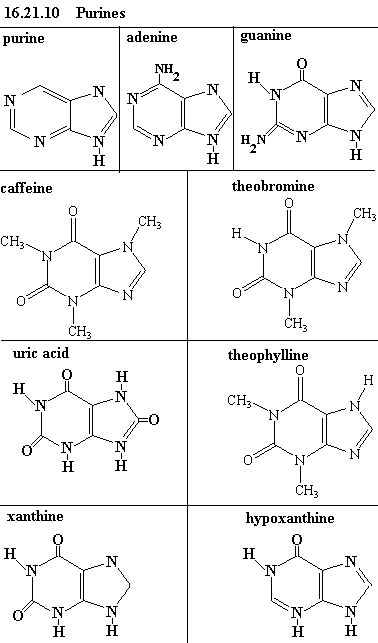
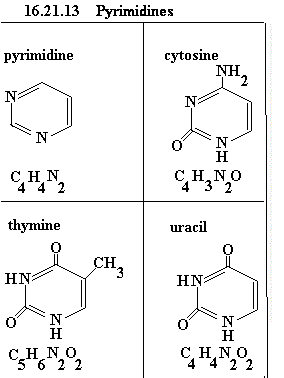
(Purine-like compounds not from amino acids, so are called "pseudoalkaloids".) (Purine derivatives).
1. Purines, The five bases of nucleic acids:
2. Methylated purines
(Only Caffeine, Theobromine and Theophylline are regarded as "alkaloids".)
3. Pyrimidine glycosides 5-Methylcytosine wheat germ, Vicine C10H16N4O7 Convicine C10H15N3 O8, in Vicia, and in Pisum source
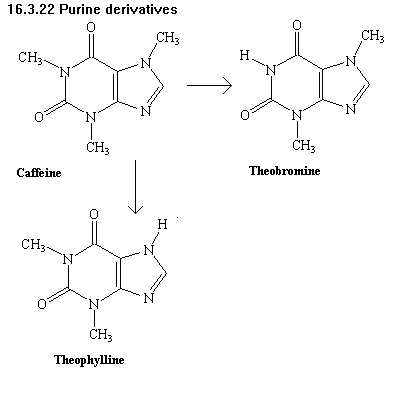
DNA and RNA: 9.4.4.0
Pyrrole
Pyrrole, C4H5N, (CH)4NH, imidole, aromatic, organic compound, colourless, volatile liquid, darkens on exposure to air. source
Paludolactone
Paludolactone, sesquiterpene lactone, eudesmanolide lactone, occurs in Creeping ox-eye (Wedelia paludosa).
Parthenolide
Parthenolide, C15H20O3, sesquiterpenoid lactone, germacranolide, insoluble, non-steroidal anti-inflammatory, antipyretic, febrifuge, It is used to release of Serotonin from blood platelets, used to treat migraine headaches. source
It occurs in flowers, fruit, and leaves of Feverfew (Tanacetum parthenium), and in Sweetbay, (Magnolia virginiana).
Patachoulol
Patachoulol, C15H26O, patchouli alcohol, patchouli camphor, tricyclic sesquiterpenoid tertiary alcohol, carbotricyclic compound source
It occurs in essential oil of Patchouli, (Pogostemon patchouli), and it is used to scent cosmetics.
Peppermint oil
Peppermint oil, C62H108O7, terpene, Mentha piperita oil. source
It occurs in the essential oil extracted from the leaves of (Mentha x piperita).
It is used for aromatic properties, flavouring, treat disorders of digestive and respiratory system, pain relief.
Peppermint, (Mentha x piperita), Lamiaceae.
Peridinin
Peridinin, C39H50O7, carotenoid pigment, light sensitive, associated with chlorophyll, and it is used as a photosynthesis pigment by some dinoflagellates. source
Perindopril
Perindopril, , C19H32N2O5, "Coversyl", ACE (angiotensin converting enzyme), blood pressure inhibitor source
Pederindopril erbumine, C23H43N3O5, Perindopril tert-butylamine source
An antihypertensive agent and a peptidyl-dipeptidase A inhibitor, used in patients with hypertension and heart failure.
Perilla ketone
Perilla ketone, C10H14O2, lung toxin affecting cattle and horses, and it occurs in Perilla, (Perilla frutescens). source
Perillartine
Perillartine, C10H15NO, perillartin, perilla sugar, X 2000 as sweet as sucrose source
It is used in chewing gum,and it occurs in Perilla, (Perilla frutescens).
Petasin
Petasin, C20H28O3, sesquiterpene, is ester of petasol (sencathenone), C15H22O2, and angelic acid, C5H8O2. source
It may be anti-inflammatory, and it occurs in Butterbur, (Petasites hybridus).
Phellandrene
Phellandrene, C10H16, alpha-phellandrene, menthadiene, monocyclic monoterpene, fragrance and flavouring agent with peppermint / citrus taste, occurs in allspice source
Cyclic monoterpene double bond isomers, having a similar molecular structure and similar chemical properties, are used in fragrances:
- alpha-Phellandrene: α-phellandrene occurs in Narrow-leaved peppermint, (Eucalyptus radiata).
- beta-phellandrene: β-phellandrene occurs in oil of Fennel (Foeniculum vulgare), and in Perilla (Perilla frutescens).
It occurs in oil of Canada balsam.
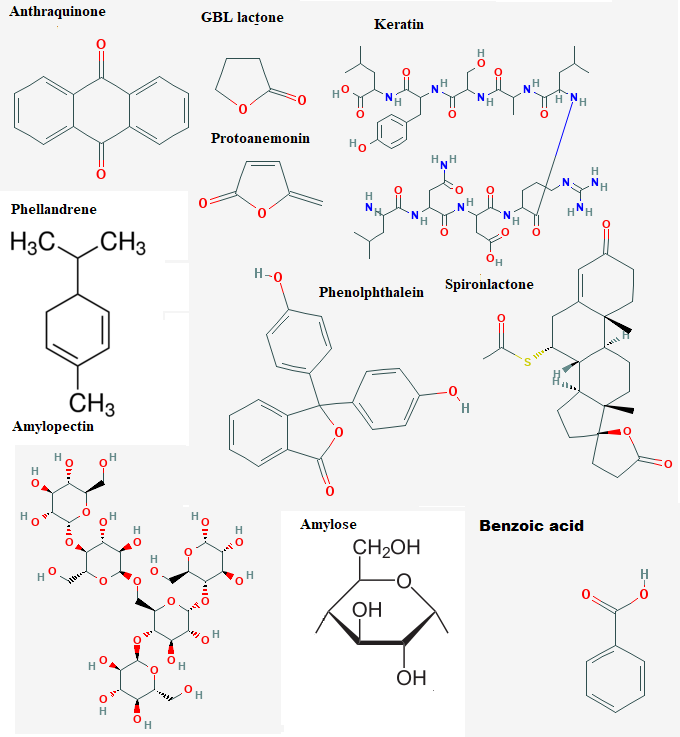
Picrotoxins
Picrotoxins, C30H34O13, sesquiterpene lactone source
Pinene
Pinene, C10H16, bicyclic monoterpene, alkene, pine needles aroma, and it occurs in Canarium. source
Pinene is the terpene in natural turpentine from conifers and in the essential oil of Rosemary.
α-Pinene, C10H16, 2-Pinene, clear colourless liquid, turpentine odour, less dense than water, insoluble in water, vapours heavier than air, used as a solvent source
It occurs in Pinus, and in Savory, (Satureja repandra).
A terpenoid, called a crystalline hydrate, C6H10(CH3)3(OH)2), is formed from acidification of α-Pinene. source
β-Pinene, C10H16, much released in pine forests, and it occurs in Pinus, and Cumin (Cuminum cyminum). source
Enantiomer alpha-pinene more common in European pines, Enantiomers beta-pinene more common in North America pines.
Pinocamphone
Pinocamphone, C10H16O, monoterpene ketone, dark yellow liquid, aromatic, pleasant odour, in the alcoholic drink absinthe source
Drinking absinthe may lead to disorders of the nervous system
It occurs in Hyssop (Hyssopus officinalis).
Piperitone
Piperitone, C10H16O, monoterpene ketone, a p-menthane monoterpenoid, cyclic terpene ketone, irritant, volatile oil component source
D-piperitone occurs in Mint (Mentha), and L-piperitone occurs in (Picea sitchensis).
Prenol
Prenol, C5H10O, 3-Methyl-2-buten-1-ol, has a fruit-like odour, and occurs in citrus, tomato, and in passionfruit. source
The Prenol hemiterpenoids, alcohols, carbon skeleton is one or more isoprene units.
Prilled
Prilled, pelletized, for machine-handled agricultural chemicals, e.g. prilled urea
Pulegone
Pulegone, C10H16O, monoterpene, natural pesticide, irritant, spearmint, fragrance and flavour ingredient, volatile oil component, mint taste biomarker source
It occurs in (Schizonepeta tenuifalia), Nepita, Mentha, (Hedeoma pulegioides), cornmint, orange mint, peppermint, and blackcurrant.
It is in essential oil of catnip, Nepeta cataria.
Putty
Prepare putty (glazier's putty, painter's putty), with calcium carbonate paste (whiting), + linseed oil (+ white lead).
Putty is used as a, filler in glazing, to seal glass into frames.
Pyrazine
Pyrazine, C4H4N2, N2(C4H4), 1,4-diazine, heterocyclic aromatic organic compound source
It occurs in tobacco (Nicotiana tabacum) and coffee (Coffea arabica).
The nutty tastes of roasted coconut is caused by pyrazines.
Pyrocatechuic acid
Pyrocatechuic acid, C7H4Br2O4, 4,5-Dibromo-o-pyrocatechuic acid source
It occurs in plasma after consumption of cranberry juice or aspirin, and it causes facial pain due to stress.
It occurs in (Phyllanthus acidus), and in aquatic fern (Salvinia molesta).
Platinum, Pt
Platinum, Pt
Platinum Table of Elements
Platinum, RSC
Platinum, Pt (Spanish plata silver, because platinum has silvery colour)
Platinum is a soft, ductile transition metal, resists most chemical agents, does not oxidize at high temperature, available as foil and has weak magnetism.
It occurs in free elemental form placer deposits or in alloys, and is used for electrical contacts electrodes and jewellery.
Platinum has no reaction with dilute HCl or H2SO4, air, water or concentrated oxidizing acids, e.g. HNO3 or H2SO4 source
Platinum reacts with aqua regia, (concentrated HNO3 + HCl) to form H2PtCl6. source
Platinum is malleable, ductile and can be cut into slices.
It has a slightly grey lustre.
It is harder than gold and silver, so it is mixed with those metals when making rings and other jewellery.
Platinum vessels can hold acids, because they do not react with them.
Platinum was used for decorative objects and jewellery settings, but now used in scientific apparatus, electrical equipment, and industrial processes as a catalyst.
Platinum black is used as a catalyst in chemical reactions.
Platinum can absorb hydrogen and is used in catalytic converters to treat exhaust gases of motor vehicles.
The melting point of platinum is 1768 oC, higher than gold, bronze and iron.
It was used to cast the platinum-iridium cylinder, the International Prototype Kilogram (IPK), in France, because of its high density and resistance to corrosion.
A "platinum" phonograph record has sold one million copies.
Atomic number =78, Relative atomic mass = 195.08, RD = 21.4, MP = 1769 oC, BP = 4530 oC
Platinum wire, 0.375 mm diameter, loop for inoculation of microbial cultures, possibly sensitizes skin, powder.
Platinum Group of Metals (PGMs), jewellery plating industry term for "4 PGM's,platinum, rhodium, osmium, ruthenium, iridium".
Platinum (IV) chloride. Platinum (IV) oxide
Platinum (IV) oxide, platinum dioxide, P2O2 source
Adams's catalyst, platinum oxide hydrate, PtO2.H2O, organic hydrogenation catalyst source
Platinum, Pt, (Spanish plata silver, platinum has silvery colour), platinum wire, 0.375 mm diameter, powder.
A plateium loop is used for for inoculation of microbial cultures, but it possibly sensitizes skin.
Platinum Group of Metals (PGMs), is the jewellery plating industry term for "4 PGM's, platinum, rhodium, osmium, ruthenium, iridium".
Chloroplatinic acid, H2PtCl6: Chloroplatinic acid source
Platinic chloride, chloroplatinic acid, Platinum (IV) chloride, Platinum (IV) oxide
Platinum, natural platinum: 35.2.54
Catalytic converter in a motor vehicle:
Catalytic oxidation of ammonia, with red-hot platinum wire: 3.3.4
Pyrogallol
Pyrogallol, C6H3(OH)3, (1,2,3-trihydroxybenzene) source
Pyrogallol: 16.6.14
Germination and air, germination and the need for oxygen: 9.4.9
Tests for gases collected in a respirometer: 9.1.19
Toxicity, Poisons and First Aid: 1.0
Pyrrolines
Pyrrolines, C4H7N, Cyclic Amines, dihydropyrroles, isomers differ in position of double bond 1-Pyrroline (3,4-dihydro-2H-pyrrole), cyclic imine. source
It is colourless, less dense than water, soluble in water and alcohol, strong ammonia smell like shrimp seafood.
2-Pyrroline, cyclic amine, 3-Pyrroline, cyclic amine
Red phosphorus, P4
Red phosphorus, P4 source
(Greek phosphoros Morning star) (Found by Henning Brand, Germany, 1669)
Lght from phosphorus is caused by combustion of oxides on its surface when exposed to air.
Red phosphorus, brown phosphorus, P4, is not poisonous, ignites above 300 oC. source
It has phosphorus atoms bound in a covalent network, so is less reactive than white phosphorus and can be stored in air.
It is used in "safety match" striking surfaces that contain red phosphorus, powdered glass, carbon black, a binder and a neutralizer, e.g. calcium carbonate.
It is used for "doping" semiconductors.
Red phosphorus is relatively harmless compared with the white phosphorus allotrope.
However, some school systems do not allow red phosphorus to be used in school science experiments.
It is not poisonous when pure.
It is deliquescent, so keep it in a sealed container.
Do not heat red phosphorus in a test-tube, because it produces phosphorus vapour that condenses to form white phosphorus.
Red phosphorus forms violently explosive mixtures with oxidizing agents.
For example: metal nitrates (potassium nitrate, sodium nitrate, potassium permanganate), nitric acid, chlorates, perchlorates, peroxides, peroxy salts.
Do not heat red phosphorus on a platinum wire, because it corrodes the platinum.
P (red) Atomic number,15, Relative atomic mass,30.9738, RD 2.34, MP 590 oC, BP = 280 oC, Specific heat capacity,670 J kg-1 K-1
White phosphorus, P4
White phosphorus, P4 source
White phosphorus (yellow phosphorus), P4, is too reactive to be used in school science teaching, so it is not permitted in schools. source
In 1943, tonnes of white phosphorus in incendiary bombs were dropped by Allies' air forces on Hamburg, Germany.
White phosphorus is waxy, poisonous, spontaneously flammable, reacts with oxygen gas in the air to form P2O5, so it is stored under water. source
White phosphorus is extremely toxic.
On contact with iodine it ignites, with bromine it explodes, and it can be ignited with a hot glass rod.
Cover spilt white phosphorus with 0.2 M copper sulfate solution that converts it to harmless copper sulfide.
P (white) Atomic number,15, Relative atomic mass, 30.9738, RD. 1.82, MP = 44.2 oC, BP = 44 oC, Specific heat capacity,757 J kg-1 K-1
Purpureacin
Purpureacin-1, Bullatanocin, Bullatalicin, Squamostatin C, C37H66O8, a polyketide, antifungal, insecticidal, and it occurs in leaves of (Annona purpurea). source
Pyridoxine
Pyridoxine, C8H11NO3, Pyridoxol, Vitamin B6, are essential nutrients and animals must obtain it through their diet. source
Pyridoxine is converted to pyridoxal 5-phosphate, an important coenzyme for synthesis of amino acids, serotonin, and norepinephrine.
"Vitamin B6" is the term for pyridoxine, pyridoxal, and pyridoxamine and their three phosphorylated derivatives, but "vitamin B6" is commonly used for pyridoxine.
Pyridoxine is used to treat vitamin B6 deficiency and commercial product "Diclectin" used to treat nausea and vomiting in pregnancy.
Commercial medicines may contain the following: "pyridoxine hydrochloride equivalent to pyridoxine (Vitamin B6)".
Pyrolysis
Pyrolysis is decomposition caused by heat.
It usually involves a chemical change caused by the application of heat.
Charcoal production is by cutting naturally growing trees and undergoing a process called pyrolysis, which involves heating wood in absence of oxygen.
A mixture of liquid, gas and charcoal is produced.
The process takes about 7 to 12 days in traditional kilns, where 8 to 12 kg of wood are used to produce 1 kg of charcoal.
The growing usage of charcoal suggests that greenhouse gas emissions associated with charcoal could reach 15 billion tonnes of carbon dioxide by 2050, which will be released into the atmosphere leading to climate change.
Phthalic acid
Phthalic acid, Phthalates
Phthalic acid C8H6O4, C6H4(CO2H)2, benzene-1,2-dicarboxylic acid, formerly from naphthalene, aromatic dicarboxylic acid, has many isomers made by oxidation reaction using naphthalene + potassium permanganate or potassium dichromate. Phthalic anhydride, C8H4O3, C6H4(CO)2O, benzene-1,2-dicarboxylic anhydride, phthalandione, Toxic, strong skin irritant, used to produce phthalic esters, chemical plasticisers, plastics from vinyl chloride, large scale production to make plasticisers. Phthalates, C6H4(COOR1)(COOR2), esters of phthalic acid, [C6H4(COOH)2], are used as chemical plasticizers and to make polymers and alkyd resins, and to soften polyvinyl chloride (PVC), and o make shower curtains, PVC piping and inflatable products. source
Alkyd resins are usually made from glycerol and phthalate anhydride for paint, car parts, electric switches and insulators, electronic components and television parts.
Phthalates are not chemically bound to the plastics they are added to, so they may be continuously released to the air as plastics harden over time.
Their use is being phased out in some countries, because of concern about possible risk to foetuses and young children.
Phthalates include the following: Bisphenol-A (BPA), Epoxy resin polymer | DPB, dibutyl phthalate | DNOP, di-n-octyl phthalate | DiNP di-isononyl phthalate | DEP, diethyl phthalate | BBzP, benzyl butyl phthalate | Di-isononyl phthalate | DEHP, di-2-ethylhexyl phthalate | DiDp, diisodecyl phthalate | DnHP, i-n-hexyl phthalate | DnOP, di-n-octyl phthalate |
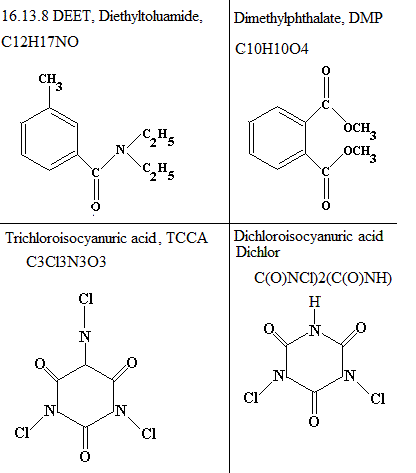
While some phthalates such as DEHP are now banned for certain products, they could still be having an effect as they degrade slowly.
Even very small amounts of phthalates have been shown to interact with other toxins and have cumulative effects.
DEHP was banned in Australia in 2011 for certain products, including children's toys (less than 36 months of age), and eating utensils.
DEHP, di-2-ethylhexyl phthalate, [dioctyl phthalate, DOP], C6H4(C8H17COO)2, it the most common phthalate plasticizer. source
DBP, dibutyl phthalate, C16H22O4, banned in cosmetics in EU, is a uspected endocrine disruptor. source
DiNP di-isononyl phthalate, C26H42O4, has EU restriction. source
Avoid plastic containers and bottles with the recycling codes 1, 3, 6 or 7.
If they have no number, avoid those by checking the bottom of the product for the number in a triangle.
These are the typical plastics to avoid:
Recycling code 1 are PET (polyethylene terephthalate): Found in water bottles, soft drink bottles.
Recycling code 3 are PVC (polyvinyl chloride): Found in cling film, food packaging, cooking oil bottles and toys.
Recycling code 6 are PS (polystyrene) Found in disposable plates /cups / trays, egg cartons and takeaway containers.
Recycling code 7 are PC (polycarbonate) and others found in baby bottles, large water containers.
This page was generated automatically from the original page on John Elfick's School Science Lessons website. If something looks wrong, please check the original.