Genus names C, (Cabomba to Chrysopogon)
Last updated 2026-10-13 by Dr John Elfick
Fan wort, (Cabomba aquatica), water shield, aquarium plant, up to 80 cm length, needs good light, local vegetable, South America, Cabombaceae
Cabomba, (Cabomba caroliniana), from the Americas and naturalised in Australia in 1986, completely submerged plan, except for flowers and floating leaves.
It has stems up to 10 m long. grass green to olive green shoots, green to olive floating leaves, solitary flowers attached to a long axillary stalk.
It is a major pest in water storage, because increases colour of potable water and so increasing the cost of treatment.
It forms dense clumps that reduce light and water quality.
The weed is so thick it makes recreational activities such as swimming, fishing and canoeing both difficult and dangerous.
The weed also reduces the water holding capacity of dams and significantly adds to the cost of treating drinking water.
(Cabomba furcata) is used in the aquarium trade in Australia.
Banduc nut, (Caesalpinia bonduc), fever nut, wait-a-while, knicker nut, climbing liana, up to 8 m, stems with curved spines, thorny shrub, spiky leaves, yellow flowers, brown pods called nickernuts can float in oceans, herbal medicine, grows on sea shores, Fabaceae
Pernambuco, (Caesalpinia echinata), pernambaco tree, Pernambuco wood, Brazil-wood, "bresel wood", sappan tree, dense orang-red heartwood | Brazilin, C16H14O5 | Natural Red 24, pigment, histological dye, folk medicine, pernambuco, also called pau-brasil, was intensively exploited and xported to Europe for dye making and later the heartwood was used for for making bows for musical instruments, Pernambuco is a state of northeastern Brazil, Pernambuco is the national tree of Brazil, Fabaceae source
Tara, (Caesalpinia spinosa), Peruvian tara, spiny holdback, "Green Gold of the Andes", tailin, vainilla, tallospiny, evergreen spiny shrub up to 8m, | E417 |, occurs in rocky soils folk medicine, high-quality tannins, gum from endosperm is used as food thickening agent, high tannin content of the pods may be lethal if consumed in large quantities by animals, Peru, Fabaceae
Coffee, (Caffea arabica), slender perennial tree, up to 2 metres but pruned for easy berry picking, needs shade, glossy leaves, white flowers, green unripe berries turn red when ripe, sweet pulp around ripe berries eaten, seed is roasted for coffee | Caffeine | Cafestol | Aspartic acid | raw bean seed chewed to neutralize toxins in body, Rubiaceae Ipecacuanha, (Carapichea ipecacuanha), herbal medicine, syrup of ipecac, amoebicide | Emetine | formerly very popular herbal medicine, Rubiaceae
Caffea arabica, Coffee, Daley's Fruit Trees
Pigeon pea, (Cajanus cajan) Congo pea, no-eye pea (no hilum), red gram, woody perennial, up to 3.6 m, yellow and red flowers.
It tolerates up to 35°C, seeds containing 25% protein eaten fresh or as split dried peas are used for dhal in India.
Its edible cooked leaves and young shoots with strong spicy odour, are used for animal fodder and green manure mulch, garden shelterbelts, Fabaceae
(Malay katjang 'bean')
European sea rocket, (Cakile maritima), succulent annual plant, taproot, branched stem, lobed flesh-like shiny alternate leaves.
It has small white to purple flowers with 4 petals, corky brown floating fruit contain two yellow to brown smooth seeds.
The seed oil contains a high level of erucic acid, C22H42O2. source
It can withstand high concentrations of Cadmium, grows in clumps on beaches, widespread in Europe, North Africa, North America, Brassicaceae
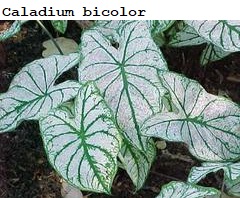
Angel wings, (Caladium bicolor), heart of Jesus, elephant ears, green-white spathe, large, heart-shaped yellow to green leaves with green or red veins, all parts are poisonous, especially leaves and tubers, contains irritating calcium oxalate raphides, houseplant, South America, Araceae
Calamint, (Calamintha sylvatica), common calamint, mill mountain, mountain balm, mountain mint, up to 30 cm perennial, low-growing, green stalks.
It has opposite, oval matt green leaves, about 2 cm long, whole plant aromatic.
It is used as a leaf tea and herbal medicine, diaphoretic, expectorant, leaf poultice for bruises, but can cause miscarriage.
It occurs in temperate regions, low-growing plant, mint smell, lavender flowers, alkaline soil, leaves are used to make tea, Lamiaceae
Large-flowered calamint, (Clinopodium grandiflorum) showy calamint, perennial, up to 25 cm, pink flowers. ovate green leaves, used in cooking, folk medicine, (Aubrac tea), aids digestion, Europe, Lamiaceae
Wait-a-while, (Calamus australis), hairy mary, lawyer cane, climbing palm, petioles with many spines to attach to other plants, rainforest plant, Australia, Arecaceae
Red maids, (Calandrinia balonensis), parakeelya, Australian native food, sold as 'Calandrinia ‘Mystique’, Australia, Montiaceae
Calandrinia balonensis, Broad-leaved Parakeelya, Balonne Parakeelya, Australian National Herbarium.
Zebra plant, (Calathea concinna), Freddie prayer plant, exotic tropical succulent perennial, has leaves with zebra-like stripes of silvery-green with darker green stripes and borders.
The natural habit of opening and closing its leaves like hands at prayer, forms mats composed of tufted leaves in rosettes, spreads rapidly via offsets.
It is used as a groundcover for dry sunny locations, popular indoor pot plant, Brazil, the arrowroot family, Marantaceae
(Calathea crocata), dark green leaves, long-lasting orange flowers, rainforest, (houseplant), Marantaceae
(Calathea lancifolia), rattlesnake plant, lance-shaped leaves, attractive fruit, deciduous shrub, Marantaceae
(Calathea picturata), leaves oval dark green whitish streaks, rainforest, (houseplant), Marantaceae
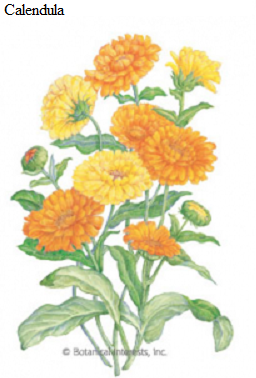
Marigold, (Calendula officinalis), English marigold, pot marigold, Mary's gold, annual plant, bushy habit, pale green leaves, perennial, up to 50 cm.
It has yellow to orange flowers, used for cut flowers and salads, repels nematodes, companion plant.
Florets in culinary uses, yellow / orange petals and leaves in salads, omelettes, sandwiches |Lutein |.
It is used as a herbal medicine, cuts, bruises, rashes, antiviral, anti-inflammatory, calendula flower tea for mouth, ulcers and nappy rash.
Flowers made into infused oil ointment, and are used to treat eczema, dermatitis, inflamed skin and for wound healing.
It is a very popular plant, easy to grow, ornamental with bright orange flowers on stiff stems, Europe, Asteraceae
It is called calendae calendar, because it flowers for most of the year.
It is called "Mary gold" in honour of the Virgin Mary of the Bible.
Calendula Infused Oil, Mudbrick Herb Cottage
Calendula, Mudbrick Herb Cottage
Dried herb sold as flowers and as petals.
Black wattle tree, (Callicoma serratifolia), used for wattle and daub huts of first European settlers in Australia, only one species in family Cunoniaceae
Callicoma serratifolia, ANPSA.
Home ginseng, (Callisia fragrans), golden runner, basket plant, fragrant inch plant, ground cover, steroids, flavonoids, invasive weed.
It is a herbal medicine for wound healing, infusions, Mexico, Commelinaceae
Crimson bottlebrush, (Callistemon citrinus), shrub, up to 3 m, grows in swamps and on rocky outcrops, simple and alternate to spiral leaves.
Leaves have lemon odour when crushed, bright red spikes, bright red stamens, woody capsules, leaf growth extends beyond the spike, Australia, Myrtaceae
(Callistemon citrinus) is also known as (Melaleuca citrinus), because many of the bottlebrushes are known under the genus Melaleuca.
Callistemon citrinus, Australian National Herbarium.
Callistemon, bottlebrushes, fast growing, hardy, woody shrub, up to 2 m, flowers in variety of single colours.
Prune it regularly for bushier growth and increased flower production, grow in moist, well-drained soil, in full sun for containers, edging, rockeries, hedges.
Bottle brush tree, (Callistemon lanceolatus), ornamental tree, evergreen shrubs, lanceolate lamina, showy stamens, Myrtaceae
Aster, (Callistephus chinensis), Chinese aster, Michaelmas daisy, slim aster, ornamental, fast growing annual, showy terminal flower head, used in cut flower trade, China, Asteraceae
Starwort, (Callitriche stagnalis), common starwort, aquatic, annual, monoecious, invasive, Plantaginaceae
Northern cypress pine, (Callitris intratropica), "cypress pine", (not true cypress), cone-shaped, blue green/grey foliage, hardy large tree, aromatic timber.
'Blue Cypress oil' from steam distilled bark and wood, is used in perfumes, cosmetics and aromatherapy.
Australian Aboriginal folk medicine used for an analgesic, body wash and insect repellent.
The Northern cypress pine is said to live for > 200 years, Australia, Cupressaceae
Heather, (Calluna vulgaris), common heather, heath, evergreen shrubs, in infertile soils, grows in a "heath", Europe, Ericaceae
Dried herb is sold as flowers.
Mammey sapote, (Calocarpum sapota), fruit used fresh or preserved, South America, Sapotaceae
Green sapote, (Calocarpum viride), large tree, evergreen, slow growing, fruit, large, green, used fresh, propagation from seeds, Central America, Sapotaceae
Incense cedar, (Calocedrus decurrens), California incense cedar, up to 40 m, largest known tree, distinctive pyramidal to columnar shape, brown to grey bark.
It has green scale-like leaves that produce unusual smell when squeezed, and it has male and female cylindrical cones from the same tree.
Soft light wood was used for pencils, cultivated as an ornamental, western United States, Cupressaceae
Alexandrean laurel, (Calophyllum inophyllum), tamanu, oil-nut, mastwood, beauty leaf, penanga laut, huge forest tree, used for building ships, source of tamanu oil, and it occurs in East Africa, Malaysia, Calophyllaceae
Damanu (Fijian), (Calophyllum vitiense), bitangor, hardwood timber tree, evergreen tree, up to 30 m, in dense or open forest, red-brown heartwood, used for interior purposes, ship building, and heavy carpentry, Pacific region, Malaysia, Clusiaceae
Calopo, (Calopogonium mucunoides), tropical pasture legume vine, creeping much-branched stems, up to 5 m in length, alternate trifoliolate leaves, red-brown shiny seeds, widely introduced for horticulture, now naturalized in a wide range of habitats as introduced pasture legume, naturalised in disturbed sites, forms dense mats that smother native vegetation, invasive, Tropical America, Fabaceae
Calotrope, (Calotropis procera), Sodom apple, giant milkweed, aak, king's crown, rubber bush, up to 1.8 m, upright branched perennial shrub, up to 4 m, stems and leaves appear waxy appearance and contain a milky sap, younger stems are greyish-green in colour, and mature stems have a deeply fissured cork-like brown bark, main stalk bears clusters of trumpet-shaped flowers, fruit have thick and spongy skins which split open at maturity to release many brown flattened seeds, grows on roadsides and disturbed areas, bitter toxic sap, was cultivated as an ornamental, but is poisonous and regarded as a weed in the drier northern parts of Australia, folk medicine, dried leaves used to treat rheumatic pain, tender leaves used to treat migraine, powdered leaves used for faster wound healing, and as a laxative, Africa, Asia, Apocynaceae
Marsh marigold, (Caltha palustris), cuckoo's joy, aquatic and marginal perennial, flower buds pickled in vinegar use as a substitute for capers, USA, Ranunculaceae
Carolina allspice, (Calycanthus floridus), eastern sweetshrub, spicebush, deciduous shrub, up to 4 m, large woody understory plant, strongly scented and has been compared to bubblegum, strawberry-green apple aroma, sepals and petals fused into tepals, bruised bark and roots smell of camphor, essential oil used in perfume, ornamental, southeastern United States, Strawberry shrub family, Calycanthaceae
Carpathian hairbell, (Campanula carpatica), tussock bellflower, up to 5 cm, alternate leaves with different shapes and edges in the same plant, latex in stems and leaves, purple to pink or white bell-shaped and long-lasting flowers, grown from seed, Bellflower family, Campanulaceae
Plants of the Campanulaceae family are called bellflowers, (Latin campanula 'little bell').
Happy tree, (Campotheca acuminata), cancer tree, tree of life, up to 20 m, large glossy leaves with heavy veining, small white flowers in spherical clusters, bark and stems | Camptothesin, C20H16N2O4 | used in Chinese traditional medicine and in cancer research, outhern China and Tibet, Asteraceae source
Trumpet vine, (Campsis radicans), trumpet creeper, cow-itch vine, woody vine with aerial roots, reddish orange showy trumpet-shaped flowers, capsule with many 2-winged seeds, popular shubbery plant, can become a garden escape and potential invasive weed, North America, Bignoniaceae
Ylang ylang, (Cananga odorata), kenanga, perennial, village tree, evergreen tree for very warm sheltered position, drooping branches
Flowers produce perfumed oil in glands near the base, Macassar oil, which used in aroma therapy, perfume and food flavouring.
It is a herbal medicine to treat: asthma, itch, scabies, stomach ache, and it is a traditional Asian aphrodisiac.
The essential oil contains: Isoeugenol | Isosafrole | sesquiterpenoid alpha-Ylangene, C15H24 | Malaysia, Annonaceae source
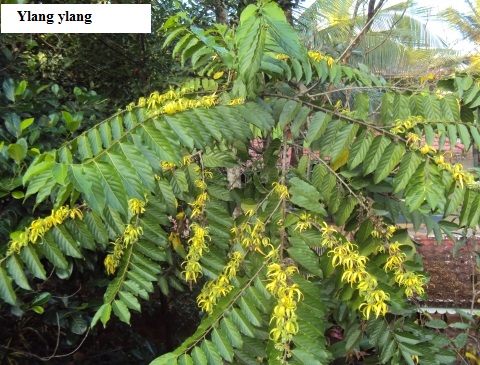
Cananga odorata, Daleys Fruit Trees.
Chinese olive, (Canarium album), white bursera, white olive, evergreen tree, up to 30 m straight trunk and compact crown, leathery elliptical eaves, small flowers in clusters at ends of branches, flowers give off slightly sweet fragrance, oval-shaped drupes with a hard woody shell contain single edible seed “Canarium nuts”, and contain: | Amyrin | Elemolic Acid | Tarexerol C30H50O. source
Resin extracted by tapping the tree and used in traditional ceremonies and in perfumes and cosmetics, Southeast Asia, Burseraceae
Bush canarium, (Canarium australianum), mango bark, brown cudgeree, scrub turpentine, Melville Island white beech, white bech, up to 15 m, deciduous, separate male and female plants, leathery smooth shiny leaves, cream-grey bark and flowers, blue-black oval fruit, Australia, Burseraceae
Galip nut, (Canarium indicum), ngali nut tree, Java almond, kenari Ambon, tall tree | Elemicin | edible nuts, timber, South Pacific, Burseraceae
Elemi, (Canarium luzonicum), Manila elemi, elemi gum, elemi resin, harvested oleoresins also called "elemi" | Elemicin C12H16O3 | used in varnishes, herbal medicine, respiratory problems, Philippines, Burseraceae source
Pili nut, (Canarium ovatum), Philippine nut, roasted nut kernels eaten, nuts collected wild, but cultivated in Philippines, ornamental, Southeast Asia, Burseraceae
Kenari nut tree, (Canarium vulgare), Java nut, Java olive, edible oily kernels eaten after removal from very hard shell of oblong, pointed fruits, kernel oil fed to infants | Anethole | Limonene | Phellandrene | herbal medicine, headache, nasal congestion, Burseraceae
Jack bean, (Canavalia ensiformis), pig bean, wonder bean, horse bean, magic bean, ("awikiwiki, the quick one" Hawaiian name and origin of "Wikipedia"), slightly woody twining vine, up to 2 m length, cylindrical stem with hollow pith, trifoliolate leaves, bean pods up to 36cm long contain 1-2 cm long beans, whole plant edible, but beans must be cooked, stock feed, invasive, Fabaceae
Sword bean, (Canavalia gladiata), fast-growing climber, edible seeds, ornamental seed pods ornamental, used for ground cover and green manure, naturalized in wet habitats, invasive, Fabaceae
Hawaiian jackbean, (Canavalia hawaiiensis), ‘āwikiwiki, woody vine, long-living perennial, fast growing in dry forests, three large leaflets with pointed tips, purple-pink flower white spot at base of the corolla, can fix nitrogen, ground cover, trellis climber, used to make leis and fishnets, folk medicine to treat skin disorders Hawaiian Islands, USA, Fabaceae)
Achira, (Canna edulis), Queensland arrowroot, perennial, up to 2 m, hardy plant, some of first plants to be cultivated by Incas, ornamental, used for quick growing windbreaks, leaves for animal feed and mulch, herbal medicine, poultices, digestive, culinary uses, large round red rhizomes eaten raw or cooked, or flour for thickening agent, young shoots as green vegetable, stir-fry, chips, tuber as vegetable, herbal medicine, poultices, South America, Cannaceae
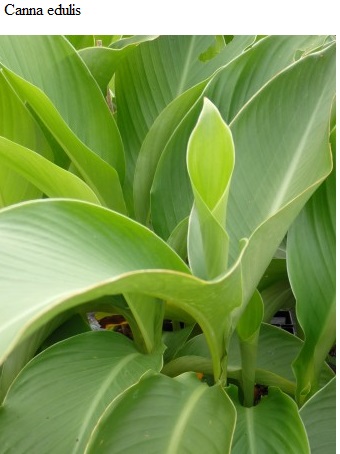
Canna edulis, Queensland arrowroot, Daleys Fruit Trees.
Indian shot, (Canna indica), small, black globular seeds like shot, horticulture cultivars, Cannaceae
(Canna is the only genus in the family Cannaceae.)
Indian hemp, (Cannabis sativa), marijuana, chokeweed, "hemp", annual herb, dioecious, slightly lignified | Linalool | Cannabichromene | Cannabisativine | Tetrahydrocannabinol resin, (THC) | cannabis alkaloids, herbal medicine, narcotic drugs, phenolic resins and psychoactive alcohol delta-tetrahydrocannabinol, analgesic and hallucinatory, cannabis alkaloids, white bast fibre for ropes, coarse cloth, oakum, Central and Western Asia, Mongolia, Cannabaceae
Tetrahydrocannabol, C21H30O2, obtained by heating, smoking, vaporization, of dried unfertilized female cannabis flowers. source
Dried herb is sold as hulled seed.
Industrial hemp, grown for industrial fibres and seed, (Cannabis sativa L. subsp. sativa var. sativa), Cannabaceae
Shankhpushi, (Canscora decussata), psychoactive, phenolic compounds, xanthones, triterpenoids, Indian medicine, Gentianaceae
Native pomegranate, (Capparis arborea), wild lime, wild lemon, rainforest bush, up to 10 m, crooked irregular trunk, sharp prickles, large white flowers with < 100 spreading stamens, green smooth fruit on long stalks resembles guava, native Australian food, eastern Australia, Capparaceae
Thorn caper, (Capparis microcantha), melada, shrub, climbing habit, parts used for local medicines, Southeast Asia, Indonesia, Capparaceae
Wild orange, (Capparis mitchellii), native orange, small native pomegranate, bumble tree, bimbil, up to 6 m, white/cream large flowers, fruit 2 to 5 cm in diameter, pulp with an agreeable perfume, Australian native food, (not related to citrus orange or other "wild oranges"), Australia, Capparaceae
Wild Orange Capparis mitchellie, Daley's Fruit Trees.
Capers, (Capparis spinosa), caper bush, Flinders rose, perennial shrub, round-ovate fleshy leaves, 'capers' are unopened edible flower buds and 'caper berries' are the edibel fruit, pungent sulfur compounds | Anthocyanins | Kaempferol | Quercetin | preserved in brine, vinegar, if dry-salted then raspberry aroma from Raspberry ketone, in sauces fish dishes, mature fruit preserved as caper berries, Mediterranean region, widespread in semi-arid regions, Capparaceae
Wild passionfruit, (Capparis spinosa subsp nummularia), caperbush, native caper, up to 1.5 m, green unripe fruit may be poisonous, orange ripe fruit splits open revealing little black inedible seeds, but fruit pulp edible, Australian native food, Capparaceae
Woolly caper bush, (Capparis tomentosa), African caper | Hydroxystachydrine | Stachydrine | poison to sheep and calves, Africa, Capparaceae
Dried herb is sold as aerials.
Ipecacuanha, (Carapichea ipecacuanha), herbal medicine, syrup of ipecac, amoebicide | Emetine | formerly very popular herbal medicine, Rubiaceae
(Carapichea ipecacuanha), innerpath
Holy thistle, (Carbenia benedicta), erect branched stem, grey-green leaves, yellow flowers surrounded by leathery scales (leaves) tipped with long yellow-red spines, long cylindrical seed, very bitter taste, folk medicine for nursing mothers and difficult menstrual periods, herbal medicine, Asteraceae
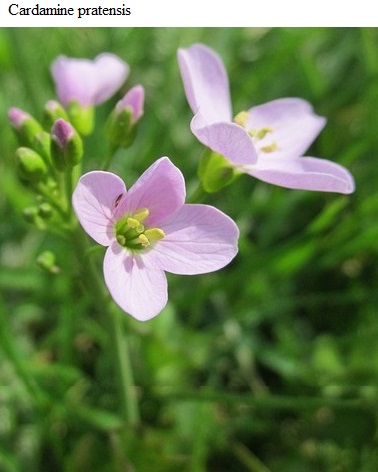
Cuckoo flower, (Cardamine pratensis), lady's smock, perennial herb, light shade, damp soil, small pale pink flowers, culinary, leaves in salads, herbal remedy, used to treat coughs, Europe, Brassicaceae
Bulbous bittercress, (Cardamine bulbosa), spring cress, edible pepper-tasting leaves, North America, Brassicaceae
Balloon vine, (Cardiospermum grandiflorum), invasive, smothers vegetation, ornamental, world wide, noxious weed Australia and South Africa, Sapindaceae
Lesser balloon vine, (Cardiospermum halicacabum), heart seed, climbing roadside weed, Africa, Australia North America, Sapindaceae
Plumeless thistle, (Carduus acanthoides), purple flower heads, deeply lobed leaves, pasture invasive, noxious weed, North America, Europe, Asia, Asteraceae
The "true thistles", unlike other thistle genera, "true thistles" have feathered hairs attached to their achenes.
Nodding thistle, (Carduus nutans), musk thistle, "true thistle", plumeless thistle, grows to 1.8 m, spiny wings on stem, green lanceolate very prickly leaves, large drooping, crimson-purple flowers, small achenes have longitudinal dotted stripes, unpalatable to livestock, aggressive growth and rapid spread in over-grazed and fertilized pastoral systems, accidentally introduced to USA, New Zealand, Australia and Argentina, where aggressive growth and rapid spread in pastoral systems, over-grazed and fertilized land are particularly vulnerable, Asteraceae
"Musk thistle" in United States and Canada is a complex of closely-related species of (Carduus nutans), Western Europe, Asteraceae
(The "true thistles" are genera Cirsium and Carduus.)
Northern silky oak, (Cardwellia sublimis), bull oak, up to 40 m, stem up to 2m, used in house framing and furniture, Australia, Proteaceae
Tall sedge, (Carex appressa), sedge, up to 800 mm, large yellow seed heads, grow in wet areas in full sun or partial shade or around pool area in pots or mass plantings, Australia, Cyperaceae
Rainforest sedge, (Carex brunnea), up to 0.8 m, stems densely tufted, very hardy for wet places, tiny brown-green flowers on spikes, used for floral arrangements, frost resistant but drought tender, Australia, Cyperaceae
Sedge, (Carex halleriana), "true" sedge, Western Asia, southern Europe, Cyperaceae
Papaya, (Carica papaya), paw paw (Australia), tall herb, evergreen, fruit, large, yellow, melon-like, used fresh, juice, propagation from seeds, herbal medicine, grafting, herbal medicine, Tropical America, Caricaceae
Papaya, (Carica papaya), Daley's Fruit Trees
Karanda, (Carissa carandas), thorny shrub, fruit, small, acid, purplish-black, used juice, jelly, propagation from seeds, air-layering cuttings, India, Apocynaceae
Natal plum, (Carissa grandiflora), carissa, thorny shrub, ornamental, thornless selections good for hedges or spiny hedges, milky juice, used fresh, salads, sauce, juice, propagation from seeds, air-layering, cuttings, South Africa, Apocynaceae
Currant bush, (Carissa ovata), carissa, native scrub lime, karey, baroom bush, turkey bush, dry sclerophyll forest, up to 1 m, sprawling habit, oval-shaped leathery leaves, spines at base of leaves, tubular perfumed white flowers, edible purple-black berry, used as a prickly hedge or screen, Australian native food, Apocynaceae
Currant bush reduces pasture production, it is drought tolerant and generally not grazed by livestock, which gives it an advantage in dry times or in overgrazed situations.
Carissa ovata, Native Plants Queensland.
Panama hat plant, (Carludovica palmata), toquilla palm, seed plant, large umbrella-like leaves but no woody trunk like palms, edible young leaves, fruits, shoots and roots, flexible stem used to make mats and bags, fibres are used to weave "Panama hats", edible leaf shoots, widely used ornamental plants, Tropical America, Cyclanthaceae
Saguaro, (Carnegiea gigantea), sage of the desert, giant saguaro cactus, slow growing, up to 2 m after 50 years up to 15 m after 120 years, branched columnar, white flowers just below the top of the stem, red edible fruits, state wildflower of Arizona, | Salsolidine, C12H17NO2 | USA, Cactaceae source
Carnegiea gigantea, OSU.
Carpentaria palm, (Carpentaria acuminata), solitary slender palm in canopy rainforest, up to 20 m, grey trunk, widely spaced rings, long feather-like fronds up to 4 m long, white male and female flowers, inflorescence from upper leaf bases then hanging down, small globular red fruit with fruit flesh is highly caustic, popular garden and landscape plant, Northern Australia, Arecaceae
Carpentaria acuminata, Donald Simpson.
Hornbeam tree, (Carpinus betulus), common hornbeam, up to 10 m, narrow upright tree then vase-shaped with ascending dense branches and does not develop a central leader, separate male and female flowers on the same plant (monoecious), ornamental, used in parks as separate tree or as hedge if constantly pruned, England, Asia, Betulaceae
Eland's sour fig, (Carpobrotus acinaciformis), sally-my-handsome | Betanin | in flowers, South Africa, Aizoaceae
Hottentot fig, (Carpobrotus edulis, Mesembryanthemum edule), ice plant, pigface, sour fig, edible leaves, easy to grow, succulent, groundcover | Betanin | Isobetanin | environmental, weed in Western Australia, South Africa, Aizoaceae
Sea fig, (Carpobrotus aequilaterus), thick fleshy lamina, for water storage, mucilaginous sap contains | Pentosans | Aizoaceae
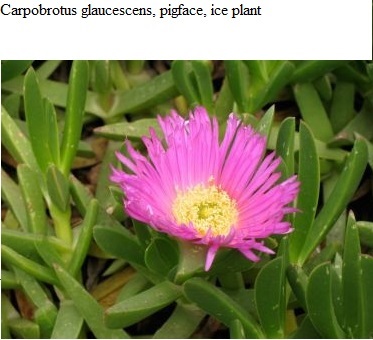
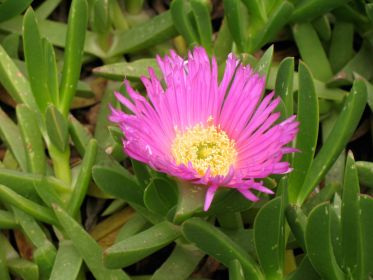
Pigface, (Carpobrotus glaucescens), nully pigface, angular pigface, succulent, coastal cover crop, hardy plant, groundcover on coastal sand dunes, leaves used as a salt substitute, stunning purple-pink flowers, red fruit tastes like salted apples or strawberries, but do not eat fruit skin, high nutritional value, ornamental creeper, plant it in full sun, fertilize with wood ash, dolomite and rock dust, grows from cuttings, herbal medicine, crushed leaves used to treat sunburn, burns, bites, jellyfish stings, sore throat, laryngitis, South Africa, Australian native food, Aizoaceae
Carpobrotus glaucescens, Australian National Herbarium.
Native pigface, (Carpobrotus rossii), coastal pigface, karkalla, "pig face", prostrate succulent groundcover, hardy plant on coastal sand dunes southern Australia, light purple flowers, globular purple / red fruit, fresh and dried fruit edible, perhaps salty leaves eaten raw, but can be cooked for greens, extracts have antioxidant and anti-inflammatory activity, leaf juice used for insect repellent and insect sting relief, Australian native food, Aizoaceae
Karkalla, (Carpobrotus virescens), coastal pigface, hardy creeping flat ground cover, up to 0.3 m, thick succulent leaves up to 10 cm in length, white-pink/purple flowers with pale yellow centres, used for rockeries and plantings, Australian native food, Australia, Aizoaceae
Saffron thistle, (Carthamus lanatus), woolly distaff thistle, annual, erect spiny stem up to 120 cm high, competes with crops for light and nutrients, spiny leaves discourage grazing and can injure eyes of livestock, causes down-grading of wool, seeds remain dormant in soil fo years, noxious pasture weed in Australia, Mediterranean region, Asteraceae
Safflower, (Carthamus tinctorius), distaff thistle, false saffron, annual, long cultivated for its seeds, up to 50 cm, full sun, up to 1 m, single smooth stem, alternate stalkless, pointed oval bristly leaves, spines at edges, thistle-like flower, red-orange florets, former herbal medicine, seed extracts to treat blood pressure, flowers used as laxatives, used for coloring and flavouring foods, yellow or red dye for silk, used as rouge, low cholesterol safflower oil for salads and cooking, florets for saffron substitute food colouring | Carthamine | ancient origin, China, Asteraceae
Dried herb is sold as petals.
Caraway, (Carum carvi), ajwain, ajmud, meridian fennel, Persian cumin, biennial, up to 60 cm, full sun, feathery foliage, grow from seed, umbels of small white flowers, culinary uses, in cabbage and pork dishes, breads, with parsnips, turnips, peas, baked apples, caraway "seed" used in seedcake and biscuits, distilled to make German liqueur Kummel, Scandinavian alcoholic drink Aquavit | Anethofuran | caraway flavour from | Carvone | lemon flavour from | Limonene | Cuminaldehyde | herbal medicine, is sold as caraway oil, ground caraway, annual from central Europe, biennial form eastern Mediterranean, Apiaceae
Dried herb is sold as whole seed or dried fruit.
The dried herb is not suitable for planting, but the chewed seed is said to stop the smell of garlic on the breath!
Caraway essential oil is used in pharmacy, perfumery, food and dried fruit for spasmodic gastrointestinal complaints, flatulence, irritable stomach, indigestion, lack of appetite and dyspepsia in adults.
Caraway, Mudbrick Herb Cottage
Ajwain, (Carum copticum), used for thousands of years for gastrointestinal disorders, cultivated herbal medicine | Thymol, C10H14O | Isoterpinene, C10H16 | Paracymene C10H14 | Beta-pinenemene, C10H16 | Nicotinic acid, C6H5NO2, Niacin | also calcium, phosphorus and iron, |seeds used extensively as food additive in India, Iran, Apiaceae source
Ajmud, (Carum roxburgbianum), wild celery, up to 100 cm, widely cultivated for aromatic dried fruits, herbal medicine, India, Southeast Asia, Indonesia, Apiaceae
Pecan, (Carya illinoiensis), hickory tree, deciduous tree, Juglandaceae
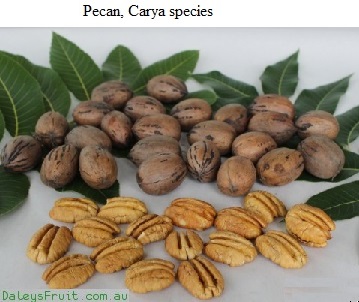
Pecan, (Carya illinoiensis), Daley's Fruit Trees
Fishtail palm, (Caryota mitis), beridin, up to 25 m, compound leaves with wedge-shaped, fish tail-like leaflets, flowers on tassel-like clusters, ripe fruits dark red like string of beads, fruit and leaves poisonous, sap stings skin, unripe fruits irritating, calcium oxalate raphides, garden and roadside ornamental, Arecaceae
Native fishtail palm, (Caryota rumphiana), rainforest plant, solitary plant, grey-tan trunk with widely spaced rings, up to 18 m, dark green pinnately compound leaves, long petiole, golden drooping mop-like flowers, round red-pink fruit, dark brown seeds, flowers only once then dies so monocarpic species, northern Australia, Papua New Guinea, Arecaceae
Solitary fishtail palm, (Caryota urens), jaggery palm, toddy palm, alcoholic drinks, palm sugar, fishing rod from leaf, India, Arecaceae
White sapote, (Casmiroa edulis), Mexican apple, matasano, spreading tree, palmate leaves, deciduous, fast growing, fruit, large, sweet, yellow-green fruit skin, white flesh, fruits cause drowsiness, seeds contain anti-cancer zapotin, vanilla custard taste, fresh, grafting, grown from seeds, Mexico, Rutaceae
Woolly-leaf white sapote, (Casimiroa tetrameria), medium tree, deciduous, leaves have white furry underside, fast growing, fruit is large, yellow custard-like, sweet, fresh, grown from grafting, seeds, Mexico, Central America, Rutaceae
Pig's senna, (Cassia absus), pig's ear, sparsely-branched, erect annual, up to 1 metre tall, weed of cultivation, harvested from the wild for traditional medicine in both Asia and Africa, Ayurvedic medicine used to treat many health problems, Fabaceae
Leichhardt bean, (Cassia brewsteri), Brewster's cassia, cigar cassia, up to 30 m, in open forests, flowers form a yellow pendulous raceme, fruits are cigar-shaped pods, pod ribbed between the seeds enclosed in a corky disk, hard-coated seed used for mine rehabilitation but seeds usually heavily parasitised, Australia, Caesalpiniaceae, Fabaceae
Crown of gold tree, (Cassia excelsa), bright yellow flowers above the leaves in showy flower clusters, seeds are in 15 cm long cylindrical pods | Cassine | Fabaceae
Indian laburnum, (Cassia fistula), cascara, golden rain tree, pudding-pipe tree, purging cassia, up to 20 m, alternately arranged bright green leaves, large racemes of golden bright yellow flowers hang downwards, large woody cylindrical pods containing many seeds in pulp turn dark brown or black as they mature | Cuminaldehyde | Anthraquinone | Hydrocyanic acid | Ricinoleic acid | Saponins | herbal medicine, laxative, widely grown ornamental, strong timber, India, Fabaceae
Brush cassia, (Cassia marksiana), up to 25 m, fragrant golden-yellow flowers hang in large clusters from lime-green foliage, segmented brown cylindrical fruits contain hard yellow-brown seeds enclosed in a cardboard-like envelope, Australia, Fabaceae
Chinese senna, (Cassia obtusifolia), glycosides: | Aurantio-obtusin, C17H14O7 | Chryso-obtusin, C19H18O7 | Obtusifolin, C16H12O5 | invasive, widespread, Fabaceae source
Yellow shower, (Cassia queenslandica), Queensland cassia, small spreading tree, pinnate foliage and multiple leaflets long spikes of yellow flowers, cylindrical pod fruit, red seeds, spectacular display tree, Australia, Fabaceae
Alexandrian senna, (Cassia senna) | Aloe-emodin | Chrysophanol | Rhein | Sennoside A | herbal medicine, ornamental, Egypt, Sudan, Fabaceae
Velvet cassia, (Cassia tomentella), velvet bean tree, up to 10 m, showy bright yellow perfumed flowers, hardy plant for dry conditions, seed used for mine rehabilitation, Australia, Fabaceae
Sickle senna, (Cassia tora), wild weed, up to 90 cm, stems have strong smell, pale yellow flowers in leaf axils, sickle-shaped pods edible plant and seeds, pesticide | Chryso-obtusin, C19H18O7 | Chrysophanic acid, C15H10O4, Chrysophanol | Rubrofusarin | Cinnamaldehyde | Cinnamyl acetate, C11H12O2 | Methoxycinnamate, C10H9O3- | very useful herbal medicine, laxative to expel intestinal worms, skin diseases, ear ache, eye sensitivity, Southeast Asia, Fabaceae source
Golden cassinia, (Cassinia aureonitens), yellow cassinia, woodlands plant, erect, open shrub, up to 4 m, dense clusters of small yellow flowers, Australia, New Zealand, Asteraceae
Dodder laurel, (Cassytha filiformis), devil's twine, false dodder, bush dodder, yugulu, globular sweet fruit, eaten raw, invasive parasitic vine, used as a poison and a medicine and social uses and for food, said to be aphrodisiac so called Caribbean "love vine", Australian native food, few globular sweet fruit eaten raw, Asian medicine, Australian native food, Lauraceae
Slender devil's twine, (Cassytha glabella), twining habit, parasitic with haustoria into hosts, degeneration of root system after parasitism, Lauraceae
Chestnut, (Castanea sativa), sweet chestnut tree, European chestnut, Spanish chestnut, deciduous, (big nuts in spiny sheaths), herbal medicine | tannins | southern Europe, England, (naturalized), Fagaceae
Black bean, (Castanospermum australe), Queensland black bean, Moreton Bay "chestnut", Moreton Bay bean, up to 40 m, stem up to 1.2 m diameter, large pendant bean-like fruit, seeds look like chestnuts, but contain | cyanogenetic poison Castanospermine | wild food plant, rainforest timber tree, limited use for wood, fence posts, Australia, Fabaceae
Do NOT eat it, because it is never listed as a "bush food"! The method of counteracting the poison formerly used by the Australian native people is described in "Australia's Original Languages", by R. M. W. Dixon, Allen & Unwin, 2019, pp 20-22, (ISBN 978 1 76087 523 7), where it describes how in Dyirbal country, (North Queensland), the "staple food" Castanospermum australe, the tall blackbean trees, called mirran, produced pods, 15 cm or more in length, from which three to four "nuts" were baked, finely sliced and soaked in running water, a process taking up to three days.
Brown tamarind, (Castanospora alphandii), native chestnut, up to 15 m, rounded bushy crown of leathery dark green leaves that are grey and felty beneath and with wavy edges, limp new growth in soft green lime, dense clusters of small white scente flowere, brown to red fleshy ovoid fruit, dark brown seeds, distantly related to the true tamarind, in rainforests, Australia, Sapindaceae
She-oak, (Casuarina equisetifolia), coast she-oak, "sheoak", drooping branches like horse hair, ornamental, tree, apparent leaves are twigs, real leaves reduced to small scales at nodes of the flattened green stem, monoecious, oval woody fruit used as missiles in children's games and called "bum stingers", herbal medicine, diarrhoea, can fix atmospheric nitrogen, invasive, widespread in Australia and pacific region, Casuarinaceae
Most Casuarina species are called sheoaks.
Sheoak: (Native American sheac 'beefwood', tree that produces hard red wood, e.g. Casuarina equisetifolia
Casuarina: the needle-like leaves look like a cassowary feather.
Swamp sheoak, (Casuarina glauca), Casuarinaceae
Casuarina glauca, Swamp sheoak, Daleys Fruit Trees.
Drooping she-oak, (Casuarina stricta), dioecious tree up to 10 M, chewable young cones called "oak apples" | Casuarictin | Casuarinin | Pedunculagin | Tellimagrandin | Australia, the She-oak family, Casuarinaceae
Khat, (Catha edulis), qat, jaad, miraa, erect evergreen glabrous tree, up to 25 m, used as a stimulant, Horn of Africa, Arabian Peninsula. | Cathine | Cathinone | East Africa, Arabia, the bittersweet family, Celastraceae
Madagascar periwinkle, (Catharanthus roseus), pink periwinkle, rosy periwinkle, bright eyes, vinca, annual vinca, sadaphuli, old maid, ornamental perennial, up to 1 m, stems and leaves have milky sap, glossy opposite leaves with prominent white vein, pink flowers with a darker centre, pair of slender pods with many seeds, environmental weed, catharanthus alkaloids: | Ajmalicine | Alstonine | Catharanthine | Cathenamine alkaloid | Norharmane | Leurosine | Loganin | Secologanin | Vinblastine | Vincristine | Vindoline | more than 66 alkaloids | herbal medicine, diarrhoea, induce abortion, diabetes, said to destroy the excessive white blood cells of leukaemia, noxious weed in Australia, Madagascar, Apocynaceae
The Catharanthus species, (Greek catharanthus 'pure flower'), are called periwinkles, and come from Madagascar, except (Catharanthus pusillus), from India.
Blue cohosh, (Caulophyllum thalictroides), squaw root, papoose root | Baptifoline | herbal medicine, quinolizidine alkaloids, Berberidaceae
Dried herb is sold as root.
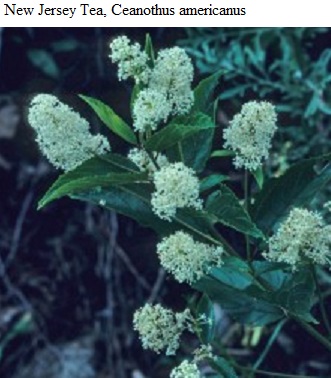
New Jersey tea, (Ceanothus americanus), leaves were used to make a popular tea, perennial shrub, up to 1 m, multiple green-yellow stems, deep roots, no caffeine, used as tea substitute, prairie plant, fixes nitrogen, anti-microbial, root decoction affects blood coagulation, New Jersey, Rhamnaceae
Mexican bean tree, (Cecropia peltata), trumpet tree, snakewood, up to 20 m, yellow-green flowers, fast growing, cold-sensitive, much variation of fruit quality, fruit, cylindrical hollow, soft, sweet flesh, many small seeds, used fresh, propagation from seeds, pioneer rainforest tree native to the American tropics, Queensland restricted invasive plant, potential to invade rainforests of the Gold Coast, outcompeting native plants and replacing food sources for native animals, aggressive coloniser, succulent fruits, seeds dispersed by flowing water, occupy creek banks, edges of rainforests and forest areas altered by human activity or storm events, large circular leaves resembling Papaya, lower leaf surface is very pale to nearly white/silver, male and female flowers on separate trees, female trees have finger-like spikes, male flowers are smaller with more ‘fingers’, Central and South America, Cecropiaceae
Spanish cedar, (Cedrela odorata), West Indian cedar, cigar box cedar, Barbados cedar, valued aromatic wood, invasive, Meliaceae
Chinese cedar, (Cedrela sinensis), toon tree, Chinese flamingo tree, up to 9 m, brilliant bright pink foliage, ornamental tree, Meliaceae
Balm of Gilead, (Cedronella canariensis), Canary Islands balm, Canary balm, short-lived perennial, up to 1 m, full sun, small pink flowers in terminal heads, elongated dull green leaves with sweet perfume like cedar when brushed, loose spikes of pink, lilac, or white two-lipped flowers, no therapeutic uses, infused to make a tea, added to potpourri for a ‘Woodsy’ scent, fragrant seeds, Azores, Madeira, Canary Islands, Lamiaceae
(Bible, Jeremiah laments, “Is there no balm in Gilead?”, Jeremiah 8:22, also Genesis 37:25), Burseraceae
https://www.herbcottage.com.au/products/balm-of-gilead.html">balm-of-gilead Cedronella canariensis, Mudbrick Herb Cottage
The "balm" may have been from Mastic tree (Pistacia lentiscus), Balsam poplar (Populus balsamifera), Mecca balsam (Commiphora gileadensis), (Populus × jackii), (P. × gileadensis), the hybrid between (P. balsamifera) x (P. deltoides), and Ayurveda Balsam resin (Balsamodendron opobalsamum).
Kapok tree, (Ceiba pentandra), ceiba, Java cotton, pochote, silk cotton tree, up to 70 m, deciduous shedding palmate leaves before flowering, clusters of thick conical thorns, seeds surrounded by light, strong fibres for mattresses called "kapok", now replaced by synthetics, tropical forest tree, resin for kapok seed oil, tannin, herbal medicine bark aphrodisiac, fever, asthma, root tonic, South America, west Africa, Malvaceae
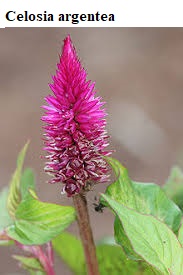
Lagos spinach, (Celosia argentea), celosia, plumed cockscomb, woolflower, wild cockscomb, dense bright-coloured clusters of flowers | Niacin | herbal medicine, blood discharge, dysentery, eye inflammation, swellings, invasive weed, Asia, Amaranthaceae
Celosia argentea, Lagos spinach, Daleys Fruit Trees
Cockscomb, (Celosia argentea var. cristata), wool flower, up to 60 cm, bright green foliage, wrinkly "rooster comb" bright red flowerheads, widely used as cut dried flowers, | Niacin | Amaranthin | Betalamic acid | (houseplant), ornamental, Amaranthaceae
Buffel grass, (Cenchrus ciliaris), African foxtail grass, birdwood grass, hardy, drought-tolerant perennial, high oxalate content, easily catches fire, Poaceae
Buffel grass, Cultivar Biloela, (Cenchrus ciliaris), drought resistant, cultivars adapted to wide range of tropical agriculture conditions.
Birdwood grass, (Cenchrus setigerus), used in short season environment, used as erosion control species.
Cornflower, (Centaurea cyanus), bluebottle, astringent tannins, Europe, west Asia, Asteraceae
Dried herb is sold as cornflower petals.
Centaurea species are called knapweeds.
Mountain bluet, (Centaurea montana), mountain cornflower, widespread mountain plant, blue flowers, ornamental, Europe, Asteraceae
Knapweed, (Centaurea nigra), common knapweed, black knapweed, perennial, up to 1 m, lobed, hairy leaves, purple flowers, butterfly food, Europe, Asteraceae
Dried herb is sold as cornflower petals.
Centaury, (Centaurium erythraea), common centaury, spike centaury, European centaury, herbal medicine, gastric disorders, kill worms, topical cure for freckles, Gentianaceae
Dried herb is sold as aerials.
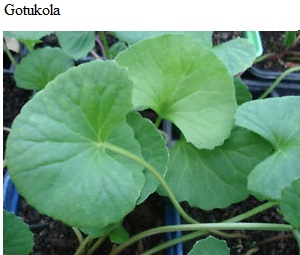
Indian pennywort, (Centella asiatica), gotu kola, Asian pennywort, pegaga, spadeleaf, perennial, graceful, hardy plant, small annual garden herb, groundcover, traditional Asian food / herb, 2-5 leaves a day regarded as brain and body food | Asiaticoside | Asiatic acid | herbal medicine, tonic, improve mental sharpness, temporary relief, arthritis, pain, skin disorders fluid retention, allergies, nervous tension, arthritic pain, ("chemical cocktail"), culinary uses, India, Apiaceae
Gotu kola, Mudbrick Herb Cottage
Dried herb is sold as leaves, "Gotu Kola Tea".
Old man weed, (Centipeda cunninghamii), gukwonderuk, sneezeweed, scent weed, native Australian medicinal herb, occurs in low lying swampy areas of the Murray River, unusual leaf shape, smells of pine trees, Australia, Asteraceae
Spreading sneezeweed, (Centipeda minima), small erect prostrate mat-forming soft aromatic herb, cottony hairy stems, clusters of tiny flowerheads up to 15 purple-green flowerile still green. widely used in Australian native medicine, harvested from the wild for mainly local medicinal use, plant strongly aromatic when crushed, may have caused poisoning of livestock in northern Australia.
Centurion centro, (Centrosema pascuourum), tropical pasture legume, annual twining herb that roots at nodes, leaves with 3 narrow leaflets, pink-mauve to crimson flowers, brown seeds, South America, Fabaceae
Centro, (Centrosema pubescens), butterfly pea, flor de conchitas, vigorous twining perennial herb, forms tangled mat or grows up shrubs, an established tropical pasture plant in Australia, widespread weed of cane fields, roadside banks and other disturbed areas, South America, Fabaceae
Centro, (Centrosema pubescens), Pastures Australia.
Spurred butterfly pea, (Centrosema virginianum), Virginian centro, herbaceous, trailing and twining perennial vine, highly specialized flowers with an inverted banner for pollinating bees, North and South America, Fabaceae
Old man cactus, (Cephalocereus senelis), columnar-shaped blue-green cactus, solitary stem wth many white tangled hairs or fine white bristles, cream and red trumpet-shaped flowers may appear at night after many years, red fruit with yellow hairs, called "the weird plant", Mexico, Cactaceae
Albany pitcher plant, (Cephalotus follicularis), West Australian pitcher plant, pod like a siliqua, grows in swampy areas, contains pit-fall traps, (Greek kephalē 'head, and 'ooce 'ear', shape of the head of the anthers), genus contains one species, Cephalotaceae
Japanese plum-yew, (Cephalotaxus harringtonia), | Homoharringtonine, C29H39NO9 | used for treatment of chronic myeloid leukaemia, Japan, Cephalotaxaceae source
Plum yew, (Cephalotaxus fortunei), cowtail pine, evergreen trees and shrubs, north China, Cephalotaxaceae
Mouse-ear chickweed, (Cerastium vulgatum), perennial broadleaf weed, germinates by seed, prostrate growth habit, weed in turfgrass, prostrate stems form dense mat-like patches, form an upright mound of spreading and invasive sticky hairy stems that produce roots when nodes touch soil, dark green oblong leaves that are hairy on the entire upper surface, small white flowers, [common chickweed (Stellaria media), does not have hairy leaves and its nodes cannot form roots when they touch soil], USA. Caryophyllaceae
Bur buttercup, (Ceratocephala testiculata), curveseed butterwort, dwarf herbaceous annual plant, up to 8 cm, small yellow flowers, hairy poisonous leaves, hard spiny fruits called 'burs', invasive in disturbed land, North America, southeastern Europe, Ranunculaceae
Carob tree, (Ceratonia siliqua), St John's bread (desert food of Sant John the Baptist), algaroba, vegetable gum, large tree, evergreen, fast growing, up to 15 years to have pods, grows better in dry climate, fruit, large pod, drinks, chocolate substitute.
Locust bean gum, carob gum, from (Ceratonia siliqua), (vegetable gum), in sweets, fruit drinks, syrup, chocolate substitute.
Carob flour, grown from seeds, grafting, Mediterranean region, Fabaceae
Carob tree seeds were used to weigh gold.
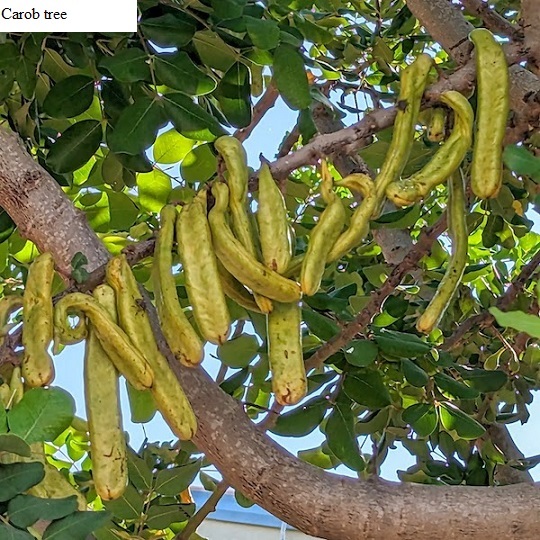
Carob Tree, Daley's Fruit Trees.
Coachwood, (Ceratopetalum apetalum), scented satinwood, tarwood, medium-size hardwood, grows straight, fragrant grey bark, wood has caramel odour, used for flooring and furniture, boat building, Australia, Cunoniaceae
Coon's tail, (Ceratophyllum demersum), hornwort, aquatic, widespread, common aquarium plant, invasive, Ceratophyllaceae
New South Wales Christmas bush, (Ceratophyllum gummiferum), long-living large shrub, up to 6 m, sweet honey scent of cream star-shape small white flowers, enlarged red sepals, light grey rough bark exudes gum when cut, Australia, Cunoniaceae
Ceratophyllum gummiferum, Australian National Herbarium.
Sea mango, (Cerbera manghas), suicide apple, toxic glycosides, coastal, cardiac poison, ceberin glycoside, light wood, ornamental, [not related to the mango (Mangifera indica)], Seychelles Islands, Apocynaceae
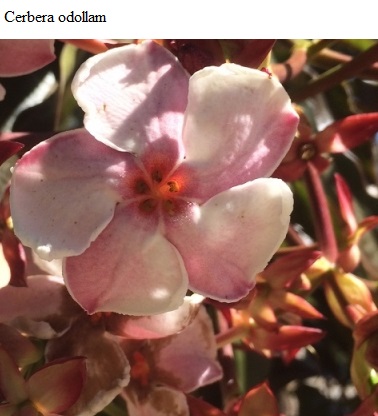
Pong-pong, (Cerbera odollam), suicide tree, othalam, up to 12 m, grey bark, dark green spirally-arranged glossy leaves, cluster of white flowers with yellow eye, milky white latex, single large round green fruit called othalanga turns pink then black, two white poisonous seeds kernel turns black when exposed to the air | Cerberin, C32H48O9 | cardiac glycoside, used for murder and suicide, herbal medicine, purgative, emetic, ornamental, mangrove swamps, coastal south Asia, Apocynaceae source
Judas tree, (Cercis siliquastrum), love tree, deciduous, rounded heart-shaped leaves., pink pea-like flowers, long flat purple pods, woody fruits, decorative garden tree, Mediterranean region, Fabaceae
Torch thistle, (Cereus aethiops), sweet potato cactus, multi-stemmed cactus, tall like a taper, South America, Cactaceae
Blue torch cactus, (Cereus azureus), upright, slender stems, blue waxy bloom, (houseplant), Cactaceae
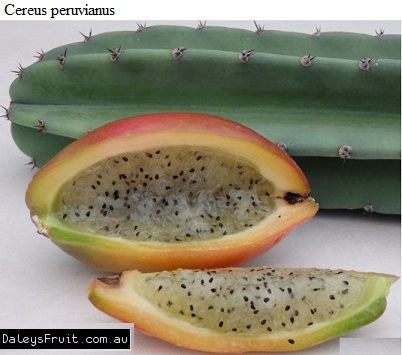
Apple cactus, (Cereus peruvianus), Peruvian apple, columnar cactus, blue bloom, brown thorns, (potted houseplant), night flowering, flesh soft, sweet, delicate flavour, (like dragonfruit), attractive, drought tolerant, night pollination by moths or bats, sold as bare-rooted cuttings, South America, Cactaceae
Honeywort, (Cerinthe major), blue shrimp plant, self-seeding annual, up to 90 cm, blue-grey foliage, nodding purple bell flowers, Boraginaceae
String of hearts, (Ceropegia woodii), hearts entangled, rosary vine, wiry purple stems, heart-shaped leaves, trailer, (houseplant), Apocynaceae
Wax palm, (Ceroxylon alpinum), ceroxylon palm, South American wax palm, solitary palm, up to 21 m, internodes covered with thin layers of wax, hemispheric crown of leaves, orange fruits, lives in cool and damp conditions, very slow growing, Ecuador, Arecaceae
Night-blooming jasmine, (Cestrum nocturum), night-scented jasmine, perennial, up to 1-2 metres +, honey / musk / almond scented flowers give off their aroma in evenings | Alkaloids | Glycosides | Flavonoids | Essential oils | folk medicine, anti-inflammatory, analgesic, sedative, used to treat epilepsy, and skin disorders, contains toxic solanine alkaloids, Solanaceae
Night-Scented Jessamine, (Cestrum nocturum), Mudbrick Herb Cottage
Green cestrum, (Cestrum parqui), shrub, up to 3 m, light-green, brittle stems, shiny green lance-shaped leaves, foul-smelling when crushed but sweet smelling in the evening, yellow trumpet-shaped flowers, all parts poisonous | Carboxyparquin, C37H50O19 | Solanaceae source
Stinging serpent, (Cevallia sinuata), spiny leaf, thick prickly glandular leaves, yellow flowers, red-orange bracts, variable hairs covering the leaves that have yellow glands, blooms at night, unusual plant, Texas, USA, Loasaceae
Parlour palm, (Chamaedorea elegans), neanthe bella palm, dwarf palm, up to 2 m, slow growing, dark green foliage ffrom base, yellow flowers, popular houseplant, Mexico, Arecaceae
Roman chamomile, (Chamaemelum nobile), dog fennel, English chamomile, garden chamomile, sweet chamomile, "true chamomile", herbaceous perennial, mat-forming creeping groundcover, up to 25 cm, soft feathery foliage, full sun, formerly popular for its apple scent when walked on, shade, yellow-centered and white-rayed flowers, grow on stalks, spreading plant, leaves used as wash, hair conditioner, dried flowers for camomile tea, herbal medicine, digestive problems, morning sickness colic, stress-related dyspepsia, sleeplessness and bad dreams, but may increase drowsiness caused by some drugs and may interact with prescription drugs for osteoporosis or cancer, volatile oil contains | Chamazulene | Angelic acid | Tiglic acid | Sesquiterpene lactones | do not use if taking contraceptive pill or hormone replacement therapy, a study in 2018 showed that people with generalized anxiety order who took chamomile had beneficial responses in their cortisol levels, Western Europe. Asteraceae
Roman Chamomile, Mudbrick Herb Cottage
Not all "chamomiles" are Chamaemelum species, e.g. German chamolile, Matricaria chamomilla.
Lawn chamomile, (Chamaemelum nobile, var. Treneague, Anthemis nobilis), mat-forming low growing perennial, feathery leaves, non-flowering variety suitable for lawns, e.g. at Buckingham Palace, Asteraceae
Lawn Chamomile, Mudbrick Herb Cottage
European fan palm, (Chamaerops humilis), fan palm, large, fan-shaped leaves, (houseplant), Europe, Arecaceae
Peanut cactus, (Chamaeus silvestris), clump-forming, finger-like spined stems, funnel-shaped bright red flowers, very popular cactus, Cactaceae
Geralton wax plant, (Chamelaucium unicinatum), wax flower, erect shrub, up to 4 m, hooked tips of the aromatic leaves, conical bracts like a monk's hood surrounding the young flowers, hooked tips of the leaves, dense spreading shrub, evergreen, fine narrow foliage, star-like aromatic mostly white waxy flowers, popular long-living cut flowers, planted as a hedge, feature plant or screen, popular horticulture plant, widely cultivated, Australia, Myrtaceae
Chamelaucium unicinatum, ANPSA.
Wallflower, (Cheiranthus cheiri), colourful flowers, scents in nosegays, called "gillyflower", because of clove smell, anti-inflammatory Poisonous | Cardenolides | from the leaves and seeds with action similar to | Digitalis |, dangerous cardiotonic drug, traditional medicine in medieval Persia, formerly used as a diuretic and emmenagogue (stimulate blood flow in pelvic region).
Nowadays, used in small doses as a cardiotonic to treat impotence and paralysis, toxic in large doses, seeds are aphrodisiac, diuretic, expectorant.
Also, used to treat bronchitis, fevers and eye injuries, pain associated with wisdom teeth, Brassicaceae
Greater celandine, (Chelidonium majus), celandine, swallowwort, 1 metre +, white flowers, orange sap from stem, root shaped like ginger, culinary uses | Chelerythrine | Chelerythrine chloride | Chelidonic acid | Chelidonine, (C20H19NO5) | Nonacosan-10-ol, (C29H60O) | Sanguinarine | herbal medicine for eyes and liver tonic, may cause liver toxicity, poisonous, purgative, used to cure warts, Papaveraceae source
Dried herb sold as aerials.
Greater celandine, Mudbrick Herb Cottage
Fat hen, (Chenopodium album), lamb's quarters, goosefoot, midden myles, pigweed, all good, perennial, hardy plant, up to 1.5 metres, whiteish undersides of leaves, (Latin álbum 'white'), prolific garden weed, forage for little chickens and hens love it, culinary uses, rich in vitamins A and C, nutty flavoured young leaves and flowers, used in salads or cooked in Fat Hen soup, Europe, Amaranthaceae
(Chenopodium album ssp. amaranticolor, is used for diagnosis of plant viruses) | Amaranthin | Amaranthaceae
Quinoa, (Chenopodium quinoa), staple ancient pseudograin of Incas in Peru ashes consumed with coca leaves, up to 1-2 m, annual, seeds 1-3 mm diameter coated with bitter saponins to be removed by washing, cuisine, cooked as with rice, ground for bread, gluten-free, easy to digest, used as folk medicine, antiseptic, South America, Amaranthaceae
White fringetree, (Chionanthus virginicus), old man's beard, deciduous shrub, up to 10 m, richly-scented flowers have a white-lobed corolla, drooping axillary panicles, blue-purple ovoid drupe, Native Americans used dried roots and bark to treat skin inflammation, North America, Oleaceae
Devil's hand tree, (Chiranthodendron pentadactylon), monkey's hand tree, (single species), evergreen tree, brilliant red flowers open pointing upwards, fast growing tree, up to 10 m, large flowers, seeds in hard woody pods, grows in Melbourne Botanic Gardens, Mexico, Malvaceae
Narrowleaf soap plant, (Chlorogalum augustifolium), soap root, amole, soap lily, small fibrous bulb with narrow basal leaves, ephemeral flowers open at night, small fruit capsule, soapy foam from saponin glycosides can be used to wash clothes, grows on rocky hillsides, North America, Asparagaceae
Musli, (Chlorophytum borivilianum), safed musli (Hindi), from the wild but now widely grown for its high saponin content tubers aphrodisiac folk medicine, lanceolate leaves, from tropical wet forests in peninsular India, Asparagaceae
Spider plant, (Chlorophytum comosum), hen and chickens, up to 60 cm, ribbon-like variegated leaves arch to form cascade, green-white flowers, invasive, common houseplant, southern Africa, Asparagaceae
Widely cultivated especially as a house plant and probably one of the most familiar of cultivated ornamentals throughout the world.
Rhodes grass, Chloris gayana , windmill grass, tropical pasture grass, perennial, cultivated or naturalised throughout the more settled areas of Australia, often found on roadsides and other disturbed areas, invasive, Poaceae
a name="ChondrillaspH">
Velvet leaf, (Chondodendron tomentosum), woody climber into rainforest canopy, large heart-shaped leaves with silky underside | benzylisoquinoline alkaloid muscle relaxant | Tubocurarinem C37H41N2O6 | active component of curare poison used by indigenous South Americans to coat tips of hunting arrows, South America, Menispermaceae source
Skeleton weed, (Chondrilla juncea), vegetative reproduction by tuberous roots, large tap root competes with native plant species for nutrients and water, major problem of wheat fields, can reduce yields, threatens native species, resistant to many herbicides, Asteraceae
Climbing frangipani, (Chonemorpha fragrans), vigorous, deciduous, yellow-throated white blooms, delicious perfume, grows in full sun, Apocynaceae
Silk floss tree, (Chorisia speciosa), Brazilian kopock deciduous, up to 13 m, evergreen, deciduous in cooler climates, green thorny trunk swells to hold moisture, "silk floss" from seed pods, purple-pink flowers with central white markings, "most beautiful tree in the world", Brazil, Bombacaceae
Siam weed, (Chromolaena odorata), chromolaena, triffid weed, bitter bush, jack-in-the-bush, common floss flower, sprawling shrub that forms dense thickets, toxic to livestock, causes allergies in humans, outcompetes pastures and native vegetation, herbal medicine, prohibited invasive plant of Queensland, tropical and subtropical, Americas, introduced to Asia, West Africa, and Australia, Asteraceae
Costmary, (Chrysanthemum balsamita var. tanacetoides), alecost, balsam herb, chrysanthemum sage, herbaceous perennial, up to 1.5 m, toothed hairy leaves are oval-shaped with strong fragrance when crushed, leaves have a bitter taste, clusters of yellow flowers that look like a daisy, woody stem used for wreaths, used to add flavor to salads, soups, stews, and sauces, folk medicine used to treat digestive disorders, headache, and respiratory infections, natural insecticide due to its strong scent, Mediterranean region, Asteraceae
[Medicinal camphor, C10H16O, strong mothball-like odour, in many plants, especially camphor laurel, (Cinnamomum camphora)]. source
Pyrethrum, (Chrysanthemum cinerariaefolium), painted daisy, Dalmation chrysanthemum, perennial, up to 1.5 m, grow from seed in open sunny location.
Basal clump of blue-green fern-like daisy leaves, thin erect flower stem, single white daisy flower with yellow centre on a slender upright stem.
Seeds attached to calyx beneath the flower, commercial production of insecticide pyrethrum from dried flower heads | Pyrethrin C22H28O5 |. source
Make spray by cutting off whole flower heads when in full bloom, grind up the flowers into a smooth powder.
Combine half a cup of the powder with liquid soap + 1 litre of water.
| Jasmolone, C11H16O2 | ornamental, Yugoslavia, Asteraceae source
Pyrethrum, Mudbrick Herb Cottage
(Pyrethrum is the name of the plant and the name of the insecticide.
| Pyrethrin, (C22H28O5), is the active ingredient of insecticide called Pyrethrum). source
Pyrethrum, Mudbrick Herb Cottage
Pyrethrum daisy, (Chrysanthemum coccineum), Persian pellitory, painted daisy, popular colourful garden flower, formerly used for commercial production of insecticide pyrethrum, (C43H56O8), from dried flower heads, ornamental, Asteraceae source
Garland chrysanthemum, (Chrysanthemum coronarium), garland daisy, crown daisy shungiku, chop suey green, up to 1 m, double flower s with mixed colours, yellow (var. coronaria) and white (var. discolor), young leaves eaten raw and cooked in stir-fried Asian cuisine, older leaves used in folk medicine, used for cut flowers and borders, Chile, spread worldwide, Asteraceae
Garland chrysanthemum, Mudbrick Herb Cottage
Indian chrysanthemum, (Chrysanthemum indicum), (type species), Chrysanthemum (Greek chrysos gold, and anthenon flower)
(A chrysanthemum flower with 16 petals is the emblem of Japan).
Ox-eye daisy, (Chrysanthemum leucanthemum), moon daisy, maudelenwort, grassland perennial, ornamental, invasive, annual, former herbal medicine, diuretic, not cultivated, weed in damp places, ornamental, Greece, Asteraceae
Chrysanthemum, (Chrysanthemum x morifolium), the most important hybrid, common garden chrysanthemum, florist's chrysanthemum, florists' daisy, hardy garden mum. "ju hua", Chinese chrysanthemum, herbal medicine, used to treat many disorders in Chinese medicine, boiled to make Chinese "chrysanthemum tea", added to Korean rice wine, many chemical compounds, houseplant removes toxic chemicals from air, ornamental, Asteraceae
Dried herb is sold as chrysanthemum flowers.
Cocoplum, (Chrysobalanus icaco), paradise plum, icaco, evergreen shrub, slow growing, smooth white or purple fruit, cotton-like pulp, used for fresh jellies, preserves, propagation from seeds, grown as an ornamental, South Florida, West Indies, Chrysobalanaceae
Yellow buttons, (Chrysocephalum apiculatum), cate's orange, common everlasting, desert flame, groundcover, yellow flower heads, Australia, Asteraceae
Star apple, (Chrysophyllum cainito), cainito, caimito, satin leaf tree, purple apple, large tree, evergreen, slow growing, large purple / gold / green fruit with edible pulp, used fresh, propagated from seeds, cuttings, and grafting, Tropical America, Sapotaceae
Chrysophyllum cainito, Star apple, Daly's Fruit Trees.
Satinleaf, (Chrysophyllum oliviforme), damson plum, wild star apple, up to 10 m golden-brown foliage, leaves are silky-smooth bottle green on top and a glowing silvery copper colour beneath, garden ornamental, USA, Caribbean islands, Sapotaceae
ornamental, Sapotaceae
Love grass, (Chrysopogon aciculatus), amorseco, lesser spear grass, perennial, creeping stout rhizomes, up to 50 cm, sharp spikelets that stick to clothing and animal fur | Hydrocyanic acid | herbal medicine, expel intestinal worms, rheumatism, invasive weed, used to prevent soil erosion, Southeast Asia, Australia, Poaceae
Vetiver grass, (Chrysopogon zizanioides), perennial, up to 1. 5 metres, clumping grass, moisture conservation and erosion control, mulch.
Aromatic root yields valuable oil used in perfumery, drinks, foods, cosmetics, soaps, crafts, insect repellent, herbal medicine, tonic, digestive, temporary relief of arthritis, fevers, stress, aromatherapy, culinary uses, herbal medicine, Poaceae
Vetiver Grass, Vetiveria zizanioides, Mudbrick Herb Cottage
Tea plant(Camellia sinensis), Theaceae
Camellia sinensis, Brynhill, The Tea Plant, Camellia sinensis
Camellia sinensis, Tea Plant, Daley's Fruit Trees
Camellia sinensis var. assamica, Assam tea, Theaceae
Camellia sinensis var. sinensis, China tea, Theaceae
Tea plant, green tea | Tannins | Caffeine | Theanine | Catechin | China, Theaceae
Tea from (Camellia sinensis), has a slightly bitter, astringent flavour.
Tea contains polyphenols, but tea does not contain tannic acid as previously believed.
BOP = cut size of leaves, "Broken Orange Pekoe".
Black Assam tea, full-bodied, good strength and good dose antioxidants, India.
Black tea is more oxidized than oolong tea, green tea and white tea.
Black Ceylon teas, BOP, contains caffeine, Sri Lanka.
Black Darjeeling tea, Light, special delicate taste, contains caffeine, Darjeeling province, India.
Earl Grey tea, BOP, blended, citrus bergamot flavour, South India.
English breakfast tea, BOP, full-bodied blend, Sri Lanka.
Dried herb sold as leaves.
Green tea, not affected by oxidation, contains caffeine, sugar not added to drink, dried herb sold as leaves and powder, China.
Green tea gunpowder, from Zhejiang province, higher caffeine content than other green teas, cut size: rolled leaf, China.
Green tea jasmine, blended with jasmine, China.
Green tea Sencha, China.
Oolong tea, cut size: cut leaf and rolled leaf, China.
Dried herb, white tea, is sold leaves.
Camellia species, Theaceae
(Camellia reticulata), "Spanish dancer", large showy flowers, Theaceae
(Camellia rumelica), graceful false flax, camelina oil seed, Theaceae
(Camellia sasanqua), many cultivars, garden hedge, evergreen shrub, Japan, Theaceae
(Camellia sinensis), tea plant, Theaceae
(Camellia sinensis var. assamica), Assam tea, Theaceae
(Camellia sinensis var. sinensis), China tea, Theaceae
Bioactive compounds in teas: Gallic acid, Ellagic acid, Chlorogenic acid, Cathechins, Flavonoids, Theanine, Aminobutyric acid, Theobromine, Caffeine
This page was generated automatically from the original page on John Elfick's School Science Lessons website. If something looks wrong, please check the original.