Chemistry Tests
Last updated 2026-04-24 by Dr John Elfick
Chemistry Tests Please send comments to: jwelfick@gmail.com
2.1.0 Tests for all substances
Tests for acetates: 12.11.0
Tests for acetic acid: 9.3.0
Tests for acetic acid in vinegar: 2.1.1
Tests for acetylene: 16.6.6.2
Tests for acid radicals in solution: 12.11.0
Tests for acidity of water: topic18
Tests for adulteration by borax: 19.5.6
Tests for air in water: topic18
Tests for air pollution: topic18
Tests for albumin / gelatine: 9.3.0
Tests for aldehydes: 9.3.0
Tests for aldehydes with Fehling's solution: 9.5.0
Tests for alcohol, breath tests: 15.3.6
Tests for alcohols: 2.1.2
Tests for aluminium: 13.3.12
Tests for ammonia: 3.5.0
Tests for ammonium compounds, flame tests: 2.5.0 (See: 1.)
Tests for amphoterism 16.4.0
Tests for amylose / amylopectin: 9.3.0
Tests for anions: 12.11.0
Tests for antimonates, borates, oxalates: 12.11.0
Tests for antimony: 2.3.2
Tests for arsenic, flame tests: 2.5.0 (See: 3.)
Tests for arsenates: 12.11.0
Tests for ascorbic acid with dipsticks: 19.1.10
Tests for ash content of plants: 9.3.0
Tests for aspirin: 2.1.3
Tests for barium: 2.3.3
Tests for benzidine: 2.1.4
Tests for bicarbonates: 12.11.0
Tests for bismuth: 2.3.4
Tests for blood with luminol: 9.1.12
Tests for blood, TMB test for blood: 9.1.13
Tests for borates: 12.11.0
Tests for bromides: 12.11.0
Tests for cadmium: 2.3.5
Tests for calcium: 2.3.6
Tests for calcium: 16.4.0
Tests for calcium: 20.6.0
Tests for carbohydrates: 9.3.0
Tests for carbon dioxide: 3.5.0
Tests for carbon monoxide topic18
Tests for carbonates: 12.11.0
Tests for cellulose: 9.3.0
Tests for cellulose, Fehling's solution: 9.5.0
Tests for cement brick strength: 34.3.4
Tests for chlorides: 12.11.0
Tests for chlorides in water: topic18
Tests for chlorine: 2.2.1
Tests for chromates: 12.11.0
Tests for chromium: 2.3.7
Tests for cigarette smoke: 16.4.0
Tests for cobalt: 2.3.8
Tests for colour of water: topic18
Tests for concrete alkalinity: 34.3.0
Tests for conductivity: topic18
Tests for copper: 2.3.9
Tests for copper: 12.6.0
Tests for dextrins in toast: 19.2.14
Tests for diastase activity: 9.3.0
Tests for dinitrogen oxide: 13.3.23
Tests for dissolved O2 in water: topic18 source
Tests for ethyne: 16.6.6.2
Tests for fabrics, Burning tests for fabrics: 4.0.0
Tests for Faraday's first law: 15.1.1.1
Tests for fats and oils: 9.3.0
Tests for food: 9.3.0
Tests for gases and vapours: 2.2.0
Tests for gases collected in a respirometer: 9.3.0
Tests for gases with hot concentrated sulfuric acid: 2.2.3
Tests for glucose: 2.1.5
Tests for glycerol: 12.5.15
Tests for glycerine: 2.3.27
Tests for glycerine: 12.7.4
Tests for gypsum added to the soil: 9.2.4
Tests for haemoglobin: 9.1.0
Tests for halides, Cl, Br, I: 12.11.0
Tests for hard water: 12.4.0
Tests for hardness, lead, tin, and tin alloys: 3.62.0
Tests for harmful detergents: topic18
Tests for household chemicals: 19.5.0
Tests for hydrogen chloride: 13.2.24
Tests for hydrogen chloride with ammonia solution: 3.3.8
Tests for hydrogen gas: 13.3.25
Tests for H+ ion concentration of water: topic18
Tests for hydrogen peroxide: 17.7.23
Tests for hydrogen sulfide solution: 13.3.26
Tests for hydroxides: 12.11.0
Tests for hydroxyl ions: 3.3.7
Tests for insoluble solids in rain: topic18
Tests for iodides: 12.11.0
Tests for ions in water: topic18
Tests for iron: 2.3.10
Tests for iron in cooking water: 19.2.15
Tests for iron in water topic18
Tests for ketones: 19.5.1
Tests for lactic acid solution: 2.3.28
Tests for lactic acid solution: 12.7.11
Tests for lead: 2.3.11
Tests for lemon juice effect on apple browning: 19.2.3.4
Tests for lignin: 9.3.0
Tests for limestone: 35.6.14
Tests for lipase: 9.3.0
Tests for magnesium: 2.3.12
Tests for magnesium: Mg
Tests for manganese: 2.3.13
Tests for melting point of lead, tin, and lead-tin alloys: 3.63
Tests for metals: 2.3.0
Tests for metals with flame tests: 2.5.0
Tests for methane: 16.5.1.2
Tests for milk: 16.0.0
Tests for moisture content of plant organs: 9.3.14
Tests for multiple reagent strips: 19.5.6, Tests with
Tests for natural fabrics, burning tests: 4.2.0
Tests for nickel: 2.3.14
Tests for nitrates / nitrites with dipsticks: 19.5.2
Tests for nitrates: 12.11.0
Tests for nitrogen content in food: 16.4.0
Tests for nitrogen in food, soda lime test: 9.3.0
Tests for nitrous oxide: 13.3.23
Tests for organic acids / alcohols: 9.3.0
Tests for oxalates: 12.11.0
Tests for oxidase / peroxidase: 9.3.0
Tests for oxidation of glucose, blue bottle experiment: 9.3.10a
Tests for oxidizing agents: 15.4.17
Tests for oxygen absorption during plant respiration: 9.1.20
Tests for oxygen gas: 3.49.1
Tests for pectin in jelly and jam: 16.4.0
Tests for pH of environment: topic18
Tests for pH of local water: topic18
Tests for pH of soil: topic18
Tests for pH of tap water: topic18
Tests for pH with acid-base indicators: 5.6.1
Tests for phosphate ions: topic18
Tests for phosphates: 12.11.0
Tests for plant tissues water content: 9.3.14
Tests for plant tissues oxidase and peroxidase: 9.3.14aH
Tests for plastics, Burning tests for fabrics: 4.0.0
Tests for plastics, natural fibres and synthetic fibres: 3.102
Tests for plastics, thermal behaviour: 4.6.0
Tests for pollution of water: topic18
Tests for polymers: 4.0.0
Tests for potassium: 2.3.15
Tests for proteins: 9.3.25.0
Tests for proteins: 19.5.7
Tests for reagents, multiple reagent strips: 19.5.6
Tests for reducing sugars, Benedict's test: 9.4.1
Tests for reducing sugars, Fehling's test: 9.5.0
Tests for refuse impurity in water: topic18
Tests for reducing sugars, Fehling's test: 9.5.0
Tests for respiration of soaked peas with limewater: 9.1.21
Tests for salinity of water: topic18
Tests for salt effect on buffer solutions: 12.12.11
Tests for salts with flame tests: 2.3.32
Tests for salts with flame test sprays: 12.11.32
Tests for saturated hydrocarbons, bromine water test: 9.3.33.6
Tests for silver: 2.3.16
Tests for smell of water: topic18
Tests for soap: 12.2.16
Tests for sodium: 2.3.17
Tests for sodium bicarbonate: 2.1.6
Tests for sodium bicarbonate in a stomach powder: 12.1.20
Tests for sodium chloride, flame test: 12.1.29
Tests for soils: 6.10.0
Tests for solubility: 2.3.33
Tests for soluble solids in rain: 18
Tests for starch: 2.1.7
Tests for strength of mud, clay and sand bricks: 34.3.11
Tests for strength of plaster of Paris bricks: 34.3.12
Tests for strontium: 2.3.18
Tests for substances by loss on heating: 2.3.34
Tests for substances by sublimation, melting, decrepitation: 2.3.35
Tests for substances with dilute hydrochloric acid: 2.3.36
Tests for substances with heated charcoal and fusion mixture: 2.3.37
Tests for sucrose with Fehling's solution: 9.5.0
Tests for sugars: 9.3.0
Tests for sugars in plant parts: 9.5.0
Tests for sulfates: 12.11.0
Tests for sulfates in water: topic18
Tests for sulfides: 12.11.0
Tests for sulfites: 12.11.0
Tests for sulfites: 19.5.3
Tests for sulfur: 9.3.0
Tests for sulfur dioxide: 13.10.4
Tests for swimming pools: 18.5.0
Tests for synthetic fibres, burning tests: 4.3.0
Tests for tannic acid: 9.3.0
Tests for tartaric acid: 19.5.4
Tests for temperature of water: topic18
Tests for thermometer calibration: 22.7.3
Tests for tin: 2.3.6 (See: 9.)
Tests for tin: 2.3.19
Tests for total dissolved solids: 18.5.0
Tests for toxic drugs on water flea: 16.4.0
Tests for turbidity: 18.5.0
Tests for unsaturated alkanes: 2.1.8
Tests for unsaturated fats: 9.3.0
Tests for unsaturated hydrocarbons: 9.3.0
Tests for urine: 19.5.5
Tests for vitamin C, DCPIP: 9.3.0
Tests for water hardness: 12.4.0
Tests for water hardness: 18.5.0
Tests for water pollution: 18.3.0
Tests for water in plant tissues: 9.3.0
Tests for wood: 9.3.0
Tests for zinc: 2.3.6, (See: 10.)
Tests for zinc: 2.3.20
Tests for zymase / catalaset: 9.3.0
2.1.1 Tests for acetic acid in vinegar
Cool the neutralized vinegar remaining from the previous experiment under the tap.
Add to it drops of ammonium iron (III) sulfate or iron (III) chloride (ferric chloride) in solution.
The liquid turns a bright red colour.
2.1.2 Tests for alcohols
Tests for primary, secondary and tertiary aliphatic alcohols
To one drop of each alcohol in three test-tubes, add saturated potassium manganate (VII) solution drop by drop with shaking.
If decolorization occurs, continue adding drops until pink coloration persists, as shown by spot testing on filter paper.
Add one drop of concentrated sulfuric acid and resume adding potassium manganate (VII) drop by drop.
No decolorization occurs with tertiary alcohols.
The colour eventually fades with secondary alcohols, but persists with primary alcohols.
2.1.3 Tests for aspirin
Crush half an aspirin tablet and dissolve the powder by heating it with sodium carbonate, (washing soda), solution in a test-tube.
Cool the test-tube and make the liquid slightly acid by adding dilute sulfuric acid or sodium hydrogen sulfate, (sodium bisulfate), solution.
Add drops of ammonium iron (III) sulfate solution.
The liquid turns a mauve or violet colour.
2.1.4 Tests for benzidine
Organic reagent, C12H12N2, 0.05% solution in 10% acetic acid source
To one drop of solution on filter paper add one drop 0.05% NaOH then one drop of reagent.
Use in Group IV when in solution in dilute acid.
Dissolve Group IV precipitate in very dilute acid and use the solution, rejecting any undissolved solid.
2.1.5 Tests for glucose
Tests for glucose: 19.4.0
Tests for glucose and fructose with Fehling's reagent: 9.5.0
Tests for glucose and starch, "Testape": 9.3.0
Tests for glucose oxidation, blue bottle experiment: 9.3.0
Tests for glucose, Tollens' test: 9.3.10
Tests for glucose: UNBiol6
Tests for glucose and fructose with Fehling's solution: 9.5.0
Tests for glucose oxidation: UNBiol6
Tests for glucose "Testape": 9.3.0
Tests for glucose and sucrose: 2.3.25
Tests for glucose in apples and sweets: 2.3.26
2.1.6 Tests for sodium bicarbonate
Tests for sodium bicarbonate in a stomach powder
This mixture may contain calcium carbonate, magnesium carbonate, bismuth carbonate, and sodium bicarbonate, but only sodium bicarbonate is soluble.
Shake 5 mL of the powder with water in a test-tube for a few minutes.
Filter the milky liquid.
The filtrate is a colourless solution of sodium bicarbonate.
Dip the end of a wood splint into the liquid and hold it in the edge of a non-luminous Bunsen burner flame.
The flame turns an intense yellow colour, showing the presence of sodium.
Heat the rest of the solution.
Carbon dioxide forms as shown by testing with lime water.
2.1.7 Tests for starch
Tests for breakdown of starch to sugars: 9.3.0
Tests for starch, iodine solution: 1.6
Tests for starch with Fehling's solution: 9.5.0
Tests for starch, Iodine with starch: 12.19.6.10
Starches, amylum, glycogen, iodine test for starch: 16.1.15
Tests for starch: 2.1.7a Tests for starch
Tests for starch hydrolysis: 9.3.0
Tests for starch in potato: 9.3.0
Tests for starch, iodine test: 9.3.0
Tests for starch with Fehling.s solution: 9.5.0
2.1.7a Tests for starch
1. Shake a small pinch of powdered starch with half a test-tube of water.
The starch does not dissolve.
Tests the liquid by adding one drop of iodine solution.
No reaction is given.
Boil a small pinch of starch with half a test-tube of water for seconds.
The starch dissolves.
Cool the test-tube under the tap and add one drop of iodine solution.
A deep blue-black liquid forms.
2. Shake a drop of the paste with water in a test-tube and add a drop of iodine solution.
If the paste contains starch the contents of the test-tube turns blue-black.
If a red colour forms, the paste contains dextrin, (C6H10O5)n, which is made from starch. source
3. Tests for starch with iodine
Shake a small pinch of powdered starch with half a test-tube of water.
The starch does not dissolve.
Tests the liquid by adding one drop of iodine solution.
No reaction is given.
Boil a small pinch of starch with half a test-tube of water for seconds.
The starch dissolves.
Cool the test-tube under the tap and add one drop of iodine solution.
A deep blue-black liquid forms.
2.1.8 Tests for unsaturated alkanes
1. Ignition tests for unsaturation
Ignite a substance in an evaporating basin and observe the smoke over the flame.
The darker or more sooty the smoke, the more unsaturated, e.g. aromatic compound.
If clear over a luminous flame, the compound is saturated, e.g. n-hexane.
2. Bromine tests for unsaturation
Bromine is a coloured compound, but it reacts with double bonds or triple bonds to form a colourless brominated compound.
alkene or alkyne + bromine water, yellowish colour disappears
3. Decolorization of bromine water
Hexane does not decolorize bromine water.
Aromatic compounds also do not decolorize bromine water, because they are stable compounds.
4. Baeyer test for unsaturation
Change in colour of the reagent (purple permanganate to brown manganese dioxide), redox reaction
Brominate hexane and other saturated hydrocarbons with the right wavelength of light and shining it on the reaction vessel, or adding peroxide or by heating the reaction.
2.2.0 Tests for gases and vapours
Tests for acetylene: 16.4.6.2
Tests for ammonia: 3.5.0
Tests for carbon dioxide: 3.5.0
Tests for carbon dioxide in the breath with limewater : 9.1.18
Tests for carbon monoxide: 18.1.6
Tests for chlorine: 2.2.1
Tests for chlorine: 3.40.1
Tests for chlorine levels in swimming pools: 18.7.21.0
Tests for gases collected in a respirometer: 9.1.19
Tests for gases from burning hydrocarbons: 2.2.2
Tests for gases with hot concentrated sulfuric acid: 2.2.3
Tests for gases: Lighted splint tests
Tests for hydrogen chloride: 13.2.24
Tests for hydrogen gas: 13.3.25
Tests for hydrogen sulfide solution: 13.3.26
Tests for methane gas, burn methane: 16.5.1.2
Tests for nitrous oxide, dinitrogen oxide, N2O: 3.45.1 source
Tests for oxygen absorption during plant respiration: 9.6.7
Tests for oxygen gas: 3.49.1
Tests for sulfur dioxide: 13.10.4
2.2.1 Tests for chlorine
Tests for chlorine 1: 15.5.12a
Tests for chlorine 2: 2.3.24
Tests for chlorine 3: 18.2.23, (Test kit for chlorine levels in swimming pools)
Tests for chlorine 4: 18.2.25, (Tests total chlorine in swimming pools)
Tests for chlorine 5: 18.2.24, (Tests for free chlorine in water, swimming pools)
Tests for chlorine levels in swimming pools: 18.7.21.0
2.2.2 Tests for gases from burning hydrocarbons.
Hydrocarbons burn in excess air to form carbon dioxide and water.
The reaction is exothermic.
Methane burns with a clear flame.
Ethene (ethylene) and ethyne (acetylene) burn with a smoky luminous flame.
This flame can be seen above a chimney at many petrol refineries where excess ethene is burned off.
Experiment: Tests for gases from burning hydrocarbons
Light a natural gas burner or pour drops of cigarette lighter fuel in an evaporating basin and ignite it.
Hold a dry test-tube containing ice over the burning gas.
Water from the combustion condenses on the test-tube.
Add limewater and shake.
The milky precipitate shows the presence of carbon dioxide.
CH4 (g) + 2O2 (g) → CO2 (g) + 2H2O (g). source
In insufficient oxygen, the poisonous gas carbon monoxide forms.
2CH4 (g) + 3O2 (g) → 2CO (g) + 4H2O (g). source
2.2.3 Tests for gases with hot concentrated sulfuric acid
If organic acid present, substance should be ignited, extracted with dilute hydrochloric acid and filtered before proceeding with main group separation.
Gas evolved indication
1. Hydrogen chloride produced indicates chloride.
2. Nitric acid produced indicates nitrate.
3. Oxygen produced indicates peroxide, permanganate, chromate, dichromate.
4. Chlorine peroxide (yellow green gas, violent action) produced indicates chlorate.
5. Sulfur dioxide produced indicates sulfite, thiosulfate or reducing agent.
6. Hydrogen bromide, bromine and sulfur produced indicates bromide.
7. Hydrogen iodide, iodine and hydrogen sulfide produced indicates iodide.
8. Carbon monoxide and carbon dioxide produced indicates oxalate.
9. Carbon monoxide only produced indicates formate.
10. Acetic acid produced indicates acetate.
2.3.0 Tests for metals
Tests for metal ions in water, EDTA chelates: 12.13.11
Tests for metals with borax beads: 2.1.1a
Tests for metals with flame tests: 2.5.0
Tests for antimony: 2.3.2
Tests for antimony, flame tests: 2.5.0 (See: 2.)
Tests for arsenic, flame tests: 2.5.0 (See: 3.)
Tests for arsenates: 12.11.0
Tests for barium: 2.3.3
Tests for barium, flame tests: 2.5.0 (See: 4.)
Tests for bismuth, flame tests: 2.5.0 (See: 5.)
Tests for bismuth: 2.3.4
Tests for cadmium: 2.3.5
Tests for calcium: 2.3.6
Tests for calcium: 12.4.0
Tests for calcium, flame tests: 2.5.0 (See: 6.)
Tests for calcium compounds, flame tests: 2.5.0 (See: 7.)
Tests for chromium: 2.3.72.3.8
Tests for copper: 2.3.9
Tests for copper, flame tests: 2.5.0 (See: 8.)
Tests for copper compounds, flame tests: 2.5.0 (See: 9.)
Tests for iron: 2.3.10
Tests for lead: 2.3.11
Tests for lead ions: 15.8.3
Tests for lead, flame tests: 2.5.0 (See: 10.)
Tests for lithium compounds, flame tests: 2.5.0 (See: 11.)
Tests for magnesium: 2.3.12
Tests for manganese: 2.3.13
Tests for molybdenum, flame tests: 2.5.0 (See: 12.)
Tests for nickel: 2.3.14
Tests for phosphates, flame tests: 2.5.0 (See: 13.)
Tests for potassium: 2.3.15
Tests for potassium, flame tests: 2.5.0 (See: 14.)
Tests for potassium compounds, flame tests: 2.5.0 (See: 15.)
Tests for selenium, flame tests: 2.5.0 (See: 16.)
Tests for silver: 2.3.16
Tests for silver: 12.2.3.6, (See 8.)
Tests for sodium: 2.3.17
Tests for sodium, flame tests: 2.5.0 (See: 17.)
Tests for sodium compounds, flame tests: 2.5.0 (See: 18.)
Tests for strontium: 2.3.18
Tests for strontium, flame tests: 2.5.0 (See: 19.)
Tests for strontium compounds, flame tests: 2.5.0 (See: 20.)
Tests for tin: 2.3.19
Tests for zinc: 2.3.20
Tests for zinc, flame tests: 2.5.0 (See: 21.)
2.3.2 Tests for antimony
1. Dilute with its own volume of water.
Pass H2S. source
An orange-red precipitate of antimony sulfide, Sb2S3, indicates the presence of antimony. source
2Sb3+ + 3S2- → Sb2S3 (s). source
2. Organic reagent: Gallocyanine (Fast violet), C15H13ClN2O5, 0.05% in M HCl. source
To one drop of antimony solution on filter paper, add one drop of reagent.
A colour change from wine red to blue indicates the presence of antimony.
Use Group IIb precipitate dissolved in concentrated HCl and diluted.
2.3.3 Tests for barium
Confirm by flame test: Light green
Barium and strontium
Organic reagent: Rhodizonic acid, C6H2O6, [(CO)4(COH)2], 1,2-dihydroxycyclohexene-3,4,5,6-tetrone, dihydrate: C6H2O6.2H2O, 0.1% aqueous solution source
Put one drop of test liquid on filter paper then add one drop of reagent.
A red-brown spot indicates the presence of Sr and Ba.
When one drop of dilute HCl is added, a barium spot is intensified and a Sr spot disappears.
Use Group V precipitate after solution in dilute acetic acid.
Prepare fresh solution of reagent if it has decolorized.
2.3.4 Tests for bismuth
Organic reagent: Thiourea, H2N.CS.NH2, 10% aqueous solution (10 mL Bi solution + 10 mL dilute HNO3 + 1 mL reagent) source
A yellow colour indicates the presence of bismuth.
2.3.5 Tests for cadmium
1. Ammonium hydroxide gives white precipitate easily soluble in excess.
2. Organic reagent: Diphenyl carbazide, C13H14N4O, CO(NH.NH.C6H5)2, in saturated alcoholic solution source
Add few drops of reagent to Cd to give violet coloration.
Use solution in dilute HNO3 in Group separation. source
If Cu present as a blue solution, first saturate reagent with KCNS and add crystal KI, then Cu is reduced and does not interfere.
2.3.6 Tests for calcium
Confirm by flame test: Brick-red (green through blue glass).
2.3.7 Tests for chromium
1. Fuse with sodium carbonate and a little potassium nitrate in a porcelain crucible.
Dissolve in water, add acetic acid and lead acetate solution.
A yellow precipitate forms.
A filtrate may contain chromium and aluminium as sodium chromate and sodium aluminate.
A yellow precipitate indicates the presence of chromium.
Pb2+ + CrO42- → PbCrO4 (s), [yellow lead chromate]. source
2. Chromium (as chromate}
Organic reagent: Diphenyl carbazide, C13H14N4O, CO(NH.NH.C6H5)2, 0.2% solution in one part glacial acetic acid and nine parts methylated spirit. source
Make the chromate solution acidic with acetic acid or sulfuric acid.
Add reagent.
A deep violet-red colour indicates the presence of chromate.
Use in Group III when in form of chromate.
2.3.8 Tests for cobalt
Organic reagent: Nitroso-beta-naphthol, 1-nitroso-2-naphthol, C10H7NO2, 1 g in 50 mL acetic acid source
Dilute to 100 mL Add reagent to neutral or slightly acid solution.
A brown colour indicates the presence of cobalt.
Use in Group IV when in solution after treatment with KClO3 and acid, or use the solution after Group III. source
Cu, Fe, Sn, Ag, Cr, Bi, all interfere with the test.
2.3.9 Tests for copper
1. Ammonium hydroxide gives a pale blue precipitate that dissolves in excess to give a deep blue solution.
2. Organic reagent: Rubeanic acid (ethanedithioamide, dithiooxamide), NH2.CS.CS.NH2, saturated 0.5% alcoholic solution source
Use 10 mL of neutral Cu solution + 1 mL 5M CH3COOH + drops of reagent. source
A green-black precipitate forms.
Test with Group II precipitate.
Ni and Co may interfere with the test.
Dissolve CuS in dilute HNO3 and neutralize with NaOH solution. source
2.3.10 Tests for iron
1. Dissolve ammonium thiocyanate in water and heat the solution.
The solution turns a characteristic red colour with iron (III) compounds, ferric compounds.
2. Organic reagent: Cupferron
NH4[C6H5N(O)NO] (ammonium salt of N-nitroso-N-phenylhydroxylamine), 5% aqueous solution source
Filter if reagent is turbid.
Add reagent to strongly acidic HCl solution.
A red-brown compound indicates the presence of iron.
The reagents is unstable over long periods, but decomposition may be delayed by a piece of solid ammonium carbonate added to the reagent.
2.3.11 Tests for lead
Add potassium iodide solution to solutions of lead salts to form a yellow precipitate that is soluble in boiling water.
Organic reagent: Rhodizonic acid, C6H2O6, (CO)4(COH)2, dihydrate: C6H2O6.2H2O, sodium salt (CO-CO.C.ONa)2, 0.1% aqueous solution source
Add two drops of reagent to a sample of Group I precipitate still wet with acid.
A violet colour indicates the presence of lead.
Make a fresh solution of the reagent, if it has decolorized.
2.3.12 Tests for magnesium
1. Heat on charcoal with sodium carbonate.
Add a few drops of cobalt nitrate solution and heat again to produce a pink residue.
2. Organic reagent: The complex dye Titan yellow
Na2C28H19S4O6, as 0.1% aqueous solution. source
Add 2 mL 1% KOH to 2 drops of test solution.
Boil to remove NH4+ and add 2 drops of Titan yellow. source
A red colour or red precipitate indicates the presence of magnesium.
Tests for Mg in a Group VI solution.
Ammonium ions interfere with the test and must be removed.
3. Tests for magnesium in compounds
Magnesium sulfate, MgSO4 source
Cobalt (II) chloride, CoCl2 source
Pour drops of magnesium sulfate solution on a filter paper, then drops of cobalt (II) chloride solution.
Heat the wet paper over a flame until dry and then use the flame to ignite it over a watch glass or saucer to catch any ash.
The ash has a pink colour.
The same result occurs for any solution that contains magnesium.
2.3.13 Tests for manganese
Fuse manganese with sodium carbonate and some potassium nitrate in a crucible to form a blue-green mass.
2Mn(OH)2 + 5O → 2MnO4- + 2H+ + H2O, [5O from oxidizing agents], [MnO4- = purple permanganate ion]. source
2.3.14 Tests for nickel
Organic reagent: Dimethylglyoxime, DMG (CH3C(NOH)C(NOH)CH3), 1% solution in methylated spirit, Toxic if ingested. source
Warm a slightly acid test solution, add reagent then ammonium hydroxide until solution is alkaline.
A bright red precipitate indicates the presence of nickel.
Bismuth interferes with the test.
2.3.15 Tests for potassium
1. Reagent: Sodium perchlorate, 20% solution in equal parts of water and alcohol
Add reagent to equal volume of test solution.
A white precipitate of KClO4 indicates the presence of potassium. source
Test in Group VI solution concentrated by evaporation and let cool.
Do the test on a glass plate above a black background.
2. The tetraphenylborate test
To 15 drops of the solution, add 5 drops of 1 M NaOH, boil the solution, add 2 drops of 6 M HCl and 15 drops of 1 M sodium acetate.
Add 3 drops of 3% sodium tetraphenylborate, NaB(C6H5)4. source
If a white precipitate forms the test is positive.
2.3.16 Tests for silver
1. Add potassium chromate solution to neutral solution of a silver salt to form a brick-red precipitate.
2. Organic reagent: 5-(4-dimethylaminobenzylidene) rhodanine
C12H12N2OS2, 0.03% in acetone source
The reagent detects AgCl in solution in water.
A red colour indicates the presence of silver.
Use a Group I precipitate.
2.3.17 Tests for sodium
Organic reagent: Uranyl magnesium acetate.
UO2(CH3COO)2.Mg(CH3COO)2, as a saturated aqueous solution source
Add reagent to cold solution.
A yellow precipitate indicates the presence of sodium.
Test in Group VI solution concentrated by evaporation and let cool.
Do the test on a glass plate above a black background.
2.3.18 Tests for strontium
1. Confirm by flame test: Crimson
Sr2+ + SO42- → SrSO4 (s). source
2. Strontium and barium
Organic reagent: Rhodizonic acid (CO-CO.CONa)2, 0.1% aqueous solution
Put one drop of test liquid on filter paper then add one drop of reagent.
A red-brown spot indicates the presence of Sr and Ba.
When one drop of dilute HCl is added, a barium spot is intensified and a Sr spot disappears.
Use Group V precipitate after solution in dilute acetic acid.
Prepare fresh solution of reagent if it has decolorized.
2.3.19 Tests for tin
1. Use a borax bead containing some copper (II) sulfate.
Add a sample of the original solid and heat again to produce a red bead.
2. Organic reagent: Cacotheline
C21H21O7N3, saturated solution in water source
Tin must be as Sn (II) in M HCl.
Add drops of reagent.
A violet colour indicates the presence of tin.
Stability of reagent is about 14 days.
Cu, Ni, Co, Cr and Fe interfere with the reaction.
Do the test with Group IIb solution when as Sn (II).
2.3.20 Tests for zinc
Rinman's green, Rinmann's green, cobalt green
Cobalt (II) nitrate hexahydrate, Co(NO3)2(H2O)6 source
Filter and dissolve the precipitate in concentrated nitric acid.
Add a little cobalt (II) nitrate solution, evaporate to concentrate, and soak a filter paper in the mixture.
Ignite the filter paper.
A green ash (Rimann's green) indicates the presence of zinc.
The green ash is a compound of zinc and cobalt oxides.
2ZnO22- + 8H+ + 2S2- → 2ZnS (s) + 4H2O source
2.3.24 Tests for chlorine
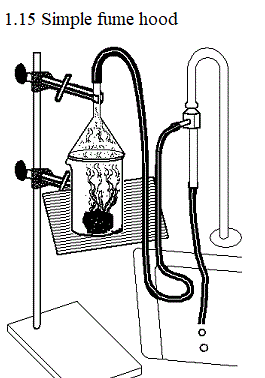
Be careful! Prepare chlorine gas only in a fume hood or fume cupboard.
Use small quantities only.
1. Bleaching test for chlorine
Chlorine bleaches moist red or blue litmus paper, flowers and some dyes in cloth.
Use chlorine gas to bleach flower petals, leaves and hair suspended in the gas.
2. Lighted splint test for chlorine
Chlorine extinguishes a lighted splint, but hot steel wool burns in it.
3. Pass chlorine through water
Chlorine is available from chemical suppliers for school laboratory use as chlorine water.
Hypochlorous acid HClO, a bleach and a disinfectant, is a solution of chlorine (I) oxide that forms salts called hypochlorites.
Hypochlorous acid is a weak acid that easily decomposes back to chlorine gas and water.
When chlorine passes through water, a mixture of HCl and HClO forms.
The chlorine is oxidized and reduced.
Cl2 (g) + H2O (l) ⇌ HCl (aq) + HClO (aq) source
2.3.25 Tests for glucose and sucrose
Glucose, C6H12O6 source
Copper (II) hydroxide, Cu(OH)2 source
Heat a glucose solution with copper (II) hydroxide solution.
A precipitate of copper (I) oxide, (Cu2O, cuprous oxide), forms that gradually turns to red. source
This test reaction does not occur with sucrose.
2.3.26 Tests for glucose in apples and sweets
Sodium carbonate, Na2CO3 source
Cut four pea-size pieces of apple and put them into a test-tube with 5 mL of sodium carbonate, (washing soda), crystals.
Add 2 cm of water.
Hold the test-tube in a paper holder and heat it over a flame.
When the liquid begins to boil, continue the heating for four minutes.
A red-brown solution gradually forms that then gradually darkens until it is almost black.
Note the faint smell of burnt sugar.
This test reaction does not occur with sucrose.
Repeat the test with barley sugar and "Glucodin".
2.3.27 Tests for glycerine
Glycerol, C3H8O3 source
Commercial "glycerine" is about 95% glycerol.
Heat drops of glycerine in a dry test-tube with powdered sodium hydrogen sulfate, (sodium bisulfate).
Acrolein, (C3H4O, ethylene aldehyde), vapour forms with a penetrating acrid smell of burnt fat in burning cooking oil. source
2.3.28 Tests for lactic acid solution
Lactic acid, C3H6O3 source
Sodium bicarbonate, sodium hydrogencarbonate, NaHCO3 source
1. Add lactic acid solution to the solution to sodium hydrogen carbonate (baking soda) in a test-tube.
Note the effervescence because of the formation of carbon dioxide gas.
Test for carbon dioxide with lime water.
2. Heat lactic acid solution with iron filings.
Note the effervescence because of the formation of hydrogen gas.
Increase the reaction by adding drops of copper sulfate solution.
However, it is difficult to obtain sufficient hydrogen to test by explosion with a glowing splint.
3. Boil 5 ml of lactic acid solution with two drops of dilute sulfuric acid.
Leave the solution to cool then add it to a copper hydroxide precipitate from the reaction of copper sulfate with sodium hydroxide.
Heat the solution and observe a yellow precipitate, which turns red as copper (I) oxide (cuprous oxide) forms.
2.3.32 Tests for salts with flame tests
1. Soak paper in the following salts, leave to dry then ignite
Calcium chloride: orange, Copper (II) chloride: blue, Copper (II) sulfate: green, Lithium chloride: red, Potassium chloride: purple, Sodium borate, borax: green.
Sodium carbonate: yellow, Sodium chloride: yellow, Strontium chloride: red.
2. Tests for salts with flame test sprays
Be careful! Wear eye protection.
Use spray bottles, e.g. window cleaners or garden sprays, to spray saturated solutions of metal salts in ethanol on roaring Bunsen burner flames in a darkened room.
The salts can include sodium chloride, potassium chloride, lithium chloride, and copper sulfate.
The spray bottles should have a trigger mechanism and not a scent bottle spray pump, which may allow flash back.
2.3.33 Tests for solubility
Prepare a solution for group analysis
Dissolve 1 g of the substance in the first reagent below that can dissolve the substance.
1. Water: Try to dissolve the salt in deionized water.
If the salt does not dissolve, heat it in a test-tube to observe if the salt dissolves in hot water.
2. Dilute hydrochloric acid: If the salt does not dissolve in hot water, add dilute hydrochloric acid to observe if it dissolves.
3. Concentrated hydrochloric acid, 2.0 to 5.0 mL: When all substance is dissolved, dilute solution to five times its bulk, then leave to cool.
If the dilution produces a precipitate, because of hydrolysis of chlorides of bismuth, antimony or tin, add drops of concentrated hydrochloric acid.
4. Dilute nitric acid: It may dissolve compounds of lead, silver and mercury, but avoid using nitric acid, because it may oxidize hydrogen sulfide.
5. Aqua regia, Be careful!
Heat with concentrated hydrochloric acid, then add a few drops of concentrated nitric acid.
Dilute as in 3. above.
6. Concentrated nitric acid: Warm with 2.0 to 5.0 mL of the acid.
The solution must be evaporated to dryness and the residue dissolved in water or hydrochloric acid.
7. Insoluble residue: Filter it off, wash it, and fuse it in a crucible with four times its bulk of fusion mixture.
Cool, boil with water, filter.
Test filtrate for acid radicals.
Dissolve precipitate of metal carbonates in hydrochloric acid, and analyse separately.
If the solution so obtained gives no precipitate with that obtained by 1. to 6. above, analyse them together.
2.3.34 Tests for substances by loss on heating
1. Loss of water vapour indicates the presence of water of crystallization and some basic hydroxides, basic carbonates, and acid salts.
Also, it may indicate that the substance has absorbed moisture from the atmosphere.
2. Loss of oxygen indicates oxides of silver, peroxides, sodium or potassium nitrate, permanganates and chlorates.
3. Loss of carbon dioxide indicates carbonate or bicarbonate.
4. Loss of ammonia indicates an ammonium compound.
5. Loss of nitrogen dioxide (dinitrogen tetroxide), (N2O4), indicates nitrates of heavy metals, e.g. copper, lead, zinc. source
6. Loss of sulfur trioxide indicates some sulfates.
7. Loss of halogens indicates oxidation of a halide.
2.3.35 Tests for substances by sublimation, melting, decrepitation
1. Sublimation indicates the presence of ammonium halides, other halides, and some oxides.
2. Melting indicates the presence of sodium, potassium or ammonium nitrate, potassium chlorate, and other less common substances.
3. Decrepitation (crackling noise of some heated crystals), indicates the presence of sodium chloride, lead nitrate and potassium chlorate.
2.3.36 Tests for substances with dilute hydrochloric acid
1. Carbon dioxide produced indicates a carbonate or bicarbonate.
2. Hydrogen gas produced indicates some free metals.
3. Sulfur dioxide produced indicates sulfite or bisulfite.
4. Sulfur dioxide and sulfur produced indicates thiosulfate.
5. Hydrogen sulfide produced indicates sulfide.
6. Nitrogen dioxide (N2O4) produced indicates nitrite. source
7. Chlorine produced indicates hypochlorite or oxidizing agent.
2.3.37 Tests for substances with heated charcoal and fusion mixture
Test substances with charcoal, heat charcoal with fusion mixture, note heated metal appearance.
1. Aluminium produces a white residue.
Add drops of cobalt nitrate solution and heat again to form a blue mass, but this is also caused by fusible phosphates, arsenates, borates and silicates.
2. Arsenic produces fumes smelling of garlic and forms a white crust if seen at some distance from the flame.
3. Bismuth forms pink globules, becomes brittle and forms a yellow crust.
4. Cadmium forms a brown crust.
5. Copper forms red scales.
6. Lead forms grey-white soft globules and forms a red crust when hot and a yellow crust when cold.
7. Magnesium produces a white residue.
Add drops of cobalt nitrate solution and heat again to form a green mass.
8. Silver has shining metal particles.
9. Tin forms hard white beads.
10. Zinc forms a yellow crust when hot and a white crust when cold.
Zinc also produces a white residue.
Add drops of cobalt nitrate solution and heat again to form a green mass.
2.5.0 Tests for metals with flame tests
Add drops of concentrated hydrochloric acid to the solution of the substance.
Dip a clean piece of platinum wire into it, then hold it in a Bunsen burner flame.
Or
Dip platinum wire into concentrated hydrochloric acid (12 M), then into powdered solid and heat in a non-luminous edge of a Bunsen burner flame.
When a salt is heated in the flame, it emits light of characteristic colour for that atom.
In the experiment, check the flame test colours by doing the test for all the cations against a dark background.
List of colours:
1. Ammonium compounds: green (faint colour).
2. Antimony: blue-green to light blue (faint colour)
3. Arsenic: light blue (moistened with hydrochloric acid)
4. Barium: pale green to yellow-green:
5. Bismuth: blue
6. Calcium: red
7. Calcium compounds: brick-red to yellow (masked by barium)
8. Copper: blue-green
9. Copper compounds: green (not halides) (CuBr2 blue-green) source
10. Lead: light blue to blue
11. Lithium compounds: crimson (masked by barium or sodium)
12. Molybdenum: yellow-green:
13. Phosphates: blue-green (if when moistened with sulfuric acid).
14. Potassium: lilac, but crimson through blue glass, violet through cobalt glass
15. Potassium compounds: pink-lilac to violet (not borates, phosphates, and silicates.) (masked by sodium or lithium).
16. Selenium: blue
17. Sodium: strong golden yellow, but no colour viewed through blue glass
18 Sodium compounds: yellow (if the yellow flame persists and is not intensified by adding 1% NaCl to the dry compound.)
19. Strontium: crimson
20. Strontium compounds: scarlet (masked by barium)
21. Zinc: green-white.
13.2.24 Tests for hydrogen chloride
1. Ammonia test for hydrogen chloride
Hold a piece of cotton wool soaked in ammonia solution, NH3 (aq) at the mouth of a receiving test-tube. source
Note the white cloud of ammonium chloride above the hydrochloric acid.
2. Fountain test for hydrogen chloride 1.
This test is similar to the ammonia fountain test.
Heat the end of a delivery tube and draw it out to form a fine jet.
Fill a flask with hydrogen chloride and close the flask with a one-hole stopper with a delivery tube.
Add litmus to alkaline water in a beaker.
Warm the flask gently to expand the gas and then hold the flask upside down with the lower end of the delivery tube in alkaline water.
Water soon sprays into the flask through the fine jet as the hydrogen chloride gas dissolves in the water, and the pressure of hydrogen chloride in the flask decreases.
The litmus in the water changes from blue to red.
2. Fountain test for hydrogen chloride 2.
Fill a beaker with litmus solution.
Fit a glass jet tube into the stopper of a flask.
Remove the stopper and jet, and start filling the dry flask with hydrogen chloride.
When the flask is full of gas, replace the stopper and jet, and quickly invert the flask with the other end of the jet tube in the litmus solution.
With the spirit burner at a safe distance, pour a finger width of methylated spirit on the flask and blow on it.
This causes the spirit to evaporate and thereby cool the flask and the gas inside it.
The contraction of the gas reduces its pressure, and atmospheric pressure forces litmus solution up the glass tube and out of the jet.
The fountain from the jet suddenly increases and the litmus changes colour.
The fountain from the jet suddenly increases for the reason given above.
The litmus changes from blue to red, because the water in the litmus solutionreacts with the hydrogen chloride to form hydrochloric acid.
3. Lighted splint test for hydrogen chloride
Hydrogen chloride extinguishes a lighted splint.
Hydrogen chloride neither burns nor supports combustion.
4. Litmus paper test for hydrogen chloride
* Test the solution in the receiving test-tube with moist litmus paper.
Red litmus paper turns blue.
* Hold a piece of blue litmus paper in the fumes.
The blue litmus turns red.
The misty fumes are minute droplets of hydrochloric acid, formed by the reaction of the invisible hydrogen chloride with water vapour in the air.
It is this acid that turns the blue litmus red.
5. Magnesium ribbon test for hydrogen chloride
Shake a receiving test-tube with water to form a solution of hydrogen chloride, hydrochloric acid.
Put a piece of magnesium ribbon in the solution.
Collect any gas formed and test for hydrogen with the glowing splint test.
6. Solubility test for hydrogen chloride
Remove the stopper from the receiving test-tube under water.
Note the solubility of hydrogen chloride.
Invert a receiving test-tube over water.
The gas dissolves immediately to form hydrochloric acid.
The water rises almost to the top, because collection by upward displacement of air results in some residual air remaining in the test-tube.
7. To show the extreme solubility of hydrogen chloride, remove the stopper from the test-tube, and quickly put your thumb or finger over the mouth of the test-tube.
Invert the test-tube of gas in a dish of water, removing your thumb only when the mouth of the test-tube is under the water.
Water rushes up into the test-tube.
Hydrogen chloride is so soluble that it dissolves almost at once in the water at the mouth of the test-tube.
Atmospheric pressure forces the water into the empty test-tube.
13.3.23 Tests for dinitrogen oxide, nitrous oxide, N2O
13.3.23 Tests for dinitrogen oxide, nitrous oxide, N2O source
Put a glowing splint down in the receiving test-tube and note the gas relights the splint
13.3.25 Tests for hydrogen gas
1. Lighted splint test for hydrogen gas
Be careful! A dangerous explosion may occur if you use anything bigger than a small test-tube when igniting the gas, particularly if the gas is mixed with air.
Never test more than a test-tube full of hydrogen gas.
Never dry hydrogen gas with concentrated sulfuric acid.
Hold a lighted splint or burning taper to the mouth of a test-tube.
The gas explodes with a squeaky pop sound.
The splint is extinguished.
The squeaky pop shows rapid combustion of hydrogen to form water vapour.
Look for vapour on the sides of the test-tube.
However, as 2 litres of gas forms only about 1 mL of liquid, the liquid on the sides of the test-tube may just show that test-tube was already wet before the experiment.
2H2 (g) + O2 (g) → 2H2O (l) source
hydrogen gas + oxygen gas → water source
2. Na (s) + 2(C2H5OH) (l) → 2(C2H5ONa) (s) + H2 (g) source
sodium + ethanol → sodium ethoxide + hydrogen source
Evaporate the sodium ethoxide solution to form white crystals.
Add drops of water and test for litmus that turns blue.
3. Pouring test for hydrogen gas
Test whether hydrogen is lighter than air by "pouring" the gas into a test-tube, held either above the first test-tube or below it.
Use a lighted taper to investigate where the hydrogen has gone.
4. Litmus test for hydrogen gas
Hydrogen does not change the colour of moist litmus.
13.3.26 Tests for hydrogen sulfide solution
Be careful!
The gas is soluble in water, so use a solution of hydrogen sulfide in water instead of the gas.
1. Odour test
Hydrogen sulfide has the odour of rotten eggs.
Be careful! Do NOT inhale gases directly from the test-tube.
Fan the gas towards the nose with the hand and sniff cautiously.
If you detect no odour, move closer and try again.
2. Lead (II) nitrate test
Hydrogen sulfide solution turns lead (II) nitrate solution test paper black.
3. Litmus test
Hydrogen sulfide solution turns blue litmus slightly pink-red.
4. Copper (II) sulfate test
Hydrogen sulfide solution turns copper (II) sulfate solution black.
Ionization of hydrogen sulfide
H2S + H2O → H3O+ + HS- source
HS- + H2O → H3O+ + S2-5. source
Hydrogen sulfide with lead ethanoate paper forms a black precipitate of lead sulfide.
H2S (g) + Pb (C2H3O2)2 (aq) → PbS (s) + 2HC2H3O2 (aq) source
lead (II) acetate + hydrogen sulfide → lead (II) sulfide + acetic acid source
This page was generated automatically from the original page on John Elfick's School Science Lessons website. If something looks wrong, please check the original.