Phytochemicals
Last updated 2026-04-08 by Dr John Elfick
Terpenes are polymers of isoprene, (C5H8)n, and may also be called Terpenoids or Isoprenoids. source
Phytochemicals
Phytochemicals are plant-based bioactive compounds that are produced by plants for their protection, (Greek phyto 'plant').
Nutritionists suggest giving children a diet containing the 5 different-coloured phytochemials.
1. Purple / blue phytochemicals in | Beetroot | Red cabbage | Eggplant | contain anthocyanins.
2. Red phytochemicals in | Tomato | Red capsicum | Radishes | Strawberries | Rhubarb | Cherries | contain lycopene.
3. Orange / yellow phytochemicals occur in carrots, contain carotenoids, betacarotene, and lutein.
4. Green phytochemicals in green vegetables, contain carotenoids, indoles and saponins.
5. Brown / white phytochemicals, e.g Illicin in garlic, and bananas and potatoes are a source of potassium.
Brown rice contains many differetn phytochemicals.
Isoprene
Isoprene, (2-methyl-1,3-butadiene), C5H8, CH2=C(CH3)−CH=CH2, C5H8 source
C5H8 in a molecule is called an isoprene unit, so 8 isoprene units = 8 X C5H8 = C40H64. source
A terpene is an unsaturated hydrocarbon molecule with the chemical formula, C10H16. source
A tetraterpene, (tetra terpene), = 4 terpenes, 4 X C10H16 = C40H64. source
Carotenoids have the chemical formula C40H64, so carotenoids are tetraterpenes. source
Hemiterpenes, 1 isoprene unit, C5H8
Hemiterpenes, 1 isoprene unit, C5H8 source
Isoprene, C5H8, CH2=C(CH3)CH=CH2 source
Isoprenol, C5H10O source
Isovaleric acid, C5H10O2 source
Prenol, C5H10O source
Monoterpenes, 2 isoprene units, C10H16
Monoterpenes, 2 isoprene units, C10H16 source
Monoterpenoids are modified monoterpenes.
Sesquiterpenes, 3 isoprene units, C15H24
Sesquiterpenes, 3 isoprene units, C15H24 source
Sesquiterpenes and sesquiterpenoids
Sesquiterpenes, occur in essential oils
They stimulate glands and liver, anti-allergenic, antispasmodic, anti-inflammatory, acyclic or monocyclic or dicyclic, or tricyclic
They can be isolated from their natural sources by distillation with steam or by extraction, purified by vacuum fractional distillation or by chromatography.
Diterpenes, 4 isoprene units, C20H32
Diterpenes, 4 isoprene units, C20H32 source
Diterpenoids are derivatives of diterpenes.
Sesterterpenes, 5 isoprene units, C25H40
Sesterterpenes, 5 isoprene units, C25H40 source
Sesterterpenes, (C14 Sesterterpenes, five isoprene units), occur in insect waxes, fungi products, phytotoxins, insect gascardic acid.
Azafrin, C27H38O4, a sesterterpenoid. source
Triterpenes, 6 isoprene units, C30H48
Triterpenes, 6 isoprene units, C30H48 source
Triterpenes and triterpenoids
Polyterpenes, many isoprene units, (C5H8)n
Polyterpenes, many isoprene units, (C5H8)n source
Polyterpenes contain a long chain of thousands of C5H8 isoprene subunits in milky latex sap. source
Rubber
Gutta-percha
Aromatic acids
Aromatic acids containing a carboxyl group (-COOH) attached to an aromatic ring, e,g, benzoic acid, C6H5COOH source
Benzoic acid, C6H5COOH source
Gallic acid, C7H6O5 source
Ellagic acid, C14H6O8 source
Hydroxycinnamic acid, C9H8O3 source
Caffeic acid, C9H8O4 source
Chlorogenic acid, C16H18O9 source
Cinnamic acid, C9H8O2 source
Ferulic acid, C10H10O4 source
Coumaric acid, C9H8O3 source
Saturated cyclic acids
Glycyrrhizic acid, C42H62O16 source
Eculetin, C9H6O4 source
Esculin, C15H16O9br>
Tetrapyrroles
Chlorophyll, C55H74MgN4O5+2 source
Flavonoids
Flavonoids are 3-ring phenolic compounds with a double benzene ring with OH groups attached to a 3rd benzene ring by a single bond, C6-C3-C6.
Almost all fruits, vegetables, herbs and spices contain flavonoids.
See diagram 16.3.4.2. Flavonoids, (flavone, flavonol, riboflavin, flavonoid, anthocyanin).
See diagram. Flavonoid basic structure, ( 6-3-6 skeleton)
Plant pigments, are based on flavone or similar to flavone, C15H10O2, including anthocyanins. source
Vasodilating actions, antioxidant, anti-allergenic, has anti-inflammatory and antiviral properties.
Colour, flavour and aroma for many foods and are found in fruits and vegetables, tea, red wine, cacao and some nuts.
Flavonoids are polyphenolic compounds, secondary metabolites, blue-pigments.
Flavonoids antioxidants, prevent the bad LDL cholesterol from forming oxidized LDL, which forms plaques in arteries.
Neoflavonoids
Dalbergin, occurs in Dalbergia, C16H12O4 source
It occurs in (Dalbergia miscolobium) and (Dalbergia nigra).
Flavonols
Flavonols have a 3-hydroxyflavone backbone, with the phenolic –OH groups in different positions.
Flavonols occur in green leaves, fruits and grains.
Fisetin, C15H10O6 source
Galangin, C15H10O5 source
Kaempferol, C15H10O6 source
Isorhamnetin, C16H12O7 source
Myricetin, C15H10O8 source
Pachypodol, C18H16O7 source
Quercetin, C15H10O7 source
Rhamnazin, C17H14O7 source
Rhamnetin, C16H12O7 source
Flavonol glycosides
Hyperoside, C21H20O12 source
Icariin, C33H40O15 source
Myricitrin, C21H20O12 source
Rutin, C27H32O16 source
Quercitrin, C21H20O11 source
Flavones, (condensed tannins)
Flavones, (condensed tannins)
Flavone ketone derivatives are yellow glycoside plant pigments, and are used as dyestuffs.
Flavones occur in leaves, flowers and fruits.
Flavones:
Flavone, C15H10O2, is a small molecule simplest member of the class of flavones. source
It occurs in (Camellia sinensis) and is a nematicide.
Acacetin, dihydroxyflavone, C16H12O5 source
Apigenin, C15H10O5 source
Baicalin, C21H18O11 source
Galangin, trihydroxyflavone, C15H10O5 source
Herbacetin, pentahydroxyflavone, C15H10O7 source
Luteolin, C15H10O6 source
Sinensetin, C20H20O7 source
Tangeretin, C20H20O7 source
Flavanols, (Flavan-3-ols)
Flavanols, (Flavan-3-ols)
1. Monomers - catechin, occurs in chocolate, cinnamon, red wine.
2. Dimers and polymers, occurs in chocolate, cinnamon.
3. Proanthrocyinidins - Flavon-3-ol polymers
4. Theaflavins
Theaflavin, C29H24O12 source
Theaflavin-3-gallate
Hesperetin, C16H14O6, occurs in lemon, orange source
Hesperidin, (aglycone hesperetin)
Naringin 4'-0-glucoside, C33H42O19, Flavanone Glycoside source
Narirutin, C27H32O14, flavanone-7-0-glycoside, Flavanone Glycoside, occurs in Orange juice. source
Flavan-3-ols (Flavanols), subgroup of Flavonoids, derivatives of Flavans Flavonols, most common, flavonoids, (Hesperetin. Icariin, Kaempferol, Myricetin, Naringenin, Quercitin)
Subgroup of Flavonoids, e.g. Catechin, C15H14O6, occurs in chocolate, cinnamon, red wine source
Four categories: 1. Flavan-3-ols, 2. Flavan-4-ols, 3. Flavan-3,4-ols. isoflavan-4-ols
1. Flavan-3-ols, flavanols (NOT "Flavonols"!)
They occur in fruits and vegetables, e.g. apples, apricots, berries, cherries, grapes, nectarines, peaches, pears, plums, and Swiss chard.
They occur in nuts, e.g. almonds, cashews, hazelnuts, pecans and pistachios.
They occur in green, black and oolong teas, cacao, red and white wine.
Leucanthocyanidin, C15H14O3, from enzymes, occurs in many plants, e.g. (Zea mays) source
Catechins white tea, green tea, black tea, grapes, wine, apple juice, cocoa, lentils, black-eyed peas
(+)-Catechin | (+)-Gallocatechin | (−)-Epicatechin | (−)-Epigallocatechin | (−)-Epigallocatechin gallate (EGCG) occurs in green tea | (−)-Epicatechin 3-gallate
Theaflavin | Theaflavin-3-gallate | Thearubigins | occur in black tea.
Catechins white tea, green tea, black tea, grapes, wine, apple juice, cocoa, lentils, black-eyed peas
2. Flavan-4-ols
Flavan-4-ols are colourless compounds that form red pigments in maize and sorghum.
Apiforol, C15H14O5, a tetrahydroxyflavan, occurs in eastern honey bee, (Apis cerana). source
Luteoforol, C15H14O6, a pentahydroxyflavan, occurs in (Sorghum bicolor), and pome fruits. source
3. Flavan-3,4-ols, Leucanthocyanidins
Leucanthocyanidin, C15H14O3, from enzymes, in many plants, e.g. (Zea mays). source
Rutin hydrate, C27H30O16.xH2O, poly flavonoid source
4. Theaflavins (TF), antioxidant polyphenols, occur from flavan-3-ols during "fermentation" of tea leaves, to produce black tea.
Theaflavin, C29H24O12, occurs in (Camellia sinensis). source
Theaflavin-3-gallate, Theaflavin 3, C43H32O20, occurs in (Camellia sinensis). source
Theaflavin 3,3'-di-O-gallate, C43H32O20, occurs in (Camellia sinensis). source
Flavanones, dihydroflavones
Flavanones, dihydroflavones
Flavanones occur in citrus fruits.
Anthocyanins
Anthocyanins [Greek (ánthos) 'flower' (kuáneos) 'dark blue'], anthocyans, flavonoids, vacuolar pigments red to black, blueberry, raspberry
Anthocyanins cause the blue, purple, red, and orange colours of some flowers, leaves and fruits, e.g. berries, red cabbage, purple sweet potato.
Anthocyanidins are natural dyes, coloured pigments, antioxidative, antimicrobial activities, improve visual and neurological health.
Anthocyanidins are anthocyanin aglycones.
Anthocyanins are glycosides of anthocyanidins, e.g. Cyanin is a cyanidin glucoside.
Anthocyanins, glycosides, C15H11O + (glycosides of anthocyanidins), red, blue and purple flavonoids source
They occurs in cell sap, natural antioxidants (blueberry, boysenberry, black raspberry, black currant pigments), and in cyanidin chloride, C15H11ClO6. source
Food additive E163 Anthocyanins (from grape skins, red cabbage, flowers), (colour. red to violet)
Anthocyanins are water-soluble plant pigments of the flavonoid class, antioxidants.
They are glycosides that on hydrolysis yield coloured aglycones, called anthocyanidins.
Anthocyanidin molecule + sugar, anthocyinidin glycosides are called anthocyanins.
Anthocyanins cause most of the red, purple and blue colours.
They occur in vacuoles of outer layers of plant cells as signalling colours.
They occur in black currant, blueberry, blackberry, red cabbage, black plum, radish, rasberry, apple, eggplant, grapes, pears, red onions, hazelnuts, pistachios.
Anthocyanins are water-soluble flavonoids in berries, grapes, apples, plums, cabbage, and most natural colorants.
Anthocyanins help to prevent cardiovascular and neurodegenerative diseases.
Cyanidin, delphinidin, malvidin, peonidin, petunidin, are the most common anthocyanins.
Some anthocyanins:
Aurantinidin, C15H11O6 source
Aureusidin, C15H10O6 source
Bracteatin, C15H10O7 source
Butein, C15H12O5 source
Cyanidin, anthocyanidin cation, C15H11O6+ source
Delphinidin, anthocyanidin chloride, C15H11ClO7 source
Malvidin, malvidin chloride, C17H15ClO7 source
Peonidin, O-methylated anthocyanidin, C16H13O6+ source
Petunidin, O-methylated anthocyanidin, C16H13O7+ source
Pelargonidin C15H11O5 source
PelargoninC27H31O15 source
Anthoxanthins
Anthoxanthins, (flavones and flavonols) are water-soluble, white to yellow flavonoid pigments, and antioxidants.
They occur in potatoes, cauliflower, onions, parsnips, and bananas.
Anthoxanthins cause bright white colour of food in acid medium, and yellow in alkaline medium.
Colour in flower petals depends on the soil minerals.
Quercetin, C15H10O7. source
Catechins
Catechins, flavonoids, the name comes from catechu, (Mimosa catechu), (Acacia catechu)
Catechin, C15H14O6, has four catechin isomers: source
- Two trans isomers called [(+)-catechin and (-)-catechin], the most common catechin isomers.
- Two cis isomers called [(+)-epicatechin and (-)-epicatechin]
(+)-Catechin and (-)-epicatechin occur in food plants.
(-)-Epicatechins and their derivatives occur in green tea.
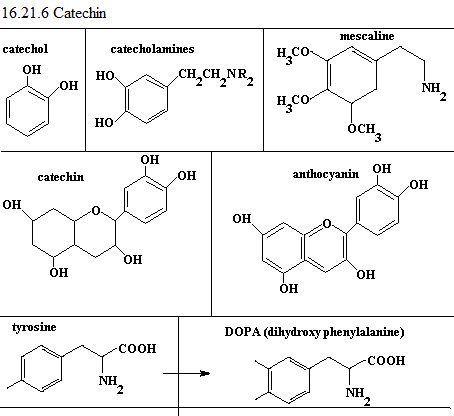
Catechin 7-O-beta-D-xyloside, C20H22O10, is a monosaccharide derivative of catechin. source
Catechinic acid, C15H14O6, is a flavan-3-ol, colourless, bioflavonoid, tannin, antioxidant, anti-viral, anti-bacterial. source
Catechin is in catechu, the astringent tannin-rich extract of acacia, in green tea, in cocoa, in vinegar, in catechu, in black grapes, in fava bean, in black tea.
Catechins occur in woody plants, willow catkin, (Salix haemostatic), (Potentilla fragarioides), (Salix capra), (Cinnamomum kotoense), and (Begonia nantoensis).
Catechins occur in many plant species of white tea, green tea, black tea, grapes, apple, cocoa, lentils, black-eyed peas.
Catechins are polyphenolic antioxidants, which support plant growth, and are used for treating obesity.
Catechin is used to treat liver diseases, e.g. hepatitis, possible radical scavenger, but excess treatment causes haemolysis and renal failure, skin rashes.
Dark chocolate and red table wine contain high concentrations of catechins and their compounds.
Catechins are water soluble polyphenols and antioxidants that are easily oxidized
Catechin sticks to proteins, blocking bacteria from adhering to cell walls and disrupting their ability to destroy them.
Catechin in green tea prevents viruses from adhering to cell walls and causing harm.
Catechin reacts with toxins created by harmful bacteria and harmful metals such as lead, mercury, chrome, and cadmium.
Catechin hydrate, C15H16O7, C15H14O6.xH2O, polyphenolic antioxidant, Chinese medicine, antioxidant, free radical scavenger, suppresses DNA strand breaks. source
The black tea oxidation process reduces catechin in black tea.
(+)-catechin, Cianidanol, C15H14O6, antioxidant flavonoid, occurs in woody plants. source
Green tea is made from fresh, unfermented tea leaves where the oxidation of catechin is minimal, and so are antioxidants.
Racemic catechin is used to study seed germination and plant invasion.
Green tea, (Camellia sinensis), Theaceae
Catechin gallate, C22H18O10 source
Catechin hydrate, C15H16O7 source
Epicatechin, (EC), Flavonoid, C15H14O6 source
ECG Epicatechin gallate (ECG), Flavonoid, C22H18O10. source
EGC Epigallocatechin, Bioflavonoid, C15H14O7. source
EGCG Epigallocatechin gallate, Bioflavonoid, C22H18O11 source
Catechin gallate
Catechin gallate, , C22H18O10, catechin 3'-O-gallate, is an ester, a polyphenol a flavan, bioflavonoid, green tea extract, antioxidant, and free radical scavenger. source
It may be used to treat breast cancer.
It occurs in (Camellia sinensis), and in (Rheum palmatum).
Catechin hydrate
Catechin hydrate, C15H16O7, C15H14O6.xH2O, polyphenolic antioxidant, Chinese medicine, antioxidant, free radical scavenger. source
It suppresses DNA strand breaks.
Epicatechin
Epicatechin, C15H14O6, (EC), a flavonoid, is a catechin, tannin, flavan-3-ol, and antioxidant. source
It occurs in green tea, cocoa, black grapes, kola nut, peach, fava bean, woody plants, cacao bean, and in green tea.
Epicatechin gallate
Epicatechin gallate, C22H18O10, (ECG), is a flavonoid, occurs in green tea, buckwheat, grapes, and in rhubarb. source
Epigallocatechin
Epigallocatechin, C15H14O7, (EGC), is a bioflavonoid, flavan-3-ol, a catechin, antioxidant, and food component. source
It occurs in almond, broad beans, and green and black tea.
It occurs in St John's wort, (Hypericum perforatum).
Epigallocatechin gallate
Epigallocatechin gallate, C22H18O11, tea catechin, (EGCG), is a bioflavonoid, antineoplastic agent, and a phenolic antioxidant. source
It is an ester of hydroxy group of epigallocatechin and gallic acid.
It inhibits cellular oxidation, and prevents free radical damage to cells
It occurs in green and black tea, (Camellia sinensis), and is the most abundant catechin in green tea.
Dietary fibre
Dietary fibre is the edible parts of plants or carbohydrates, resistant to digestion and absorption in the small intestine.
Dietary fibre includes non-starch polysaccharides, oligosaccharides, resistant starch, and lignin.
Dietary fibres are not digested by the human digestive enzymes.
They may be are broken down by fermentation activities of the gut microbiota in the large intestine.
Dietary fibre is a recommended component for a healthy diet, but the mechanism for preventing human ailments is not clearly understood.
Pectin
Pectin, (C6H10O7)n, (β-D-Galactopyranuronic acid)n, is a heteropolysaccharide in the cell walls of plants. source
It is composed of linked methylated polygalacturonic acid units.
Pectin is a safe food substance.
Starchy endosperms resist digestion in the small intestine, but are broken up and fermented in the large intestine to feed the gut bacteria.
Resistant starch is a soluble, fermentable fibre in wholegrain cereals and legumes, and repeated cooked rice, and potatoes.
It passes through the small intestine undigested, to also feed the gut bacteria in the colon.
Starch = Amylose (linear glucose molecules) + Amylopectin (glucose molecules).
Arabinoxylan has a backbone of d-xylose units (C5H10O5), linked by β (1→4) glycosidic bonds. source
16.1.9 Pectin
4.3.2 Pectins and pectinases
Pectins, E440, Emulsifiers, food additives
16.5.8, Tests for pectin in jelly and jam
Hemicelluloses
Araloside, C47H74O18 source
Glucosinolates
Glucosinolates, mustard oil glycosides, are from sugar + amino acid, and contain S and N.
Glucosinolates + enzyme hydrolysis by thioglucosidases → mustard oil glycosides, when plant cells are damaged or chewed. source
Glucosinolates are the precursors to isothiocyanates, and occur mostly in family Brassicaceae
If cruciferous plants are consumed without processing,the myrosinase enzyme will hydrolyze the glucosinolates.
However, if cooked before consumption, myrosinase is inactivated and glucosinolates are absorbed through the gastrointestinal mucosa.
List of glucosinolates:
Epiprogoitrin, C11H19NO10S2 source
Glucoalyssin, C13H25NO10S3 source
Hydroxyglucobrassicin, C16H20N2O10S2 source
Methoxyglucobrassicin, C17H22N2O10S2 source
Neoglucobrassicin, C17H22N2O10S2 source
Progoitrin, C11H19NO10S2 source
Sinalbin, C30H42N2O15S2 source
Sinigrin, C10H16KNO9S2 source
Hydroxybenzaldehydes
Hydroxybenzaldehydes are phenolic aldehydes, e.g. 4-Hydroxybenzaldehyde, C6H4OH(CHO), a benzaldehyde, C6H5CHO, with a hydroxy group at position C-4. source
| 4-Hydroxybenzaldehyde, C7H6O2 | Gallic aldehyde, C7H6O4 | Anisaldehyde C8H8O2 | source
| Protocatechuic aldehyde, C7H6O3 | Syringaldehyde, C9H10O4 | Vanillin C8H8O3 | source
Hydroxybenzoic acids
Note. "hydroxybenzoic acid" may refer to different compounds.
| Gallic acid 4-O-glucoside C13H16O10 | Gentisic acid, C7H6O4 | Lambertianin C, C123H80O78 | Protocatechuic acid, C7H6O4 | Punicalagin, C48H28O30 | source
| Sanguiin H-6, C82H54O52 | Syringic acid, C9H10O5 Valoneic acid dilactone, C21H10O13 | source
| Vanillic acid, C8H8O4 | Salicyclic acid, C7H6O3 | source
3-hydroxybenzoic acid, C7H6O3, in gut microfauna source
4-hydroxybenzoic acid, C7H6O3 → esters → parabens, (esters of para-hydroxybenzoic acid) source
trihydroxybenzoic acid Gallic acid, C7H6O5, hydrolysable tannin, pseudotannin source
Benzoic acid, C6H5COOH, C7H6O2 source
Ellagic acid, C14H6O8 source
Hydroxycinnamic acids
Cinnamic acid occurs in cinnamon, aloe.
Ferulic acid occurs in oats, rice, artichoke, orange, pineapple, apple, peanut, açaí oil.
Indoles
Indole, C8H7N, Amine source
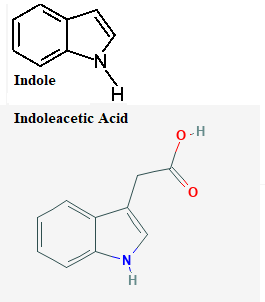
Indole, aromatic, in coal tar, fused benzene and pyrrole rings, toxic if ingested
It is formed from amino acid: | Tryptophan
It has a flowery smell at very low concentrations, but in human faeces intense faecal odour, in Jasmine oil, in Orange blossom.
Ergotamine, indole derivative
Five member heterocycles: 16.2.19
Indole-3-acetic acid, indole acetic acid, IAA
Indole-3-butyric acid, Indolebutyric acid, IBA
Indole alkaloids, indolizidine group: 16.6.4
Indole, C8H7N, C6H4CCNH3, 1H-indole, an indole, an aromatic heterocycle, (benzene ring + pyrrole ring), occurs in Daphne. source
Indole-3-carbinol occurs in cabbage, kale, brussels sprouts, rutabaga, mustard greens, broccoli.
3,3'-Diindolylmethane, C17H14N2, "DIM", an indole, occurs in broccoli family, brussels sprouts, cabbage, kale, Brassica oleracea, Arundina graminifolia. source
Iridoids
Iridoids are cyclic monoterpenoids
See diagram: Iridoid molecules
The iridoid Iridomyrmecin, C10H16O2, occurs in Iridomyrmex ants, in (Actinidia polygama). source
Isoflavonoids Phytoestrogens
Isoflavonoids are flavonoid phenolic compounds.
Isoflavone, C15H10O2, the simplest isoflavone, a soy phytoestrogen, and a commercial dietary supplement. source
It occurs in soy, peanut, green peas, chick peas and alfalfa.
Glycitein, C16H12O5, an isoflavone, a phytoestrogen, it occurs in soy, Glycine max source
Isoflavonoids occur mostly in Papilionoideae subfamily of family Fabaceae
Some are physoalexins which form compounds to attack fungus or are activated when the host plant contacts a parasite.
Isoflavonoids are used in dietary supplements.
Isoflavonoid toxins include biliatresone.
List of isoflavonoids Isoflavones
Also: Isoflavanones, Isoflavans, Pterocarpans, Rotenoids
BetavulgarinC17H12O6 source
Daidzein, C15H10O4 source
Formononetin, C16H12O4 source
Isoflavones
Isoflavones, C15H10O2, occur almost only in legumes, oestrogenic activity, e.g. Psoralea, soybeans, and pistachios source
Isoflavones are related to isoflavonoids, phytoestrogens and antioxidants, soy isoflavones may prevent breast cancer, only in legumes.
Isoflavones almost only occur in Fabaceaelegumes, soybeans, and in pistachios.
Isoflavones is are related to isoflavonoids, phytestrogens and antioxidants.
Soy isoflavones may prevent breast cancer
Isoflavone, C15H10O2, the simplest isoflavone, it lessens coronary heart disease, atherosclerosis, type II diabetes mellitus, breast / prostate cancer. source
Isoflavone is used in oral over-the-counter dietary supplements and pistachios.
Soybean and pistachios are rich in dietary isoflavones, soy phytoestrogen, 1-2 mg/gram.
Isoflavones are a type of isoflavonoid, phytoestrogen polyphenolic compounds, and are the major flavonoids, in legumes, especially soybeans.
The main precursor molecule for isoflavone biosynthesis is the flavanone naringenin, C15H12O5. source
Red clover, (Trifolium pratense), contains the most isoflavones of any plant.
Isoflavones are similar to estradiol, beta-estradiol, 17beta-estradiol, C18H24O2, in chemical structure. source
A high dietary intake of phytoestrogens may lower rates of cancers, cardiovascular problems, and menopausal problems.
However, isoflavones may be endocrine disruptors and have negative influences on the state of health of some populations, e.g. Greek people.
The isoflavone Formononetin caused reproductive malfunction, "clover disease”, in Australian sheep grazing on Subterranean clover (Trifolium subterraneum).
Astragalosides, C41H68O14 source
psoralen), (flavone alkaloids: ficine, vochysine)
See: Vestitol.
List of isoflavones
Astragaloside C41H68O14 source
Betavulgarin C17H12O6 source
Daidzein, C15H10O4 source
Formononetin, C16H12O4 source
Genistein, C15H10O5 source
Lignans
Lignans C25H30O8, an ethyl carboxylate source
Lignans are plant polyphenols derived from phenylalanine, and are phytoestrogens
Lignans occur in flax, sesame, sunflower, pumpkin seeds and body fluids of humans and animals.
Bacteria occuring in the human colon convert lignan precursors to lignans.
Lignans are related to the lignins occuring in plant cell walls and are found mainly in woody tissue.
Lignin, is a disodium disulphonate, C18H13N3Na2O8S2 source
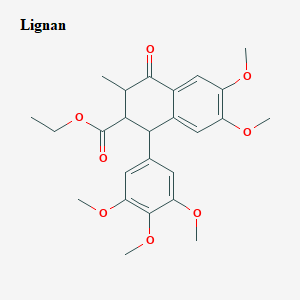
Lignans: Justicidin A, Steganacin
Sesamin, a lignan. C20H18O6 source
Sesamol C7H6O3 source
Podophyllotoxin, a lignan, C22H22O8 source
Glepidotin, a trihydroxyflavone, C20H18O5 source
Stilbenes
Stilbene, trans-stilbene, C6H5CH=CHC6H5 is a diarylethene polyphenol. source
Stilbenoids are derivatives of Stilbene and the products of heartwood formation occurs in trees.
Stilbenoids, (C6–C2–C6), the hydroxylated derivatives of stilbene
Deoxykaempferol, trihydroxy flavone
href="../topics/topic16c.html#16.2.2.2H">Apiole, C12H14O4 source
Pallidol a tetracyclic stilbenoid, C28H22O6 source
Phyllodulcin, a hydroxybenzoic acid, C16H14O5 source
Piceid stilbenoid glucoside
Resveratrol a stilbenol, C14H12O3 source
Rhaponticin, stilbenoid glucoside, C21H24O9. source
Polyphenol flavonoids
| Catechol | Geosmin | Chrysoeriol
| EGC Epigallocatechin | Kaempferol | Luteolin
| Naringin | Quercetin | | Tangeritin
Porphyrins, Haeme
Porphyrins, Haeme
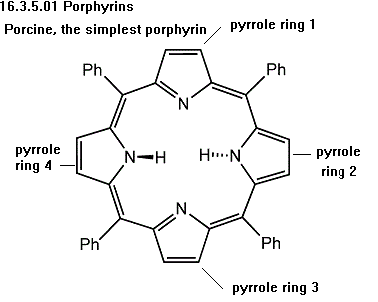
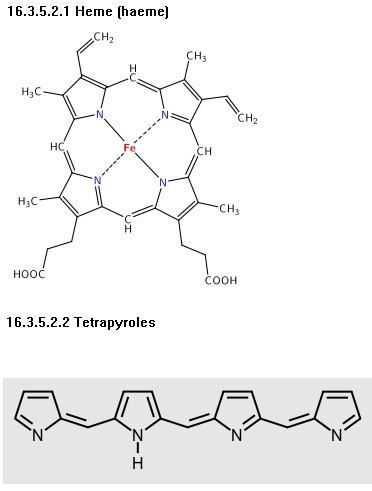
Porphyrins refers to any of a group of compounds containing the porphyrin structure of four pyrrole rings connected by methine bridges.
It occurs in a cyclic configuration with usually metal side chains attached, e.g. with iron to form heme.
Porphyrin chelates include haeme, occurs in haemoglobin, bonded to iron (II) ion, and chlorophyll bonded to Mg (II) ion.
Haeme, (Heme), Haemoglobin, (Hemoglobin), is the protein that carries oxygen in the blood and causes the red colour of blood.
Haeme A is a cytochrome oxidase ligand complex, C49H56O6N4Fe, a tetradentate ligand. source
The most common type is Haeme B, C34H32O4N4Fe. source
The haeme component of the protein haemoglobin has four iron porphyrins.
Porphyrins occur in iron-containing cytochrome pigments, and in mitochondria in plants, animals and bacteria.
Is used for oxidative phosphorylation, electron transport system, and ATP production.
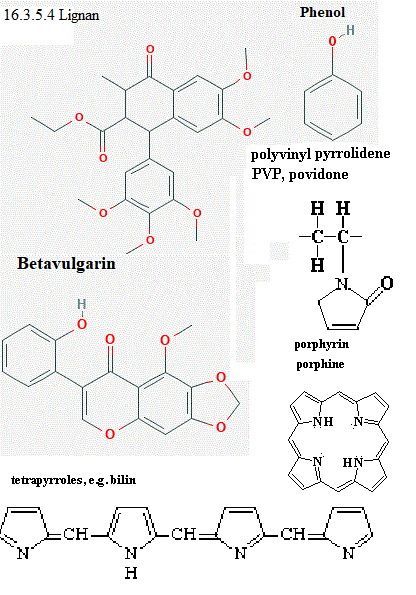
For oxidative phosphorylation, electron transport system, and ATP production.
Xanthones
Xanthone, C13H8O2, xanthenone, 9H-Xanthen-9-one, is prepared from phenyl salicylate, C13H10O3. source
It is an insecticide ovicide.
It is used to prepare xanthydrol to determine urea levels in blood.t
The parent compound of xanthone derivatives called xanthones or xanthonoids are fluorescent.
It occurs mainly in Gentianaceae and Gutterferae roots and leaves.
List of xanthones
Athyriol C14H10O6, occurs in the fern (Athyrium mesosorum). source
Bellidifolin C14H10O6, anti-heptotoxic, mutagenic, occurs in (Gentiana lutea). source
Gambogic acid C33H44O3, occurs in gamboge the gum resin of (Garcinia hamburgyi). source
Gentisein, C13H8O5, occurs in (Garciniama lutea). source
Gentisin C14H10O5, occurs in (Garcinia lutea). source
Gartanin C24H27O10, antifungal, antibacterial, occurs in (Garciniama). source
Mangiferin C19H18O11, Aphloid, Chimonin, Euxanthogen, widespread occurrence with Isomangiferin, occurs in (Mangifera indica). source
Mangostin C24H26O6, mainly occurs in Garciniama. source
Morellin C33H36O7, antibiotic, occurs in (Garcinia morella). source
Norathyriol C13H8O6, tuberculostatic, occurs in Garciniama. source
Swertianin C14H10O6 source
Flavan and flavone
Flavan, C15H14O, 2-Phenyl-3,4-dihydro-2H-1-benzopyran, the simplest member of the flavans, occurs in (Broussonetia papyrifera). source
Flavone, C15H10O2, 2-phenychromen-4-one, the simplest member of the flavones, it occurs in (Camellia sinensis), and in (Anaphalis lactea). source
(Casuarina glauca) is an actinorhizal plant producing root nitrogen-fixing nodules, because it is infested by Frankia bacteria, containing flavans.
1. Flavanols, (NOT "Flavonols"!)
Flavanols occur in:
fruits and vegetables, e.g. apples, apricots, berries, cherries, grapes, nectarines, peaches, pears, plums, Swiss chard,
nuts, e.g. almonds, cashews, hazelnuts, pecans and pistachios,
green, black and oolong teas, cacao, red and white wine.
Catechin, C15H14O6 source
Epicatechin, (EC), Flavonoid
ECG Epicatechin gallate (ECG), Flavonoid
Epigallocatechin (EGC), bioflavonoid
Epigallocatechin gallate (EGCG), bioflavonoid
Catechol, C6H6O2, a phenol source
Leucanthocyanidin, C15H14O3, from enzymes, occurs in many plants, e.g. (Zea mays). source
Rutin hydrate, C27H30O16.xH2O, poly flavonoid source
Phenols
Phenols, Phenolic acids, Phenolics, Polyphenols
1. Phenol crystals, C6H5OH, Highly toxic by all routes, lung irritant, corrosive to skin source
Phenol solution < 1%, Not hazardous
Phenol red, C19H14O5S: 28 (indicator) source
Phenol, phenolic, is a derivative of an aromatic hydrocarbon where a hydroxyl group is attached to a benzene ring.
Phenolic compounds occur occurs in seeds, grape skins occurs in citronella, clove oil, dicoumarin, eucalyptol, ubiquinone, urushiol and extracted from oak barrels.
Prepare carbol xylol solution: 1.4
Phenols are compounds having one or more hydroxy groups attached to a benzene ring, C6H6, or other aromatic hydrocarbon, e.g. 2-naphthol, C10H8O source
A phenolic is a derivative of an aromatic hydrocarbon. where a hydroxyl group is attached to a benzene ring.
Phenolic compounds occur in seeds, grape skins and and are extracted from oak barrels, in citronella, clove oil, dicoumarin, eucalyptol, ubiquinone, urushiol.
Prepare carbol xylol solution. 1.4.
Phenol red, C19H14O5S. 28 (indicator) source
Naturally occuring phenols, by number of carbon atoms.
Phenolic compounds
Simple phenols
C6 Benzoquinone, C6H4O2 source
C6 Catechol, C6H6O2 source
Polyphenols
C8 Tyrosol
C9 Caffeic acid
C9 Ferulic acid
C10 Napththoquinones
C13 Mangiferin
C15 Flavonoids
C15 Emodin
C16 Quercetin
C18 Lignans, C18H18O2 source
C20 Sesamin, a lignan. C20H18O6 source
C30 Lignin, C18H13N3Na2O8S2 source
C76 Tannic acid, C76H52O46 source
Phenols, phenolics
Phenol, carbolic acid, the simplest phenol, C6H5OH source
Phenol, Carbolic acid
Phenol, Carbolic acid
Phenol, C6H5OH, carbolic acid, the simplest of the phenols, aromatic organic compound, corrosive, acute toxic source
Phenyl group (−C6H5) + hydroxy group (−OH), volatile white crystalline solid, mildly acidic, cause chemical burns or numbs source
Phenol crystals, C6H5OH, Highly toxic by all routes, lung irritant, corrosive to skin source
Phenol solution < 1%, Not hazardous
Phenol-indo-2, 6-dichloro phenol
Phenol fuchsin, carbol fuchsin
Phenols, group. (OH-C)
It is colourless to white solid when pure, liquid commercial product, distinct sweet odour, does not react with water.
It is used to make phenolic resins, plastics and adhesives, corrosive to lead, aluminum and its alloys, plastics, and rubber.
Phenol is the parent of the class of phenols, group of 6 in an aromatic ring + OH.
Phenol is the parent of the class of phenols, germicidal agent, disinfectant, and antiseptics.
Phenol solution, white crystalline mass dissolved in a colourless to slightly pink aqueous solution, distinctive phenol odour, sharp burning taste, toxic by ingestion.
1. Carbolic acid, C6H5OH, "phenol" from coal tar fraction 170 oC to 230 oC, colourless hygroscopic crystals source
Phenol is acidic so ionizes in water.
C6H5OH → H+ + C6H5O- source
Do not wash off phenol with alcohol, because carcinogenic products or explosive materials may form.
2. "Phenol", carbolic acid C6H5OH, pale pink crystalline solid, because of the hydrogen bonds between the phenol molecules). source
Pure phenol blisters the skin, but it is still used in carbolic soaps as an antiseptic.
3. Formerly, carbolic acid was used as an antiseptic spray in early medical operations.
4. Phenol as a weak acid
Phenol loses a proton, H+ ion, to form a phenoxide ion, C6H5O-. source
C6H5OH → C6H5O- + (H+) source
phenol → phenoxide ion + a proton, H+ ion source
5. Phenol reacts with alkalis.
NaOH (aq) ⇌ C6H5NaO + H2O source
phenol + sodium hydroxide ⇌ sodium phenoxide + water source
Sodium phenolate formula. NaOC6H5 source
6. Halogenation of phenol
phenol + bromine → 2.4.6-tribromophenol, (TBP), C6H3Br3O source
phenol + chlorine → 2-chlorophenol, C6H5OHCl source
Carvacrol
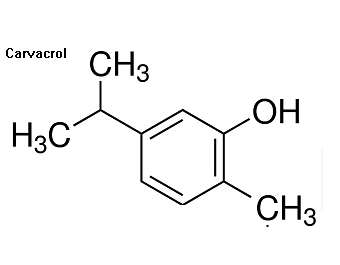
Carvacrol, C10H14O, [C6H3(CH3)(OH)C3H7], cymophenol, is a monoterpenoid phenol, isopropyl-o-cresol, antioxidant, aromatic. source
It inhibits bacterial growth, food additive, volatile oil component, flavouring agent, antimicrobial agent, agrochemical, (anti-fungal agent).
It is a flavouring agent, which gives "penetrating" flavour to some varieties of oregano, food additive.
It occurs in black walnut, and many essential oils, e.g. Thyme oil and Origanum oil, and it smells like oregano.
Chloroxylenol
Chloroxylenol, C8H9ClO, (4-chloro-3,5-dimethylphenol), is an halophenol, monochlorobenzene, antiseptic, disinfectant agent in antibacterial soaps. source
It is a widely-used antiseptic, "Dettol", "PCMX", and is a bactericidal against most Gram-positive bacteria, for skin disinfection and surgical instruments.
However, it is is less effective against Staphylococci and Gram-negative bacteria, and is inactive against Pseudomonas, and bacterial spores.
TCP
TCP, antiseptic for sore throats, was originally (2,4,6-trichlorophenol), trichlorophenylmethyliodosalicyl.
Nowadays, commercial TCP contains a mixture of phenol and halogenated phenols.
TCP has a distinctive "medicine" smell.
TCP (antiseptic) now C13H12Cl2I2O4. source
Phenolic acids
Phenolic acids are phenolic compounds having one carboxylic acid group.
Phenolic acids, phenolcarboxylic acids, are aromatic acid compounds with a phenolic ring and a C6-C1 skeleton, and are weak acids.
Phenolic acids occur in many plant species, especially in dried fruits, basidiomycetes mushrooms, soil humus, and human urine.
Phenolic acids are natural antioxidants, a vital human dietary component, a variety of functions in plants, and are in the therapeutic, cosmetics, and food industries.
These dietary antioxidant property through radical scavenging mechanism, shields against pathological conditions arise from oxidative stress.
Oxidative stress is imbalance between reactive oxygen species and the system's ability to detoxify the reactive intermediates or to repair the resulting damage.
Disturbances in the normal redox state of tissues can cause toxic effects through the production of peroxides and free radicals that damage all components of the cell.
Oxidative stress is involved in atherosclerosis, Parkinson's disease, heart failure, myocardial infarction, Alzheimer's disease, and chronic fatigue syndrome.
The two sub-groups of phenolic acids.
Sub-group 1: Hydroxybenzoic acids, occur conjugated with sugars or organic acids and bound with cell wall lignin.
They occur in red fruits, onions and black radish.
The four commonly found hydroxybenzoic acids are p-hydroxybenzoic, protocatechuic, vanillic, and syringic acids.
Gallic acid, C7H6O5 source
Salicyclic acid, C7H6O3 source
Sub-group 2: Hydroxycinnamic acids, occur as simple esters with quinic acid or glucose.
Ferulic acid, C10H10O4 source
Caffeic acid, C9H8O4 source
Phenolic ketones
Phenolic ketones are used as organic synthesis raw materials and solvents, dewaxing agents, organic synthesis, materials for synthetic fragrances and medicine.
1. Acetophenones
2. Phloroglucinol derivatives
Phloroglucinol, C6H6O3, Benzene-1,3,5-triol source
Apocynin A, C24H20O10 source
Aspidin, C25H32O8 source
Humulone, C21H30O5 source
Lupulone, C26H38O4 source
Picein, C14H18O7 source
Rottlerin, C30H28O8 source
Phenolics
Water-soluble phenolics are in central vacuoles of plant cells.
Lipophilic phenolics are in cell cytoplasm and in surfaces as waxes or bud exudates.
Brazilin, C16H14O5 source
16.3.4.1.1 Benzofurans
Coumarone, 16.3.4.1a
Polyphenols
Polyphenols have aromatic phenyl ring + -OH group
Phenolics are classified into two main groups:
1. Flavonoid phenolics
Subclass: Flavonoids
2. Non-flavonoids phenolics
Subclass: Lignans
Subclass: Phenolic acids
Subclass: Stilbenes and Stilbenoids
Polyphenols:
Tyrosol, a phenylethanoid, C8H10O2 source
Guaiacol, a methoxyphenol, C7H8O2 source
Gentisin, a polyphenol, a xanthone, C14H10O5 source
Juglone, an hydroxy-naphthoquinone, C10H6O3 source
Plumbagin, an hydroxy-methyl-naphthoquinonegin, C11H8O3 source
Polyphenols are often repeated connected units of:
Catechol, C6H6O2 source
Resorcinol, C6H4(OH)2 source
Phloroglucinol, C6H3(OH)3 source
Arbutin, C12H16O7 source
Pyrogallol, C6H6O3 source
Monophenols
Apiole, Apiole, C12H14O4 source
Carnosol, C20H26O4 source
Dillapiole, C12H14O4 source
Glycosides
A substance containing a glycosidic bond is a glycoside.
Glycosides are a sugar group, called the glycone, with a covalent glycosidic bond to a non-sugar group, called the aglycone.
The sugar group can be a monosaccharide or an oligosaccharide, but not polysaccharides.
There are many different types of glycosides, e.g a glucoside has a glucose glycone group, and a fructoside has a fructose glycone group.
are soap-like steroid glycosides.
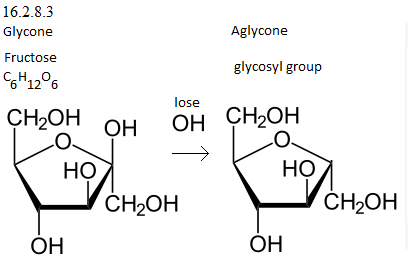
1. A glycoside contains a constituent sugar, in which the hydroxyl group attached to the first carbon is substituted by an alcoholic, phenolic, or other organic group.
Glycosides are named from the constituent sugar, e.g. glucoside (glucose), pentoside (pentose), fructoside (fructose).
Glycosides, unlike polysaccharides, are sugars bonded to a non-sugar, so they contain a carbohydrate and a non-carbohydrate residue occurs in the same molecule.
2. Anthoxanthins, glycosides, are similar to and associated with anthocyanin.
They are water-soluble white to yellow flavonoid pigments, antioxidants, occur occurs in potatoes, cauliflower, onions, parsnips, bananas.
Anthoxanthins cause bright white colour of food occurs in acid medium, yellow occurs in alkaline medium.
3. Anthraqinone glycosides, (aglycone from anthraquinone), alizarin, hypericin, physcion, rhubarb, Cascara, Senna, Aloe
4. Cardiac glycosides, (steroidal glycosides, digitalis glycosides, cardiovascular glycosides), heart stimulants, occurs in Digitalis, Convallaria.
Cardenolide, C23H34O2, is a steroid molecule, but "cardenolides" are usually cardenolide glycosides source
Types of glycosides
Saponinskk
Aminoglycosides
Aminoglycosides have a broad spectrum of activity covering aerobic organisms, including gram-negative bacteria and mycobacteria.
Aminoglycoside drugs. Gentamycin, tobramycin, amikacin, streptomycin, neomycin, paromomycin, and streptomycin
Aminoglycosides from Streptomyces bacteria, have the suffix "mycin", e.g. Neomycins, B and C, Neomycin E and Streptomycin.
Aminoglycosides from Micromonospora bacteria, have the suffix "micin", e.g. Kanamycin A, Amikacin, Tobra mycin, Dibehacin, Gentamucin.
Amikacin, C22H43N5O13, amicacin, an aminoglycoside, is antimicrobial, antibacterial, a semi-synthetic aminoglycoside antibiotic It is active against more resistant gram-negative bacilli, e.g. Acinetobacter baumanii and most aerobic gram-negative bacilli source
It occurs in water and soil.
Betalains
Betalains, C24H26N2O13, Betalain, compounds derived from the non-essential amino acid Tyrosine,C9H11NO3, and include the Betaxanthins and Betacyanins. source
They are water-soluble glycoside plant pigments in vacuoles, but their function in plants is not known, and they never occur in plants with anthocyanins.
Betalains, occur in beets (Beta vulgaris subsp. vulgaris), Opunti, leaves of (Amaranthus spinosus), floral bracts of (Bougainvillea glabra), and in Portulaca.
They also occur in Gomphrena globosa, and in some Basidiomycota fungi.
Cardiac glycosides
Cardenolides - the aglycone constituents of cardiac glycosides
* Cardiac glycosides, (steroidal glycosides, digitalis glycosides, cardiovascular glycosides), heart stimulants, occur in Digitalis, and in Convallaria.
Cymarine, C30H44O9br> * Digitalis glycosides Digitoxin, C41H64O13 source
Digoxin, C41H64O14 source
- Scilla glycosides Proscillardin, C30H42O8
- Strophanthus glycosides Ouabain, C29H44O12
Strophanthin, C36H54O14 source
* Cardenolides Cardenolides
Cyanogenic glycosides
Cyanogenic glycosides are chemicals that cause protective cyanogenesis, i.e. they produce HCN, when plant is attacked.
Cyanogenic glycosides (cyanophore glycosides), (aglycone contains CN group)
Amygdalin, C20H27NO11 source
Betanin, C24H26N2O13 source
Dhurrin, C14H17NO7 source
Linamarin, C10H17NO6 source
Prunasin, C14H17NO6 source
Cardenolides
Cardenolide, C23H34O2, is a steroid lactone, and the parent of the cardenolides. source
Cardenolide is a steroid molecule, but "Cardenolides" are usually cardiac glycosides
Cardenolides inhibit the ion-transporting enzyme Na+/K+-ATPase, which controls many physiological processes, cell resting potential, ion transport, cellular volume.
Cardenolides are cardiac glycosides and occur mainly in the toxic latex of Asclepidaceae, and in the foxglove plant, Digitalis purpurea.
Cadenolide glycosides are usually potentially heart toxic, but Digitalis is used medically.
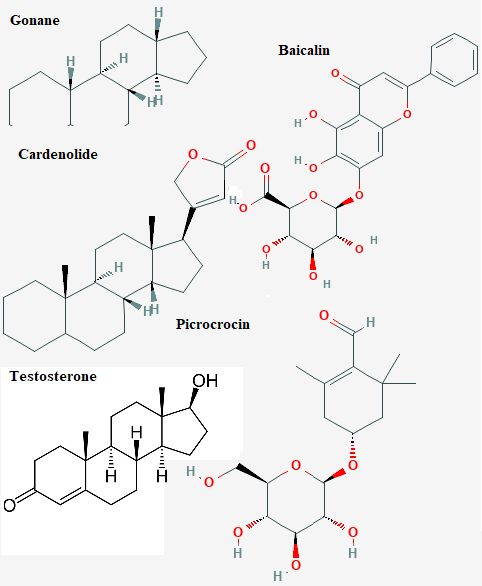
Cardenolides:
Glucosides
A glucoside is a glycoside from glucose, a glycoside with a glucose sugar component, a glycoside that yield glucose upon hydrolysis.
A glucoside is a glycoside in which the sugar is glucose.
Glucosides are natural compounds linked to glucose.
Glucoside. sugar + non-carbohydrate R, e.g. glucose + terpene or glucose + phenolic compound
Bracteatin 6-glucoside, C21H20O12, yellow colour of Antirrhinum majus (snapdragon) Glucosides source
Aesculin, Esculin, C15H16O9 source
Arctigenin, C21H24O3 source
Betanin, C24H26N2O13 source
Cycasin, C8H16N2O7 source
Fraxin, C16H18O10 source
Icariin, C33H40O15 source
Linamarin, C10H17NO6 source
Piceatannol, C14H12O4 source
Picrocrocin, C16H26O7 source
Quercitrin, C21H20O11 source
Rhamnazin, C17H14O7 source
Rhamnetin, C16H12O7 source
Rhaponticin, C21H24O9 source
Salicin, C13H18O7 source
Glucose, C6H12O6 source
Fructose, C6H12O6 source
Pentose, C5H10O55 source
Salidroside, rhodioloside, glucoside of tyrosol, neuroprotective, antidepressant, anxiolytic, C14H20O7 source
Napththoquinones
1,2-Naphthoquinone, C10H6O2, occurs in diesel exhaust, strong odour, red-brown alkaline solution, cytotoxic derivatives occur in vitamin K. source
1,4-Naphthoquinone, (C10H6O2), strong odour, red-brown alkaline solution source
Naphthoquinones C6-C4 skeleton, 1,2-Naphthoquinone C10H6O2 occurs in diesel exhaust, 1,4-Naphthoquinone, (C10H6O2) source
It has a strong odour, red-brown alkaline solution, cytotoxic derivatives occurs in vitamin K.
Napthoquinone derivatives
Drosera, Droserone, C11H8O4 source
Plumbagin, C11H8O3 source
Juglone, C10H6O3 source
Saponins
A saponin consists of a steroid or a triterpene sapogenin and a sugar, which may be glucose, galactose, a pentose, or a methylpentose.
Saponins are 1. Triterpene glycosides and 2. Steroid glycosides.
1. Triterpene glycosides are natural glycosides present in various plants, herbs and sea cucumbers. and are used for traditional medicine.
Triterpenoid saponins are triterpenes which belong to the saponin group of compounds, so are triterpenoid glycosides.
Senegin II, C70H104O32, triterpenoid saponin source
Glycyrrhizin, C42H62O16, glycyrrhizinic acid, triterpenoid saponin source
2. Steroid glycosides are saponins with 27-C atoms, modified triterpenoids, with cytotoxic, neurotrophic and antibacterial properties.
Steroid saponins are similar to triterpenoid saponins and are used as non-toxic to humans detergents, fish poisons, fire extinguisher foaming agents.
Steroid glycosides form frothy colloidal soapy solutions when agitated in water, emulsifiers, detergents, often toxic to fish.
See: Quillaja saponaria, the soap bark tree, the source of quillaia, which contains saponins.
Tests for saponins:
Add ground plant material to test-tube of water, heat to boiling, add stopper, shake the test-tube and note presence of stable froth.
#SteroidsaponinsH">Steroid saponins
Carotenoids
A terpene is an unsaturated hydrocarbon molecule with the chemical formula, C10H16. source
A tetraterpene, (tetra terpene), = 4 terpenes, 4 X C10H16 = C40H64. source
Carotenoids have the chemical formula C40H64, so carotenoids are tetraterpenes. C5H8 in a molecule is called an isoprene unit, so 8 isoprene units = 8 X C5H8 = C40H64. source
Carotenoids are hydrocarbons, which have a similar base structure consisting of 8 isoprene units.
Carotenoids are a type of accessory pigment, created by plants to help them absorb light energy and convert it to chemical energy. The two types of carotenoids are the Carotenes (hydrocarbons, contain no oxygen), and the Xanthophylls, (hydrocarbons + oxygen).
See: Carotenes
See: href="#XanthophyllsH">Xanthophylls
1. Carotenoid pigments are tetraterpenoids from the acyclic parent carotene, and are produced from 8 isoprene molecules.
They have 40 C atoms, in two six-carbon rings connected by a chain of carbon atoms.
2. Carotenoids are red, orange and yellow, fat-soluble, insoluble in water, plant and animal organic pigments in plants, algae, fungi and bacteria.
3. Presence of carotenoids is shown by the bright red, orange and yellow pigments.
Carotenoids occur in beet greens, broccoli, cantaloupe, carrots, collard greens, green peas, kale, leafy green vegetables, mango, okra, oranges, papaya, parsley, pink grapefruit, pumpkin, red peppers spinach, sweet potatoes, Swiss chard, tangerines, tomatoes, watermelon, winter squash, and fish liver oil.
4. Carotenoids should be ingested with fats in the diet and are stored in fatty tissue, and may be antioxidants.
A high carotenoid diet may help reduce the risk of lung cancer in non-smokers and breast cancer.
Most carotenoids are not damaged by cooking.
5. Carotenoids absorb blue and green wavelengths of light causing yellow and orange colours.
Carotenoids occur in chromoplasts, which show when fruit is ripe, and in chloroplast membranes to absorb light energy for photosynthesis.
They are accessory pigments and protect chlorophyll from damaging wavelengths.
The most common carotenoids in food are alpha-carotene, beta-carotene, beta-cryptoxanthin, lutein, zeaxanthin, and lycopene.
6. Provitamin A carotenoids, alpha-carotene, beta-carotene, and beta-cryptoxanthin, can be converted to retinol (vitamin A).
Lutein and zeaxanthin, in the macula of the eye, absorb most incident blue light, and may prevent age-related macular degeneration.
Carotenes
Carotene, C40Hx, (Latin carotin, 'carrot')
Carotenes, C40Hx, contain no oxygen,and are orange or red photosynthetic pigments
Carotenes are hydrocarbon carotenoids, a subclass of tetraterpenes and C5n polyterpenes, C40Hx
Plants rich in carotenes include sweet potato (red variety), kale, (carrot, mustard greens, spinach driedbasil, butternut squash, lettuce (red leaf variety).
Carotenes occur in many plants, and are pigments.
Carotenes that are are orange pigments cause the colour of carrots.
Carotenes, C40H56, are simple orange or red unsaturated hydrocarbons. source
Test the cooking water of boiled vegetables: 19.2.12, (See 1. and 6.)
Chromatography of chlorophyll pigments: 10.2.1 (See: 3.)
Vitamin A: 9.6.1 (See: Carotenes)
Alpha-carotene
Alpha-carotene, C40H56, α-Carotene, a carotene isomer, carotenoid pigment, occurs in vitamin A, carrots, pumpkins, maize, tangerine, orange, Alhagi, and Corbicula. source
Alpha-carotene is used as a yellow food colouring, and it occurs in green leaves of many plants.
Alpha-carotene occurs in in carrot roots, maize seed, oil palm and in tomato.
α-Carotene, less than half the vitamin A activity of beta-carotene, in carrots, pumpkin, maize seeds, orange, tangerine, tomato.
Vitamin A precursor is used as yellow food colouring.
Beta-carotene, C40H56, β-Carotene, carotenoid pigment, cyclic carotene, strongly-coloured red-orange pigment, antioxidant, occurs in dark leafy greens, red, orange and yellow fruits and vegetables. source
Beta-carotene occurs widelyin most green leaves and coloured fruits and vegetables
Beta-carotene is used as yellow food colouring of fats, e.g. margarine, used as sunscreen, red-purple oil, not soluble in water, in dark orange varieties of sweet potato.
β-Carotene, Type I, synthetic, 93% (UV), powder, β, β-Carotene, Provitamin A, C40H56, commercial product source
β-Carotene, Type II, synthetic, 95% (HPLC), crystalline, β, β-Carotene, Provitamin A, C40H56, commercial product source
E160e, Beta-apo-8' carotenal
E160f, Ethyl ester of beta-apo-8
Both α-carotene and β-carotene are precursors of vitamin A, C20H30O, retinol. source
Gamma-carotene, C40H56, (γ-carotene), carotenoid pigment, Vitamin A precursor source
Delta-Carotene. C40H56, δ-Carotene source
Epsilon-carotene, C40H56, ε-carotene source
Carotene epoxide, zeta-Carotene epoxide, (1,2-Epoxy-1,2-dihydro-z-carotene), C40H60O source
It occurs in garden tomato and in cherry tomato, (Solanum lycopersicum var. cerasiforme).
Xanthophylls
Xanthophylls, contain oxygen, and are yellow or brown oxygenated carotenoids, carotene derivatives
Xanthophylls, (C40H56)n, are hydrocarbons + oxygen, and are usually yellow pigments in the leaves of most plants. source
Xanthophylls are oxygenated carotenes, synthesised within plastids without need for light for synthesis.
They do absorb some wavelengths not absorbed by chlorophyll, so in etiolated leaves with chlorosis nutrient deficiency.
In the leaves of deciduous plants, green chlorophyll covers up the yellow from the carotenoid pigments, except during autumn.
Xanthophylls are yellow or brown carotenoid pigments in green plants and cause the colours of leaves in the autumn, the fall.
The carotenoids, carotenes are hydrocarbons, and the xanthophylls are hydrocarbons + oxygen.
Xanthophylls, are yellow or brown oxygenated carotenoids, carotene derivatives.
However, they do absorb some wavelengths not absorbed by chlorophyll, so they appear in etiolated leaves and plants with chlorosis.
In the leaves of deciduous plants, green chlorophyll covers up the yellow from the carotenoid pigments, except during autumn.
Xanthophylls act to modulate light energy and deal with triplet chlorophyll, (an excited form of chlorophyll).
(an excited form of chlorophyll), which is overproduced at very high light levels, during photosynthesis.
Astaxanthin
Antheraxanthin, an epoxycarotenol, C40H56O3 source
Cryptoxanthin, a carotenol, C40H56O source
Fucoxanthin, an epoxycarotenol, C42H58O6 source
Astaxanthin C40H52O4 source
Astaxanthin, a terpene, keto-carotenoid pigment, β-carotene derivative, as a free red pigment, or ester, or brown to green chromoprotein, an anticoagulant, an antioxidant, widely used additive for colouring of fish food
Steroids
Steroids are compounds containing a 17-carbon 4-ring system, e.g. Cholesterol, C27H46O source
3.9.1 Cholesterol
Steroids, sterols, steroid alcohols, natural steroids, have a nucleus of three six-member carbon rings and one five-member ring.
Natural steroids are from triterpenoids and have a saturated 4 ring steroid structure.
Steroids include sex hormones, coricosteroid hormones, cardiac glycosides, bile acids, cholesterol lanosterol (animal sterols), β-sitosteron (plant sterol), ergosterol (fungus sterol), cardiac glucosides, diosgenin, androstane, 19-norpregnane, 7-dehydrocholesterol, previtamin D3, ergocalciferol (vitamin D2), cholecalciferol (vitamin D3).
Estradiol, an estrogen steroid hormone, C18H24O2 source
Esculeoside, a steroidal alkaloid glycoside, a steroid saponin C58H95NO29 source
Sterols
Sterols are solid, waxy, unsaturated steroid alcohols, anti-inflammatory, analgesic agents and occur in animal sex hormones.
Plant sterols are called phytosterols, some existing naturally free and some exist in combination as esters or glycosides.
Phytosterols are the plant sterols, and they differ from animal sterols, because they have extra ethyl or methy substituent occurs in the chemical side chain.
They are obtained from vegetable oils or from industrial wastes, are used occurs in pharmaceuticals, food additives and cosmetics.
Phytosterols occur occurs in almonds, cashews, peanuts, sesame seeds, sunflower seeds, whole wheat, maize, soybeans, and many vegetable oils.
Sterols (steroids) occurs in animal sex hormones, squalene (in shark liver oil), cephalosporin, gonane, hopane, diplotene, lupeol.
β-sitosterol, C29H50O, oestrogenic activity, occurs in human leukemia cells, occurs in vegetable oils, nuts, and in avocado. source
Naturally occurring non-delta-5 plant sterols: | Cycloartenol | 24-methylene cycloartenol | cycloeucalenol | obtusifoliol|.
The most commonly occurring phytosterols are Campesterol, Beta-sitosterol, and Stigmasterol.
Sterolins
Sterolins are glucosides, which are molecular structures joined to the sterol.
Sterolin is easily destroyed, and without it, the sterol does not have the same immune-enhancing benefits.
In nature, plants never contain sterols only, because the sterols are always associated with their glucoside sterolins.
Carotenes
Carotenes, C40Hx
- Alpha-carotene (α-carotene), C40H56, is a carotenoid pigment, Vitamin A precursor, and is used as yellow food colouring, occur in green leaves of many plants, including carrot roots, maize seed, oil palm and in tomato.
- Beta-carotene (β-carotene), C40H56, strongly-coloured red-orange cyclic carotenoid pigment, an antioxidant, an important provitamin A carotenoid precursor, wide occurrence most green leaves and coloured fruits and vegetables, used as yellow food colouring of fats, e.g. margarine, used as sunscreen, red-purple oil, not soluble in water, and occurs in dark orange sweet potato.
β-Carotene, Type II, synthetic, 95% (HPLC), crystalline, β, β-Carotene, Provitamin A, C 40 H 56, commercial
* Gamma carotene (γ-carotene), C40H56, carotenoid pigment, Vitamin A precursor source
β-Carotene, Type I, synthetic, 93% (UV), powder, β, β-Carotene, Provitamin A, C40H56 source
β-Carotene, Type II, synthetic, 95% (HPLC), crystalline, β, β-Carotene, Provitamin A, C40H56 source
Carotene epoxide, zeta-Carotene epoxide, (1,2-Epoxy-1,2-dihydro-z-carotene), C40H60O, occurs in garden tomato, and cherry tomato, (Solanum lycopersicum var. cerasiforme). source
Sesquiterpenoids
Sesquiterpenoids C15H24, Natural sesquiterpenoids. source
Cuparene, C15H22, occurs in (Perilla frutescens). source
Allo-aromadendrane, C15H24, woody odour, occurs in allspice, Tasmanian gum, (Eucalyptus globulus). source
Alpha-bisabolene, C15H24, Caryophyllane, (Cedrene in essential oil of cedar). source
Beta-bisabolene, C15H24, balsamic odour, food additive. source
Cadinane, C15H28, cadinene, from cade oil in (Juniperus oxycedrus), occurs in prickly juniper, sharp cedar. source
Debneyol, C15H26O2, a sesquiterpenoid propane-1,2-diol, occurs in (Nicotiana fragrans), and (Nicotiana debneyi), and in cigarette tobacco source
.
Steroid saponins
Agavoside A, C33H52O9, a steroid saponin, anti-leukaemic, occurs in green vegetables, occurs in (Agave americana). source
Asparagoside B, C33H56O9, a steroid saponin, occurs in (Aspagus officinalis). source
Avenacoside A, C53H82O23, a steroid saponin, occurs in cereals, (Avena sativa). source
Digitogenin, C27H44O5, a sapogenin, occurs in (Digitalispurpura). source
"Digitonin, Digitin, C56H92O29, a steroid saponin, toxic, solubilizes lipids, occurs in (Digitalis purpurea). source
Diosgenin, C27H42O3, a steroid sapogenin, nitogenin, a hexacyclic triterpenoid, occurs in bark of wild yam, (Discorea villosa). source
It is used to synthesise steroids, e.g. cortisone, pregnenolone and progesterone, apoptosis inducer, antiviral, antineoplastic.
Gitoxygenin, C23H34O5, an hydroxy steroid, acute toxic, occurs in (Strophanthus divaricatus).br> Nuatigenin, C27H42O4, an hydroxy-steroid, occurs in oats (Avena sativa) source
Osladin, C45H74O17, a steroid saponin, very sweet taste, in fern rhizome (Polypodium vulgare) source
Ruscogenin, C27H42O4, a triterpenoid, irritant, used to treat haemorrhoids, anti-hypertensive, occurs in (Ruscus aculeatus). source
Ruscoside, C50H80O23, a steroid saponin, anti-inflammatory, occurs in (Ruscus aculeatus). source
Sarsaparilloside, C57H96O28, a steroid saponin, used to flavour confectionary, occurs in sarsaparilla roots and Smilax rhizomes. source
Sarsasapogenin, C27H44O3, a sapogenin, occurs in Spanish sarsasparilla (Smilax aspera), asparagus, and in Sarsaparilla root (Radix sarsaparilla) source
Paclitaxel, (C45H51NO14), Taxol A, Yewtaxan, "taxol", a tetracyclic diterpenoid, appears as needles or fine white powder, inhibits mitosis, stabilizes microtubules leading to cell death, so it is an antileukaemia and antitumour medicine, can cause female reproductive toxicity and male reproductive toxicity, occurs in the bark of the Pacific yew tree, (Taxus brevifolia). source
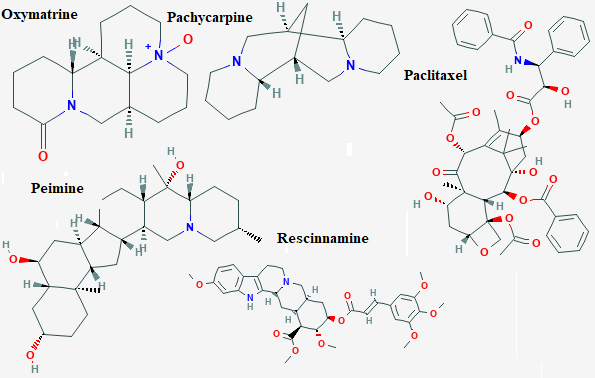
The name "Taxol" is now a registered trade mark.
Triterpenoid saponins
Deltonin, C45H72O17, a triterpenoid, used in synthesis of steroid hormones, occurs in (Dioscorea deltoidea). Dioscin, C45H72O16, a triterpenoid, treat liver injury, potential anticancer, antifungal, occurs in (Dioscorea nipponica), Costus, and Trigonella. Gitogenin, C27H44O4, a triterpenoid, in (Digitalis purpurea), foxglove Gitonin, C50H82O23, a triterpenoid, steroidal saponin, in (Digitalis purpurea), foxglove leaves Hocogenin, C27H42O4, a triterpenoid, sapogenin of Agavoside A, irritant, is used to prepare steroid hormones, occurs in Agave. Parillin, Sarsasaponin, Smilacin, C51H84O22, a triterpenoid, haemolytic, antibiotic, cancerostatic, occurs in roots of Sarsaparilla (Smilax ornata). Tigogenin, C27H44O3, a triterpenoid, steroidal saponin, occurs in Fenugreek (Trigonella foenum-graecum), in (Digitalis lanata), and in Sisal (Agave sisalana). Tigonin, C56H92O27, a triterpenoid, occurs in Digitalis, and in Chlorogalum Yamogenin, C27H42O3, a triterpenoid sapogenin, occurs in (Trigonella foenum-graecum), fenugreek, in asparagus, and in Smilax. source
Diterpenoids
Ajugarin I C24H34O7, a diterpenoid, insect antifeedant, has anti-neuropathic pain activity, and occurs in leaves of (Ajuga remota). source
Andrographolide C20H30O5, a diterpenoid, bitter taste, anti-inflammatory, antioxidant, anti-cancer, used in many traditional medicines to treat infectious diseases and cardiovascular poblems, occurs in (Andrographis paniculata). source
Candletoxin A C35H44O9, a diterpenoid, toxic, in (Euphorbia poisonii) latex. source
Caryoptin C26H36O9, a diterpenoid, bitter, insect antifeedant, in Caryopteris. source
Geranylgeraniol C20H34O, a diterpenoid, geranylgeraniol, occurs in linseed oil (Linum usitatissum), in wood oil Australian red cedar (Toona ciliata). source
Gibberellin C19H22O6, a pentacyclic diterpenoid, (Gibberellin A3, GA, GA3, Gibberellic acid), gibreskol,, irritant, a C19-gibberellin, monocarboxylic acid, white powder, potent plant hormone that regulates growth and cell elongation, stimulates cells of germinating seeds. source
Ginkgolide C20H24O9, a diterpenoid, irritant, bitter, Platelet Activating Factor antagonist, bronchdilator, anti-asthmatic, and occurs in (Ginkgo biloba) root bark and leaves. source
Gnidicin C36H36O10, a diterpenoid, thymeleatoxin A, anti-tumour, and occurs in in Gnidia. source
Grayanotoxin Grayanotoxin I, (GI), Rhodotoxin, Asebotoxin, Acetylandromedol, C22H36O7, tetracyclic diterpenoid, acetate ester, phytotoxin, antihypertensive, occurs in Rhododendron and its honey. source
Labdane C20H32O2, a diterpenoid, antifungal and occurs in (Nicotiana glutinosa) epicuticle leaf wax. source
Mascaroside C20H36O11, a diterpenoid, naphthofuran, very bitter, in (Coffea viyanneya) beans. source
Neocembrene C20H32, a diterpenoid, cembrene A, a macrocycle, and occurs in (Picea obovata). source
Palmarin C20H22O7, a diterpenoid, tinosporide, arcangelisin, isochasmanthin, organo-oxygen compound, organic heterotricyclic compound, bitter, was used in (Radix columba) tonic, occurs in Jateorhiza roots. source
PhorbolPhorbol, C20H28O6, a tetracyclic diterpenoid, acute toxic, cyclic ketone, a tertiary alcohol, an acyclic diterpene alcohol, white solid, irritant phorbol, Phorbol diesters may be anti-leukaemic and carcinogenic, occurs in (Croton tiglium) seed oil. source
Phytol, trans-Phytol, (20H40O), a diterpenoid, acyclic diterpene alcohol, irritant, environmental hazard, used to prepare vitamin E and vitamin K1, modulates transcription in cells, long-chain primary fatty alcohol, oily liquid, modulates transcription in cells, a decomposition product of chlorophyll. source
List of Phytochemicals, Araloside toTangshenoside Phytochemicals
Contents
16.0.0
Araloside
Araloside, C47H74O18, Chikusetsusaponin IV, a triterpenoid saponin, occurs in Japanese angelica tree, (Aralia alata), (Caragana sinica), and in (Panax pseudoginseng). source
Aspidin
Aspidin, C25H32O8, polystichin, antihelminthic source
It occurs in Aspidium roots, in Dryopteris, antihelminthic.
Astragalosides
Astragalosides are chemicals from Astragalus, for example:
Astragaloside IV, C41H68O14, is a pentacyclic triterpenoid, anti-inflammatory, neuroprotective, antioxidant. source
It assists new blood vessels formation, and it inhibits formation of abnormal fibrous tissues.
"Astragaloside IV Astragalus Root Extract Powder" is sold as a health food.
Betavulgarin
Betavulgarin, C17H12O6, antifungal isoflavonoid, is an hydroxyisoflavone. source
It occurs in (Beta vulgaris), (Beta lomatogona), and in (Iris tingitana).
"Brassicasterol
Brassicasterol, C28H46O, a phytosterol, a component of plant cell membranes, occurs in seed oil of (Brassica rapis). source
It is used as a biomarker for the presence of marine algae
Brazilin
Brazilin, C16H14O5, is an organic heterotetracyclic compound, is a red pigment. source
It occurs as a red pigment, Natural Red 24, in Brazil-wood (Caesalpinia echinata), and in sappan-wood (Caesalpinia sappan).
"Brazil wood" was originally called "bresel wood".
Charantin
Charantin, glucoside, (C35H60O6) + (C35H58O6), hypoglycaemic so may cause low blood sugar. source
It occurs, in Asian bitter melon (Momordica charantia).
Daidzin,
Daidzin,
Daidzin, C21H20O9, isoflavone, anti-oxidant, daidzoside, anti-carcinogenic, anti-antheroscerotic source
It occurs in TCM Chinese medicine and it is used to treat alcohol abuse.
It occurs in kudzu (Pueraria lobata).
Daidzein
Daidzein, C15H10O4, dihydroxyisoflavone, a phytoestrogen, is anti-inflammatory, anti-microbial, antioxidant, phytoestrogenic, antineoplastic. source
It occurs in soybean, tofu, alfalfa sprouts, red clover, chickpeas, peanuts, kudzu, (Streptomyces padanus), and in (Glycine soja).
Equol, C15H14O3, (S)-Equol, a hydroxyisoflavan, is the main active product of daidzein metabolism produced by microflora in the gut. source
It is a biomarker for the consumption of soy beans and other soy products.
It occurs in (Punica granatum).
Daidzin, C21H20O9, a glycosyloxyisoflavone, anti-oxidant, anti-carcinogenic, anti-antheroscerotic, in TCM Chinese medicine, is used to treat alcohol abuse. source
It occurs in (Pueraria lobata), (Salvia hispanica), and (Begonia nantoensis).
Eleutheroside
Eleutheroside B, C17H24O9, syringin, phenyl propanoid glycoside occurs in Siberian ginseng, (Syringa vulgaris). source
Eleutheroside A, C35H60O6, daucosterol, saponin and sterol glycoside, occurs in Siberian ginseng source
Eriodictiol
Eriodictiol, C15H12O6, eriodictyol, a tetrahydroxyflavanone, flavanone glycoside source
It occurs in (Camellia sinensis), (Prunus serrulata), and in citrus fruits.
Esculeoside
Esculeoside A, C56H95NO29, a steroid alkaloid, glycoside, a steroid saponin, occurs in cherry tomato (Solanum lycopersicum). source
Estradiol
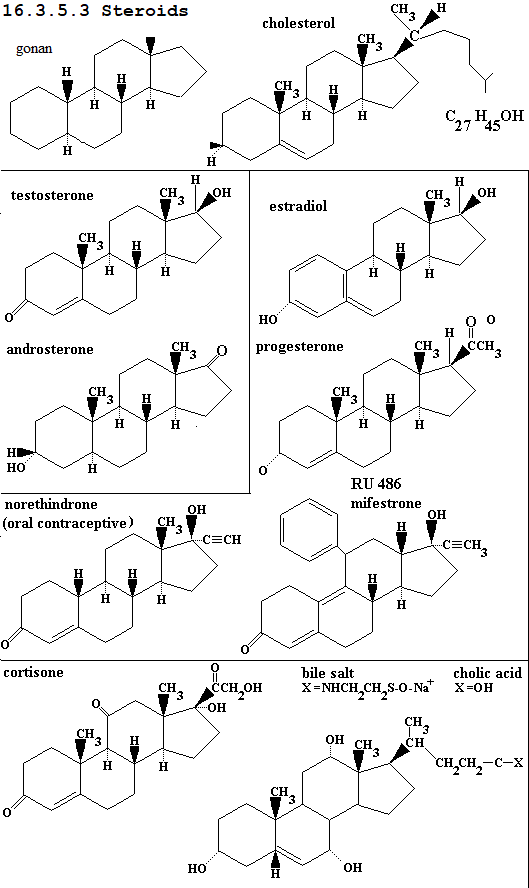
Estradiol, C18H24O2, oestradiol, female sex hormone, an estrogen (oestrogen), an hydroxy steroid, female growth hormone for reproductive organs. source
It is used in contraceptives (OCPs), but the synthetic steroid ethinyl estradiol, C20H24O2, is more suitable for oral contraception. source
It is commercially available in hormone therapy products for treating menopause problems, such as hot flashes.
It is used in oral tablets, vaginal rings, transdermal patches, sprays, gels, and creams.
Formononetin
Formononetin, C16H12O4, biochanin B, formononetol, is a methoxyisoflavone, and a phytoestrogen. source
It occurs in (Dalbergia nigrescens), and in (Glycyrrhiza pallidiflora).
It caused reproductive malfunction, "clover disease”, in Australian sheep grazing on subterranean clover (Trifolium subterraneum)
Genistein
Genistein, C15H10O5, an isoflavone, phytoestrogen, antineoplastic, from soy products, induces apoptosis, antioxidant, anti-inflammatory, anti-atherosclerosis source
It is used as an antineoplastic and antitumor agent.
Genistein has antihelmintic activity, and it is the active ingredient in (Felmingia vestita), a plant traditionally used against worms infections of humans
It has shown to be effective in the treatment of common liver fluke, pork trematode and poultry cestode.
It has been investigated in clinical trials as an alternative to classical hormone therapy to help prevent cardiovascular disease in postmenopausal women.
Natural sources of genistein include tofu, fava beans, soybeans, kudzu, (Salvia hispanica), and (Glycine soja).
It has antihelmintic activity, and it is the active ingredient in (Felmingia vestita), traditionally used against worms, liver fluke, pork trematode and poultry cestode
It may be an alternative to classical hormone therapy to help prevent cardiovascular disease in postmenopausal women.
Glycone and aglycone
glycoside (hydrolysis) → glycone (sugar group) + aglycone (non-sugar group) source
The sugar group is called a "glycone" and the non-sugar group is called an "aglycone".
The glycone can consist of a single sugar group (monosaccharide) or several sugar groups (oligosaccharide).
Upon hydrolysis, a sugar and non-sugar component (aglycone) are formed.
An aglycone, is the non-sugar component formed when a glycoside is hydrolysed.
It is the non-sugar compound remaining after replacement of the glycosyl group from a glycoside by a hydrogen atom.
For example
Vanilla species → pods → Glucovanillin, (a glucoside) + β-glucosidase enzyme → vanillin source
Glucovanillin (hydrolysis) → glycone glucose + aglycone vanillin source
C14H18O8 + (glucosidase) → C6H12O6 + C8H8O3 source
Gymnemic acid
Gymnemic acid I, C43H66O14, triterpenoid glycoside, triterpenoid saponin, flavour modifier, makes food tasteless, occurs in leaves of (Gymnema sylvestre). source
Haeme
Haeme C49H56O6N4Fe, (heme), occurs in haemoglobin, a globular protein in animals source
Haeme A, is a cytochrome oxidase ligand complex, (Greek haîma 'blood' + Latin globus 'ball, sphere')
Haemoglobin is the protein that carries oxygen in the blood.
The haem group causes the red colour of blood.
The different kinds of haem are Haeme A, B, C and O.
Haeme A is a cytochrome oxidase ligand complex, C49H56O6N4Fe, a tetradentate ligand. source
The most common type is Haeme B, C34H32O4N4Fe. source
The "quaternary proteins" have four joined tertiary proteins, e.g. haemoglobin.
The "transition metals" form complex ions and often have catalytic activity, e.g. Fe in haemoglobin molecule.
Porphyrin chelates include haeme, in haemoglobin, bonded to iron (II) ion, and chlorophyll bonded to Mg (II) ion.
Glycosylated haemoglobin
Glycosylated hemoglobins are minor components of human red cell hemoglobin.
They are formed by condensation of glucose with hemoglobin A.
Glycosylated hemoglobins are increased X 2 - X 3 in the red blood cells of diabetic patients, so are an indicator for assessing the control of diabetes mellitus.
HbA1c is a blood test to diagnose type 2 diabetes and monitor blood sugar levels in people with diabetes.
It measures the average blood sugar level from the past 8 to 12 weeks.
. HbA1c is glycated haemoglobin, which measures how much haemoglobin in the blood has glucose (sugar) attached to it..
(Hb), haemoglobin is a protein in red blood cells that carries oxygen throughout the body.
(A1c) is the glucose attached to the haemoglobin.
See: Tests for haemoglobin, Hematrace test
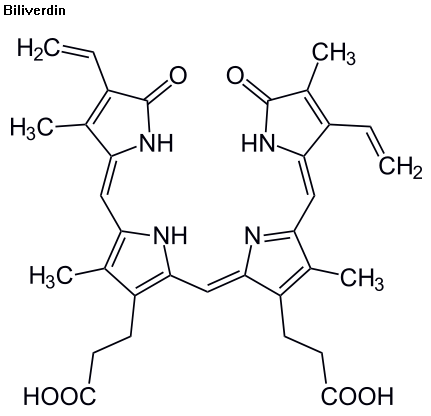
Hederin
Alpha-Hederin, C41H66O12, koronaroside A, a pentacyclic triterpenoid saponin, anti-inflammatory, antifungal, strong haemolytiic activity source
It occurs in stem bark of (Kalopanax pictus), (Nigella sativa), (Lonicera macrantha), and in (Anemone taipaiensis).
Beta-Hederin, C41H66O11, eleutheroside K, a triterpenoid saponin, antifungal, strong haemolytic activity source
Beta-Hederin occurs in leaves of ivy (Hedera helix), (Akebia quinata), and Anemoclema.
Hesperetin
Hesperetin, C16H14O6, a trihydroxyflavanone, antioxidant, antineoplastic agent, is the predominant flavonoid in lemons and oranges. source
It occurs in (Camellia sinensis).
Irilone
Irilone, C16H10O6, a methylenedioxyisoflavone, an hydroxyisoflavone, immunomodulator, antineoplastic agent, inhibits growth of malignant cells. source
It occurs in red clover (Trifolium pratense), and in Iris.
Magnolol
Magnolol, C18H18O2, a biphenyldiol, in traditional herbal medicine, antifungal, occurs in bark of (Magnolia grandiflora), and in (Magnolia officinalis). source
Matairesinol
Matairesinol, C20H22O6, a phenylpropanoid, lignan, gamma-butyrolactone, is a phytoestrogen. source
It occurs in flax seed, sesame seed, rye bran and meal, oat bran, poppy seed, strawberries, blackcurrants, and broccoli.
Menthol
1. Menthol, C10H20O, C10H19OH, dl-Menthol, (2-Isopropyl-5-methylcyclohexanol), is a white crystalline solid with a peppermint odour and taste. source
Menthol is an organic compound made synthetically or obtained from peppermint or mint oils with flavoring and local anesthetic properties.
Menthol, hexahydrothymol, a monoterpene, peppermint camphor (a methyl cyclohexanol) (mint flavour, peppermint flavour), eight sterioisomers
Menthol, mint camphorrubifacient, white crystalline organic compound resembling camphor, extracted from oil of peppermint.
This compound is solid at room temperature and melts at about 37 oC.
2. Menthol is used occurs in perfumes, menthol cigarettes, mild topical anaesthetic, and as a mint flavouring.
Menthol binds to receptors on temperature-sensin nerve cells to give cooling sensation.
Menthol is antipruritic, reduces itching, so is used for relief of minor sore throat and mouth irritation.
When added to pharmaceuticals and foods, menthol functions as a fortifier for peppermint flavours.
It has a counterirritant effect on skin and mucous membranes, thereby producing a local analgesic or anesthetic effect.
The pure solution may damage eyes and sensitize skin, but < 10 mg occurs in throat medicine lozenges is harmless.
3. Menthol occurs in the peppermint plant, a hybrid mint (Mentha X piperita) and in wild mint (Mentha arvensis).
Spearmint, "mint", garden mint, (Mentha spicata), Lamiaceae
It occurs in peppermint leaves, where the concentration of menthol increase with age.
Menthol breaks down with heating, so peppermint leaf is not usually cooked.
Myrosinase
Myrosinase enzyme, is also called glucosinolase, thioglucosidase, thioglucoside glucohydrolase.
Myrosinase enzyme is a singrinase and a sinigrase.
It can catalyze the hydrolysis of glucosinolates. glucosinolate + myrosinase → toxic compounds to deter grazing. source
glucosinolate + myrosinase → glucose + isothionate source
glucosinate + myrosinase → thiocynates (SCN-), and nitriles (R-C triple bond N) source
Ononin
Ononin, C22H22O9, isoflavone glucoside, formononetin-7-O-glucoside, Chinese medicine. source
It occurs in (Radix astragali), (Daphnia pulex), and in (Astragalus hoantchy).
idth="100%" size="2">Pallidol
Pallidol, C28H22O6, a tetracyclic stilbenoid, antioxidant, antifungal, polyphenol source
It occurs in red wine, Cissus, and in Parthenocissus.
Phenanthracene
Phenanthracene, C14H10, phenanthrin, colourless monoclinic crystals, has a faint aromatic smell, is a polycyclic aromatic hydrocarbon. source
It consists of three fused benzene rings.
It occurs in (Nicotiana tabacum), and in (Buddleja lindleyana).
Phenanthrene is a polycyclic aromatic hydrocarbon (PAH) with formula C14H10. source
Picein
Picein, C14H18O7, glycoside, has antioxidant and anti-inflammatory properties in cellular and plant studies. source
It occurs in (Rhodiola crenulata), and (Salvia officinalis).
Protodioscin
Protodioscin, C51H84O22, glycoside, steroid saponin, beta-D-glucoside, is a pentacyclic triterpenoid. source
It occurs in aphrodisiac puncture vine, (Tribulus terrestris), yams, asparagus, fenugreek, and in Dioscorea.
Pterocarpan
Pterocarpan, C15H12O2, is the simplest member of the class of pterocarpans, which occur only occurs in Fabaceae, e.g. Phaseolin, C20H10O4, phytoalexin, It occurs in French bean, (Phaseolus vulgaris), and in the stems of (Erythrina subumbrans). source
hr width="100%" size="2">
Rottlerin
Rottlerin, C30H28O8, mallotoxin, pink-brown pigment, toxic, antihelminthic, is used to treat tumours in India, and is used as silk dye. source
It occurs in Rottleria, and in Mallotus.
Silybin
Silybin, C25H22O10, silibinin, a flavonolignan, polyphenol, antioxidant, antineoplastic, anticancer, protect liver cells against toxins. source
It occurs in milk thistle, (Silybum marianum), (Silybum eburneum), and in (Aspergillus iizukae).
Tangshenoside
Tangshenoside I, C29H42O18, a pentanoic acid, occurs in (Codonopsis pilosula). source
Dang shen, and Codonopsis tangshen are plants widely and used in traditional Chinese medicine.
Leghemoglobin
Leghemoglobin, a protein that carries heme is a phytoglobin, a globular plant protein, which occurs in nitrogen-fixing bacteria, and in the root nodules of legumes.
It is an oxygen carrier and a hemoprotein, produced by legumes occurs in response to the roots being infected by nitrogen-fixing bacteria, Rhizobium.
Like haemoglobin, it is red in colour and is an essential component for nitrogen fixation by legumes.
This page was generated automatically from the original page on John Elfick's School Science Lessons website. If something looks wrong, please check the original.