Chemistry Experiments, M
Last updated 2026-10-14 by Dr John Elfick
Chemistry M
mu, micro-, one millionth, 106 (micron, micrometer, m, 106 metres
Quick links — A–Z index
6.12.0 Macronutrients in soils
Magnesium Mg
Manganese Mn
Malt E
Maltose E
Mannitol E
Marble E
Mass Weight
Matches E
Mayer's haematoxylin solution P
MDF medium density fibre board
Mechanical properties of materials E
MEHQ Methyl methacrylate
Melanoidins, Non-enzymatic browning
Melanterite, Iron (II) sulfate E
Melting E
Mendelevium Md
Mephedrone and Methamphetamine
Mercaptans thiols
Metals E
Metathesis, Double replacement reactions E
Methane-3-8-diol Methofuran
Methyl E
Mica E
6.13.0 Micronutrients in soils
Milk E
Millon's test, Tests for Proteins E
Mineral deficiencies, hydroponics
Misch metal alloy
Miscible E
Mixture E
Mohr's salt, Iron (II) ammonium sulfate E
Moisture, tests for water in plant tissue
Molisch's test, Tests for carbohydrates
Molarity E
Monosaccharides, D sugars and L sugars
Mordants E
Molecular motion, Diffusion experiments
3.16.0 Miscible liquids
Put 10 mL of water in three test-tubes.
Add 1 mL of: 1. methylated spirits, 2. glycerine, and 3. kerosene.
Shake each test-tube.
Miscible liquids can mix in all proportions.
Alcohol and water are miscible.
Glycerine and water are miscible.
Kerosene and water are not miscible, immiscible.
16.5.1.1 Prepare methane gas
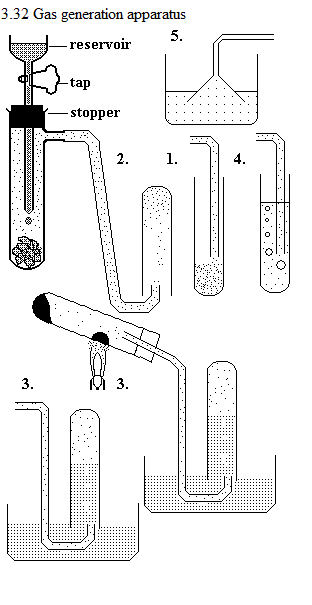
1. Mix 1 part sodium acetate with 3 parts soda lime.
Heat in a dry pyrex test tube or flask.
Collect the gas over water.
2. Heat 20 g of sodium acetate-3-water in a Pyrex test-tube until the salt becomes anhydrous.
Grind the cooled salt with an equal amount of soda lime [NaOH + Ca(OH)2] granules in a mortar and pestle. source
Mix thoroughly and place the mixture in a Pyrex test-tube.
Heat the test-tube and collect the gas over water.
Be careful! Pull out the delivery tube before heating the water stops so that water will not be "sucked back" into the hot test-tube!.
For safety, wrap the test-tube in wire gauze.
CH3COONa + NaOH → CH4 + Na2CO3 source
sodium acetate + sodium hydroxide → methane + sodium carbonate source
Magneson
Magneson, C12H9N3O4, Azoviolet, toxic so use solid ethanol solution, highly flammable source
Magneson, 4-(4-nitrophenylazo)-1-naphthol (precipitates Mg2+)
4-(4-Nitrophenylazo)resorcinol, O2NC6H4N=NC6H3-1,3-(OH)2 source
Makisterone
Makisterone, C28H46O7, callinecdysone, a phytosterol, steroid, phytoecdysteroid, is an insect moulting hormone and growth regulator. source
It occurs in (Ajuga chamaepitys), seeds of Diplolisia, (Taxus cuspidata), and in (Dysdercus cingulatus).
Maleic acid
1. Maleic acid, C4H4O4, HOOCCH:CHCOOH, cis-butenedioic acid, malenic acid, toxilic acid, cis-butane-1.4-dioic acid source
Heated maleic acid forms maleic anhydride, C4H2O3, (2,5-furandione) source
Poly(styrene-co-maleic anhydride), maleic copolymer (4: 1 mole ratio of styrene: maleic anhydride)
2. Trans-isomer of butenedioic acid, Fumaric acid, HOOCCH:CHCOOH, (in Krebs cycle), fumaric acid (fumarates), fruity taste, food acid E297
It occurs in (Fumaria officinalis), mushrooms, and in lichens.
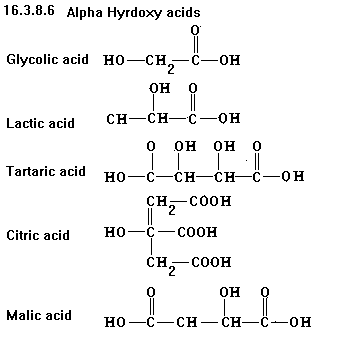
Malic acid
Malic acid, C4H60O5, HO2CCH2CHOHCO2H, DL-malic acid, 2-hydroxycarboxylic acid, green apple sour taste, acidity regulator, antioxidant source
It occurs in Rhubarb (Rheum rhabarbarum), and in Myrtle (Myrtus communis).
Malonic acid
Malonic acid C3H4O4, HOOCCH2COOH, propanedioic acid source
Malonic acid esters and salts are called malonates, e.g. malonic acid ethyl ester is called diethyl malonate, C7H12O4. source
Propanedioic acid is a strong organic acid and strong skin irritant that accumulates in some leaves, e.g. Beta vulgaris, and is used to make barbiturates.
Belousov-Zhabotinskii clock reaction, BZ reaction:: 17.2.1
Hydrogen peroxide clock reaction, Briggs-Rauscher oscillating reaction: 17.2.2
Potassium bromate with propanedioic acid, double autocatalytic reaction, oscillating reaction: 17.3.9
Malt
Malt steeped, germinated and dried grain prepared for brewing, distilling and making vinegar
Maltodextrin, C6nH(10n+2)O(5n+1), D-glucose units, made from starch, food additive
Malt extract agar medium: 1.8 P
Malt extract solution: 3.15 P
Malvidin
Malvidin, C17H15O7, an anthocyanin, (O-methylated anthocyanidin), blue pigment source
It occurs in Primula, blue pimpernel Anagallis, and in sweet pea.
Mandelic acid
Mandelic acid, C6H5CH(OH)CO2H, is an alpha hydroxy acid, a benzene a carboxylic acid, related to acetic acid. source
It is used as an antibacterial agent and as an ingredient in cosmetics.
. It occurs in bitter almond, a variety of (Prunus dulcis).
Mangiferin
Mangiferin, C19H18O11, (MGF), a xanthone, hypoglycemic, antimicrobial, anti-inflammatory, antioxidant source
It occurs in (Mangifera indica), Rigidella, and in (Polygala tenuifolia).
Mangostin
Mangostin, C24H26O6, a xanthone, phenol and an aromatic ether, with antioxidant, antimicrobial and antitumour properties. source
The plant extract occurs in some over-the-counter products, but it is not an approved drug.
It occurs in the Purple mangosteen (Garcinia mangostana), Clusiaceae.
Mannitol
Mannitol, C6H14O6, C6H8(OH)6, CH2OH(CHOH)4CH2OH, D-mannitol, a polyhydric alcohol, reduces swelling, an occurs in fruits and vegetables. source
Mannitol, from mannose or fructose, sugar in fungi and brown algae, food sweetener, Sold as D-Mannitol, Mannite, C6H14O6 source
It is used as osmotic diuretic causing increased diuresis, renal diagnostic, mostly eliminated from the body before any metabolism.
It is used to treat kidney failure and to measure glomerular filtration rate, and used in research on osmolarity.
It is freely filtered by the glomerulus and poorly reabsorbed from the renal tubule, causing an increase in osmolarity of the glomerular filtrate.
It limits tubular reabsorption of water and inhibits the renal tubular reabsorption of sodium, chloride, and other solutes, so promoting diuresis.
It elevates blood plasma osmolarity, causing increased flow of water from tissues into interstitial fluid and plasma.
E421 Mannitol, (Emulsifiers, food additives)
1.9 Mannitol yeast extract agar, (MYEA)
19.1.7 Polyhydric alcohols, d-Mannitol
4.3.18 Root nodules, Isolate micro-organisms from root nodules
Mansonone C
Mansonone C, C15H16O2, alpha-Naphthoquinone, a sesquiterpenoid, antifungal quinones cause sawdust sneezing. source
It occurs in (Mansonia altissima), and in Ulmus.
Marble
Marble, CaCO3, is granular limestone or dolomite that has been recrystallized, almost insoluble in water, and can be polished. source
Marbling is a decorative technique based on drops of acrylic paint onto paper previously soaked in aluminium sulfate.
(The term "alabaster" may refer to gypsum, or calcite, called "onyx-marble".)
Dilute hydrochloric acid with calcium carbonate, marble chips: 17.2.1
Dilute hydrochloric acid with marble chips (balloons to collect gases): 17.1.4
Gas burette, dilute hydrochloric acid with marble chips: 17.1.3
Marbelite: 18.4.13
Marble, CaCO3: 35.3.9 source
Weight of calcium in marble: 17.6.2
Mastic
Mastic, gum mastic, resin, is used as chewing gum, Greek food flavouring, and traditional medicine.
It is produced from the mastic tree, (Pistacia lenticus), Anacardiaceae.
Matches, safety matches
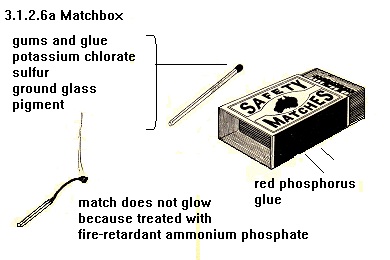
Light a match of a box of safety matches: 8.3.1
Study a match flame: 8.3.2
Matricarin
Matricarin, C17H22O5, sesquiterpenoid lactone, anti-inflammatory, antispasmotic source
It is used in popular herbal teas and it occurs in dried flower heads of Chamomile (Matricaria chamomilla).
Matricin
Matricin C17H22O5, colourless sesquiterpene lactone, precursor of anti-inflammatory chamazulene source
It occurs in Chamomille (Matricaria chamomilla) flowers, Achillea, and in Artemisia.
MDF
MDF is a medium density fibre board, which is more dense than particle board, or in laminated tubes.
It emits fine dust and formaldehyde, CH2O, when sanded. source
Measure
Measuring cups jugs spoons
2.4.16 Measuring cylinders
Meitnerium Mt
Meitnerium Table of the Elements
Meitnerium, RSC
Meitnerium Mt, Table of the elements (Lise Meitner, 1878-1968, Germany, a discoverer of nuclear fission)
Melting
5.1.12 Eutectic and dystectic mixtures
24.7.1 Latent heat, change of state, melting and boiling
5.1.14 Lower melting point alloys
24.10. Phase changes, liquid / solid, MP and FP
24.11.0 Phase changes, liquid / gas, boiling point, BP.
Experiments
3.3.0 Melting point
8.1.15 Candle wax, paraffin wax
32.2.16 Conductivity of melted substances
4.39 Melt different solids (Primary)
5.1.13 Higher MP alloys
3.63 Tests for melting point of lead, tin, and lead-tin alloys
Mendelevium Md
Mendelevium Table of the Elements
Mendelevium, RSC
(Dmitri Mendeleev, 1834-1907, Russia), radioactive actinide, produced in laboratory, tiny amounts made, few properties known
Menthofurane
Menthofurane, C10H14O, a 1-benzofurand, monoterpenoid, nematicide source
It occurs in essential oils of Pennyroyal, Peppermint (Mentha piperita), and in Watermint (Mentha aquatica).
It is highly toxic, and hepatotoxic after ingestion.
Menthone
Menthone, C10H18O, monoterpene ketone, peppermint odour source
It occurs in Native mint, (Mentha diemenica), (Minthostachys mollis), and in (Swertia japonica).
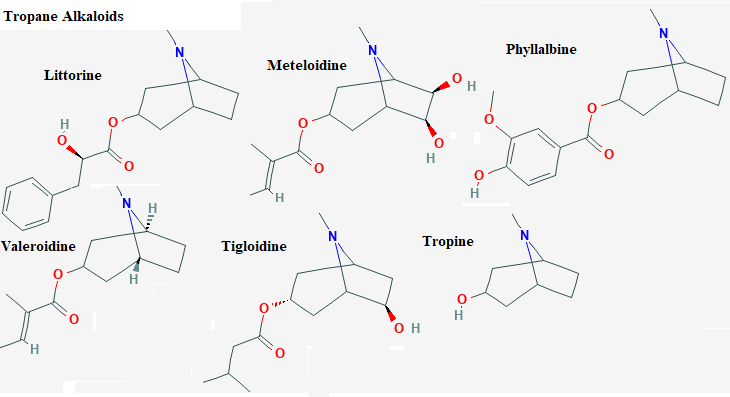
Meteloidine
Meteloidine, (C13H21NO4), teloidine, 3-tiglate source
It occurs in (Datura stramonium), and in Erythroxylum.
Methofuran
Methofuran, C10H14O, methanee-3-8-diol, benzofuran, menthoglycol, in insecticide repellents, highly toxic source
It occurs in Pennyroyal (Mentha pulegium), and Peppermint, (Mentha x piperita)
Menthoxypropanediol
Menthoxypropanediol, C13H26O3, synthetic derivative of menthol source
It occurs in Vaseline (White Petrolatum).
Menthyl acetate
Menthyl acetate, C12H22O, a monoterpenoid source
It occurs in Peppermint, (Mentha x piperita), Lamiaceae.
Menthatriene
Menthatriene C10H14, p-Mentha-1,3,8-triene, para-menthatriene, terpene, camphor, woody aroma and taste, colourless-yellow liquid, roasted parsley aroma source
It is not used for fragrances or flavours.
It occurs in Parsley (Petroselinium crispum), and in epizote or Jesuit's tea, (Dysphania ambrosioides), Amaranthaceae.
Menthylisoborneol
Menthylisoborneol, C11H20O2, has a bad odour at very low concentration, affects drinking water and causes the corky taste in wine. source
It occurs in (Phormidium tenue), and in (Streptomyces albidoflavus).
Mercaptomenthone
Mercaptomenthone, C10H18OS, a p-menthane monoterpenoid source
8-Mercaptomenthone is used in the synthesis of specialty chemicals and pharmaceuticals, the production of flavoring agents and fragrances.
Messagenin
Messagenin, C29H48O3, lupane triterpenoid, miscellaneous triterpenoid, hydroxy steroid, allelopathic source
It occurs in (Melalotus messagenin).
Metalaxyl
Metalaxyl, C15H21NO4, ridomil, is an aromatic amide, alanine derivative, an ether and a methyl ester. source
It is used as a systemic agricultural fungicide, to control Phytophthora.
It occurs in (Ganoderma lucidum).
Metaldehyde
Metaldehyde, C8H16O4, metacetaldehyde, white crystalline solid, insoluble in water, highly flammable then irritates skin and eyes, toxic by ingestion. source
It is used as "meta" fuel, fire lighter, canned heat and as a snail bait, "Esbit", "Blitzem".
Metals
Active metals: 1.17 List of active metals
Activity series of metals as reducing agents: 12.14.1
Alkali metals, Group 1: 1.1.0
Alkaline earth metals, Group 2: 1.2.0
Alkalis with metals, sodium hydroxide: 12.1.7
Alloys: 5.1.1
Assay value of precious metals: 6.5.3
Common or industrial classification of metals: 1.3.0
Decomposition of metals, metallic salts: 3.7.12
Free element metals: 2.6.0
Metal powders: 1.18 List of metal powders
Metallic bonds: 11.2.9
Metalloids: Table 2
Metals in the kitchen: 19.3.3
Metals with copper (II) sulfate solution: 12.14.2
Experiments
Different metals (Primary): 2.43
Dilute acids with carbonates, common carbonates: 12.4.5
Dilute acids with metals, hydrochloric acid: 12.4.8
Dilute acids with metals, sulfuric acid, hydrochloric acid, ethanoic acid: 12.4.9
Heat metals with oxides of another metal: 12.14.11
Heat treatment of metals: 34.7.0 annealing, quenching, tempering
Heavy metals: 7.9.31
Heavy metals: 2.7.0 (Table of elements)
Heavy metals: List of heavy metal compounds: 1.14
Prepare metallic salts, gels: 7.8.12
Nitric acid with metals: 13.3.11 (Dilute nitric acid)
Reactions of metals with ligands: 2.0
Reactions of metals as reducing agents: 12.14.0
Reactions of sodium with water: 12.73.0
Reduce metal oxides to metals with hydrogen gas: 13.3.4
Reduce metal oxides to metals, red lead to lead and oxygen: 10.10.1
Separate to metals by reduction of metal oxides, charcoal blocks: 10.10.0
Tests for metals: 12.11.3
Transition metals, transition elements: 1.12.0
Metal oxides
Metal oxides, (basic oxides, metallic oxides), copper (II) oxide (copper oxide)
Alkalis with basic oxides, copper oxide: 12.1.6
Copper (II) oxide (copper oxide): 12.13.9
Dilute acids with basic oxides: 12.4.3
Separate to metals by reduction of metal oxides, charcoal blocks: 10.10.0
Metglas
Metglas is a ribbon of an alloy, e.g. iron, boron silicon, phosphorus, formed by very rapid solidification.
It is used for joining metals by braising, transformer cores, and in pulse power switches.
Metglas can be rapidly magnetized and demagnetized.
For example, Powerlite C-Core, an iron-based Metglas, has low loss and high saturation flux density compared to other ferromagnetic materials.
Methane
Methane, CH4, is the simplest alkane, methyl CH3-, Stem name: meth-: source
It is colourless and odourless and found in natural gas and bubbles of methane in swamp water.
Fire damp, which causes explosions in coal mines, is a mixture of methane and air.
Methane is found in large quantities usually associated with petroleum.
It has largely displaced town gas produced from coal.
Methanogenic bacteria live in swamps and in the human gastrointestinal tract where they liberate methane causing flatulence.
After carbon dioxide, methane produced by bacteria in rice paddies may be the second most important greenhouse gas made by man.
Methane is a simple asphyxiant.
Methane with chlorine: 16.5.1.3 (Dangerous experiment)
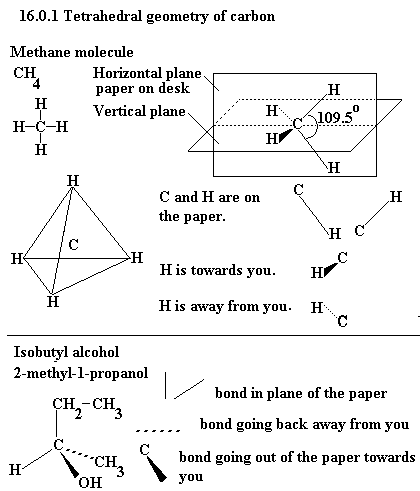
Methane: Density (Table)
Biogas: 4.1.4 Safety in school science
Bunsen burner gas: 22.1.4
Coal, coal dust explosions, "Stone dust": 35.3.2 (See: 3.)
Coal seam gas, CSG, and coal to liquid, CTL, projects: 37.1.2
Composition of the atmosphere and greenhouse gases: 37.2.2
CFCs, chlorofluorocarbons, "Freons":
Dioxins, "Agent orange", PCBs: 16.15.0
Greenhouse effect in a model greenhouse, global warming: 37.2.6
Methanides, carbides: Methanides (See: 1.)
Methane-producing bacteria: 8.5.12 (Biology)
Methane Natural gas
Methane experiments
Myristicin
Myristicin, C11H12O3, terpene, phenylpropene, methylenedioxyphenol, may enhance detoxification of carcinogenic substances. source
It occurs in anise, (in nutmeg essential oil + some in carrots, dill, fennel, and parsley essential oils.
It may cause psychotic effects of large doses of nutmeg.
It is a naturally occurring insecticide and acaricide, may defend plants against moulds.
Myristicin produces a warm, woody aroma in food.
Myristicin is psychoactive, anticholinergic, hallucinogenic, precursor to MMDA, 3-methoxy-MDA, C11H15NO3. source
Trimyristin, sedative, C45H86O6, saturated fat, 80% of nutmeg butter. source
It is separated by steam distillation.
It is used in nutmeg in eggnog, pumpkin pie, bread and butter pudding, custard.
Myristic acid, tetradecanoic acid, CH3(CH3)12COOH, (in nutmeg) source
5.5.4 Amphetamines, See: MMDA
Mace (Mystica fragrans), Lamiaceae
Nutmeg (Myristica fragrans), Lamiaceae
16.3.41 Myristicin
16.5.1.2 Tests for methane gas, burn methane
Light the gas in the test-tube with a glowing splint.
The gas burns with a clear flame.
CH4 + 2O2 → CO2 + 2H2O source
Repeat the experiment using glacial acetic acid soaked in glass wool + soda lime.
16.5.1.3 Methane with chlorine
Be Careful! Dangerous experiment!
When a mixture of an alkane and chlorine gas are stored at low temperature in the dark no reaction occurs.
At high temperatures or in sunlight, a substitution exothermic reaction, "chlorination" produces chloromethane, and HCl.
CH4 + Cl2 → CH3Cl + HCl source
Excess chlorine can produce dichloromethane, trichloromethane, and tetrachloromethane.
A mixture of chlorine and methane explodes violently in direct sunlight forming hydrogen chloride and free carbon.
BE CAREFUL! Do not mix chlorine and methane!
CH4 (g) + 2Cl2 (g) → C (s) + 4HCl (g) + energy source
Chloromethane, CH3Cl, (methyl chloride) source
Prepare methyl chloride gas: 16.4.8
Dichloromethane, CH2Cl2, (methylene chloride) source
Trichloromethane, CHCl3, (chloroform) source
Tetrachloromethane, CCl4, (carbon tetrachloride) source
16.5.1.4 Reactions of methane with steam
At 700 oC and nickel catalyst forms hydrogen and carbon monoxide.
CH4 (g) + H2O (g) → 3H2 (g) + CO(g) source
16.5.1.5 Reduce copper oxide with natural gas, methane
1. Pass natural gas, about 95% methane, over heated copper (II) oxide powder.
The reduction reaction is slow and may need twenty minutes of strong heating.
The copper does not glow with heating so it is not clear when all the copper oxide has been reduced.
4CuO (s) + CH4 (g) → 4Cu (s) + 2H2O (l) + CO2 (g) source
2. Repeat the experiment with a 1 cm cubic piece of metaldehyde in the reduction tube.
The reduction is quicker.
3. Repeat the experiment with natural gas that has bubbled through ethanol.
The reduction is quicker and a slight glow is seen as the copper oxide is reduced.
6CuO (s) + C2H5OH (l) → 6Cu (s) + 3H2O (l) + 2CO2 (g) source
16.5.1.6 Reduce copper oxide with methane
1. Pass natural gas, about 95% methane, over heated copper (II) oxide powder.
Reduction reaction is slow and may need twenty minutes of strong heating.
Copper does not glow with heating, so it is not clear when all the copper oxide has been reduced.
4CuO (s) + CH4 (g) → 4Cu (s) + 2H2O (l) + CO2 (g) source
Repeat the experiment with a 1 cm cubic piece of metaldehyde in the reduction tube.
The reduction is quicker.
3. Repeat the experiment with natural gas that has bubbled through ethanol.
The reduction is quicker and a slight glow is seen as the copper oxide is reduced.
6CuO (s) + C2H5OH (l) → 6Cu (s) + 3H2O (l) + 2CO2 (g) source
Methanol CH3OH, methyl alcohol
Methanol CH3OH, methyl alcohol source
Alcohols, phenols, thiols: 16.1.3.0
Methanol, Chromatography of chlorophyll pigments: 10.2.2.8
Catalytic oxidation of methyl alcohol: 17.3.2
Oxidation of methanol to methanal: 16.1.03
Shrinking mixture of liquids, lost volume: 3.5.4 (See: 4.)
Methanol
Substitute ethanol or methylated spirits as alternative solvent to methanol!
Do not use methanol in school science experiments.
Methanol, CH3OH, methyl alcohol, absolute, methanol pure, wood alcohol, meths, carbinol, colourless liquid, characteristic smell source
Methanol, is toxic, poisonous if drunk, damages optic nerve to cause blindness, highly flammable.
Methanol, methyl alcohol, aromatic alcohols, phenyl methanol (benzyl alcohol), C6H5CH2OH source
Low cost: from some hardware stores, auto parts stores for fuel additive, "HEET" (not ISO-HEET, isopropanol.), in rust inhibitor fuel additives
Methanol anhydrous, CH3OH, methyl alcohol, wood alcohol, clear liquid, distinct odour, volatile, flammable, poisonous, general laboratory solvent, chromatography solvent, alcohol lamp fuel, (but invisible flame!), in rust inhibitor fuel additives, methanol and illegal home-made alcoholic beverages may cause blindness. source
Use < 5 mL of 0.1 M per activity or use in a fume cupboard.
Substitute ethanol or methylated spirits as alternative solvent.
Natural gas Methane
Methane gas, CH4, natural gas (55.6 MJ / kg), marsh gas, in oil wells, colourless, odourless gas, simplest alkane, Flammable source
Methane is large proportion of coal gas (firedamp in coal mines, methane burns to form air depleted of oxygen, called blackdamp, choke damp).
Natural gas is flammable gas, 99% methane, occurring naturally underground, usually associated with petroleum.
CH4 (g) + 2O2 (g) → CO2 (g) + 2H2O(g) + heat source
Natural gas occurs usually over petroleum products so its composition varies, CH4, C2H6, C3H8. source
So natural gas usually contains about 90% methane + various proportions of ethane, propane, butane, nitrogen and carbon dioxide.
Methane is odourless, but during manufacture ethanethiol C2H5SH, which has a garlic-like odour, may is added for gas detection. source
Incomplete combustion produces carbon monoxide.
It should burn with a 90% blue flame.
Natural gas is used in heating and cooking appliances, buses and other motor vehicles and is transported by large tankers or gas grids.
In many places it has replaced town gas.
Methane safety procedures
1. Check the colour of the flame in the pilot light is yellow.
If a yellow condensate forms on the nearby wall or the bottom of cooking pots have a black smudge, ask for advice, because the gas may be contaminated.
2. Gas leaks
Cover a suspected gas leak with a soap solution.
If any bubbles form in the solution, contact the gas distribution authority and report a gas leak.
Be careful! Do not search for a gas leak with a lighted match or lighted taper, but use a soap solution.
3. Regularly check all equipment using natural gas.
Use sturdy undamaged tubing to connect Bunsen burners to gas taps.
Replace any perished tubing or tubing damaged at one end.
Check that tubing is connected securely to both the tap and the Bunsen burner before the gas is turned on.
4. Clean or replace any Bunsen burners that have damaged jets, or are known to burn back (strike back).
5. At the end of the school day, turn off the master gas switches in each laboratory.
6. Do not allow dangerous practices, e.g. turning on a gas tap and then lighting it.
7. If you smell an overpowering gas odour in a laboratory, evacuate the area rapidly, open all windows and seek assistance.
Natural gas information
Natural gas: Density (Table)
Natural gas, Flammable: 7.9.22 (See: 5.)
Natural gas, hazards: 3.8.9
Renewable energy, landfill gas: 9.4.4 (See: 2.)
Methanethiol
Methanethiol, CH4S, CH3SH, methylmercaptan, mercaptomethane, colorless gas, sharp rotten cabbage odour, very toxic by inhalation, absorbed through the skin source
It occurs in blood, brain, faeces, some nuts, and in cheese.
It is released from decaying organic matter in marshes and it occurs in some natural gases, coal tar, and crude oils.
It is used to make plastics and pesticides, and as a jet fuel additive.
People who eat asparagus, which contains methylmethionine, C6H13NO2S and Asparagusic acid, C4H6O2S2 may produce the following malodorous compounds: source
Methanethiol, methylmercaptan CH3SH, source
Dimethyl disulfide (methyl disulfide) C2H6S2, and source
Dimethyl sulfone, (methylsulfonylmethane) C2H6O2S. source
However, less than 50% of adults can smell these compounds in the urine.
Family studies suggest that the ability to produce the odorous urine is inherited as an autosomal dominant trait.
Methoxycinnamaldehyde
Methoxycinnamaldehyde, C10H10O2, PMCA, (4-Methoxycinnamaldehyde), irritant, yellow crystals source
It is used as a flavouring ingredient, herbicidal, active against germination.
It occurs in oil of tarragon (Artemisia dracunculus), (Ocimum basilicum), (Agastache rugosa), (Limnophila rugosa), (Illicium verum), and in Acorus.
Methoxyglucobrassicin
Methoxyglucobrassicin, C17H22N2O10S2, (4-Methoxyglucobrassicin), (4-Methoxy-3-indolylmethyl glucosinolate), indolyl carbohydrate source
It occurs in Swede (Brassica napus var. purple) top root bark, and in other Brassica species.
Methoxyluteolin rhamnoside
Methoxyluteolin rhamnoside, C22H22O11, 6-Methoxyluteolin 7-rhamnoside, a glycosyloxyflavone, alpha-L-rhamnoside, and a trihydroxyflavone source
It is a monomethoxyflavone, a monosaccharide derivative, antioxidant and anti-inflammatory.
4-Methoxyphenylacetone
4-Methoxyphenylacetone, C10H12O2, Anisketone, 2-Propanone, 1-(4-methoxyphenyl)-, an anise-ketone source
It occurs in anise, from anise oil, fennel oil, oil of star anise fruit (Illicium verum), and in Clausena.
Methoxyethanol
Methoxyethanol 2-methoxyethanol, methyl cellosolve
2-methoxyethanol, Solution < 5%, Not hazardous, but should not be ingested
2-methoxyethanol, ethylene glycol monomethylene ether, methyl cellosolve, toxic by all routes
2-methoxyethanol anhydrous, CH3OCH2CH2OH, ethylene glycol monomethyl ether, methyl glycol, methyl cellosolve source
Use it in a fume cupboard or use <50 mL in a well-ventilated area.
It may cause long-term nerve damage and be teratogenic, (cause birth defects).
Methyl
Methyl CH3-, the alkyl radical, -CH3, from methane CH4 source
Methyl acetate, C12H22O, methyl ethanoate, toxic by all routes, highly flammable, skin irritant, use < 50 mL or g source
It occurs in Peppermint (Mentha x piperita), Lamiaceae.
Methyl alcohol methanol
Methyl benzene, C6H5CH3, toluene, toluol, colourless liquid source
See diagram 16.8.1chd: Methyl benzene
Methyl bromide: 12.6.9 bromomethane
Methyl chloride: 16.4.8 P
Methyl chloroform Trichloroethane
Methyl cinnamate, C10H10O2, ester, white to transparent solid, flavouring agent, sweet aromatic odour, balsamic strawberry fruity flavour. source
Methyl cyclohexanol (IV) (3 isomers), fat solvent, used in soaps and detergents
Methyldopa, C10H13NO4, colorless crystals, yellow-white fine powder, almost tasteless, used to treat hypertension source
Methyl green solution: 19.00
Methyl eugenol, 16.3.38
Methyl green acid-base indicator
Methyl imidazole, 4-methylimidazole, 4-MEI, caramel colouring in cola drinks, said to cause cancer
Methyl iodide, CH3I, iodomethane, highly toxic by all routes, use < 5 mL of 0.1 M per activity, Solution < 2% Not hazardous source
Methyl isothiocyanate, Glucocapparin, C8H15NO9S2, occurs in horseradish, radish, and in caulflower. source
Methyl mercaptan: 16.9.3 methanethiol
Methyl methanoate, C2H4O2, methyl formate, toxic, flammable, fumigant, insecticide source
It occurs in (Aloe africana), and in (Coffea arabica).
Methyl orange acid-base indicator: 20.00
Methyl red acid-base indicator
Methyl red acid-base indicator: 21.00 Methyl red, acid-base indicator
Methyl violet 10B acid-base indicator
Methyl yellow acid-base indicator
Methylation, addition of methyl, (-CH3) source
16.7.4 Methylamine ionization reaction
N-Methylcytisine C12H16N2O source
Methyldopa, C10H13NO4, white powder, hypertension medicine source
N-Methylephedrine C11H17NO source
Methylene blue: 3.19a microscopy stain
Methylene bromide: 12.18.17 dibromomethane
Methylene chloride dichloromethane
12.18.5Methylene chlorobromide
Methylene iodide, CH2I2, di-iodomethane, relative density 3.32, used in ore flotation source
Polymethyl methacrylate: 3.7.24 Lucite, (Perspex)
Methyl allyl disulfide
Methyl allyl sulfide, C4H8S, CH2=CHCH2SCH3, allyl methyl sulfide source
Allyl methyl disulphide, C4H8S2, "Disulfide", methyl 2-propenyl, is an organic disulfide. source
It occurs in garlic, onion, and in Allium essential oils.
It is a flavouring ingredient, and it causes "garlic breath"!
Methyl benzoate
Methyl benzoate, C6H5COOCH3, solution almost colourless, fragrant liquid, toxic, use < 50 mL per activity source
Prepare xylene and methyl benzoate solution: 3.28
Methyl blue
Methyl blue, C37H28N3Na2O9S3+, cotton blue, aniline blue, Helvetia blue, acid blue 93, isusedas an histology and fungus stain. source
Prepare lactophenol cotton blue, (LPCB): 4.8
Methyl caffeate
Methyl caffeate, C10H10O4>, caffeic acid methyl ester, is an alkyl caffeate ester, formed by caffeic acid with methyl alcohol. source
It is antifungal and anti-microbial, and occurs in Gaillardia, and in Tanacetum.
Methyl cellulose
Methyl cellulose, methylcellulose, cellulose ethers, thickening and emulsifying agents, E461
Prepare methyl cellulose solution: 3.16
Methyl chavicol
Methyl chavicol C10H12O, estragole, phenolic, phenylpropene, 4-allylanisole, a constituent of many essential oils, flavouring agent, colourless liquid source
It has the odour of anise, is insoluble in water, and smells like liquorice.
It occurs in allspice, apple, bilberry, orange, (Persea gratissima), oil of estragon, Russian anise, basil, fennel turpentine, tarragon oil, and anise bark oil.
It occurs in basil (up to 70%), tarragon (up to 86%), fennel (up to 65%), and may cause adverse reactions in sensitive people.
It may cause cancer in high doses, so it is not recommed for ingestion by young children and pregnant women.
Methyl ethyl benzene
Methyl ethyl benzene (1-Methylethyl)benzene, cumene, isopropylbenzene, 2-phenylpropane, C9H12 or C6H5CH(CH3)2 source
It has colourless, gasoline odour, and occurs in high octane fuel.
Methyl ethyl ketone
Methyl ethyl ketone, CH3COCH2CH3, MEK, butanone, colourless volatile liquid, organic solvent, epoxy resin adhesive curing agent, sweet ethereal odour source
It is used as a paint thinner, toxic by all routes.
Methyl ethyl ketone peroxide
MEKP, C8H16O4 or C8H18O6, methyl ethyl ketone peroxide, (2-butanone peroxide), thermacure, ketonox, toxic if ingested, reacts with dangerous chemicals. source
It is used as an accelerant for resins and fibreglass, and it has a short shelf life.
Methyl isobutyl ketone
Methyl isobutyl ketone CH3)2CHCH2COCH3, 4-methylpentan-2-one, hexone, solvent
Methyl isobutyl ketone, toxic by all routes, highly flammable, BP 116 oC
Methyl isobutyl ketone, Solution or mixture < 5%, Not hazardous
Methyl isocyanate
Methyl isocyanate, Isocyanatomethane, CH3NCO or C2H3NO, highly toxic by all routes (epoxy resin accelerator), Bhopal disaster in India source
Methyl isocyanate, Solution < 5 mL or g, Not hazardous
Methyl methacrylate
Methyl methacrylate, C5H8O2, CH2=C(CH3)COOCH3, MEHQ, acrylic monomer, monomethyl ether of hydroquinone source
Methyl methacrylate, 2-methyl-2-propenoic acid methyl ester, methyl 2-methyl-2-propenoate, toxic
Methyl methacrylate, Solution < 1%, Not hazardous
Methyl methacrylate is the methyl ester of methacrylic acid which polymerizes to form polymethyl methacrylate.
Methyl methacrylate monomer, clear colorless liquid, slightly soluble in water, floats on water, heavier than air vapour and irritates eyes and respiratory system.
Methyl methacrylate may polymerize exothermically if heated or contaminated with strong acid or base. and the container may rupture violently.
It is used as a bone cement in dentistry and orthopaedic surgery.
It is used to make plastics.
Methyl-2-cyanoacrylate, C5H5NO2, toxic by all route, irritating pungent odour burns skin and eyes source
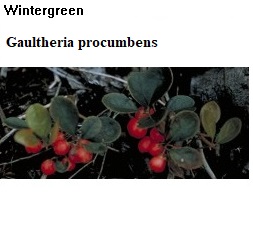
Methyl-2-hydroxybenzoate, C8H8O3, methyl salicylate, oil of wintergreen, wintergreen oil, colorless viscous liquid, sweet odour source
In Australian candy "'Minties" ("It's moments like these you need menties ...")
It occurs in wintergreens, Gaultheria.
Methyl paraben
Methyl paraben, C8H8O3, HOC6H4CO2CH3, methyl 4-hydroxybenzoate, nipagin M. source
It is used as antimicrobial preservative in cosmetics, antimicrobial food preservative, antifungal agent, allergenic testing.
It occurs blueberries, Vaccinium.
Methylated spirits
Methylated spirits, denatured alcohol, metho, meths, denatured rectified spirit
Methylated spirits is ethanol with a small amount of an adulterant added, usually 10% methanol, so as to be unfit for use as a beverage.16.6.8
Flammable: 7.9.22
Use methylated spirits to clean household windows, spectacles, laminated surfaces, rubber door seal of a refrigerator, chrome and glass bathroom fixtures
It is used to treat swimmer's ear and jellyfish stings.
Use methylated spirits + eucalyptus oil + soap flakes solution to shampoo blankets.
Use methylated spirits + lemon juice to remove ink stains, ballpoint ink stains, French polish.
Industrial methylated spirit is a mixture of nineteen volumes of ethanol of an appropriate strength with one volume of approved wood naphtha, (methanol).
It is a colourless, clear, mobile, volatile liquid, boiling at about 78°.
Test
Mix 0.1 mL with 0.05 mL of an 11% w/w solution of orthophosphoric acid and 0.25 mL of dilute potassium permanganate solution.
After 1 minute add a few mg of sodium metabisulfite and shake until the mixture is decolorised.
Add 1.5 mL of a 50% v/v solution of sulfuric acid and a few mg of finely powdered chromotropic acid sodium salt.
Shake well and heat on a water bath for 5 minutes until a deep violet colour forms.
Methysticin
Methysticin, C15H14O5, kavatin, is an alpha-pyranone, an aromatic ether, and a spasmolytic. source
It occurs in Kava, (Piper methysticum) root.
Metol
Metol, p-methyl aminophenol, 4-methyl aminophenol sulfate, photography film developer, toxic if ingested
Mica
Mica, powder, sheets
Birefringent mica: 28.188
Mica group: 35.2.12
Prepare split crystals: 3.1.15
Midazolam
Midazolam, C18H13ClFN3, Dormicum, a benzodiazepine, hypnotic, anticonvulsant source
It is an anxiolytic drug, apoptosis inducer, muscle relaxant, and sedative.
It is a general anaesthetic and a central nervous system depressant.
It has rapid onset of effects and short duration of action.
Milk
Milk agar medium: 9.2.19.2
7.2.8 Milk
Milk cheese, dairy products
Milk separator, centrifuge: 15.2.5
Milk testing and quality control: 16.0.0
A2 Milk ™: 16.3.1
Ice cream: 16.2.10
Microorganisms and milk quality: 4.3.19
Prepare casein plastic from milk: 3.100
Prepare lactic acid with milk: 12.7.10
Puberty in girls, the breast: 10.3.3 (Human milk)
Sodium bicarbonate prevents milk from going sour: 12.1.21
Tests for lipase activity: 9.3.13
Tests for milk: 16.0.0
Tests for milk fortification: 16.2.11
Yoghurts: 16.2.7
Prepare sodium polyacrylate gels (ghost crystals): 3.4.2.5.1 Disappearing milk trick
Experiment
Filter milk
Filter a quarter of a test-tube of milk.
Describe what you see.
All the milk passes through a filter paper.
Milk is a suspension of substances in water, but the particles are very small and can pass through filter paper.
Minerals
Mineral oil: 16.8.6
Mineral salts, food additives: 19.1.18 )
Minerals: 35.2.0
Mineral deficiency, Knop's solution: 9.2.3
Mineral deficiency symptoms: 6.11.0
Tenacity, minerals
Miraculin
Miraculin is a taste modifying glycoprotein extracted from the berries of the miracle fruit Synsepalum dulcificum (Richadella dulcifica).
Miraculin does not taste sweet, but binds to sweetness receptors on the tongue causing sour-tasting citrus to taste sweet for about an hour.
Miraculin glycoprotein consists of amino acids and various sugars.
Miracle fruit 1, (Synsepalum dulcificum), Sapotaceae
Miscible
Miscible liquids: 3.16.0
Liquids float on liquids, miscible and immiscible liquids: 11.4.22
Separate two immiscible liquids of different density: 3.4.9
Shake different liquids in water: 10.4.1
Mixture
Black iron oxide is a mixed base, Fe3O4: 14.8.27. source
Concentration, Molarity: 5.3.7
Mole, amount of substance: 5.3.1
Mixing and dissolving, (Primary): 4.28
Mixing liquids with water, (Primary): 4.29
Mixed oxides: 12.13.4
Mixtures, Solutions and mixtures: 5.4.0
Synthesis reactions (combination reactions, direct union of elements): 12.2.10
Experiment
Molarity.
Molarity.
Concentration: 5.2.0
Concentration and rate of reaction: 6.3.2
Molar heat capacity, (Cm): 22.5.2
Mole, amount of substance: 5.3.0
Molecules
Molecules: 7.4.42
Breakdown large molecules to small molecules
Construct molecular models: 11.2.3
Molecular gastronomy, scientific study of food preparation
Molecular mass: 5.3.8 molecular weight
Molecular models: 11.5.1
Relative molecular mass of gases, propane: 13.1.02
Size of molecules and particles: 11.3.0
Size of stearic acid molecule: 11.3.11
Molybdenum
Molybdenum Table of Elements
Molybdenum, RSC
Molybdenum, Mo, (Greek molubdaina fishing sinker, molubdos lead, when Mo was thought to be a lead salt)
Molybdenum-99, reactor-produced medical radioisotope, half-life 66 hours, used as "parent" to form Technetium-99, silvery solid, transition element
It occurs in molybdenite, (MoS2), is not affected by most acids, is used in steel alloys, in two enzyme systems xanthine oxidase and aldehyde oxidase. source
Hard water can provide some of the daily intake of molybdenum.
Molybdenite, MoS2: 35.20.28 source
Molybdenum deficiency in soils: 6.13.7
Molybdite MoO2 source
Mordants
7.6 Alizarin red S indicator solution
2.00 Alizarin yellow indicator
13.1.16 Alum
13.1.14 Aluminium sulfate
12.8.0 Chrome alum
Dyes pigments
E263 Calcium acetate
19.4.0 Household fabrics
7.25 Prepare Heidenhain iron haematoxylin solution
19.4.3 Prepare mordants
Prepare plant dyes: 3.30 (Primary)
Sodium sulfate Na2SO4 source
Tannic acid tea
Tannins, plant polyphenols: 16.2.7.0
Morin
Morin, C15H10O7, a pentahydroxyflavone, antioxidant, antihypertensive, hepatoprotective, neuroprotective, anti-inflammatory, antineoplastic, antibacterial source
It is a DNA topoisomerase inhibitor, and it assists the formation of new blood vessels.
It occurs in (Maclura pomifera), and in (Petasites formosanus).
Moscovium Mc
Moscovium Table of the Elements
Moscovium, RSC
Moscovium RSC
Movement of ions
11.5.3 Movement of ions between microscope slides
11.5.4 Movement of ions, potassium permanganate solution
11.5.5 Movement of ions, sodium sulfate solution
11.5.6 Movement of suspended aluminium powder
Mustard
16.11.0 Isothiocyanates, R-N=C=S, (old name: mustard oil) (RN=C=S), Mustards: X(CH2.CH2)2S
Mustard, brown Indian mustard, (Brassica juncea)
Mustard, black mustard, table mustard, (Brassica nigra), in Bible, Matthew 13: 31-32:
"The kingdom of heaven is like a mustard seed, which a man took and sowed in his field".
Mustard, white mustard, yellow mustard (mustard and cress sandwich)
Sinapsis alba, white mustard, yellow mustard, annual, used in mustard and cress sandwiches
herbal medicine, widely grown for seed for less pungent white mustard, fodder crop, green manure, Mediterranean region, Brassicaceae
Mustards, (XCH2CH2),2S, two haloalkyl groups bound to a sulfur atom
Mustard (XCH2CH2),2NR, nitrogen and phosphorus mustards
Use mustard powder to remove onion smells from the hands.
Mutatochrome
Mutatochrome, C40H56O, citroxanthin, a xanthophyll carotenoid, provitamin A. source
It occurs in Papaya, tomato, orange peel, pot marigold (Calendula officinalis) flowers, bitter gourd, Pprika (Capsicum annuum), and in bolete mushroom cap.
Myrcene
Myrcene, C10H16, acyclic monoterpene, colourless-yellow, oily liquid, pleasant earthy clove-like odour, insoluble in water source
The most abundant and possibly more than half terpenes occur in Cannabis, changes cell membranes for more brain absorption of cannabinoids.
Cannabis smokers would first eat ripe mango, analgesic, antibacterial, anti-diabetic, anti-inflammatory, anti-mutagenic, antispasmotic, helps sleep, tranquillizer
It occurs in Allspice (Pimenta dioica), Basil (Ocimum basilicum), Bay tree (Laurus nobilis), Cannabis (Cannabis sativa), and in Hops, (Humulus lupulus).
Mango (Mangifera indica), Myrcia sphaerocarpa, Parsley (Petroselinium crispum), Verbena, Wild thyme (Thymus serphyllum), Ylang ylang (Cananga odorata)
Myrcenol
Myrcenol, C10H18O, a monoterpenoid, a tertiary alcohol, fragrance, It occurs in Lavender oil, Hops (Humulus lupulus), (Basella alba), and in (Citrus reticulata). source
Myricyl alcohol
Melissyl alcohol, C30H62O, 1-Triacontanol, 1-Hydroxytriacontane, very long-chain primary fatty alcohol, plant growth regulator source
It occurs in plant cuticle wax, in (Trifolium repens), (Brassica oleracea), Melicope, (Camellia sinensis), and in Jatropha mollissima.
Myristic acid
Myristic acid, C14H28O2, tetradecanoic acid, saturated long-chain fatty acid, straight-chain saturated fatty acid, oily white crystalline solid source
It occurs in humans, palm oil, coconut oil, and in butter fat.
Myrtenal
Myrtenal, C10H14O, a caraldehyde source
It occurs in cumin seed, juniper berry, pepper, peppermint, scotch spearmint, (Magnolia officinalis), and in (Helichrysum taenari).
This page was generated automatically from the original page on John Elfick's School Science Lessons website. If something looks wrong, please check the original.