Chemistry Experiments, H
Last updated 2026-07-13 by Dr John Elfick
Chemistry H
Hypochlorite ion: ClO-, Chromium (III) hypochlorite
Quick links — A–Z index
Hafnium, Hf
Handling and transferring chemicals, E
Hardness, E
Hazards, Health hazzards
Herniarinzzz
Heroinzzz
Hess's law, Energy of reactions
Hexa-
Hofmann voltameter, Electrolysis
Hot ice, frozen CO2 source
19.5.0 Household products
Hydrazine, N2H4 source
Hydrogen bromidebr> Hydrogen cyanide
Hydroxybutanoic acid, Malic acid
Hydroxypropionic acid, Lactic acid
Hygroscopic, E
3.4.9 Handling and transferring chemicals, Adding chemicals to containers
When adding chemicals to a reaction or container:
1. Students should not touch any chemical, but use a spatula or gloves, except for a few experiments when students are told to feel the texture of chemicals or minerals to determine whether they are crystalline or amorphous.
If students do touch any chemical, they should immediately wash their hands with soap and water.
2. The best way to add chemical to a container is to pour the powdered or crystalline chemical into a creased rectangle of clean paper, then tip the chemical from this paper held in a V- shape.
3. When taking chemicals from a container, after removing the stopper, keep holding the stopper in one hand so that you can replace it immediately afterwards.
This method ensures that the chemical does not have unnecessary exposure to air and that the correct stopper is replaced.
4. Transfer liquids through a funnel or pour the liquid slowly down a glass rod.
5. Fill pipettes with a pipette-filler and not by sucking by mouth.
3.42.0 Hydrogen chloride / hydrochloric acid
Be careful!
Prepare hydrogen chloride gas, HCl, in a fume hood!
Hydrogen sulfide, H2S source
Hydrogencarbonate, (-HCO3-) source
33.3.4 Lemon battery, lemon cell, electricity from a lemon
3.74 Metals displace hydrogen from acids
19.4.22 Packaging gases, E949
12.3.0.4 pH
13.3.15 Prepare hydrogen gas
12.15.3 Reactions of metals with steam
12.15.1 Reactions of metals with water
13.2.24 Tests for hydrogen chloride:
12.11.3.5 Tests for substances with dilute hydrochloric acid
13.3.14 Prepare hydrogen chloride / hydrochloric acid
13.3.27 Prepare hydrochloric acid with sodium chloride
3.7.5 Decomposition of chlorides
12.19.5.0 CFCs, chlorofluorocarbons, "Freons"
Density of gases, Hydrogen chloride, (Table)
3.8.6 Hydrogen chloride, anhydrous, hazards
Tests for hydrogen chloride: 13.3.24
Experiments
31.1.3 Aluminium foil precipitator
3.6 Ammonium chloride smoke screen
10.1.3 Diffusion rates of ammonia and hydrogen chloride gases
17.5.5 Effect of temperature on chemical equilibrium
14.8.30 Heat hydrated iron chlorides
12.13.8 Phosphorus trichloride with water
12.19.8.3 Prepare iron (III) chloride, (See 2.)
12.20.2 Prepare tin (IV) chloride
12.19.8.1 Reactions of sodium chloride
12.18.5.2 Sulfuric acid displaces acids from salts
18.6.0.3 Tests for air pollution from burning refuse
13.3.24 Tests for hydrogen chloride
12.11.3.6 Tests for gases with hot concentrated sulfuric acid
12.14.14 Zinc with copper in sulfuric acid
12.2.1 Acid-base reactions, (hydrogen ions, H+)
12.1.7 Alkalis with metals, sodium hydroxide, (See 2.)
13.3.4 Aluminium with acids
13.3.5 Aluminium with sodium hydroxide
13.3.2H Aluminium chloride with water
Coal gas, (50% hydrogen gas)
12.4.8 Dilute acids with metals, hydrochloric acid, H2 (g) source
8.0.0 Direct union of elements to form compounds, H2 + source
12.5.5 Drain cleaners
15.5.4 Electrolysis of water
7.9.22 Flammable, (See: 4.)
7.9.28 Fuel cell, H2 source
33.1.3.11 Galvanic cell, Voltaic cell
14.1.10 Heat of reaction, potassium with diethyl ether
4.47 "Human" water (hydrogen boy, oxygen girl), (Primary)
33.1.7.5 Lemon cell
12.2.3.3 Metals displace hydrogen from acids
19.1.20 Packaging gases, E949
12.3.6 pH
12.15.3 Reactions of metals with steam
12.15.1 Reactions of metals with water
12.11.3.5 Tests for substances with dilute hydrochloric acid, (See: 2.)
13.1.3 Hydrogen sulfide
Acids react with sulfides to produce hydrogen sulfide, (rotten egg gas), and a salt.
Be careful!
Prepare hydrogen sulfide in a fume cupboard!
Density of gases, Hydrogen sulfide, (Table)
19.1.1 Hair products
3.8.7 Hydrogen sulfide, hazards
3.3.2 Hydrogen sulfide waste bottle
18.2.2.2 Iron in drinking water
8.4 Oxygenic phototropic bacteria
12.3.9 Acids with salts (See: with sulfides)
17.7.3 Hydrogen peroxide as oxidizing agent
15.5.7 Hydrogen sulfide as reducing agent
18.6.5 Smell of water, hydrogen sulfide, (rotten egg gas)
3.7.16 Sulfides, hazards
16.2.8.2 Sulfides: RSR (Where R is not H.)
Experiments
12.2.10.5 Heat iron with sulfur, synthesis reaction → FeS source
12.19.6.1 Prepare hydrogen iodide, HI (See 5.)
13.3.16 Prepare hydrogen sulfide
12.18.2.0 Prepare sulfides S2-, (See 3.)
5.32 Protect mangroves (See 5. ) (Primary)
18.6.5 Smell of water, hydrogen sulfide
13.3.26 Tests for hydrogen sulfide solution
11.3.3 Tests for solubility, prepare group analysis
12.11.3.5 Tests for substances with dilute hydrochloric acid
9.9.18.6 Use of freshwater algae for hydroponics
19.5.0 Household items
Baby powder | Baking powder Baking soda | Bleach | Boracic acid | Borax | Breakfast cereal | Bricks (house bricks)
Camphor | Cat litter (Obsidian) | Caustic soda | Cloves | Coffee tins | Copper II sulfate | Corn oil | Cornstarch (cornflour) | Cornmeal | Crayons | Creosote
Eggs | Epsom salts | Eucalyptus oil
Lead pencil | Lemon juice | Lime sulfur, CaSx | Linseed oil | Lip balm
Magnesia | Methylated spirits | Milk | Mustard
Paper towels | Penetrating oil, (WD-40) | Pepper | Putty
Salt NaCl | Soap | Sodium hydroxide
Talcum powder | Tea | Tennis balls | Toothpaste | Toothpicks | Turpentine
Washing soda | Water |
34.7 Heat treatment of metals
Heating steel material to "red heat" then cooling it slowly is called annealing.
Putting steel material heated to red heat into cold liquid to cool it quickly is called quenching.
Reheated steel material is quenched to the temperature slightly lower than "red heat" temperature, then cooled slowly, called tempering.
Annealing, quenching and tempering are heat treatings to change rigidity, brittleness and toughness, by changing the arrangement of iron atoms.
Annealing is a form of heat treatment to soften a metal and make it easier to work.
Annealing is often used to soften steel to relax its inner stress to change its shape by forging, pressing and machining.
Experiment
34.7.1 Annealing
34.7.2 Heat treatment of needles
34.7.3 Heat treatment of razor blades or steel knitting needles
34.7.4. Heat treatment of steel needles, annealing, quenching, tempering
34.7.5 Quenching
34.7.6 Tempering
Hafnium, Hf
Hafnium, Hf
Hafnium, Table of the Elements
Hafnium, RSC
Hafnium, Hf (Latin Hafnia, former name of Copenhagen), transition metal, abundant, space science heat resistance
It occurs in zirconium minerals, and in filaments for electron emission.
Hafnium (IV) n-butoxide, C16H36HfO4 source
Hafnium (IV) oxide, HFO2, in computer transistors, smart phones source
Hafnium (IV) trifluoromethanesulfonate hydrate, C4F12HfS4O12.xH2O source
Hardness
1. Hard substances
To "harden" cement is to let it become "rock hard".
Hooke's law: When a big stress results in a small strain, the material is "hard".
34.10 Mohs' scale of hardness
34.8.5 Hooke's Law, elastic limit, stress and strain
5.1.4 Case-hardening, (of steel)
3.62.0 Tests for hardness, lead, tin, and tin alloys:
2. Hardness of water, hard water
12.2.0 Hardness in water, water hardness
18.4.11 Magnesium hardness, (Swimming pools)
12.3.0 Tests for water hardnes
18.5.6 Total dissolved solids, (TDS), water hardness, scale
Hassium, Hs
Hassium, Hs
Hassium, Table of the Elements
Hassium, RSC
Hassium, Hs (Hassia, laboratory at Hesse, Germany), radioactive transuranic element
Hazards, Health hazards, Harmful substances
Hazards, Health hazards, Harmful substances
19.2.0 Food allergies and intolerances, "hyperactive"
7.3.0 Radiation hazards
Heat
Heat (Physics)
34.7.0 Heat treatment of metals. (Physics)
Heat of
Heat of combustion, bomb calorimeter: 22.5.6
Heat of displacement reaction: 14.1.6
Heat of crystallization: 24.10.9
Heat of neutralization with a calorimeter: 14.1.5
Heat of neutralization titration: 12.11.4.6
Heat of reaction: Heat of reaction
Heat of solution: 3.6.1
Tests for heat
Heat-sensitive paper: 12.6.9, (See: 10)
Heat of reaction, chromium (VI) oxide with ethanol: 14.1.9
Heat of reaction, potassium permanganate with ethanol: 14.1.8
Heat of reaction, potassium permanganate with glycerol: 14.1.7
Heat of reaction, potassium with diethyl ether: 14.1.10
Heat up
Heat up, apply heat to something
Heat and temperature: 22.2.3
Prepare carbon dioxide,: 3.4.0
Heat citric acid to form carbon: 12.6.2
Heat copper wire with iodine crystals: 12.2.10.2
Heat different substances (Primary): 2.21
Heat nitrogen tetroxide: 17.5.4
Heat fats: 3.9.7
Heat food with copper (II) oxide: 9.1.8
Heat hydrated iron chlorides: 14.8.30
Heat hydrogen bromide: 12.19.9.3a
Heat hydrogencarbonates: 3.4.4
Heat steel wool with iodine crystals: 12.2.10.6
Heat iron with sulfur: 12.2.10.5
Heat nitrogen tetroxide: 17.5.4
Heat sodium bicarbonate: 12.1.17
Heat sodium carbonate crystals: 12.1.24
Heat sodium thiosulfate crystals: 12.1.39
Heat substances, Tests for substances by sublimation, melting, decrepitation: 12.11.3.4
Heat substances that decompose when heated: 3.2.1
Heavy metals
Heavy metals: 7.4.33
Heavy metals: 2.7.0 (Table of elements)
List of heavy metal compounds: 1.14
Hederagenin
Hederagenin, C30H48O4, a sapogenin, occurs in ivy (Hedera helix). source
Helenalin
Helenalin, C15H18O4, a sesquiterpene lactone, a cyclic ketone, a secondary alcohol, highly cardiotoxic, anti-inflammatory source
It occurs in (Arnica montana), (Psychotria rubra), (Helenium autumnale), and in smallhead sneezeweed (Helenium microcephalum).
Helenalin inhibits melanin production in melanocytes and causes arnica sensitization.
Helicoside
Helicoside, C29H36O17, phenylpropanoid, monomethoxyflavone, enzyme activities, anti-inflammatory, anti-asthmatic source
It occurs in Che Qian Zi, (Plantago asiatica)
Helium, He
Helium, He
Helium, Table of the Elements
Helium, RSC
Helium, He, (Greek helios 'sun', because emission line in sun spectrum), colourless, odourless, lightest noble gas, low cost, from party supplies shops (e.g. helium balloons)
Helium is a non-metal noble gas (inert gas), at room temperature and pressure.
Helium has no known compounds.
Helium has separate small molecules, 0.0005% of the air, superfluid at 2.2 K, lowest boiling point, and is obtained from natural gas wells.
It is used in diving gases, party balloons.
Large concentration of helium can asphyxiate, and change of pitch of voice due to increased velocity of sound.
Helium is a simple asphixiant, however young people have become ill or have died after inhaling the contents of helium party balloons.
Party balloons may travel over the oceans to fall and choke sea animals.
Helium cannot be prepared in the laboratory, despite incorrect advice that "homemade helium" for balloons can be made by mixing vinegar with baking soda, a preparation for carbon dioxide.
Inert properties and high heat transfer make helium useful for welding as a shielding gas to protect the weld from oxygen and water when welding Cu, Mg alloys, and Al.
Helium has the lowest critical temperature, -268 oC.
Packaging gas, propellant gas E939. vapour density 0.14 compared to air
Atomic number: 2, Relative atomic mass: 4.00260, RD 0.147(4 K), MP = -270 oC, BP = -269 oC.
Specific heat capacity: 5.19 × 10³ J kg-1 K-1
Balloon as a sound lens, acoustic lens: 26.3.1
Balloon electroscope: 31.2.2
Critical point, critical temperature: 24.1.2, (See: Helium)
Gas, Molecular weight, Density of gases, Helium (Table)
Helium balloon in a motor vehicle: 16.3.16
Helium, E939 Helium, (packaging gas, propellant)
Hentriacontane
Hentriacontane, C31H64, CH3(CH2)29CH3, n-Hentriacontane, Untriacontane, long-chain alkane hydrocarbon, antitubercular source
It occurs in beeswax, Peas (Pisum sativum), Gum arabic (Acacia senegal), (Gymnema sylvestre), and European black elderberry (Sambucus nigra).
Hentricontanol, Hentriacontan-1-ol, C31H64O, primary alcohol) source
Heparin, C26H41NO34S4
Heparin, C26H41NO34S4 source
Heparin, sulfated glycosaminoglycan, injectable anticoagulant
Heparin sulfate is a glycosaminoglycan covalently attached to core proteins to form proteoglycans.
It is produced primarily by mast cells in connective tissue and basiphils.
Enoxaparin, C26H40N2O36S5, low molecular weight injectable heparin, Xaparin source
Ethyl butyl ketone, C7H14O
Ethyl butyl ketone, C7H14O source
Ethyl butyl ketone, 2-Heptanone, C7H14O, CH3(CH2)4COCH3, ethyl butyl ketone source
It is a colourless, flammable liquid, mild banana-like fruity odour, slightly soluble in water, soluble in organic solvents, irritant, floats on water.
It is used as solvent, ingredient in fragrances, synthetic flavouring, and occurs in garden mint.
Hexa-
Hexachloroplatinic acid, H2PtCl6.6H2O source
Hexadecan-1-ol: Cetyl alcohol
Hexadecanoic acid, CH3(CH2)14CO2H, palmitic acid, saturated fatty acid, palm oil, palm kernel oil, coconut oil, animals and plants source
Hexahydrobenzene, C6H12, cyclohexane, hexahydrobenzene, colourless liquid, ethereal odour, toxic, Highly flammable source
Hexahydrophenol, C6H11OH, cyclohexanol, cyclohexyl alcohol, hexahydrobenzene, hexalin, toxic source
Hexahydrothymol, C10H20O, menthol source
Hexamethyl diisocyanate, OCN(CH2)6NCO, HMDI, 1,6-diisocyanatohexane, polyurethane adhesive or surface coating, irritant source
Hexanal, C6H12O, hexaldehyde (used to prepare fruity flavours) source
16.4.8, Hexane C6H14 source
Hexanoic acid, C6H12O2
Hexanoic acid, C6H12O2 source
Hexanoic acid, caproic acid, hexoic acid, hexylic acid, C6H12O2 or CH3(CH2)4COOH, straight-chain medium-chain saturated fatty acid source
It is a white crystalline solid or colourless to light yellow oily liquid, unpleasant odour like cheese, irritates skin, eyes and mucous membranes, toxic.
It is used to make perfumes, as an acidulating agent in foods, animal fats and oils.
It occurs in goat fat, (Cocos nucifera), and other palm oils, as glucose ester in Datura, non-toxic medium chain triglycerides, foods, drugs, and cosmetics.
Hexanol, C6H14O
Hexanol, C6H14O source
Hexanol, C6H14O, CH3(CH2)5OH, CH3(CH2)5OH, n-hexanol, hexyl alcohol, n-hexyl alcohol, 1-hexanol, (pharmacy preparations), toxic, flammable source
Hexan-1-ol, Solution < 25% Not hazardous
Hispidulin, C16H12O6
Hispidulin, C16H12O6 source
Hispidulin, Dinatin, Scutellarein 6-methyl ether, a trihydroxyflavone, apoptosis inducer, anti-inflammatory, antioxidant, anticonvulsant, antineoplastic, irritant.
It occurs in (Citrus sidachii), (Digitalis orientalis), (Grindelia argentina), (Arrabidaea chica), (Saussurea involucrate), (Crossostephium chinense), and in Artemisia.
Holmium, Ho
Holmium, Ho
Holmium, Table of the Elements
Holmium, RSC
Holmium, Ho, (Latin Holmia, 'Stockholm'), silver metal lanthanide, rare earth
Holmium chips, foil, ingot, Ho
Holmium (III) acetate hydrate, C6H9HoO6.xH2O source
Holmium (III) chloride hexahydrate, Cl3Ho.6H2O source
Holmium (III) nitrate pentahydrate, HoN3O9.5H2O source
Holmium (III) trifluoromethanesulfonate, C3F9HoO9S3 source
Honey
Density of different liquids: 11.4.7
Flat cork, wax and wood in different liquids: 11.4.11
9.2.7 Osmosis with honey on bread
Rayleigh-Taylor instability: 13.6.2
9.3.0 Bees
Experiments
Viscosity of honey: 17.3.20
Sampling yeast population: 9.7.7, (See: 1.)
Use honey to condition hair and prevent split ends and frizzy hair, dress wounds and burns.
Honey with lemon soothes sore throat and relieve coughing.
Substitute honey for cooking sugar.
Hernandulcin
Hernandulcin, C15H24O2, sesquiterpene, 1000 X sweeter than sucrose, occurs in sweet plant (Lippia dulcis) and Aztec sweet herb, (Phyla scaberrima). source
Honokiol
Honokiol, C18H18O2, small-molecule polyphenol, antiangiogenic, antiinflammatory, antitumor, central muscle relaxation, inhibits thrombosis source
It occurs in Magnolia with other polyphenols.
It has a spicy odour and is used in Asian herbal teas, e.g. houpo and saiboku-tu.
It used in traditional Asian herbal medicine, as an analgesic, and to treat anxiety.
Horseshoes
Horseshoes, are made from from a low carbon steel alloy (A-36), MP about 1500 oC
Household, home, kitchen items
Household, home, kitchen items
Beauty and skin care products: 19.1.0
Cooking: 19.2.0
Home chemicals 1: 19.3.0
Household chemicals 2: 19.1.0
Household fabrics: 19.4.0
Household products: 19.5.0
Microwave cooking: 19.2.7.2
Hanksite
Hanksite, Na22K(SO4)9(CO3)2, sodium potassium sulfate carbonate, salty taste, source
Heterodendrin
Heterodendrin, C11H19NO6, cyanogenic glycoside source
It occurs in Acacia and Rhodiola.
Hexene
Hexene, C6H12, CH2=CH(CH2)3CH3, Hex-1-ene, 1-hexene, olefin, toxic, flammable source
It is a clear colourless liquid, smells like petroleum, and is used as a solvent and paint thinner, and to make polyethene.
It occurs in (Lonicera japonica) and in (Oryza sativa).
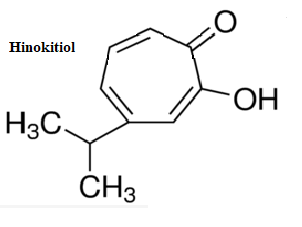
Hinokitiol
Hinokitiol, C10H12O2, monoterpenoid, antifungal and anti-bacterial, occurs in western red cedar (not a true cedar, Cedrus), (Thuja plicata). source
HPLC
HPLC, High-performance liquid chromatography, high-pressure liquid chromatography, used to separate and identify components in a mixture
may show concentration, e.g. 16.3.6.7 [6]-Gingerol = 95% (HPLC)
Humulene
Humulene, C15H24, alpha-caryophyllene, occurs in hops oil, (Humulus lupulus), and in lipstick tree, (Bixa orellana) source
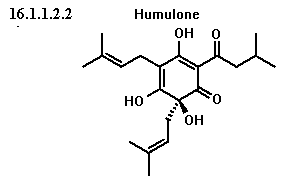
Humulone
Humulone, C21H30O5, (α-lupulic acid), cyclic ketone, an aromatic ketone, bitter, antibacterial, antioxidant source
It occurs in resin of hops (Humulus lupulus).
Hydrazine, N2H4
Hydrazine, N2H4 source
Hydrazine, diazine, toxic by all routes
Hydrazine hydrate, NH2NH2.xH2O, hydrazine monohydrate, toxic source
Hydrazine hydrate, Solution < 1%, Not hazardous
Hydrazine hydrochloride, NH2NH2.HCl hydraziumchloride, hydrazine monohydrochloride, toxic by all routes source
Hydrazine sulfate, NH2NH2.H2SO4, hydrazium sulfate, toxic, reacts violently with oxidizing agents source
Hydriodic acid, HI
Hydriodic acid, HI
Hydriodic acid, HI, conc. 5.5 M, solution <5 M (47%), toxic by all routes
Hydriodic acid is pure HI in water, but may be sold as 57%by mass Hydriodic acid, Solution < 1%, Not hazardous.
Hydrobromic acid, HBr
Hydrobromic acid, HBr
Hydrobromic acid, bromic acid, hydrobromic acid solution, hydrogen bromide solution, 9 M (48%), toxic by all routes
Hydrobromic acid, Solution > 2M (10%), Not hazardous
Hydrochloric acid, HCl
Hydrochloric acid is an aqueous solution of hydrogen chloride gas.
Hydrochloric acid dissolves most metals to form chlorides and hydrogen gas.
Hydrochloric acid is available as 5.0 M, 4.0 M, 2.0 M, 1.0 M and 0.5 M volumetric solutions.
Minimum assay 36% solution density 1.17 g cm-3 at 20 oC
36% "ANALAR" solution
Hydrochloric acid is sold as "muriatic acid", and used in the building trades.
Hydrochloric acid, HCl: 13.3.6
Hydrochloric acid, (COR 1789), hydrochloric acid, 37%, spirits of salts, muriatic acid, spiritus salis
Hydrochloric acid, concentrated, 10 M, 35%, 200 mL of concentrated solution for 1 litre of 2 M solution
Hydrochloric acid, 37%, AR grade, CAS Number 7647-01-0, Molecular Weight 36.46 (1.19 g/mL, 12.08 M)
Hydrochloric acid, concentrated, > 10 M (32%), toxic, Corrosive, lung irritant
Hydrochloric acid, < 10 M (35%) > 4 M (14%), toxic, Corrosive, lung irritant
Hydrochloric acid, < 4 M (14%) > 0.2 M (1%), toxic, Corrosive, lung irritant
Hydrochloric acid, < 0.2 M (1%), Not hazardous, skin irritant
Hydrochloric acid, 3 M, dilute 258 mL of 11.6 M acid to 1 litre of water, 35% hydrochloric acid)
Hydrochloric acid, 4 M, dilute 400 mL of 10 M acid to 1 litre of water
Hydrochloric acid test, effervescence test: 35.1.8,
Aqua regia, "royal water", dissolves gold (3 vols concentrated HCl + 1 vol concentrated HNO3) source
Copper (II) sulfate solution with concentrated hydrochloric acid, ligand substitution: 1.1
Dilute hydrochloric acid with marble chips, balloons: 17.1.4
Dilute HCl with:
Prepare hydrogen chloride / hydrochloric acid: 3.42.0
Tests for hydrogen chloride: 13.3.24
Prepare hydrochloric acid with sodium chloride: 13.3.27
Reverse colour change, KI and HCl: 17.3.5
Sodium thiosulfate with dilute hydrochloric acid: 12.1.47
Titrate dilute HCl with NaOH, using a burette 1. 12.8.4.0
Titrate dilute HCl with NaOH, using a burette 2. 12.8.4.1
Tests for substances with dilute hydrochloric acid: 12.11.3.5
Tests for hydrogen chloride: 13.3.24
Tests for hydrogen gas: 13.3.25
Tests for hydrogen sulfide solution: 13.3.26
Dilute HCl with
Acids with sodium carbonate: 12.1.25
Calcium carbonate: 12.3.9.1
Galvanic cell, Voltaic cell: 33.84.1
Heat of neutralization reactions: 3.82
Hydroxides: 12.3.7.2
Metals, acids with metals: 12.3.2
Sodium carbonate: 12.3.9.1
Sodium hydroxide: 12.8.2
Sodium hydroxide, heat of neutralization: 14.1.5.1
Muriatic acid, HCl
Muriatic acid, HCl
Muriatic acid, HCl, hydrochloric acid, spirits of salt, acidum salis, 37% muriatic acid (about 12 M)
It is sold in hardware shops, used by builders for clogged drains and about 30% for cleaning or etching concrete.
Use about 15% for lowering swimming pool pH.
(Muriate of potash, KCl, is a fertilizer.)
Rates of reaction of HCl
Concentration of reactants, HCl with Mg: 17.2.2.1
Count bubbles, dilute HCl with Zn: 17.1.1
Gas burette, dilute HCl with marble chips: 17.1.3
Magnesium with HCl: 17.5.4.1
Particle size, dilute HCl with marble chips: 17.2.1
Volume of gas, dilute HCl with Zn: 17.1.2
Hyaluronic acid, (C14H21NO11)n
Hyaluronic acid, (C14H21NO11)n source
Hyaluronic acid, Hyaluronan, acidic, mucopolysaccharide, glycosaminoglycan, long unbranched polysaccharide, repeating disaccharide units, anionic
It occurs in nonsulfated glycosaminoglycan, in plasma membranes, in cartilage, and is used for wound healing.
Hyaluronic acid sodium salt is obtained from from bovine vitreous humor.
(It fills the space between the lens and the retina within the eye.)
Hydrocortisone/a>
Hydrocortisone/a>
Hydrocortisone, C21H30O5, the hormone cortisol, a glucocorticoid secreted by the adrenal cortex source
It promotes protein catabolism, gluconeogenesis, capillary wall stability, renal excretion of calcium, suppresses immune and inflammatory responses.
Synthetic hydrocortisone is used to treat insufficient activity of the adrenal glands, inflammation, allergy, collagen diseases, asthma, shock.
Hydrogen, H
Hydrogen, H
Hydrogen, Table of the Elements
Hydrogen, RSC
Deuterium, isotope, 2H
11.2.5 Hydrogen bonds
11.2.8 Liquids with different viscosity, hydrogen bonds
13.3.4 Hydrogen gas
3.8.5 Hydrogen gas, hazards
11.2.5 Hydrogen bonds
13.3.25 Tests for hydrogen gas
Tests for hydrogen gas: 13.3.15
Hydrogen bromide, HBr
3.42.0 Hydrogen chloride / hydrochloric acid
13.3.3 Hydrogen cyanide
Hydrogen sulfide, H2S source
12.19.6.1 Hydrogen iodide, P
12.6.0.0 Hydrogen sulfate ion
3.5.1 Hydrogen sulfide waste bottle
Hydrogencarbonate, (-HCO3-) source
Hydrogen bromide, HBr
Hydrogen bromide, HBr
Heat hydrogen bromide: 12.19.9.3a
Prepare hydrogen bromide: 12.19.9.3
Reactions of hydrogen bromide: 12.19.9.4
Tests for substances hot conc. H2SO4: 12.11.3.6 source
Hydrogen fluoride, HF
Hydrogen fluoride, HF
Hydrogen fluoride, hydrofluoric acid, conc. 29 M, Very toxic, Not permitted in schools
Prepare hydrogen fluoride, HF: 12.19.7.1
Halide salts with hot conc. H2SO4: 12.19.3.1 source
Hydrogencarbonate, (-HCO3-)
Hydrogencarbonate, (-HCO3-) source
Bicarbonate, hydrogen carbonate, HCO3-, sodium hydrogen carbonate, bicarbonate of soda indicator solution source
3.30.2Decomposition, hydrogen carbonates
Dilute acids with CaHCO3: 12.3.10.1 source
Dilute acids with NaHCO3: 2.3.10.0 source
Heat a hydrogen carbonate, NaHCO3: 12.16.4 source
Prepare carbon dioxide, NaHCO3: 3.34.2.0 source
Tests for bicarbonates: 12.11.5.4
Thermal decomposition, bicarbonates: 3.30.2
Hydrogenation
13.3.4 Hydrogen gas
Hydrogenation, cis-trans fatty acids: 3.9.8
Formation of alkanes: 16.4.1.1
Hydrolysis of
Ammonium chloride: 12.10.3.2
Antimony chloride, reversible reactions: 17.5.5.2
Bismuth chloride, reversible reactions: 17.5.5.1
Esters, Hydrolysis of esters: 16.5.4
Ethyl acetate, autocatalytic hydrolysis: 17.3.15
Hydrolysis of starch by dilute hydrochloric acid: 9.5.3
Hydrolysis of starch by salivary amylase: 9.5.4
Hydrolysis of sucrose by dilute acids: 9.5.3, (See; 4.)
Iron (III) chloride, iron chloride: 12.10.5
Salts: 12.10.3
Sodium hydrogen carbonate: 12.10.3.1
Starch by dilute hydrochloric acid: 9.5.3
Starch by salivary amylase (ptyalin): 9.5.4
Tests for hydroxides: 12.11.5.11
Hydroxides
Hydroxide , HO-, hydroxide ion, hydroxyl ion, hydroxide anion, an oxygen hydride, a conjugate base of a water.
An hydroxide is a compound of a metal with the hydroxide ion, OH-.
Hydroxyl group -OH functional group (sodium hydroxide, Na++ OH-)
Alkalis and amphoteric oxides and hydroxides: 12.1.5
Alkalis with salts, hydroxides: 12.1.8
Decomposition of hydroxides: 3.30.3
Dilute acids with hydroxides, Mg(OH)2: 12.3.6 source
Dilute acids with hydroxides, NaOH: 12.3.7
Hydroxide (hydroxo), O-H-, monodentate ligand
Prepare hydroxides by precipitation: 12.1.33
Prepare hydroxides with ammonia solution: 3.33.2.1
Tests for ammonia, ammonium ions, "NH4OH": 12.11.3.11 source
Tests for hydroxides: 12.11.11
Tests for hydroxyl ions, ammonia solution: 13.6.5
Thermal decomposition of hydroxides: 3.30.3
Hydronium ion, H3O+
Hydronium ion, H3O+ source
Hydronium ion (hydroxonium ion): 7.4.34
Hydronium ion, Acid-base reactions: 12.2.5.0
Hydronium ion, Oxides and Periodic Table: 12.17.1.1
Hydrogen bonds: 11.2.5
Hydroxyapatite
Hydroxyapatite, Ca3(PO4)3OH, Ca10(PO4)6(OH)2, Ca5[OH(PO4)3, durapatite, mineral, occurs in “phosphate rock”, human bone, and artificial skeletons source
It may be prepared from calcium nitrate and potassium dihydrogen phosphate and from other methods for pure forms.
Hydroxy compounds
- Hydroxybenzaldehydes
- Hydroxybenzoic acids
- Hydroxycinnamic acids
- Hydroxycoumarins
Coumarin, C9H6O2 source
Eculetin, C9H6O4 source
EsculinC15H16O9 source
* Hydroxyphenylacetic acids
Estragole, C10H12O, methyl chavicol source
Eugenol, C10H12O2 source
Gingerol, C17H32O4 source
* Hydroxyphenylpropenes
Acetyl eugenol, C12H14O3 source
Estragole, C10H12O, methyl chavicol source
Eugenol, C10H12O2 source
Gingerol, C17H32O4 source
* Hydroxyphenylpropanoic acids
Dihydro-p-coumaric acid, C9H10O3 Dihydrocaffeic acid, C9H10O4 source
* Hydroxyphenylpropionic acids
Dihydrocaffeic acid, C9H10O4 source
Hydroxygeraniol
Hydroxygeraniol, C10H18O2, 8-hydroxygeraniol, monoterpenoid, occurs in Cistanche source
Arabidopsis converts geraniol into 8-hydroxygeraniol.
Hypolaetin
Hypolaetin, hypoletin, (8-Hydroxyluteolin) 1655, C15H10O7, a pentahydroxyflavone, anti-inflammatory, cytoprotective source
It occurs in common thyme, Italian corn salad (Valerianella eriocarpa), and (Hypolaena fastigiata).
Hygroscopic
Hygroscopic, deliquescent and efflorescent substances
3.0 Hygroscopic polymers
1.0 Hygroscopic substances
Deliquescent substances
2.0 Silica gel
Efflorescent substances
3.4.13.5 Storing hygroscopic and deliquescent substances
Hygroscopic substances absorb water from the air
The hygroscopic solids absorb water without liquefaction.
Hygroscopic substances absorb water from the air under some conditions of humidity and temperature.
Hygroscopic chemicals include the following:
Anhydrous calcium chloride CaCl2 Ethanol ("absolute alcohol", C2H5OH Glycerol (glycerine, glycerin, CH2OH.CHOH.CH2OH, Iron (II) sulfate-7-water FeSO4.7H2O Concentrated nitric acid HNO3 source
Potassium carbonate K2CO3 Potassium chloride KCl (slight) Concentrated potassium hydroxide KOH Potassium iodide KI (slight) Silica gel desiccant SiO2 Anhydrous sodium carbonate Na2CO3 source
Concentrated sodium hydroxide NaOH Sodium nitrite NaNO2 Anhydrous sodium sulfate Na2SO4 Concentrated sulfuric acid H2SO4 source
* Silica gel, SiO2 source
Dry silica gel SiO2, is hygroscopic. source
It absorbs water from the air, but does not dissolve in the water.
It occurs naturally and is manufactured as beads to be used as a desiccant in laboratory glass vacuum desiccators and in silica gel packets packed with equipment, e.g. microscopes, food products and toilet products.
Be careful! The packets may usually bear a warnings not to eat the contents, so children should not have access to them, thinking they are packets of lollies!
* Hygroscopic polymers
"Fortune Teller Fish" (child's toy)
Hygroscopic polymers, including nylon, ABS, polycarbonate, cellulose, and Poly(methyl methacrylate)
Some forms of hygroscopic red cellophane used in novelties are flat on a warm dry surface, but curl up in the hand when they absorb sweat and evaporate moisture.
Experiments
1. Expose different salts to the air
Put equal volumes of different salts on separate watch glasses, e.g. dry calcium chloride, copper (II) sulfate-5-water, iron (II) sulfate-7-water, potassium carbonate, dry silica gel, pure sodium chloride, and sodium sulfate-10-water.
Examine the salts after one hour and after one day.
2. Expose sodium carbonate decahydrate to the air
The relative molecular mass of sodium carbonate-10-water = 286.15.
The relative molecular mass of anhydrous sodium carbonate = 105.99.
The relative molecular mass of sodium carbonate in sodium carbonate crystals = (105.99/286.15) X 100 = 37%.
3. Open an unopened packet of washing soda.
Put 10 g of washing soda in an evaporating basin.
Record the time for the crystals to change into a white powder.
Leave the basin for two days.
Record the time for all the crystals to change into a white powder.
Weigh the powder.
Calculate the weight of the powder expressed as the percentage of the original weight of the crystals.
Hypochlorite, ClO-
Hypochlorite, ClO-
Calcium hypochlorite, Ca(OCl)2: 18.1.4 source
Calcium hypochlorite, Ca(OCl)2: Calcium hypochlorite source
Electrolysis of sodium chloride solution to prepare sodium hypochlorite: 15.5.12.6
Hypochlorites, hazards: 3.7.7
Inorganic hypochlorites: 18.1.8
Pass chlorine through water: 12.4.9
Prepare chlorine: 12.4.1.0
Prepare chlorine water: 12.4.2
Prepare sodium hypochlorite: 12.1.13
Sodium hypochlorite decomposition, cobalt sulfate catalyst: 17.3.14
Swimming pools, checklist: 3.9.2
19.4.1Household chemicals checklist
19.4.1Household chemicals checklist
Abrasives, carbides
Acetic acid, vinegar
Acetone, nail polish remover
Albumen, egg white
Alcohol, ethanol
Adhesives, list of adhesives, glue
Algicide, control of algae in swimming pool
Ammonia, ammonia solution, "cloudy ammonia"
potassium alum
13.1.16 Alum
Ammonium carbonate, smelling salts
Ammonium chloride, solder flux
Ammonium sulfate, fertilizer
Antifreeze, ethylene glycol, ethane-1,2-diol
Aspirin, ASA
Baking powder, leavening agent
Baking soda, bicarb
Bakelite, plastic
Bean curd, tofu
Bitumen, asphalt
Bleaches, disinfectants, deodorizers
35.13.3.1 Borax,
Boric acid, Boracic acid
Calcium carbonate, egg shell
Ca hydroxide, limewater
Ca hypochlorite, bleaching powder
Calcium oxide, garden lime, quicklime
Calcium sulfate, school chalk
Candles, wax candles
3.34, Carbon dioxide
Carbon tetrachloride, dry cleaning fluid
18.2.0, Chlorine used in swimming pools
Chromium, plating
Citric acid, lemon juice
Clay, soil mineral,
Copper, wire
Copper (II) sulfate, bluestone
Bordeaux mixture, fungicide
Cyanoacrylate, glue
Dry cells, torch battery
Emulsions, face cream
Fat, lipids
Formic acid, ant poison
Gas-Pak, gas
Gelatine, jelly
Glass, window
Glucose, jellybean
Gluten, bread
Ice, ice lolly
Ink, fingerprints
Iodine, tincture of iodine
Iron, nails
Kerosene, paraffin oil
Lead, fishing sinker
Lemon juice, citric acid
Lime, garden lime
Magnesium hydroxide, magnesia
Magnesium sulfate, Epsom salts, medicine
Methylated spirits, "metho"
Milk, ice cream
Oil, lubricating oil
Petrol, gasoline, gas,
Petrolatum, "Vaseline"
Polymers and plastics, ball point pen
Potassium permanganate, Condys crystals
Putty, window putty
Red Lead, paint
Silica, quartz
Sodium bicarbonate, "carb soda"
Sodium carbonate, washing soda
Sodium chloride, table salt
Sodium hydroxide, caustic soda
Sodium metabisulfite, sterilizer
Sucrose, sugar
Talc, tailor's chalk,
Tin, tin can
Turpentine, turps
Urea, fertilizer
Water, (Chemistry)
Water, (Physics)
Waterglass, Prepare silicate garden
Yeast, bread
Zinc. zinc- carbon battery casing
Hydroxyglucobrassicin Hydroxyglucobrassicin, C16H20N2O10S2-, (4-Hydroxyglucobrassicin), indolylmethylglucosinolic acid, indolyl carbohydrate
Hydroxyglucobrassicin Hydroxyglucobrassicin, C16H20N2O10S2-, (4-Hydroxyglucobrassicin), indolylmethylglucosinolic acid, indolyl carbohydrate source
It occurs in Rapeseed (Brassica napus var. midas), and in other Brassica, if mechanical damage or insect damage
Hydroxykynurenic acid
Hydroxykynurenic acid, C10H7NO4, (6-Hydroxykynurenic acid), amino acid, quinoline, in fats and oils source
It occurs in ginkgo, (Ginkgo biloba).
Hydrozincite
Hydrozincite, Zn5(CO3)2(OH)6, Zn[(OH)3CO3], zinc bloom, basic zinc carbonate, white to yellow, tiny translucent crystals, fluoresces in UV light source
Hyperin
Hyperin, C21H20O12, Hyperoside, is a medicinally important compound that occurs in St. John's wort source
Hyperoside
Hyperoside, C21H20O12, hyperoside, quercetin 3-galactoside, (quercetin aglycone), flavonol O-glycoside, phenolic compound, antibacterial source
It occurs in St John's wort (Hypericum perforatum), (Cuscuta chinensis), (Camptotheca acuminata), (Carpobrotus edulis), Drosera, Prunella and Rumex.
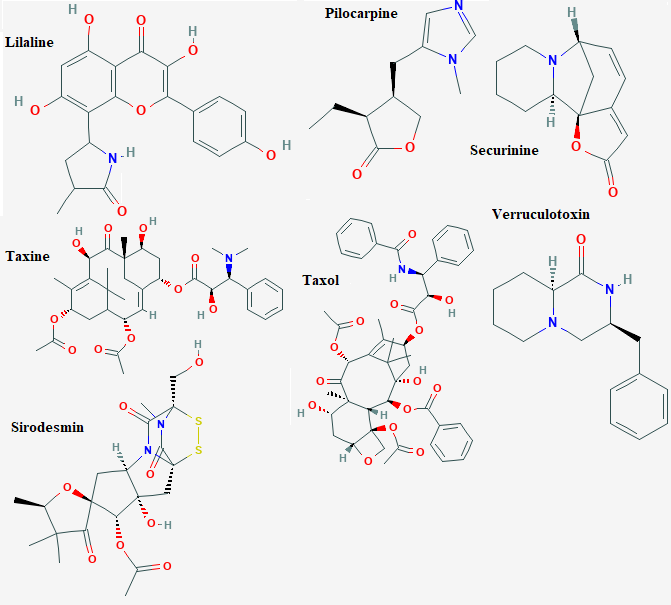
Securinine, (C13H15NO2)
Securinine, (C13H15NO2) source
Securinine, Securinin, occurs in Securinega, and in Phyllanthus.
This page was generated automatically from the original page on John Elfick's School Science Lessons website. If something looks wrong, please check the original.