Phytochemicals, Araloside toTangshenoside
Last updated 2026-04-02 by Dr John Elfick
16.0.0
Araloside
Araloside, C47H74O18, Chikusetsusaponin IV, a triterpenoid saponin, occurs in Japanese angelica tree, (Aralia alata), (Caragana sinica), and in (Panax pseudoginseng). source
Aspidin
Aspidin, C25H32O8, polystichin, antihelminthic source
It occurs in Aspidium roots, in Dryopteris, antihelminthic.
Astragalosides
Astragalosides are chemicals from Astragalus, for example:
Astragaloside IV, C41H68O14, is a pentacyclic triterpenoid, anti-inflammatory, neuroprotective, antioxidant. source
It assists new blood vessels formation, and it inhibits formation of abnormal fibrous tissues.
"Astragaloside IV Astragalus Root Extract Powder" is sold as a health food.
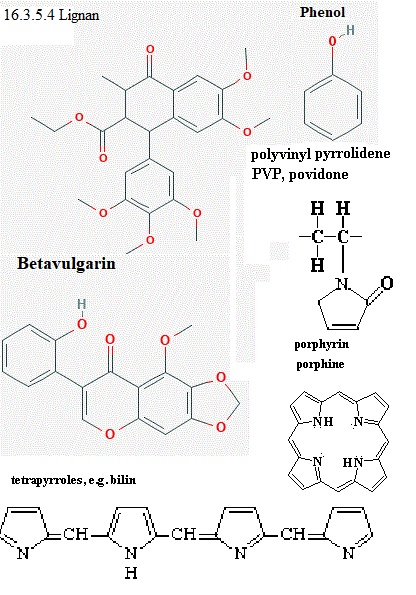
Betavulgarin
Betavulgarin, C17H12O6, antifungal isoflavonoid, is an hydroxyisoflavone. source
It occurs in (Beta vulgaris), (Beta lomatogona), and in (Iris tingitana).
"Brassicasterol
Brassicasterol, C28H46O, a phytosterol, a component of plant cell membranes, occurs in seed oil of (Brassica rapis). source
It is used as a biomarker for the presence of marine algae
Brazilin
Brazilin, C16H14O5, is an organic heterotetracyclic compound, is a red pigment. source
It occurs as a red pigment, Natural Red 24, in Brazil-wood (Caesalpinia echinata), and in sappan-wood (Caesalpinia sappan).
"Brazil wood" was originally called "bresel wood".
Charantin
Charantin, glucoside, (C35H60O6) + (C35H58O6), hypoglycaemic so may cause low blood sugar. source
It occurs, in Asian bitter melon (Momordica charantia).
Daidzin,
Daidzin,
Daidzin, C21H20O9, isoflavone, anti-oxidant, daidzoside, anti-carcinogenic, anti-antheroscerotic source
It occurs in TCM Chinese medicine and it is used to treat alcohol abuse.
It occurs in kudzu (Pueraria lobata).
Daidzein
Daidzein, C15H10O4, dihydroxyisoflavone, a phytoestrogen, is anti-inflammatory, anti-microbial, antioxidant, phytoestrogenic, antineoplastic. source
It occurs in soybean, tofu, alfalfa sprouts, red clover, chickpeas, peanuts, kudzu, (Streptomyces padanus), and in (Glycine soja).
Equol, C15H14O3, (S)-Equol, a hydroxyisoflavan, is the main active product of daidzein metabolism produced by microflora in the gut. source
It is a biomarker for the consumption of soy beans and other soy products.
It occurs in (Punica granatum).
Daidzin, C21H20O9, a glycosyloxyisoflavone, anti-oxidant, anti-carcinogenic, anti-antheroscerotic, in TCM Chinese medicine, is used to treat alcohol abuse. source
It occurs in (Pueraria lobata), (Salvia hispanica), and (Begonia nantoensis).
Eleutheroside
Eleutheroside B, C17H24O9, syringin, phenyl propanoid glycoside occurs in Siberian ginseng, (Syringa vulgaris). source
Eleutheroside A, C35H60O6, daucosterol, saponin and sterol glycoside, occurs in Siberian ginseng source
Eriodictiol
Eriodictiol, C15H12O6, eriodictyol, a tetrahydroxyflavanone, flavanone glycoside source
It occurs in (Camellia sinensis), (Prunus serrulata), and in citrus fruits.
Esculeoside
Esculeoside A, C56H95NO29, a steroid alkaloid, glycoside, a steroid saponin, occurs in cherry tomato (Solanum lycopersicum). source
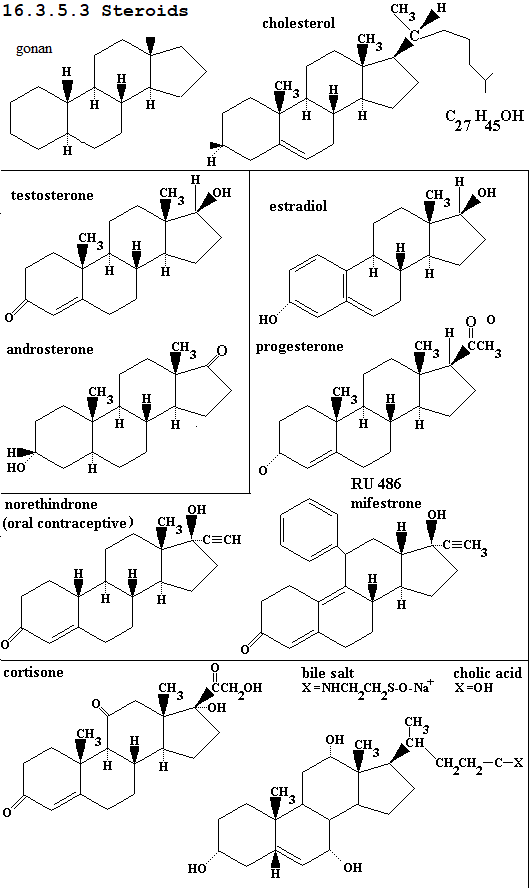
Estradiol
Estradiol, C18H24O2, oestradiol, female sex hormone, an estrogen (oestrogen), an hydroxy steroid, female growth hormone for reproductive organs. source
It is used in contraceptives (OCPs), but the synthetic steroid ethinyl estradiol, C20H24O2, is more suitable for oral contraception. source
It is commercially available in hormone therapy products for treating menopause problems, such as hot flashes.
It is used in oral tablets, vaginal rings, transdermal patches, sprays, gels, and creams.
Formononetin
Formononetin, C16H12O4, biochanin B, formononetol, is a methoxyisoflavone, and a phytoestrogen. source
It occurs in (Dalbergia nigrescens), and in (Glycyrrhiza pallidiflora).
It caused reproductive malfunction, "clover disease”, in Australian sheep grazing on subterranean clover (Trifolium subterraneum)
Genistein
Genistein, C15H10O5, an isoflavone, phytoestrogen, antineoplastic, from soy products, induces apoptosis, antioxidant, anti-inflammatory, anti-atherosclerosis source
It is used as an antineoplastic and antitumor agent.
Genistein has antihelmintic activity, and it is the active ingredient in (Felmingia vestita), a plant traditionally used against worms infections of humans
It has shown to be effective in the treatment of common liver fluke, pork trematode and poultry cestode.
It has been investigated in clinical trials as an alternative to classical hormone therapy to help prevent cardiovascular disease in postmenopausal women.
Natural sources of genistein include tofu, fava beans, soybeans, kudzu, (Salvia hispanica), and (Glycine soja).
It has antihelmintic activity, and it is the active ingredient in (Felmingia vestita), traditionally used against worms, liver fluke, pork trematode and poultry cestode
It may be an alternative to classical hormone therapy to help prevent cardiovascular disease in postmenopausal women.
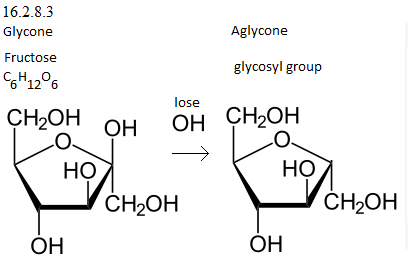
Glycone and aglycone
glycoside (hydrolysis) → glycone (sugar group) + aglycone (non-sugar group) source
The sugar group is called a "glycone" and the non-sugar group is called an "aglycone".
The glycone can consist of a single sugar group (monosaccharide) or several sugar groups (oligosaccharide).
Upon hydrolysis, a sugar and non-sugar component (aglycone) are formed.
An aglycone, is the non-sugar component formed when a glycoside is hydrolysed.
It is the non-sugar compound remaining after replacement of the glycosyl group from a glycoside by a hydrogen atom.
For example
Vanilla species → pods → Glucovanillin, (a glucoside) + β-glucosidase enzyme → vanillin source
Glucovanillin (hydrolysis) → glycone glucose + aglycone vanillin source
C14H18O8 + (glucosidase) → C6H12O6 + C8H8O3 source
Gymnemic acid
Gymnemic acid I, C43H66O14, triterpenoid glycoside, triterpenoid saponin, flavour modifier, makes food tasteless, occurs in leaves of (Gymnema sylvestre). source
Haeme
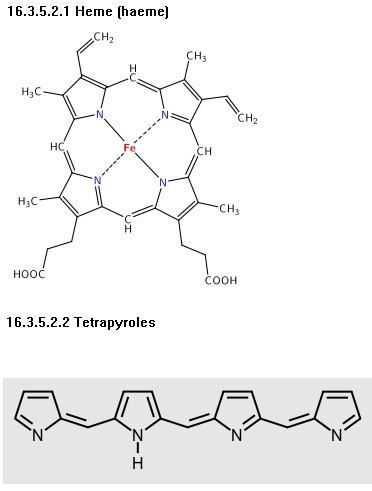
Haeme C49H56O6N4Fe, (heme), occurs in haemoglobin, a globular protein in animals source
Haeme A, is a cytochrome oxidase ligand complex, (Greek haîma 'blood' + Latin globus 'ball, sphere')
Haemoglobin is the protein that carries oxygen in the blood.
The haem group causes the red colour of blood.
The different kinds of haem are Haeme A, B, C and O.
Haeme A is a cytochrome oxidase ligand complex, C49H56O6N4Fe, a tetradentate ligand. source
The most common type is Haeme B, C34H32O4N4Fe. source
The "quaternary proteins" have four joined tertiary proteins, e.g. haemoglobin.
The "transition metals" form complex ions and often have catalytic activity, e.g. Fe in haemoglobin molecule.
Porphyrin chelates include haeme, in haemoglobin, bonded to iron (II) ion, and chlorophyll bonded to Mg (II) ion.
Glycosylated haemoglobin
Glycosylated hemoglobins are minor components of human red cell hemoglobin.
They are formed by condensation of glucose with hemoglobin A.
Glycosylated hemoglobins are increased X 2 - X 3 in the red blood cells of diabetic patients, so are an indicator for assessing the control of diabetes mellitus.
HbA1c is a blood test to diagnose type 2 diabetes and monitor blood sugar levels in people with diabetes.
It measures the average blood sugar level from the past 8 to 12 weeks.
. HbA1c is glycated haemoglobin, which measures how much haemoglobin in the blood has glucose (sugar) attached to it..
(Hb), haemoglobin is a protein in red blood cells that carries oxygen throughout the body.
(A1c) is the glucose attached to the haemoglobin.
See: Tests for haemoglobin, Hematrace test
Hederin
Alpha-Hederin, C41H66O12, koronaroside A, a pentacyclic triterpenoid saponin, anti-inflammatory, antifungal, strong haemolytiic activity source
It occurs in stem bark of (Kalopanax pictus), (Nigella sativa), (Lonicera macrantha), and in (Anemone taipaiensis).
Beta-Hederin, C41H66O11, eleutheroside K, a triterpenoid saponin, antifungal, strong haemolytic activity source
Beta-Hederin occurs in leaves of ivy (Hedera helix), (Akebia quinata), and Anemoclema.
Hesperetin
Hesperetin, C16H14O6, a trihydroxyflavanone, antioxidant, antineoplastic agent, is the predominant flavonoid in lemons and oranges. source
It occurs in (Camellia sinensis).
Irilone
Irilone, C16H10O6, a methylenedioxyisoflavone, an hydroxyisoflavone, immunomodulator, antineoplastic agent, inhibits growth of malignant cells. source
It occurs in red clover (Trifolium pratense), and in Iris.
Magnolol
Magnolol, C18H18O2, a biphenyldiol, in traditional herbal medicine, antifungal, occurs in bark of (Magnolia grandiflora), and in (Magnolia officinalis). source
Matairesinol
Matairesinol, C20H22O6, a phenylpropanoid, lignan, gamma-butyrolactone, is a phytoestrogen. source
It occurs in flax seed, sesame seed, rye bran and meal, oat bran, poppy seed, strawberries, blackcurrants, and broccoli.
Menthol
1. Menthol, C10H20O, C10H19OH, dl-Menthol, (2-Isopropyl-5-methylcyclohexanol), is a white crystalline solid with a peppermint odour and taste. source
Menthol is an organic compound made synthetically or obtained from peppermint or mint oils with flavoring and local anesthetic properties.
Menthol, hexahydrothymol, a monoterpene, peppermint camphor (a methyl cyclohexanol) (mint flavour, peppermint flavour), eight sterioisomers
Menthol, mint camphorrubifacient, white crystalline organic compound resembling camphor, extracted from oil of peppermint.
This compound is solid at room temperature and melts at about 37 oC.
2. Menthol is used occurs in perfumes, menthol cigarettes, mild topical anaesthetic, and as a mint flavouring.
Menthol binds to receptors on temperature-sensin nerve cells to give cooling sensation.
Menthol is antipruritic, reduces itching, so is used for relief of minor sore throat and mouth irritation.
When added to pharmaceuticals and foods, menthol functions as a fortifier for peppermint flavours.
It has a counterirritant effect on skin and mucous membranes, thereby producing a local analgesic or anesthetic effect.
The pure solution may damage eyes and sensitize skin, but < 10 mg occurs in throat medicine lozenges is harmless.
3. Menthol occurs in the peppermint plant, a hybrid mint (Mentha X piperita) and in wild mint (Mentha arvensis).
Spearmint, "mint", garden mint, (Mentha spicata), Lamiaceae
It occurs in peppermint leaves, where the concentration of menthol increase with age.
Menthol breaks down with heating, so peppermint leaf is not usually cooked.
Myrosinase
Myrosinase enzyme, is also called glucosinolase, thioglucosidase, thioglucoside glucohydrolase.
Myrosinase enzyme is a singrinase and a sinigrase.
It can catalyze the hydrolysis of glucosinolates. glucosinolate + myrosinase → toxic compounds to deter grazing. source
glucosinolate + myrosinase → glucose + isothionate source
glucosinate + myrosinase → thiocynates (SCN-), and nitriles (R-C triple bond N) source
Ononin
Ononin, C22H22O9, isoflavone glucoside, formononetin-7-O-glucoside, Chinese medicine. source
It occurs in (Radix astragali), (Daphnia pulex), and in (Astragalus hoantchy).
idth="100%" size="2">Pallidol
Pallidol, C28H22O6, a tetracyclic stilbenoid, antioxidant, antifungal, polyphenol source
It occurs in red wine, Cissus, and in Parthenocissus.
Phenanthracene
Phenanthracene, C14H10, phenanthrin, colourless monoclinic crystals, has a faint aromatic smell, is a polycyclic aromatic hydrocarbon. source
It consists of three fused benzene rings.
It occurs in (Nicotiana tabacum), and in (Buddleja lindleyana).
Phenanthrene is a polycyclic aromatic hydrocarbon (PAH) with formula C14H10. source
Picein
Picein, C14H18O7, glycoside, has antioxidant and anti-inflammatory properties in cellular and plant studies. source
It occurs in (Rhodiola crenulata), and (Salvia officinalis).
Protodioscin
Protodioscin, C51H84O22, glycoside, steroid saponin, beta-D-glucoside, is a pentacyclic triterpenoid. source
It occurs in aphrodisiac puncture vine, (Tribulus terrestris), yams, asparagus, fenugreek, and in Dioscorea.
Pterocarpan
Pterocarpan, C15H12O2, is the simplest member of the class of pterocarpans, which occur only occurs in Fabaceae, e.g. Phaseolin, C20H10O4, phytoalexin, It occurs in French bean, (Phaseolus vulgaris), and in the stems of (Erythrina subumbrans). source
Rottlerin
Rottlerin, C30H28O8, mallotoxin, pink-brown pigment, toxic, antihelminthic, is used to treat tumours in India, and is used as silk dye. source
It occurs in Rottleria, and in Mallotus.
Silybin
Silybin, C25H22O10, silibinin, a flavonolignan, polyphenol, antioxidant, antineoplastic, anticancer, protect liver cells against toxins. source
It occurs in milk thistle, (Silybum marianum), (Silybum eburneum), and in (Aspergillus iizukae).
Tangshenoside
Tangshenoside I, C29H42O18, a pentanoic acid, occurs in (Codonopsis pilosula). source
Dang shen, and Codonopsis tangshen are plants widely and used in traditional Chinese medicine.
Leghemoglobin
Leghemoglobin, a protein that carries heme is a phytoglobin, a globular plant protein, which occurs in nitrogen-fixing bacteria, and in the root nodules of legumes.
It is an oxygen carrier and a hemoprotein, produced by legumes occurs in response to the roots being infected by nitrogen-fixing bacteria, Rhizobium.
Like haemoglobin, it is red in colour and is an essential component for nitrogen fixation by legumes.
This page was generated automatically from the original page on John Elfick's School Science Lessons website. If something looks wrong, please check the original.