Sulfur dioxide
Last updated 2026-04-22 by Dr John Elfick
10.10.0 Reduce metal compounds
10.10.1 Reduce copper oxide with natural gas, methane
1. Pass natural gas, about 95% methane, over heated copper (II) oxide powder.
The reduction reaction is slow and may need twenty minutes of strong heating.
The copper does not glow with heating so it is not clear when all the copper oxide has been reduced.
4CuO (s) + CH4 (g) → 4Cu (s) + 2H2O (l) + CO2 (g) source
2. Repeat the experiment with a 1 cm cubic piece of metaldehyde in the reduction tube.
The reduction is quicker.
3. Repeat the experiment with natural gas that has bubbled through ethanol.
The reduction is quicker and a slight glow is seen as the copper oxide is reduced.
6CuO (s) + C2H5OH (l) → 6Cu (s) + 3H2O (l) + 2CO2 (g) source
10.10.2 Reduce copper (I) oxide to copper.
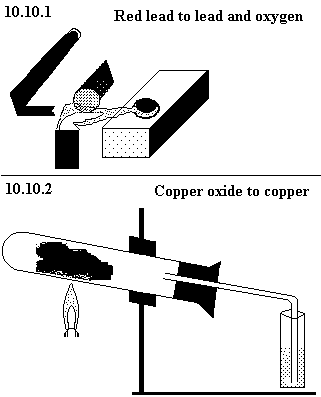
Most school science laboratories are not equipped to show the reactions that occur in a blast furnace.
Heat copper (I) oxide on a charcoal block until brown colours are observed in the residue.
Cool the bead formed then grind it with a mortar and pestle and examine with a magnifier.
Compare the reaction of dilute nitric acid with the ground residue and with copper filings.
The residue might be copper.
Repeat the procedure using red iron oxide.
Test the ground up residue with a magnet.
You have extracted copper from copper oxide and iron from iron oxide by their reaction with carbon.
10.10.3 Reduce iron (III) chloride with hydrogen sulfide
Hydrogen sulfide reduces yellow acidified iron (III) chloride to green Fe 2+ with precipitation of sulfur.
Add sodium hydroxide to the filtered precipitate to form a green-brown precipitate of iron (II) hydroxide.
10.10.4 Reduce iron (III) chloride with sulfur dioxide
Pass sulfur dioxide through brown-yellow iron (III) chloride solution. Sulfur dioxide reduces iron (III) chloride to Fe 2+.
The reaction turns red.
Pour off some solution and boil.
The solution turns green.
Add drops of sodium hydroxide solution.
The reaction forms a brown-red precipitate of iron (III) hydroxide.
FeCl3 (aq) + 3NaOH (aq) → Fe(OH)3 (s) +NaCl (aq) source
10.10.5 Reduce metal oxides to metals, red lead to lead and oxygen.
1. Use a crucible lid to heat red or orange "red lead " (red lead oxide), molecular formula Pb3O4 (2PbO.PbO2), lead tetroxide (triplumbic tetroxide, minium). source
If you heat "red lead" in a glass test-tube, the lead compounds in "red lead" may combine with the lead in the glass causing the glass to crack and spill its hot contents.
The "red lead" melts at 500 o C, then decomposes to the yellow solid lead (II) oxide (lead monoxide, litharge) and oxygen gas.
Test the gas evolved with a glowing splint.
Put some yellow residue in a cavity in a charcoal block.
Heat the metal oxide strongly with a blowpipe.
The residue is the element lead.
You have extracted oxygen and lead from "red lead".
2Pb3O4 (s) → 6PbO (s) + O2 (g). source
10.10.6 Reduce metal oxides to metals with hydrogen gas
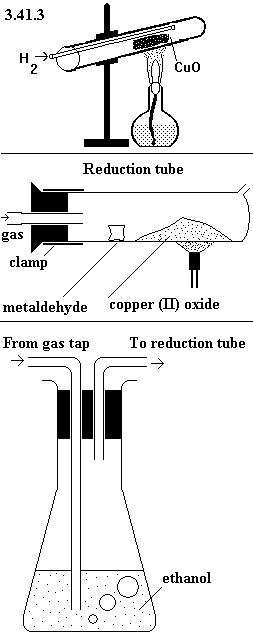
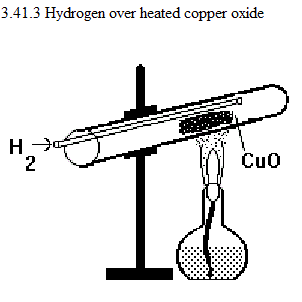
Be careful! Use a safety screen and wear eye protection.
1. Pass hydrogen gas over copper (II) oxide, or lead (II) oxide (lithage) or iron (III) oxide.
Hydrogen gas reduces metal oxides to metals.
The products are the metal and water.
CuO (s) + H2 (g) → Cu (s) + H2O (l) source
2. Pass hydrogen over 5 g of copper (II) oxide (CuO, black copper oxide) or lead (II) oxide (lead monoxide.
PbO, lithage) or iron (III) oxide (haematite, Fe2O3). source
Hydrogen reduces metal oxides to metals.
The products are the metal and water.
Weigh a reduction tube empty then with copper oxide.
Pass hydrogen over the copper oxide and light the gas as it comes out of the hole in the end of the combustion tube.
Heat the copper oxide with a Bunsen burner flame until it glows then turns pink.
The glow shows that reduction occurs.
Remove the Bunsen burner.
Let the combustion tube cool then discontinue the supply of hydrogen.
When the flame has gone out, remove the stopper and weigh the reduction tube and contents again.
CuO (s) + H2 (g) → Cu (s) + H2O (l) source
In the industrial process, blistered copper is heated in a furnace and natural gas is passed through the molten copper oxide until the flame burns green.
This indicates that almost pure copper remains.
3. Repeat the experiment with 5 g of copper (I) oxide (red copper oxide, Cu2O). source
10.10.7 Reduce potassium manganate (VII) with hydrogen sulfide
Do this experiment in a fume cupboard, fume hood.
Pass hydrogen sulfide through a dilute acidified potassium manganate (VII) solution.
The colour of the manganate ion is lost and a milky precipitate of sulfur forms.
2MnO4 - (aq) + 6H + (aq) + 5H2S (g) → 2Mn 2+ (aq) + 8H2O (l) + 5S (s) source
10.10.8 Reduce potassium manganate (VII) with sulfur dioxide
Add 10 mL of 0.1M potassium manganate (VII) solution and 10 mL of 3M dilute sulfuric acid solution to 200 mL of water containing sulfur dioxide.
The solution will gradually become colourless as the sulfur dioxide reacts with the potassium permanganate.
The colour of the manganate ion is lost as the sulfurous acid is oxidized to sulfuric acid.
Add a 0.25M barium chloride solution when the solution becomes "milky", because of the formation of barium sulfate
SO2 (g) + H2O (l) → H2SO3 (aq) source
2MnO4 - (aq) + 6H + (aq) + 5SO3 2- (aq) → 2Mn 2+ (aq) + 3H2O (l) + 5SO4 2- (aq) source
10.10.9 Reduce red iron oxide, or rust, to iron
In a blast furnace, there are 3 reactions when iron ore is smelted, i.e. melted and reduced.
3Fe2O3 (s) + CO (g) → 2Fe3O4 + CO2 (g) source
Fe3O4 (s) + CO (g) → 3FeO (s) + CO2 (g) source
FeO (s) + CO (g) → Fe (l) + CO2 (g) source
Also, water gas forms.
H2O (l) + C (s) + energy → CO (g) + H2 (g) (water gas). source
13.10.0 Sulfur dioxide
13.10.1 Sulfur dioxide
Corrosive, Highly irritating, fumes may affect asthmatics.
Always use a fume cupboard for sulfur dioxide.
Sulfur dioxide, SO2, Toxic, Corrosive, is a severe respiratory irritant, Additive E220. source
Sulfur dioxide is derived from from coal tar or combustion of S.
Sulfur dioxide preservative occurs in soft drinks, dried fruit, wine.
Sulfur dioxide, SO2, is a colourless gas that irritates the lungs. source
Sulfur dioxide dissolves in water to form mainly, sulfurous acid, H2SO3. source
Sulfur dioxide is one component of acid rain.
SO2 (g) + H2O (g) → H2SO3 (l) source
sulfur dioxide + water → sulfurous acid source
Acid rain, SOx, from burning sulfur or sulfur compounds: 12.6.0.1
Acidity and alkalinity: 18.1.0.1
Density of gases, Sulfur dioxide, (Table)
Sulfur dioxide and sulfites, Food preservation
Sulfur dioxide to sulfuric acid 1.: 12.6.0.3.1
Sulfur dioxide to sulfuric acid 2.: 12.6.0.3.2
Experiments
Bleach flowers with sulfur dioxide: 13.10.5
Dilute acids with acidic oxides: 12.3.8
Dry hydrogen sulfide and dry sulfur dioxide will not react: 13.10.7
Halide salts with hot concentrated sulfuric acid: 12.19.3.1
Heat sulfur to form sulfur dioxide: 8.2.15
Oxygen with sulfur dioxide: 12.2.6.2
Prepare sulfur dioxide: 13.10.3
Properties of sulfur dioxide and sulfites: 13.10.2
Reduce iron (III) chloride with sulfur dioxide: 13.10.3
Reduce potassium manganate (VII) with sulfur dioxide: 10.10.6
Sodium thiosulfate with dilute hydrochloric acid: 13.10.6
Tests for substances with dilute hydrochloric acid: 11.3.5 (See 3. and 4.)
Tests for sulfur dioxide: 13.10.4
13.10.2 Properties of sulfur dioxide and sulfites
Sulfur dioxide has a covalently bonded molecular structure so it does not conduct electricity and has a low melting point and boiling temperature.
Experiments
1. Heat sulfur in an evaporating basin and test the sulfur dioxide formed by drops reagents on a glass rod.
Alternatively, pass sulfur dioxide into 6 cm of water.
Show that the solution is acid, potassium permanganate loses its colour, reduces potassium dichromate, and forms a deposit of sulfur with hydrogen sulfide.
2. Hold 2 cm of magnesium ribbon in a pair tongs and heat until it ignites, then hold the burning magnesium in sulfur dioxide.
Sulfur dioxide decomposes into sulfur and oxygen.
Magnesium oxide forms.
2Mg + SO2 (g) → 2MgO (s) + S (s) source
SO2 (g) → S (s) + O2 (g) source
2Mg (s) + O2 (g) → 2MgO (s). source
3. Pass air (oxygen gas) through a hot solution of sodium sulfite, Na2SO3. source
Test the solution for sulfate.
2SO3 2- + O2 (g) → 2SO4 2-. source
4. Dissolve 5 cc of sodium sulfite crystals in 50 mL of water.
Add 2 cc of crushed roll sulfur and boil for an hour.
Transfer the mixture to an evaporating basin and heat to a small volume.
Test the concentrated solution for sodium thiosulfate, Na2S2O3: source
1. By addition of iodine solution,
2. By addition of an acid.
Na2SO3 + (O) → Na2SO4 source
Na2SO3 + (s) → Na2S2O3. source
5. Add dilute hydrochloric acid to crystals of sodium sulfite and heat.
Sulfur dioxide forms.
Tests for sulfur dioxide.
SO3 2- + 2H + → SO3(g) + H2O. source
6. Add barium chloride solution to a freshly made solution of sodium sulfite.
A white precipitate of barium sulfite forms.
Unlike barium sulfate, barium sulfite is soluble in dilute hydrochloric acid.
SO3 2- + Ba 2+ → BaSO3 (s). source
7. Add drops of iodine in potassium iodide solution (tincture of iodine) to sodium sulfite solution.
The iodine loses its colour.
Test the final solution for sulfate ion.
SO3 2- + H2O + I2 → SO4 2- + 2I - + 2H + source
13.10.3 Prepare sulfur dioxide
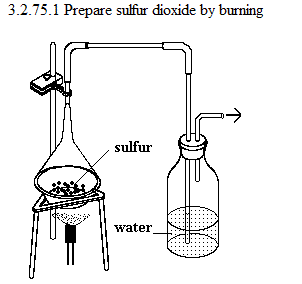
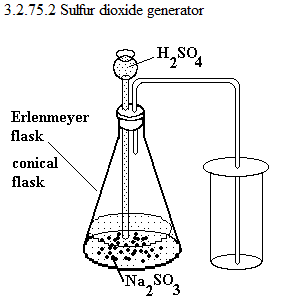
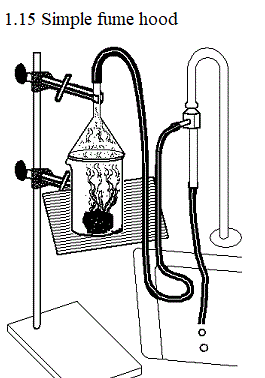
Be careful! Prepare sulfur dioxide only in a fume hood or fume cupboard.
Be careful! Do not inhale the gas.
Do the following preparations in a fume cupboard, fume hood.
1. Ignite sulfur in an evaporating basin and collect the sulfur dioxide formed under a filter funnel.
Connect the filter funnel to a receiving container with a two-holes stopper containing water.
Use a filter pump to suck the sulfur dioxide into the receiving container.
S + O2 → SO2 source
2. Pour some water into a screw cap container.
Heat a small amount of sulfur in a combustion spoon over a Bunsen burner until it melts then ignites.
Immediately put the burning sulfur into the screw cap container and block the opening.
When the burning stops, screw on the screw cap.
3. Add dilute sulfuric acid or hydrochloric acid to sodium sulfite crystals.
Collect the gas by upward displacement of air in a fume hood.
Na2SO3 (s) + H2SO4 (l) → Na2SO4 (aq) + H2O (l) + SO2 (g) source
4. Add dilute hydrochloric acid to 10 g sodium sulfite, or sodium bisulfite.
Collect the gas by upward displacement of air in a fume hood.
Na2SO3 (s) + 2HCl (l) → 2NaCl (aq) + H2O (l) + SO2 (g) source
5. Add dilute sulfuric acid or hydrochloric acid to sodium metabisulfite (Na2S2O5), crystals. source
Collect the gas by upward displacement of air.
Na2S2O5 (s) + 2HCl (l) → 2NaCl (aq) + H2O (l) + 2SO2 (g) source
6. Be careful! Add hot concentrated sulfuric acid to copper to form copper (II) sulfate, water, and sulfur dioxide.
Cu (s) + 2H2SO4 (l) → CuSO4 (aq) + 2H2O (l) + SO2 (g) source
7. Dip a wire loop into sulfur powder.
Ignite the sulfur in a burner flame and then put it into a test-tube of oxygen.
The sulfur burns with a bright blue flame to form the colourless gas sulfur dioxide.
S (s) + O2 (g) → SO2 source
sulfur + oxygen → sulfur dioxide source
Some sulfur trioxide may also form in this reaction.
8. Prepare sulfur dioxide with sulfuric acid and sodium sulfite
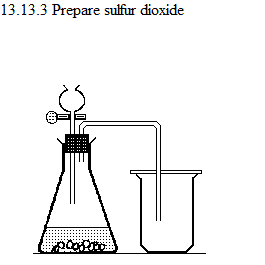
Na2SO3 (s) + H2SO4 (l) → Na2SO4 (aq) + H2O (l) + SO2 (g) source
9. Prepare sulfur dioxide with sulfuric acid and copper
Be careful!
Add hot concentrated sulfuric acid to copper to form copper (II) sulfate, water and sulfur dioxide.
Cu (s) + 2H2SO4 (l) → CuSO4 (aq) + 2H2O (l) + SO2 (g) source
10. Prepare sulfur dioxide by heating sulfur
Use a test-tube with a stopper to heat sulfur in a fume cupboard or well-ventilated area.
When heated to the melting point, sulfur usually ignites and forms sulfur dioxide gas that may distress people suffering from asthma.
When you heat sulfur, it melts, turns brown, then burns with a blue flame.
Sulfur combines with oxygen gas to form sulfur dioxide.
11. Heat sulfur in air
Be careful!
The gases that form have an irritating odour and may cause distress to people who suffer from asthma.
Put sulfur in a combustion spoon and set it alight with a flame.
Observe the burning sulfur and then lower it into a test-tube containing oxygen gas.
The gases turn moist blue litmus red.
S(s) + O2 (g) → SO2 (g). source
12. Heat sulfur gently in a crucible in a fume cupboard.
The solid melts to form a clear yellow liquid.
Melting sulfur without also igniting it is difficult.
Ignition is indicated by the formation of a blue flame on the surface, and the formation of acrid sulfur dioxide gas.
13. Put sulfur powder in a large test-tube.
Clamp the test-tube in a horizontal position and insert a piece of coiled copper wire 3 cm from the sulfur.
Heat the sulfur and copper alternately for five minutes with a strong Bunsen burner flame, with most of the heat on the copper.
The sulfur vapours blacken the copper and changes its electrical properties.
14. Put a small quantity of sulfur on a deflagrating spoon and set it alight with a Bunsen burner flame.
Note the appearance of the burning sulfur and then lower it into a test-tube containing oxygen gas.
Be careful! The sulfur dioxide produced has a very irritating odour and may cause distress to people who suffer from asthma.
When you heat sulfur, it melts, turns brown and burns with a blue flame.
It burns more vigorously in oxygen gas than in air.
During the burning it combines with oxygen gas to form the compound sulfur dioxide:
sulfur (s) + oxygen (g) → sulfur dioxide (g). source
13.10.8 Prepare sodium sulfite and sodium bisulfite in solution
Saturate 10 mL of sodium hydroxide solution with sulfur dioxide to form sodium bisulfite, NaHSO3. source
Add 10 mL of sodium hydroxide solution to form sodium sulfite, Na2SO3. source
NaOH + SO2 (g) → NaHSO3 source
NaHSO3 + NaOH → Na2SO3 + H2O. source
13.10.4 Tests for sulfur dioxide
1. Smell test
Notice its choking smell.
Be careful!
2. Litmus test
Sulfur dioxide dissolves in water to turn blue litmus paper red.
Shake water in a container of sulfur dioxide to form sulfurous acid solution.
3. Burning splint test
Sulfur dioxide extinguishes a burning splint.
4. Potassium permanganate test
Pass sulfur dioxide through a dilute solution of potassium permanganate until it loses its colour.
13.10.5 Bleach flowers with sulfur dioxide
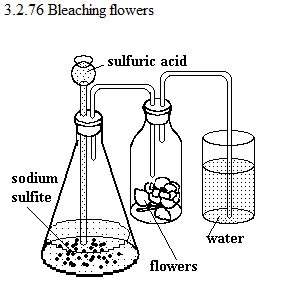
Add coloured flowers or fruit peel to a solution of sulfur dioxide in water.
Replace the stopper and shake.
The colour is bleached.
Restore the colour by placing the plant material in a dilute solution of hydrogen peroxide.
13.10.6 Sulfur dioxide with water
Sulfur dioxide, SO2, is a colourless gas that irritates the lungs. source
Sulfur dioxide dissolves in water to form, mainly, sulfurous acid (H2SO3). source
Sulfur dioxide is one component of acid rain.
SO2 (g) + H2O (l) → H2SO3 (l) source
13.10.7 Dry hydrogen sulfide and dry sulfur dioxide will not react
Collect sulfur dioxide in a dry test-tube after passing the gas slowly through concentrated sulfuric acid to dry it.
Collect a test-tube of hydrogen sulfide, after passing it over calcium chloride tube to dry it.
Invert the test-tube containing sulfur dioxide over the test-tube containing the hydrogen sulfide.
No reaction occurs.
Leave to stand then pour drops of water into the lower test-tube, and quickly replace the upper test-tube.
Sulfur immediately precipitates in the test-tubes.
2H2S + SO2 → 2H2O + 3S (s) source
13.10.9 Sulfur trioxide
Sulfur trioxide, SO3, highly irritating and toxic gas, use a fume cupboard, fumes may affect asthmatics source
Sulfur trioxide with water forms sulfurous acid.
SO3 (g) + H2O (l) → H2SO4 (aq) Loss of substance on heating indicates: 12.11.3.4.1 (See 6.) source
Reactions of sulfamic acid: 12.18.7: (See: 4. Test for sulfur trioxide)
Sulfuric acid, ionization of hydrogen sulfate ion, sulfur trioxide: 12.6.0.0
hr width="100%" size="2">
This page was generated automatically from the original page on John Elfick's School Science Lessons website. If something looks wrong, please check the original.