Chemistry Experiments, O
Last updated 2026-10-14 by Dr John Elfick
Chemistry, O
Oxidation, E
Quick links — A–Z index
Octadecanoic acid, Stearic acid
Odour, Smell, E
Oils, E
Oleic acid, E
Olivine group (Mg, Fe)2SiO4
Omega-fatty acids, Trans fatszzz
Optical bleaches, Fluorescent whitening agents
Ores and ore bodies, Geology
Orlon polymer, Polyacrylonitrile
Orthoclase feldspar, KAlSi3O8 source
Orthophosphoric acid, phosphoric acid
Oscillating reaction, Briggs-Rauscher reaction
Osmosis, E
Oudeman's insect-fixing solution, P
Oxalates, E
Oxalic acid, Ethanedioic acid, E
topic 16b Organic chemistry, Amines to Proteins
Ozone, E
3.5.0 Prepare ozone
1. Prepare ozone in the laboratory using a high voltage induction coil, spark coil (an ozonizer).
However, the experiment is dangerous.
Do not attempt it in a school laboratory.
3O2 (g) → 2O3 (g) source
2. Use electrolysis of 4 M sulfuric acid with carbon anodes
Pass 12 volts through the circuit and note the smell of ozone at the anode.
3. In the upper stratosphere, ozone forms when ultraviolet(UV) light splits an oxygen gas molecule, O2, into two atoms of oxygen, O. source
O2 + UV → O + O source
The oxygen atoms can react with other oxygen molecules to produce ozone that sinks down to the lower stratosphere, between 20 and 40 km above the Earth.
O + O2 → O3 source
Also, the oxygen atoms can react with ozone to produce oxygen molecules again.
O + O3 → O2 + O2) source
When ozone absorbs UV light, the ozone breaks into an oxygen molecule and an oxygen atom again.
O3 + UV → O2 + O source
3.50 Prepare ozone gas
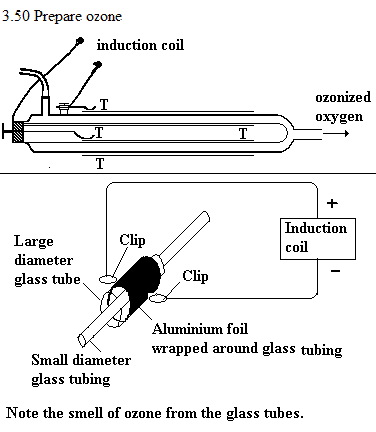
Ozone, O3, is a highly toxic, pale blue gas, with a distinct pungent odour, like weak chlorine. source
It is a powerful oxidizing agent that irritates the lungs.
Ozone is formed in the atmosphere by the action of ultraviolet light with oxygen to form the ozone layer.
You may smell ozone in underground train tunnels if electric sparks had occurred between the power rail and the electrical pickup shoe.
Ozone may be smelt around photocopiers, e.g. Rank Xerox, and laser printers, if they are not well ventilated.
However, manufacturers of these products claim that ozone can be smelt in concentrations as little as one part in 500, 000, while the threshold limit value for short term exposure is 0.3 parts per million.
Small concentrations of ozone are used as an air freshener / sanitizer in public facilities and rest rooms to destroy atmospheric germs and odours.
Ozone was discovered by Christian Schönbein (1799-1868) who noticed an unusual smell around electrical experiments.
Some people can notice the smell in underground electric train tunnels.
So he named the gas using the Greek word: to smell, 'ozein'.
Previously it was thought that the seaside smelt of ozone, but this smell probably comes from rotting seaweed.
Oaks and willows are said to emit ozone to deter vegetation near them.
The ozone layer is in the stratosphere, 20 to 40 km above the Earth absorbs some of the ultraviolet light that causes skin cancer.
Ozone is produced with oxides of nitrogen by reactions of car exhaust gases with unburned fuel and sunlight to produce photochemical smog.
After a thunderstorm, the refreshing smell is ozone and nitrogen oxides.
1. Prepare ozone in the laboratory using a high voltage induction coil, spark coil (an ozonizer).
However, the experiment is dangerous!
Do not attempt it in a school laboratory.
3O2 (g) → 2O3 (g) source
2. Use electrolysis of 4 M sulfuric acid with carbon anodes.
Pass 12 volts through the circuit and note the smell of ozone at the anode.
3. In the upper stratosphere, ozone forms when ultraviolet (UV) light splits an oxygen gas molecule, O2, into two atoms of oxygen, O. source
O2 + UV → O + O source
The oxygen atoms can react with other oxygen molecules to produce ozone that sinks down to the lower stratosphere, between 20 and 40 km above the Earth.
O + O2 → O3. source
Also, the oxygen atoms can react with ozone to produce oxygen molecules again.
O + O3 → O2 + O2 source
When ozone absorbs UV light, the ozone breaks into an oxygen molecule and an oxygen atom again
O3 + UV → O2 + O source
12.11.1 Prepare verdigris with copper and vinegar
1. In 1773, Antoine Lavoisier (1743-1794, France), reported that when copper transformed into verdigris, the substance gained in weight.
This observation lead to the conclusion that "something" was being taken from the air.
In 1777, after further experiments, he named the "something" as the gas oxygen, (oxy gen, "generator of acid".
2. Verdigris is mostly basic copper carbonate, CuCO3CH(OH)2, the green colour of old coins from copper exposed to moist air. source
Verdigris, [Cu(CH3CO2)2(H2O)], Cu(CH3CO2)2(CuO)(H2O)6, is harmful if ingested. source
In moist sea air, copper chlorides may form.
The verdigris on bronze is called aerugo.
3. The green to green-blue pigment copper acetate used in old oil paintings is also called verdigris.
4. Acetic acid with copper oxide forms green-blue crystals of copper acetate, "crystallized verdigris".
It is used as a pesticide, pigment and for manufacture of Paris green.
5. Sodium sesquicarbonate can also be used as a water softener and to remove copper chloride verdigris from old copper vessels.
Experiment
By treating copper with acetic acid in the presence of air, a green-blue pigment forms called verdigris, i.e. impure copper acetate.
Put a piece of copper coin in a watch glass or saucer and pour drops of vinegar on to the surface of the copper.
Leave the copper undisturbed for hours, until the liquid has evaporated.
Blue-green particles of basic copper acetate are left on the surface of the coin.
Scrape these off on to a piece of white paper and wash the coin.
If the coin is an old, black copper oxide previously on the surface is removed, but black copper sulfide remains.
Basic copper acetate is used as a paint pigment, mordant and fungicide.
15.1.5 Corrosion of alloys, restore bronze coins
12.12.0 Prepare oxygen gas
Prepare oxygen gas by decomposition of manganates: 3.7.11
Prepare oxygen gas with bleach: 12.12.1
Prepare oxygen gas with hydrogen peroxide: 12.12.2
Prepare oxygen gas with potassium chlorate and manganese dioxide: 12.12.3
Prepare oxygen gas with potassium manganate (VII): 12.12.4
12.12.1 Prepare oxygen gas with bleach
Prepare oxygen with household bleach, sodium hypochlorite, or bleaching powder.
Liquid household bleach is usually 5% sodium hypochlorite, NaOCl.
Bleach is manufactured by passing chlorine through sodium hydroxide solution until neutral pH, then diluted to 5%.
1. Heat 1 cm depth of bleaching powder in a dry test-tube.
2. Put 1 cm depth of concentrated household bleach solution (NaOCl, bleaching fluid) or bleaching powder solution in a test-tube.
Add drops of concentrated cobalt chloride solution.
A black precipitate forms.
Heat the test-tube until frothing starts.
3. Add 1 cm depth of bleaching powder to 2 cm depth of water in a test-tube.
Heat the test-tube.
No oxygen forms.
Add drops of copper (II) sulfate solution and heat again.
A little oxygen forms.
Add drops of iron sulfate solution, FeSO4.7H2O, ferrous sulfate, green vitriol). source
The solution effervesces strongly, because much oxygen forms.
4. Put 2 cm of bleaching fluid in a test-tube and add a crystal of cobalt chloride.
The contents of the test-tube turn black.
Heat the test-tube over a flame.
Effervescence begins and oxygen forms.
Test for oxygen by putting a glowing wood splint into the mouth of the test-tube:
12.12.2 Prepare oxygen gas with hydrogen peroxide
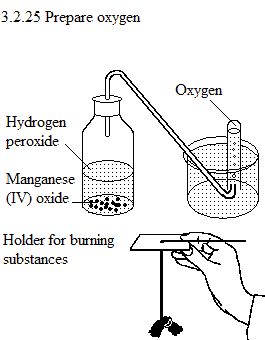
Oxygen is a colourless odourless diatomic gas that supports combustion and is essential for aerobic respiration.
Oxygen reacts with metals to form basic oxides.
Oxygen reacts with non-metals to form acidic oxides.
Oxygen does not change the colour of moist litmus.
1. The safest method to prepare oxygen is by decomposition of hydrogen peroxide solution.
Hydrogen peroxide may be sold in two strengths 10 volumes (3% w/w) and 20 volumes (6% w/w).
Pour some 20 volumes (vols) hydrogen peroxide into a test-tube containing manganese (IV) oxide granules as a catalyst and water.
Collect oxygen in receiver test-tubes over water and apply stoppers to the test-tubes.
Test for oxygen with the glowing splint test.
2H2O2 (aq) → O2 (g) + 2H2O (l) [with MnO2 as catalyst] source
Store test-tubes of oxygen in a test-tube rack and remove the stoppers just before inserting the burning element.
Be careful! This experiment may not be safe, because the decomposition reaction occurs quickly and water vapour shoots out of the container.
Improve safety by using 44 micronmetre, particle size MnO2 instead of the smaller 10 micrometre particle size. source
2. Put 1 cm depth of hydrogen peroxide solution in a test-tube.
Add a drop of iron sulfate solution (FeSO4.7H2O), ferrous sulfate, green vitriol. source
The contents froth vigorously.
Test for oxygen with the glowing splint test.
3. Pour dilute hydrogen peroxide into a measuring cylinder.
Add drops of detergent.
Add manganese (IV) oxide (manganese dioxide) powder as a catalyst.
The reaction forms oxygen as a foam of bubbles.
Use the oxygen foam for combustion experiments with burning twine, burning iron wire and burning magnesium.
Test the gas in the space above the liquid.
4. To 3 mL of 6% hydrogen peroxide solution, add:
- Powdered manganese dioxide, MnO2, as a catalyst.
- 0.5 mL of 1 M FeCl3, * 20 grains of active dry yeast.
Test the oxygen formed by these catalytic reactions with a glowing splint.
2H2O2 → 2H2O + O2 (g) source
5. Pour some 20 volumes (vols) hydrogen peroxide into a test-tube containing manganese (IV) oxide granules as catalyst.
Collect oxygen in receiver test-tubes over water and apply stoppers to the test-tubes.
Store test-tubes in a test-tube rack and remove the stoppers just before inserting the burning element.
2H2O2 (aq) → O2 (g) + 2H2O (l) [with MnO2 as catalyst] source
12.12.3 Prepare oxygen gas with potassium chlorate and manganese dioxide
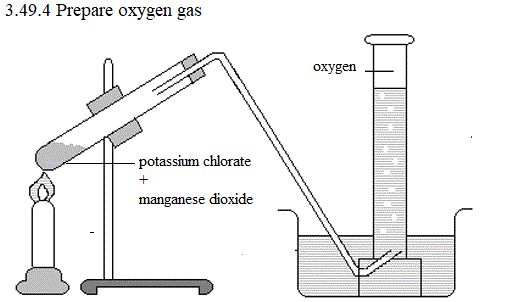
This experiment was once a common experiment to show the production of oxygen gas amd the use of the manganese dioxide catalyst.
However, in many school systems is is not done, because it it too dangerous.
Grind 25 g of potassium chlorate in a porcelain mortar.
Tip it into a porcelain dish on a tripod stand over a low Bunsen burner flame.
Keep stirring it until it is quite dry.
Add 5 g of dry manganese dioxide and mix it with the potassium chlorate.
Transfer the mixture to a hard glass test-tube fitted with a delivery tube into a pneumatic trough.
Fill a pneumatic trough with water.
Heat the mixture in the hard glsss test-tube.
Collect the gas given of by placing gas jars over the outlet of the delivery tube.
As each gas jar becomes full of gas. slide a greased glass cover under the mouth and stand it aside ready for tests.
The manganese dioxide is mixed with the potassium chlorate, so that the oxygen may be given off at a lower temperature than it would if the potassium chlorate were heated alone.
The manganese dioxide does not decompose, but acts as a catalyst in reaction.
KClO3 (heated) → KCl + O3 source
The potassium chlorate breaks up, potassium chloride is formed, and oxygen is evolved.
This gas has the property of rekindling a glowing chip.
12.12.4 Prepare oxygen gas with potassium manganate (VII).
Wear eye protection.
Put a two fingers depth of potassium manganate (VII) in a Pyrex test-tube.
To control "spitting", put a loose plug of ceramic wool in the mouth of the test-tube.
Heat the test-tube slowly and hold a glowing splint over the mouth of the test-tube to detect oxygen.
Hold a glowing splint above the top of the test-tube while continuing the heating.
The glowing splint relights.
2KMnO4 → MnO2 + O2 source
12.12.5 Tests for oxygen gas
1. Glowing splint test for oxygen
Light a splint of wood.
Blow out the flame then hold the glowing splint in the test-tube full of oxygen.
The splint relights.
2. Steel wool test for oxygen
Collect oxygen in test-tubes with stoppers.
Use an L-shaped piece of nichrome wire with a shield to fit on the top to protect your hand.
Fix steel wool into a loop in the lower end of the Nichrome wire.
Heat the steel wool to red heat in a Bunsen burner flame then insert it quickly into a test-tube of oxygen.
The steel wool burns with bright sparkles to form black grey iron oxide, Fe3O4 (FeO.Fe2O3). source
Sprinkle iron filings into a Bunsen burner flame.
A shower of sparks occurs, as in some fireworks.
6Fe + 4O2 → 2Fe3O4 source
3. Charcoal test for oxygen
Fix charcoal into the loop in the lower end of the Nichrome wire or use a combustion spoon.
Heat the charcoal in a Bunsen burner flame until it has a red glow, then quickly insert it into a test-tube of oxygen.
The charcoal glows much more.
C+ O2 → CO2 (g) source
4. Magnesium ribbon test for oxygen
Be careful! Do NOT look at the bright flame.
Wrap a 3 cm piece of magnesium ribbon around the loop at the end of a wire.
Ignite it in a Bunsen burner and put it quickly in the oxygen.
Magnesium burns with a very bright flame.
2Mg + O2 → MgO (s) source
12.12.6 Prepare oxides
Prepare oxides by direct oxidation: 12.13.2, E
Prepare oxides by indirect oxidation: 12.13, E
12.12.7 Prepare oxygen absorbent
Dissolve 300 g of ammonium chloride in 1 litre of water and add 1 litre of concentrated ammonia solution.
Shake the solution.
Pass the gas through the solution after adding half the volume of copper turnings.
12.12.8 Burn steel wool and burn iron filings
1. Collect oxygen in test-tubes with stoppers.
Store test-tubes in a test-tube rack and remove the stoppers just before inserting the burning element.
Fasten steel wool to wire.
the steel wool in a burner flame.
Put it into a test-tube of oxygen.
The steel wool burns with bright sparkles to form black-grey iron oxide.
4 Fe (s) + 3 O2 (g) → 2 Fe2O3 (s) source
iron + oxygen → iron oxide source
2. Repeat the experiment by placing iron filings in a sieve and shaking it over a Bunsen burner flame.
A shower of sparks occurs as in some fireworks.
12.12.9 Burn sulfur in oxygen
Dip a wire loop into sulfur powder.
Ignite the sulfur in a burner flame, and then put it into a test-tube of oxygen.
The sulfur burns with a bright blue flame to form the colourless gas sulfur dioxide.
S (s) + O2 (g) → SO2) source
sulfur + oxygen → sulfur dioxide source
Some sulfur trioxide may also form in this reaction.
13.5.1 Ozone and photochemical smog
A nitrogen dioxide molecule can be dissociated by absorbing photon, hv, of sunlight.
NO2 (g) + hv → NO (g) + O (g) [reactive oxygen atom] source
O (g) + O2 (g) → O3 (g) source
2NO (g) + O2 (g) → 2NO2 (g) source
16.2.4 Octane number
Octane, C8H18, CH3(CH2)6CH3, is in some hydrocarbons with unbranched carbon chains, which prematurely explode in the cylinder. source
They produce an audible knocking sound or "ping" sound (knocking, pinking).
A scale of "knock property" has isooctane (2,2,4-trimethylpentane) at 100 (a good fuel) and heptane at 0 (a poor fuel).
So gasoline with octane number 80 has the same properties as a mixture of 80% isooctane and 29% heptane.
Octane number is the percentage of iso-octane normal heptane mix with the same knocking behaviour of the fuel being tested.
Octane number indicates the knock rating of a motor fuel.
A high octane fuel has a longer self-ignition delay in motor car engine.
In Brisbane, most "family cars" use 91 octane "unleaded petrol".
This is the lowest octane rating of the different petrol sold in garages.
A high octane rating of a fuel means that it has less tendency to pre-ignite in a high compression engine.
Pre-ignition means that before the spark plug has fired, the fuel air mixture burns, because of heat created in the cylinder by compression.
Unleaded petrol has the octane rating 98.
Table 16.1.1h
| Engine compression ratio | 4: 1 | 5: 1 | 6: 1 | 7: 1 | 8: 1 | 9: 1 | 10: 1 | 11: 1 | 12: 1 |
| Octane number to be knock-free | 60 | 73 | 81 | 87 | 91 | 95 | 98 | 100 | 102 |
Ocimene
Ocimene, C10H16, acyclic monoterpene, many isomers, e.g. beta-ocimene source
It is used as a flavour and fragrance agent.
It occurs in Basil (Ocimum basilicum), Lamiaceae.
Octacosanol
Octacosan-1-ol, n-Octacosyl alcohol, Montanyl alcohol, C28H58O, a long-chain primary fatty alcohol, white crystalline powder source
It occurs in Wheat (Triticum aestivum), Beet (Beta vulgaris), and in many plant leaves.
Wheat germ oil, yellow, contains vitamin E and octacosanol, C28H58O, said to have health benefits source
Octadecan-1-ol
Octadecan-1-ol, C18H38O, CH3(CH2)17OH, stearyl alcohol, long-chain primary fatty alcohol source
It is used for skin care.
It occurs in (Camellia sinensis), and in Apis.
Use octadecan-1-ol for melting point curve experiments.
Octanoic acid
Octanoic acid, C8H16O2, caprylic acid, straight-chain saturated fatty acid, colourless to light yellow liquid, mild odour, difficult to ignite, antibacterial. source
It is corrosive to metals and tissue.
It occurs in milk of mammals, coconut oil, and in palm kernel oil.
Octanol
Octanol, C8H18O, CH3(CH2)6CH2OH, octan-1-ol, primary alcohol, clear colorless liquid, strong aromatic odour, insoluble in water and floats on water. source
The vapouris heavier than air and may irritate the eyes, and respiratory system.
It is used as an antifungal agent, and a fuel additive.
1.0 Poisons and First Aid: See Octanol.
Officinalisinin I
Officinalisinin I, Timosaponin B II, Melongoside N, C45H76O19, occurs in green vegetables, e.g. aubergine (Solanum melongena). source
Oil of wintergreen
Oil of wintergreen, methyl salicylate, strong characteristic odour
It occurs in sweet birch tree (Gaultheria procumbens), Ericaceae, snow berry, tea berry, checkerberry, aromatic wintergreen.
Methyl salicylate Wintergreen essential oil
Prepare methyl salicylate, oil of wintergreen: 16.4.9
Aspirin: 5.5.6
Oils
Edible oils, Composition of edible oils: 3.9.3 (Table)
Essential oils, volatile oils, ethereal oils: 16.6.1
Fixed oils, non-volatile oils: 16.6.2
Fractional distillation of crude oil: 16.8.0, E
List of essential oils: 16.6.1a
List of fixed oils: 16.6.2a
List of vegetable oils: 16.6.3a
Plant oils, essential oils, fixed oils, vegetable oils: 16.6.0
Vegetable oils: 16.6.3
List of oils
Almond oil, bitter almond essential oil contains toxic amygdalin, C20H27NO11, source
but may be added to commercial mazipan confectionary.
Aniline oil, C6H5NH2, phenylamine, aminobenzene, poisonous, source
It is used to make dyes, plastics, medicines, Not permitted in schools.
Prepare camphor oil: 19.3.6
Castor oil, ricinoleic acid: 16.3.6.4
Clove oil, eugenol: 16.3.6.9
Coconut oil: 5.1
Crude oil, Fractional distillation of crude oil: 16.8.0
Evening primrose, (Oenothera biennis), Onagraceae
Fish oils: 3.9.10, (See: 6.)
Goanna oil, goanna fat, lizard-like, Varanus, (lubricant, liniment, arthritis, muscle soreness)
Lemon oil, lemon juice
Lemon, (Citrus x limon), (lemon citrus fruit), Rutaceae
Neem tree, (Azadirachta indica), Meliaceae
Oil and water, Hydrophilic substances
Oil molecule: 11.3.7
Oil red solution: 3.32, Prepare
Oil of vitriol: Sulfuric acid
Oil of wintergreen, methyl salicylate
Oil shale and fracking: 37.1.4
Oil sprays: 4.79.6 (Agriculture)
Oils, essential oils, fixed oils, vegetable oils: 16.3.44
Olive oil: 19.3.7
Paraffin oil, kerosene
Peanut oil: 10.12.0
Prepare amyl acetate (pear oil): 16.3.7
Penetrating oil, e.g. WD-40: 10.3.6.1
Pennyroyal oil (Poisonous)
Petroleum jelly, "Vaseline", white paraffin
Petroleum, Distil crude oil and collect the fractions: 10.3.9
Petroleum: 35.3.10
Tests for fats and oils: 9.3.11
Vanilla oil (See: 2.)
Vegetable oils: 16.6.3
Oil drilling additives
| Bentonite and barite | Calcium chloride | Sulfonated asphalt | Xanthan gum | Polyacrylamide (PAM)
| Polyanionic cellulose (PAC) | Sodium carboxyethylcelulose (CMC) | Carboxymethyl starch sodium (CMS)
Oleanolic acid
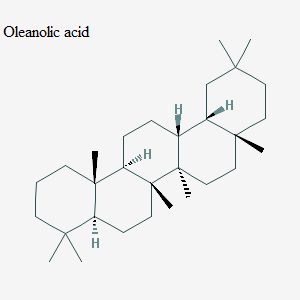
Oleanolic acid, C30H48O3, caryophyllin, astrantiagenin C, a pentacyclic triterpenoid, is a hydroxy monocarboxylic acid. source
It occurs in olive oil, honey mesquite, garlic, java apple, cloves, American pokeweed, (Hyptis suaveolens), Syzygium, (Salvia miltiorrhiza), and (Sambucus chinensis).
It is in olive pomace oil ("orujo" olive oil, i.e. pomace oil + olive oil), anti-inflammatory, antioxidant, Asian medicine.
An isomer is ursolic acid, C30H48O3. source
Oleic acid
Oleic acid, C17H33COOH, has been found to increase good cholesterol and lower bad cholesterolbr> Proponents of olive oil claim that in countries where oleic acid is the principle fat in the diet the people have the lowest incidence of heart disease and stroke. source
They have the longest life span, because olive oil is high in mono-unsaturated fats and low in both polyunsaturated and saturated fats.
However, people living in different countries where the components of fats in their diets are almost identical may have different rates of the incidence of cancer.
Olives are a remarkable source of antioxidant and anti-inflammatory phytonutrients.
Most prominent are two simple phenols (tyrosol and hydroxytyrosol) and several terpenes (especially oleuropein, erythrodiol, uvaol),
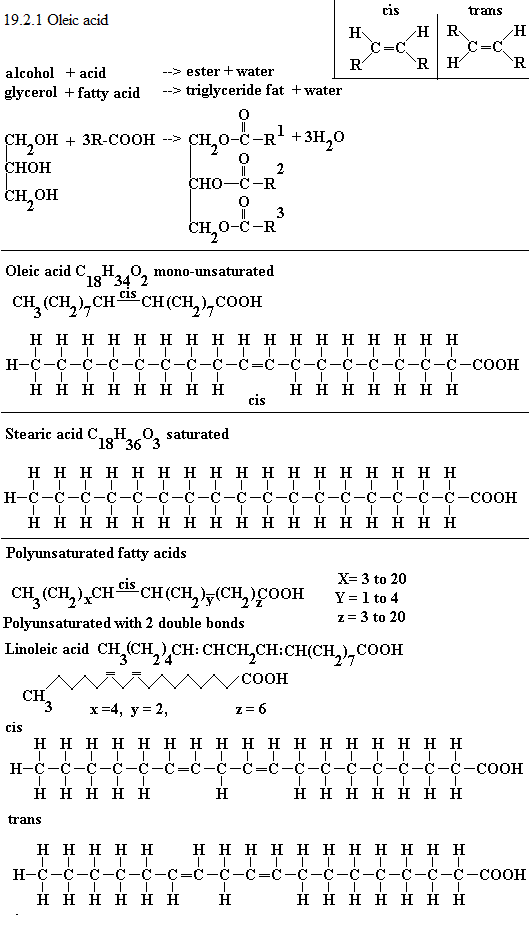
Oleic acid, cis-octadec-9-enoic acid, cis-09-octodecanoic acid, mono-unsaturated fatty acid, monounsaturated omega-9 fatty acid
Oleic acid, mono-unsaturated fatty acid, C18H34O2, C8H17CH=CH(CH2)7COOH, colourless viscous liquid, MP 14 oC source
Fats in food: 3.90
Olive oil: 19.4.6
Oil molecule: 11.3.7
Soaps and synthetic detergents, "syndets": 12.5.1
Organic chemistry
Organic chemistry, Amines to Proteins
Biochemistry terms and organic chemistry terms: 16.9.0
Chemical changes, heat organic substances: 7.6.6
Organic builders in washing powders: 12.6.11
Organic liquid residues: 3.3.5, (disposal)
Organic acids: 1.2
Organic salts: 16.7.10
Storing organic chemicals: 3.7.7
Tests for organic acids and alcohols: 9.3.16
Orientin
Orientin, C21H20O11, flavone, lutexin, luteolin-6-C-glucoside, antioxidant source
It occurs in bamboo leaves, (Cecropia hololeuca), and in (Gentiana algida).
Ormolu
Ormolu looks like gold by coating brass with copper zinc tin alloy called gilt brass.
Gilded bronze using gold-mercury amalgam, but dangerous procedure, so nowadays electroplated with gold.
It is used for ormolu-decorated mantlepiece clocks, furniture, porcelain.
Touchstone, gold streak: 35.12.1
Osmium, Os
Osmium, Os
Osmium, Table of the Elements
Osmium, RSC
Osmium, Os, (Greek osmē 'smell'), refers to strong irritating smell of poisonous osmium tetroxide.
Osmium is a silver-blue, very rare, very hard element, and possible the densest element, if not Iridium.
It was discovered in 1803 by Smithson Tennant, England.
Osmium tetroxide, OsO4, osmic acid, osmium oxide, osmium (VIII) oxide, solid, pungent unpleasant odour. source
It is extremely toxic.
Not permitted in schools.
Osmium was used in gramophone needles and fountain pen nibs, e.g. Osmiroid, because of extreme hardness and resistance to corrosion.
Osmium, MP 3,054 oC, was formerly used in electric light filaments, e.g. "Osram", but was replaced by tungsten, MP, 3,407 oC.
It is used in jewellery plating.
Osmium tetroxide vapour forms black deposits with oil, so is used in finger printing.
Oxalates
Ammonium oxalate, C2H8N2O4, (NH4)2(C2O4), occurs in kidney stones, and in guano. source
Calcium oxalate, Adoxaceae
Oxalate ion: (C2O42-, (IUPAC: ethanedioate), sodium oxalate: Na2(C2O4) source
Oxalate (oxalato), [O-C(=O)-C(=O)-O]2-, bidentate ligand
Oxalates, hazards: 3.7.11
Tests for antimonates, borates, oxalates: 12.11.2a
Tests for oxalates: 12.11.14
Oxalic acid
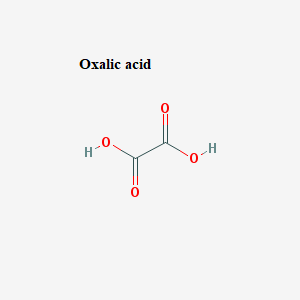
Oxalic acid, C2H2O4, (COOH)2, HOOCCOOH, ethanedioic acid, oxalic acid dihydrate, odourless, white solid, sinks in water and mixes with it, toxic source
It occurs in many plants, almonds, bananas, parsley, spinach, especially, rhubarb, and it occurs in chocolate, tea, and in beer.
It is a strong dicarboxylic acid and its salts are called oxalates, (IUPAC: ethanedioates).
It is produced in humans by metabolism of glyoxylic acid or ascorbic acid, then excreted in the urine.
In the unlikely case of excessive dose, it is toxic.
Oxalic acid, Solution < 5%, Not hazardous (analytical reagent, reducing agent, used to standardize sodium hydroxide solution.)
Oxalic acid with concentrated sulfuric acid forms carbon monoxide.
Oxalic acid dihydrate, HO2CCO2H.2H2O, white, odourless, monoclinic crystals or granules, RD 1.62, MP 101 oC- 102 oC. source
It sublimes easily above 100 oC, and is decomposed by heat.
Oxalic acid common names: Non-chlorine bleach powder (cleanser used in bars), Low cost: wood bleach from hardware stores
The gritty feeling in the mouth from drinking milk while eating rhubarb is caused by calcium oxalate crystals, which later pass harmlessly through the body.
Oxalic acid has been shown to be an effective treatment for Varroa mites, parasites of honeybees.
Experiments
Decomposition of oxalic acid: 3.7.14
Oxalic acid with potassium manganate VII), autocatalysis: 17.3.7
Prepare oxalic acid: 9.1.12
Prepare solutions of known concentration: 5.4.14 Oxalic acid, (Ethanedioic acid)
Oxidation
In a cell, oxidation occurs at the anode and reduction occurs at the cathode
Examples of oxidation include rusting, respiration, combustion, oxidation of ethanol, photosynthesis
Oxidizing means adding oxygen to a substance.
The addition of oxygen to, or the loss or removal of hydrogen from, a compound.
The increase in the proportion of negative constituents in a molecule or compound.
The loss or removal of an electron from an atom or molecule.
Experiments
Catalytic oxidation of ammonia, with red-hot platinum wire: 3.3.4
Catalytic oxidation of ammonia with chromium (III) oxide: 3.3.5
Catalytic oxidation of ammonia forms nitrogen monoxide: 3.3.6
Catalytic oxidation of methyl alcohol, and ammonia solution: 17.3.2
Oxidation and reduction, redox reactions: 15.3.0
Oxidizing agents and reducing agents: 15.4.0
Oxidation can affect air pressure: 15.1.8
Oxidation and air pressure, steel wool over water: 12.1.29
Oxidation of glycerine: 12.1.6
Oxidation of iron: 6.3.2 (Soils)
Oxidation of methanol to methanal: 16.3.2.8
ORP (Oxidation-Reduction Potential): 18.1.11
Redox reactions: 12.2.9
Tests for oxidation of glucose, blue bottle experiment: 9.3.10a
Tests for oxidase and peroxidase in plant tissues: 9.3.14a
Oxides
Carbon monoxide: 16.4.3
Decomposition of oxides: 3.7.15
Nitrogen dioxide, NO2: 13.3.19, Prepare source
Nitric oxide, NO: 13.3.18
Nitrogen oxides, Acid rain, NOx: 12.6.0.1
Nitrous oxide, N2O: 13.3.22, Prepare source
Prepare oxides by direct oxidation: 12.13.2
Prepare oxides by indirect oxidation: 12.13
Peroxides, hazards: 3.7.13
Reactions of oxides: 12.13.0
Reduce iron (III) chloride with sulfur dioxide: 13.10.3
Separate metals, reduce metal oxides, ores: 10.10.0
Sulfur dioxide, SO2: 13.1.0 source
Oxidizing agents
Oxidizing agents and reducing agents: 15.4.0
Iron (II) sulfate oxidation to iron (III) sulfate: 14.8.18
Iron with copper (II) sulfate solution: 12.14.13
Nitrous acid as oxidizing agent or reducing agent: 15.4.8
Potassium chlorate and potassium persulfate as oxidizing agents: 15.4.13
Potassium dichromate as an oxidizing agent: 15.4.16
Storing oxidizing agents: 3.7.8
Tests for oxidizing agents: 15.4.17
Oxyacids
Oxy-acid, oxyacid, any acid containing oxygen (different from oxo carboxylic acids).
Oxyacid, has an O bonded to a H and one or more other elements.
The common examples of oxyacids are:
| acetic acid (ethanoic acid) CH3COOH | boric acid (boracic acid), H3BO3 (not strictly an oxyacid) | carbonic acid H2CO3 source
| nitric acid HNO3 | nitrous acid HNO2 | phosphoric acid H3PO4 | sulfuric acid H2SO4 | sulfurous acid H2SO3 | source
The halogen oxyacids include:
| chloric acid HClO3 | chlorous acid HClO2, weak unstable acid | hypochlorous acid HClO | perchloric acid HClO4 |. source
The following carboxylic acids (RCOOH), are oxyacids:.
| acetic acid CH3COOH | benzoic acid (benzene carboxylic acid, C6H5COOH | chloroacetic acid CH2ClCOOH | dichloroacetic acid CHCl2COOH source
| formic acid (methanoic acid), HCOOH | oxalic acid (ethanedioic acid) COOH)2 | trichloroacetic acid (trichlorethanoic acid) CCl3COOH) | trifluoroacetic acid CF3COOH) |. source
Oxygen, O
Oxygen, O
Oxygen, Table of the Elements
Oxygen, RSC
12.4.0 Gas, Molecular weight, Density, (Table 1)
12.8.11 Acid rain and nitrogen oxides, NOx
12.6.0.1 Acid rain, SOx, from burning sulfur or sulfur compounds
3.6.0 Carbon dioxide from photosynthesis
7.1.6.1 Chemical changes and physical changes
37.42.1 Composition of the atmosphere and greenhouse gases
3.7.13 Decomposition of nitrates
3.7.15 Decomposition of oxides
Density, Table 1.0.0 Molecular weight, Density
7.9.28 Fuel cell
9.2.1 Mountain sickness and hyperventilation
12.13.5 Oxides and the periodic table
34.12 Oxyacetylene welding
15.4.2 Oxygen as an oxidizing agent
18.3.7 Oxygen content of water, dissolved oxygen, DO
12.12.0 Oxygen gas, Prepare
12.2.6.2 Oxygen with sulfur dioxide
19.1.20 Packaging gases, propellants, food additives
Oxygen Experiments
13.3.4 Burn magnesium ribbon in oxygen
12.12.8 Burn steel wool and burn iron filings
12.12.9 Burn sulfur in oxygen, Experiment
3.7.4 Decomposition of chlorates, potassium chlorate
3.7.11 Decomposition of manganates, potassium permanganate
12.3.11 Dilute nitric acid with copper
15.5.12.1 Electrolysis of dilute sodium chloride solution
8.2.0 Heat metals in air to form oxides
12.13.10 Heat metals with oxides of another metal, (competition for oxygen)
17.7.2 Hydrogen peroxide as a reducing agent
17.7.6 Hydrogen peroxide concentration and storage
17.7.2 Hydrogen peroxide reacts as an oxidizing agent
15.5.5 Need for oxygen for rusting
12.13.5 Oxides and the periodic table
15.5.6 Oxygen gas combines with iron during rusting
8.2.3 Oxygen gas is necessary for combustion.
9.2.10 Oxygen content of inhaled and exhaled air
17.7.22 Prepare hydrogen peroxide solution
12.12. Prepare oxides
12.12.7 Prepare oxygen absorbent
12.12.0 Prepare oxygen gas
12.11.1 Prepare verdigris with copper and vinegar
15.5.8 Rate of rusting of steel wool
12.1.30 Reactions of sodium with water
12.2.6.01 Redox reactions (oxidation-reduction reactions)
18.3.3 Tests for dissolved oxygen, titration
18.7.8 Tests for air and dissolved oxygen in water
9.1.20 Tests for oxygen absorption during plant respiration
12.12.5 Tests for oxygen gas
Oxygen gas
Oxygen, O (French oxygène), acidifying, oxygen was thought to be in all acids.
Oxygen gas, O2, is a non-metal colourless and odourless gas at room temperature and pressure, 20.95% of the air, 47% of the earth's crust. source
It can be identified by lighting a glowing splint, it supports combustion and it is necessary for respiration.
It is prepared in the laboratory by decomposition of hydrogen peroxide with MnO2 catalyst, but manufactured by distillation of liquid air. source
It is the most abundant element, 50% of mass of rocks in earth's crust.
It reacts with metals to form basic oxides, and reacts with non-metals to form acidic oxides.
Oxygen gas is stored compressed in cylinders for oxy-acetylene welding.
Liquid oxygen, refrigerated oxygen, may explode with flammable or combustible substances, and may cause frostbite (cold burns), so use ventilated gloves!.
Atomic number: 8, Relative atomic mass: 15.9994, RD 1.15 (90 K), MP = -218 oC, BP. = -183 oC
Specific heat capacity: 916 J kg-1 K-1
Oxygen concentrators:
These devices avoid the need for resupply of oxygen using heavy gas cylinders.
1. Pressure swing adsorption (PSA) oxygen concentrators
These devices force air at high pressure through zeolite minerals, which absorb nitrogen as a "nitrogen scrubber", leaving the rest of the atmospheric gases.
They are used for small-scale oxygen generation in the homes of patients.
2. Cryogenic separation oxygen concentrators are used for higher volume gas separation.
Oxytocin,
Oxytocin,
Oxytocin, C43H66N12O12S2, pitocin, (molecule based on 9 amino acids), hormone neurotransmitter released from posterior pituitary gland. source
It acts on smooth muscle cells, causing uterine smooth muscle contractions and milk ejection.
Oxytocin also has side effects on human physiology and behaviour.
Recombinant oxytocin is a synthetic cyclic peptide form of this naturally occurring hormone.
Carbetocin, C45H69N11O12S, heat stable drug used to control bleeding after giving birth, has similar action to oxytocin. source
Ozone
Ozone, O3 (Greek ozein, to smell), is an highly toxic gas with pungent odour, and was formerly called "electric oxygen". source
Composition of the atmosphere and greenhouse gases: 37.42.1
Density, Ozone (Table)
Ozonator: 18.1.17 (swimming pools)
Ozone and photochemical smog: 13.5.1
Prepare ozone gas: 13.5.0
Solar ultraviolet radiation and skin cancer: 37.1.5
Table 12.19.5.0, RODP = the relative ozone depletion potential (RODP)
Experiment
This page was generated automatically from the original page on John Elfick's School Science Lessons website. If something looks wrong, please check the original.