Chemistry Experiments, Q, R
Last updated 2026-10-14 by Dr John Elfick
Chemistry, Q, R
Chemistry, Q
Quick links — A–Z index
Quantity of chemical for experiments
Reactions of, (Chemistry)
Rainbow reactions, Butyl chloride
Rare earth elements, Lanthanides
Ratio and proportion, Concentration
Reagents, Prepare acids and bases
Reagents, Prepare reagents, solutions in water
Red phosphorus, safety matches
Relative atomic mass, Magnesium
Reproductive toxicity, chemicals
14.4.0 Reactions of:
Reaction of ammonium carbonate with ethanoic acid: 14.4.1
Reaction of ammonium nitrate with water: 14.4.2
Reactions of ammonium salts and potassium salts with water: 14.4.3
Reactions of antimony: 12.2.1
Reactions of arsenic and arsenic compounds: 12.3.3
Reactions of aspirin (rate of reaction): 17.1.13
Reactions of barium compounds: 12.4.1
Reactions of benzene: 16.5.3
Reactions of bismuth compounds: 12.5.1
Reactions of bromides: 12.19.9.6
Reactions of bromine: 12.19.9.1
Reactions of bromine water (bromine solution): 12.19.9.2
Reactions of cadmium sulfate solution: 12.7.1
Reactions of calcium and calcium compounds: 12.4.1
Reactions of carbonates: 12.15.0
Reactions of chloramines in swimming pools: 18.1.5
Reactions of chlorine: 12.19.8
Reactions of chromium compounds, Cr: 12.8.0
Reactions of copper (I) compounds: 12.7.3
Reactions of copper (II) ions: 12.7.2
Reactions of copper (II) oxide, CuO: 12.7.1.0
Reactions of dichromates, potassium dichromate: 12.8.3
Reactions of dilute acids: 12.4.0
Reactions of dilute sulfuric acid as a acid: 12.18.5.4
Reactions of dilute sulfuric acid as a sulfate: 12.16.2.1
Reactions of hydrogen bromide, HBr: 12.19.9.4
Reactions of iodides: 12.19.6.2
Reactions of iron: 14.5.0
Reactions of iron (II) salts and iron (III) salts, Prussian blue: 14.8.1
Reactions of lead (II) salts: 12.9.1
Reactions of lead (IV) salts: 12.9.2
Reactions of lithium with water: 12.9.3
Reactions of magnesium, burning or molten magnesium: 12.10.2
Reactions of magnesium compounds: 12.10.4
Reactions of magnesium oxide: 13.3.6
Reactions of magnesium with carbon dioxide, sparkler experiment: 3.77
Reactions of magnesium with water: 12.10.1
Reactions of manganese (II) salts: 12.8.1
Reactions of mercury compounds: 3.7
Reactions of: Metallic elements
Reactions of metals as reducing agents: 12.14.0
Reactions of metals with air or oxygen gas: 12.14.3
Reactions of metals with concentrated oxidizing acids: 12.14.5
Reactions of metals with dilute acids: 12.14.4
Reactions of metals with steam: 12.14.8
Reactions of methane with chlorine: 16.5.1.3
Reactions of nickel compounds: 12.9.4
Reactions of nitrates, (See: 4.)
Reactions of nitrites: 12.11.1
Reactions of non-metals with water: 12.15.4
Reactions of organic molecules: 16.3.0
Reactions of oxides: 12.13.0
Reactions of permanganate ion: 15.4.0
Reactions of phosphites: 12.9.5
Reactions of phosphorus and phosphates: 12.13.1
Reactions of potassium nitrate with water: 14.4.4
Reactions of potassium salts with water: 14.2.1
Reactions of salts: 12.10.10
Reactions of salts with water: 12.10.9
Reactions of sodium with water: 12.73.0
Reactions of silver compounds: 12.11.0
Reactions of silver halides: 12.19.2.6, photography
Reactions of sodium chloride: 12.19.8.1
Reactions of strontium compounds: 12.12.0
Reactions of sulfamic acid: 12.18.6.3
Reactions of dilute sulfuric acid: 12.16.2.0
Reactions of concentrated sulfuric acid: 12.16.3.0
Reactions of tin and tin compounds: 12.20.1
Reactions of urea: 16.5.4, Biuret, (See: 1.)
Quantity of chemical to be used in school science experiments
Disposal of waste chemicals
1. In this document, "dilute solution" refers to a 2 M solution, or a 10% solution, unless otherwise specified.
2. In this document, "concentrated acid", or any other substance, refers to the concentration supplied by chemical suppliers, e.g. concentrated hydrochloric acid is 36% w / w, unless otherwise specified.
3. For all experiments, unless otherwise instructed, use either:
3.1 a 5 mL of solution, or
3.2 a test-tube filled to the depth of a finger width, or
3.3 the powder on a little finger nail, or
3.4 a piece of solid chemical the size of half a dried pea, or
3.5 no more than one third of a test-tube of any solution.
4. Do not make gas jars full of gas for demonstration purposes.
Use test-tubes with stoppers to collect gases.
Quartz
Silica, SiO2 source
Quartz: 35.14.0
Construct molecular models (quartz): 11.2.3
Silicon: 12.10.0
Voltage from mechanical stress to crystals, piezoelectricity: 32.1.2.1
Quassin
Quassin, C22H28O6, nigakilactone D, a quassinoid febrifuge, vermicide, bitter tonic source
It occurs in Surinam Quassia wood, (Quassia amara).
Quercetin
Quercetin, C15H10O7, [(C6-(C3-(C6], flavonol glycoside, a pentahydroxyflavone, polyphenolic flavonoid, the most active of the flavonoids. source
It is a yellow powder, antioxidant in many plants, a phytoestrogen, are used for vegetables in a good diet and food additive.
Many medicinal plants have high quercetin content, anti-inflammatory activity. by inhibiting release of histamine.
Quercetin, antioxidant activity, anticancer, inhibits fatty acid synthase phytochemical.
It causes the colouring found in the skins of apples and red onions.
Quercetin may protect against heart disease and cancer, prevents damage to LDL cholesterol, antioxidant, natural anti-histamine.
It is anti-inflammatory, anti-cancer, but unproved necessary addition to dietary supplements.
It occurs in berries, red grapes, citrus fruit, tomato, and in broccoli.
Do not take quercetin if taking prescribed medicines, are pregnant or breast feeding or have liver disease.
Quinacrine
Quinacrine, C23H30ClN3O, Mepacrine, Atabrine, is an acridine derivative, bright yellow powder, odourless. source
It can be toxic, kills protozoa, antihelminthic, used to treat giardiasis.
During World War II in the pacific region it was widely used as antimalarial drug known as Atebrine.
It was unpopular with Australian troops fighting in Papua New Guinea, because it turned skin yellow it and was supposed to make men infertile.
Atebrine was generally replaced by chloroquine, C18H26ClN3, but (Plasmodium falciparum) has since developed resistance to it. source
Quinidine
Quinidine, (C20H24N2O2), Quinoline Alkaloid source
Quinidine, Chinidin, Pitayine, Cin-quin, optical isomer of quinine, antimalarial, anti-arrhythmic in the heart, dampens the excitability of cardiac and skeletal muscles, decreases conduction velocity of nerve impulses.
It occurs in Chinchona tree bark.
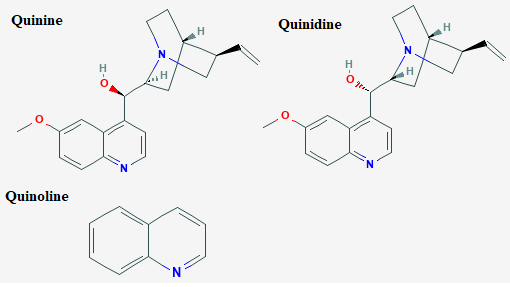
Quinine
Quinine, (C20H24N2O2), Quinoline Alkaloid source
Quinine, Chinin, Chinine, Qualaquin, irritant, is an alkaloid from cinchona tree bark, antimalarial drug, active ingredient, mild antipyretic.
It is an aanalgesic, so it is used in common cold preparations to treat idiopathic leg cramps.
Nowadays, it is used as a bitter and flavouring agent in Schweppes Indian Tonic Water.
It occurs in cinchona tree extracts.
See: Quinine.
Quinoline
Quinoline, (C9H7N), Quinoline Alkaloid source
Quinoline, heterocyclic aromatic organic compound, colourless hygroscopic liquid, strong odour, if exposed to light yellow then brown.
It is slightly soluble in cold water, and is used as a flavouring ingredient.
It occurs in Mentha, cocoa, black tea, and in scotch whisky.
Quinoline yellow, (C18H11NO2), mixture of dyes based on quinoline, quinophthalone, solvent yellow, erio chinoline yellow 4G source
E104, azo dye is based on quinoline, bright yellow colour, possible health risk is dermatitis, and is used in lipsticks.
Radium, Ra
Radium, Ra
Radium, Table of the Elements
Radium, RSC
Radium (Latin radius, 'spoke'), is an alkaline earth metal.
Radium is a radioactive alkaline earth metal, extracted from pitchblende, uraninite, used in cancer therapy, and as a radioactive resource.
Radiation dose from entry of radioactive materials into the body: 7.2.2
Atomic number: 88, Relative atomic mass: 226.025, RD: 5.0, MP: 700 oC, BP:1140 oC
Specific heat capacity: 121 J kg-1 K-1
Radon, Rn
Radon, Rn
Radon, Table of Elements
Radon, RSC
Radon, Rn (from Ra radioactive decay), in former health spas, Rn-222, Group 18, was te last noble gas found.
Radon is a non-metal noble colourless water-soluble gas at room temperature and pressure.
Rn2 is formed by decay of radium-226, usually under granite, where it may be a health habit to people living in granite houses.
Radon has few compounds and is used in radiotherapy.
Atomic number: 86, Relative atomic mass: (222), RD: 4.4 (211 K), MP: -71 oC, BP: -61.8 oC
Specific heat capacity = 92 J kg-1 K-1
Rapanone
Rapanone, C19H30O4, is a quinone, benzoquinone, dihydroxy-1,4-benzoquinone, and is antihelmintic. source
It occurs in (Rapanea maximowiczii), Aegiceras, and in Oxalis.
Raphanin
Raphanin, C6H9NOS2, sulphoraphene, toxic, antioxidant, antibacterial, and is used in Chinese medicine. source
It occurs in seed of Radish, (Raphanus raphanistrum subsp. sativus), Brassicaceae, and in root vegetables.
Rayon
Rayon, viscose, is made from cellulose products and wood.
Rayon polymer: 3.8.14
Rayon, burning test: 4.3.21
Organic builders in washing powders: 12.6.8
Prepare rayon: 3.3.8
Triboelectric series: 31.1.02 See: Negative polarity, 29. Rayon
Reactions of:
Rate of reaction, k: 17.1.11
Recycle
Recycle chemicals: 3.4.7 See: 1.3 Recycle
Plastics recycling code, recycling symbols: 3.4.0
Recycle copper: 12.7.8
7.9.31, Recycle heavy metals safety, (Experiments)
Recycle silver: 12.10.1, (See: 6.)
Redox
Redox reactions, reduction-oxidation reactions
Redox indicators, List of redox indicators: 1.21
Redox reactions: 12.2.9
Redox reactions, Disproportionation: 17.7.16
Reduce
Reduce, reducing, reductants, reduction
In an electrolytic cell, oxidation occurs at the positively charged anode and reduction occurs at the negatively charged cathode.
Reduce carbon dioxide with burning magnesium: 3.1.1
Reduce copper oxide with natural gas methane: 16.5.1.64
Reduce metal compounds: 10.10.0
Reduce nitrate to ammonia: See 4.1
Reducing agent, Reactions of metals as reducing agents: 12.14.0
Reducing agent, Separate metals by reduction of metal oxides: 10.10.0
Reducing agents, Oxidizing agents and reducing agents: 15.4.0
Reducing sugars, tests for breakdown of starch to reducing sugars: 9.3.6
Reductants (reducing agents): 15.3.3
Reductants, List of chemical reductants: 1.22
Reduction reactions, gain of electrons: 16.1.3
Tests for reducing sugars, Benedict's test for reducing sugars: 9.4.1
Tests for reducing sugars, Fehling's test for reducing sugars: 9.5.0
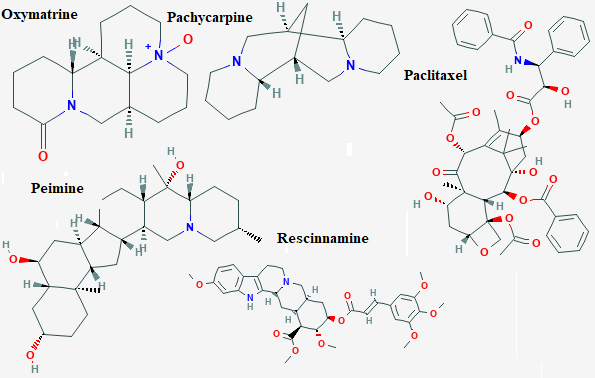
Rescinnamine Rescinnamine, (C35H42N2O9), Vinca Alkaloid, anti-hypertensive, tranquillizer, widely used in folk medicine
Rescinnamine Rescinnamine, (C35H42N2O9), Vinca Alkaloid, anti-hypertensive, tranquillizer, widely used in folk medicine source
It occurs in Poison devil's-pepper (Rauvolfia vomitoria).
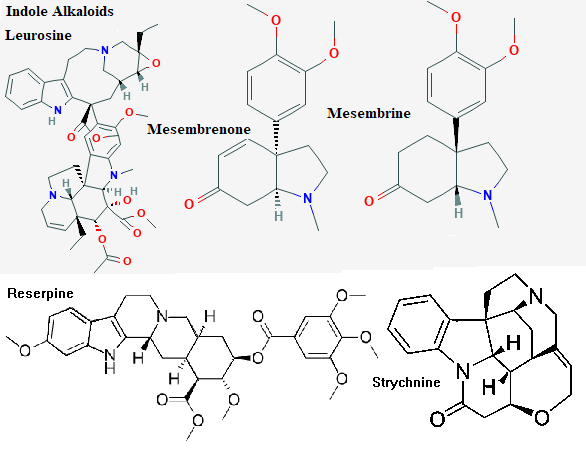
Reserpine
Reserpine, (C33H40N2O9), Indole Alkaloid source
Reserpine, indole derivative alkaloid, monoterpenoid indole alkaloid, corynanthe type alkaloid, anti-hypertensive, antipsychotic
It was used to control high blood pressure, tranquillizer, but nowadays rarely used.
It occurs in Indian snakeroot (Rauvolfia sepentina).
Resins
Resin, (Latin: resina, Resinum 'from a pine')
Resins are hard, sticky, inflammable, usually aromatic substances, insoluble in water, usually collected by incisions into fir and pine trees.
They contained organic polymers and terpenoids, e.g. alpha-pinene, beta-pinene, limonene. terpinolene, caryophyllene and resin acids.
Synthetic resins, so-called, because they at first resembled natural resins, are used to make plastics are thermosetting or thermoplastic.
Rosin, colophony, gum rosin, colophonium, Greek pitch, is a solid amber residue made by the distillation of turpentine from pine stumps.
Rosin is used for adhesives, varnishes, violin bows, and contains diterpenes.
Rosins are used on the bows of violins and other stringed instruments.
Resin, ion exchange resin, anion exchange resin ("Permutit"), DOWNEX AGI-X8
Melamine-formaldehyde resins, (MF): 16.7.6.1 Cyanamides
Remove water hardness: 12.5.5
Resins and gums: 3.0.0
Resin Identification Code, Plastics recycling code: 3.4.0
Zeolite: 18.1.28
Water softening using ion exchange resin: 12.2.15
Resveratrol
Resveratrol, C14H12O3, plant polyphenol, a stilbenoid, a glycoside, a resorcinol, polyphenolic phytoalexin, antioxidant. source
It is anti-diabetic, neuroprotective, antibacterial, antifungal.
It may be used to treat diabetes, atherosclerosis, aging.
It occurs in seeds of transgenic oilseed rape (Brassica napus), Japanese knotweed, red grapes skin, Polygonum, Picea, Pinus, and in (Eucalyptus wandoo) wood.
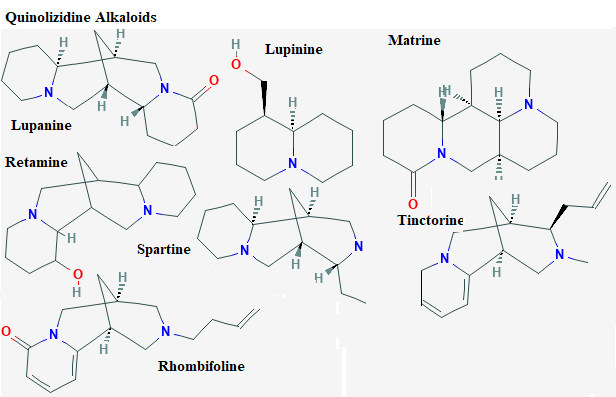
Retamine
Retamine, (C15H26N2O), Quinolzidine Alkaloid source
Retamine, Hydroxysparteine, is hypotensive, and diuretic.
It occurs in Genista.
Retene
Retene, C18H18, methyl isopropyl phenanthrene, environmental hazard, polycyclic aromatic hydrocarbon, cytotoxic source
It occurs in tars from distillation of resinous woods, and in wood pulp effluent.
It indicates conifer forest fires.
Reticuline
Reticuline, (C190H23NO4), Isoquinoline Alkaloid source
Reticuline, benzylisoquinoline alkaloid, coclanoline, alkaloid precursor, (precursor of morphine)
It occurs in Papaver, Cryptocarpa, and in Romneya.
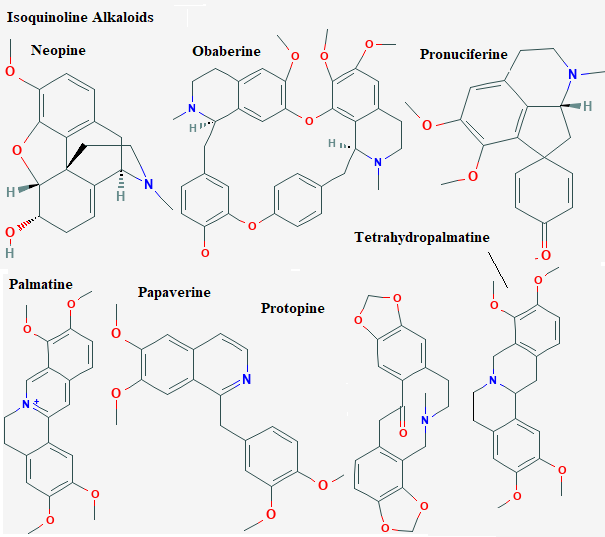
Retronecine
Retronecine, (C8H13NO2), Pyrolizidine Alkaloid, senecifolinene, pyrolizidine derivative, non-ester, may cause liver damage from excessive consumption. source
It occurs in (Borago officinalis), (Senecio vulgaris), (Tussilago farfara), (Heliotropium europaeum), (Echium plantagineum), and in (Crotalaria retusa).
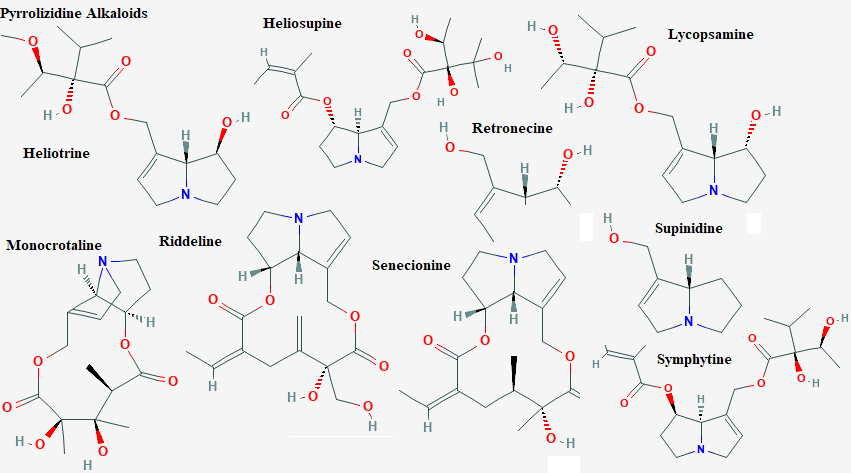
Rhaponticin
Rhaponticin, C21H24O9, rhapontin, ponticin, a stilbenoid, antifungal. source
It occurs in (Polygonum multiflorum), rhubarb, (Rheum rhabarbarum), and in Eucalyptus.
Rhein
Rhein, C15H8O6, cassic acid, rhubarb yellow, rheic acid, glucorein (rhein-8-glucoside), yellow needles or powder, cathartic source
It occurs in Rhubarb, (Rheum rhabarbarum), Polygonaceae.
Rhenium, Re
Rhenium, Re
Rhenium, Table of the Elements
Rhenium, RSC
Rhenium (Latin: Rhenus 'Rhine river')
Rhodamine dyes Rhodamine B, C28H31ClN2O3
Rhodamine dyes Rhodamine B, C28H31ClN2O3 source
Rhodamine 6G, C28H31N2O3Cl source
Rhodamine 123, C21H17ClN2O3 source
Rhodamine B cation, Rhodamine B(1+), Rhodamine 610, C28H31N2O3+, cationic fluorescent dye, xanthene dye. source
Rhodinol
Rhodinol, C10H20O, monoterpene alcohol, floral fragrance source
It occurs in citronella oil, and in lemon grass.
Rhodium, Rh
Rhodium, Rh
Rhodium, Table of the Elements
Rhodium, RSC
Rhodium, Rh, (Greek rhodos 'rose', from pink colour of Rh compounds), white to blue-white, hard, ductile, malleable metal
It is used in jewellery and electroplating.
C28H31N2O3Cl. Rhodium trichloride source
Catalytic converter in a motor vehicle: 18.6.1
Rhodopin
Rhodopin, C40H58O, a carotenoid pigment, carotenol, tertiary alcohol source
It occurs in phototrophic bacteria and in Afifella.
Rhoeadine
Rhoeadine, (C21H21NO6), rheadine, rhoeadan alkaloid, possibly antitumour, folk medicine, expectorant, sedative. source
It occurs in (Papaver rhoeas).
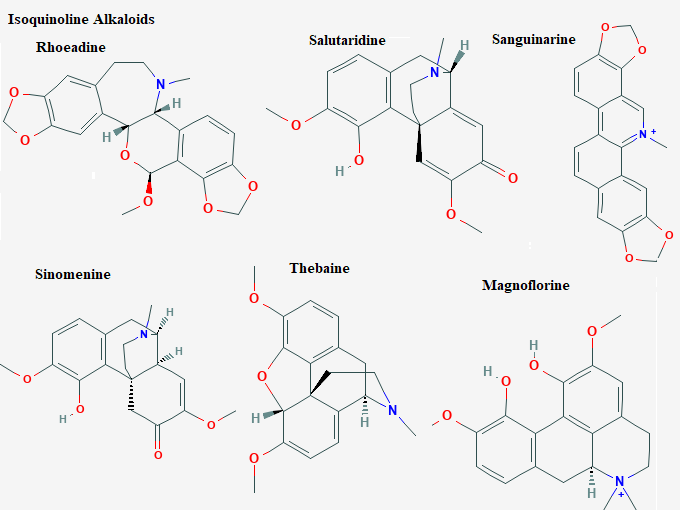
Rhombifoline
Rhombifoline, (C15H20N2O), rhombifoline, butenylcytisine source
It occurs in Genista, Ammodendron, Thermopsis, and in (Laburnum anagyroides).
Riboflavin
Riboflavin, C17H20N4O6, (Latin flavus 'yellow')br Food additive E10, 1 Riboflavin, Riboflavin-5'-phosphate(vitamin B2), (In green vegetables, eggs, milk, liver), colour: orange to yellow), (in margarine). source
Cassava tubers and cocoa "beans" contain riboflavin.
Riboflavin, vitamin b2, Lactoflavin, Riboflavine, orange-yellow crystalline compound, a heat-stable and water-soluble flavin is a growth promoting factor.
It is the precursor of the coenzymes flavin mononucleotide (FMN) and flavin adenine dinucleotide (FAD), and is important for metabolism.
It is essential for healthy skin, nails, and hair, and it is used to treat vitamin b2 deficiency.
It occurs in babassu palm, burdock, pepper, (capsicum), Vitamin b2 complex vitamins in cereals, milk, eggs, malted barley, liver, kidney, heart, leafy vegetables.
It occurs freely in eye retina and urine.
E101 Riboflavin, Riboflavin-5'-phosphate, (vitamin b2), occurs in green vegetables, eggs, milk, liver), (colour: orange to yellow) (margarine).
Diet: 15.0, Bananas
Flavonoids, (Bioflavonoids)
Freezing, thawing and cold storage of meat: 19.2.5
Lost nutrients in food: 19.2.7
Pasteurization of milk: 19.2.10
Poultry composition: 12.4
Regular cows milk, fresh milk, full cream milk, whole milk: 16.2.1a
Test the cooking water of boiled vegetables: 19.2.12
Ricinine
Ricinine, (C8H8N2O2), Pyrrolidine and Piperidine Alkaloid source
Ricinine, Ricidine, Ritsinin, pyridine derivative, pyridine alkaloid, pyridone, nitrile, bitter white crystals.
It may cause toxic burning feeling in mouth and throat, nausea, vomiting, severe pain in stomach, diarrhoea, reactions, hepatic and renal damage, death.
It is used as alkaloid marker for poisonous lectin ricin, e.g. in urine, toxic alkaloid, insecticidal.
It occurs in (Ricinus communis), castor seeds and leaves.
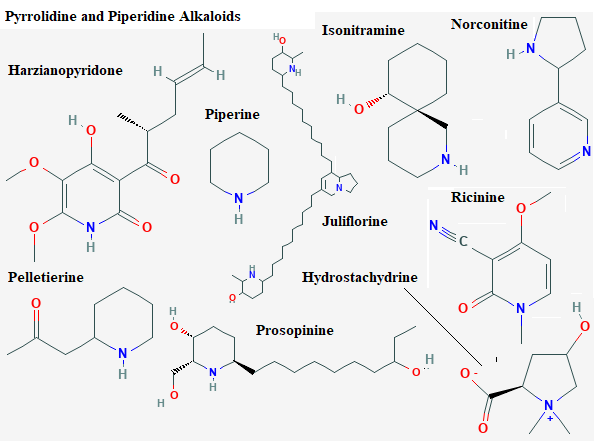
Castor oil, ricinoleic acid: 16.3.6.4.
Riddelline
Riddelline, (C18H23NO6), Pyrrolizidine Alkaloid source
Riddelline, is a diester of retronecine (C8H13NO2), and a possible carcinogen. source
It occurs in (Senecio riddelli), (Senecio vulgaris), (Acobaea vulgaris), Crotalaria, and in Amsinckia.
Ridentin
Ridentin, C15H20O4, a germacrane sesquiterpenoid. cytotoxic, antitumour. source
It occurs in Artemisia.
Rishitin
Rishitin, sesquiterpene, C14H22O2, polyol, terpenoid compound, antifungal, bacteriocidal, phytotoxic, phytoalexin. source
It is produced by tubers of (Solanum tuberosum) infected by Phytophthora fungi.
Rituximab
Rituximab, C6416H9874N1688O1987S44, ia a monoclonal antibody medication. source
It is used to treat non-Hodgkin lymphoma, and other conditions, by slow injection into a vein.
It works against the CD20 antigen on the surface of normal and malignant immune system B lymphocytes, to trigger cell death.
Side effects may include easy bruising, decrease in the amount of urine or unusual tiredness.
CHOP, chemotherapy used or treatment of non-Hodgkin lymphoma.
Cyclophosphamide, is an alkylating agent.
Hydroxydaunorubicin, (doxorubicin, adriamycin), is an intercalating agent.
Oncovin (vincristine), prevents cells from duplicating by binding to the protein tubulin.
Prednisone or Prednisolone, are corticosteroid component of R-CHOP21. source
Rochelle salt
Rochelle salt, KNaC4H4O6.4H2O, potassium sodium tartrate tetrahydrate, Seignette salt source
Seidlitz powder is a double salt of tartaric acid.
It has a saline cooling taste as a laxative, and the large deliquescent monoclinic crystals are piezoelectric and used in "crystal" phonograph pickups.
Rochelle salt: E337
Prepare Fehling's solution: 9.5.1
Tests for proteins, biuret test: 9.4.2
Piezoelectricity: Rochelle salt
Rocks
Rocks and minerals: 35.1.0
Minerals: 35.2.0
Igneous rocks: 35.2.1
Metamorphic rocks: 35.3.7
Sedimentary rocks: 35.4.5a
Roentgenium, Rg
Roentgenium, Rg
Roentgenium, Table of the Elements
Roentgenium, RSC
Roentgenium (William Roentgen, 1845-1923, Germany, discovered X-rays), radioactive, transuranic (atomic number > 92)
Rose bengal
Rose bengal, C20H4Cl4I4O5, fluorochrome, histological dye, xanthene dye, organic potassium salt, is related to fluorescein, C20H12O5. source
The sodium salt, C20H2(Cl4I4Na2O5, is used to treat eye disorders.
It is used as a stain and to treat cancers.
Rotundine
Rotundine, (C21H25NO4), Tetrahydropalmatine, Berberine Alkaloid source
It is a selective dopamine D1 receptor agonist, analgesic, adrenergic agent, non-narcotic analgesic, antiprotozoal, anti-arrhythmic, sedative, tranquillizer.
It occurs in (Stephania sinica) and is widespread in China.
Rhodoxanthin
Rhodoxanthin, C40H50O2, xanthophyll carotenoid, carotenoid pigment source
Food additive: E161f
Rhodoxanthin occurs in the yew tree, (Taxus baccata).
Rose oxide
Rose oxide, C10H18O, monoterpenoid, is a fragrance chemical. source
It occurs in roses oil, lychee, and in Gewurztraminer wines.
Rubidium, Rb
Rubidium, Rb
Rubidium, Table of the Elements
Rubidium, RSC
Rubidium, Rb, (Latin rubidus 'red'), two red lines in spectrum), is a silver-white, very reactive, alkali metal.
It occurs in pegmatites, lepidolite and pollucite.
Ruthenium, Ru
Ruthenium, Ru
Ruthenium, Table of the Elements
Ruthenium, RSC
Ruthenium, Ru, (LatinRuthenia 'Russia'), silver-white, rare similar to platinum, catalyst, hardens alloys.
It is used in electrical contacts, platinum alloys, jewellery electroplating for "high-tech grey-black look".
Ruthenium (III chloride, Ruthenium (III) chloride hydrate, Ruthenium carbonyl
Rutherfordium, Rf
Rutherfordium, Rf
Rutherfordium, Table of the Elements
Rutherfordium, RSC
Rutherfordium (Earnest Rutherford, 1971-1937, New Zealand, later UK)
Rutherfordium is radioactive, transuranic (atomic number > 92).
Rubixanthin
Rubixanthin, C40H56O, xanthophyll carotenoid, xanthophyll pigment, Natural Yellow 27, red-orange pigment, former food colourant (E161d). source
It occurs in Rose hips (Rosa canina) and Apricot (Prunus armeniaca), Rosaceae.
Rutaecarpine
Rutaecarpine, (C18H13N3O), rhetine, a pyridopyrimidine, inhibits platelet aggregation, hypotensive, vasoldilator, with strong bitter taste, is in Chinese medicine. source
It occurs in (Tetradium ruticarpum), (Evodia rutaecarpa), and in (Hortia arborea).
Rutin
Rutin, C27H32O16, sophorin, a tetrahydroxyflavone, Rutin, sophorin, bioflavonoid is a yellow or greenish-yellow, needle-shaped crystals. source
Antioxidant, strengthens capillaries to prevent bruising or bleeding, anti-inflammatory.
It prevents fat deposits in the arteries, reduces cytotoxicity of oxidized LDL-cholesterol, utilizes vitamin C to maintain collagen.
It occurs in many plants, fruits and vegetables, buckwheat, Carpobrotus, (Sophora japonica), (Ruta graveolens), Citrus, olive, lovage, dock, dill, and in fennel.
Do not take rutin if pregnant or breastfeeding.
Rutin hydrate, C27H30O16.xH2O, polyphenolic flavonoid, antioxidant, a NO scavenger, free radical scavenger, is protection against carcinogenesis. source
Strontium
Strontium Table of the Elements
Strontium, RSC
Strontium, Sr (former Strontia region, Scotland, where Strontium first found), alkaline earth metal, AAS solution.
Toxic if ingested, surface layer corrosive to skin and eyes.
Strontium with water forms hydrogen gas that may explode if mixed with air.
Strontium, do not mix with sulfur or phosphorus, because of dangerous exothermic reaction.
Strontium, Sr, silver white metallic element, in minerals celestine (SrSO4), strontianite (SrCO3), and spring water, similar properties to calcium. source
Strontium salts used for crimson flame in fireworks, after nuclear explosion fallout contains 90Sr that can be absorbed in human bone.
Strontium chloride in toothpaste for sensitive teeth, e.g. "Sensodyne".
Strontium is harder to cut than sodium, use calcium as cheaper alternative.
For schools, purchase only small quantity of strontium and store in tightly-sealed container, give students only few grains per activity.
Atomic number: 38, Relative atomic mass: 87.62, RD 2.54, MP = 800 oC, BP = 1300 oC.
Specific heat capacity: 0.3 J kg-1 K-1.
Strontium toxicity: 4.15
Tests for strontium: 12.11.3.28
Strontium compounds
Reactions of strontium compounds: 12.12.0
Strontianite, SrCO3, strontium carbonate source
Strontium carbonate, SrCO3, in strontianite mineral, harmful if ingested, skin irritant source
Strontium carbonate, Low cost: from pottery supplies stores
Strontium (II) chloride, SrCl2, strontium dichloride (detected with flame test), harmful if ingested source
Strontium chloride hexahydrate, SrCl2.6H2O, For 0.1 M solution, 26.7 g in 1 L water source
Strontium chloride (powder)
Strontium fluoride
Strontium hydroxide, harmful if ingested, skin irritant, corrosive
Strontium nitrate, Sr(NO3)2, AAS Solution, harmful if ingested, explosive mixtures with combustibles of organic compounds source
Strontium sulfate, SrSO4, celestine source
This page was generated automatically from the original page on John Elfick's School Science Lessons website. If something looks wrong, please check the original.