Chemistry, Aa to Ac
Last updated 2026-10-14 by Dr John Elfick
Aa to Ac
Aa to Ac
Prepare acetylene: 16.6.6.1
Prepare| acid-base indicators: 5.6.2
Prepare| acid-base indicator| pH range: 5.6.3
Prepare acids and bases: 11.0
12.3.1 Amphoteric substances
Amphoteric substances can act as an acid or a base.
In the above reactions water is acting as a base with sulfuric acid and is acting as an acid with ammonia.
Similarly, bicarbonate ion can act as an acid to donate a proton to form the carbonate ion.
HCO3-+ H2O < → CO32-+ H3O+ source
Also, bicarbonate ion can act as a base to accept a proton to form carbonic acid.
HCO3-+ H2O < → H2CO3 + OH- source
12.3.2 Polyprotic acids
Polyprotic acids can donate more than one proton, e.g. carbonic acid.
H2CO3 + H2O < → HCO3-+ H3O+ (The first proton to be donated to a water molecule.) source
HCO3-+ H2O < → CO32-+ H3O+ (The second proton to be donated to a water molecule.) source
12.3.3 Strong acids and weak acids
A strong acid completely dissociates into ions, e.g. nitric acid has almost complete dissociation, 93%.
HNO3 (aq) + H2O H3O+(aq) + NO3-(aq) source
A weak acid only partly dissociates into ions, e.g. acetic acid.
CH3COOH + H2O < → CH3COO-+ H3O+ source
Describing acids and bases as "strong" or "weak"only refers to their reaction with water.
It does not refer to the concentration or the number of moles in a volume.
The strong acids include:
Perchloric acid HClO4, hydrochloric acid HCl, hydrobromic acid HBr, hydroiodic acid (hydriodic acid), HI, nitric acid HNO3, and sulfuric acid H2SO4. source
Any other acid is a weak acid, because it does not completely dissociate in water.
12.3.4 pH
Water can transfer a proton from one molecule to another, autionization.
2H2O < → H3O++ OH-and H2O < → H++ OH- source
The product of hydrogen ion concentration, [H+] and hydroxide ion concentration, [OH-] = the constant, Kw
Kw = [H+] × [OH-] = 1.00 × 10⁻¹⁴
So [H+] = 10-7and [OH-] = 10-7
The hydrogen ion concentration is very small in pure water, so the concentration is describes in terms of its negative log.
pH is the negative log of the hydrogen ion concentration, pH = -log[H+], so hydrogen ion concentration, [H+] = 10-pH.
So acidic solutions have a high [H+] and low pH values.
Basic solutions have low [H+] and high pH values.
A solution that is neither acidic nor basic, a neutral solution, has [H+] = [OH-], so pH = 7.
A more acid solution has pH approaching 1.
A more basic solution has pH approaching 14.
12.3.5 Ionization reaction of carbonic acid
H2O (l) → H+(aq) + OH-(aq) source
2H+(aq) + CO32-(aq) < → H2CO3 (aq) carbonic acid source
CO2 + H2O < → H3O++HCO3-, K1 = 4.4 × 10⁻⁷ source
HCO3-+ H2O < → H3O++ CO32-, Ka = 4.7 × 10⁻¹¹ source
12.3.6 Acid dissociation constant
Acid dissociation constant, acidity constant, acid-ionization constant
1. The acid dissociation constant, Ka, measures the strength of an acid in solution.
2. An acid, HA, dissociates into A-, conjugate base, and H+, hydrogen ion (proton).
The equilibrium equation when concentrations do not change is, HA < → A-+ H+. source
3. Dissociation refers to the break up of a molecule into smaller molecules, atoms or ions.
In a buffer solution of the salt of a weak acid with a weak acid, the dissociation of the weak acid is negligible
However, a salt may be dissociated completely into ions.
4. The dissociation constant, Ka is the equilibrium constant of a reversible dissociation including the ionization reactions of acids and bases in water.
The dissociation constant Ka = [A-] [ H+] / [HA] in mol / litre.
5. However, dissociation is usually expressed as a logarithmic constant, pKa, where pKa = -log10 (1/Ka).
It is the quotient of the equilibrium concentrations, in mol/L for ionization reactions at 25 oC.
For pKa, the larger the value the weaker the acid, so strong acids have pKa < 2, and weak acids have pKa >2, < 12.
6. Confusion happens, because both Ka and pKa are sometimes both called "acid dissociation constant"!
The acid dissociation constant, Ka of the acid HB
HB (aq) < → H+(aq) + B-(aq) source
Ka = [H+][B-] / [HB]
Ka is a measure of the degree to which an acid or base will dissociate in water.
Stronger acids have a larger Ka and a smaller pKa than weaker acids.
The greater the value of Ka, the more the formation of H+ is favoured, and the lower the pH of the solution.
12.3.7 Acid dissociation constant at logarithmic scale, pKa
pKa = -log10Ka
Strong acids have pKa value < −2.
When the pH of solution is at the value of pKa for a dissolved acid, that acid will be 50% dissociated.
Sulfuric acid, H2SO4 → HSO4-, pKa -10 source
Hydroiodic acid, HI: HI (g) + H2O (l) → H3O+(aq) + I-(aq), pKa -9 source
Hydrobromic acid, HBr: HBr (g) + H2O (l) → H3O+(aq) + Br-(aq), pKa -8 source
Perchloric acid, HClO4: HClO4 + H2O → H3O++ ClO4-, pKa -10 source
Hydrochloric acid HCl: HCl (g) + H2O (l) → H3O+(aq) + Cl-(aq), pKa -7 source
Hydronium ion, H3O+: H2O + H2O < → H3O++ OH-, pKa -1.74 source
Nitric acid HNO3: HNO3 + H2O → H3O++ NO3-, pKa - 1.3 source
Chloric acid, HClO3, pKa -1.0: Weak acid has pKa value −2 to 12 in water. source
Acetic acid, CH3COOH, pKa 4.75 source
12.3.8 Taste of acids
BE CAREFUL! NEVER TASTE ACIDS IN THE LABORATORY!
Do NOT taste these acids in the laboratory!
Each acid has a sour taste that is a characteristic of acids.
Lemon juice contains the white crystalline citric acid.
Vinegar contains ethanoic acid, acetic acid, CH3COOH. source
Experiment
Moisten your finger with a very dilute solution of hydrochloric acid.
Rub your fingers together and then lick them.
Repeat the procedure with very dilute solutions of acetic acid and citric acid.
Do not taste any other acids, because they may damage living tissues.
Citric acid C6H8O7 source
9.1.6, Acetic acid, ethanoic acid, CH3COOH source
12.3.9 Nitric acid with metals
Add slowly small pieces of copper, magnesium and zinc to small amounts of dilute nitric acid in separate test-tubes.
If no change is taking place, gently heat the mixture.
Repeat the procedure, 1. with concentrated nitric acid, 2. with concentrated sulfuric acid, and 3. with concentrated hydrochloric acid.
Reactions of metals with nitric acid and conc. sulfuric acid are different from reactions of metals with HCl, dilute sulfuric acid and dilute acetic acid.
Copper does not react with dilute acids or with concentrated hydrochloric acid.
Copper does react with dilute and concentrated nitric acids and with hot concentrated sulfuric acid.
However, it does not produce hydrogen gas in reaction with them.
Residual mixtures contain solutions of salts.
However, writing equations is difficult, because more than one reaction can occur between Cu, Mg, Zn and nitric acid.
When zinc reacts with nitric acid the reaction may produce nitrogen dioxide, nitric oxide, nitrous oxide, zinc nitrate and ammonium nitrate!
12.3.10 Concentrated acids with metals
Nitric acid with copper
Nitric acid reacts with metals above platinum in the reactivity series, but does not form hydrogen gas.
BE CAREFUL! DO THIS EXPERIMENT IN A FUME CUPBOARD.
Pour drops of concentrated nitric acid on pieces of copper in a test-tube.
Put a stopper on the test-tube immediately, because brown nitrogen dioxide gas forms.
The nitric acid acts as an oxidizing agent and is reduced to nitrogen dioxide and water.
The reaction is exothermic.
Cu (s) + 4HNO3 (aq) → Cu(NO3)2 (aq) + 2H2O (l) + 2NO2 (g) source
12.3.11 Concentrated acids with a non-metals
Concentrated acids with a non-metals, carbon
DO NOT DEMONSTRATE THIS EXPERIMENT!
Hot sulfuric acid and nitric acid can react as oxidizing agents with carbon.
Carbon is oxidized to carbon dioxide and nitric acid is reduced to nitrogen dioxide and water.
C (s) + 4HNO3 (aq) → CO2 (g) + 4NO2 (g) + 2H2O (l) source
12.3.12 Acid dissociation constant
Acid dissociation constant, acidity constant, acid-ionization constant
1. The acid dissociation constant, Ka, measures the strength of an acid in solution.
2. An acid, HA, dissociates into A-, conjugate base, and H+, hydrogen ion (proton).
The equilibrium equation when concentrations do not change is, HA < → A-+ H+. source
3. Dissociation refers to the break up of a molecule into smaller molecules, atoms or ions.
In a buffer solution of the salt of a weak acid with a weak acid, the dissociation of the weak acid is negligible
However, a salt may be dissociated completely into ions.
4. The dissociation constant, Ka is the equilibrium constant of a reversible dissociation including the ionization reactions of acids and bases in water.
The dissociation constant Ka = [A-] [ H+] / [HA] in mol / litre.
5. However, dissociation is usually expressed as a logarithmic constant, pKa, where pKa = -log10 (1/Ka).
It is the quotient of the equilibrium concentrations, in mol/L for ionization reactions at 25 oC.
For pKa, the larger the value the weaker the acid, so strong acids have pKa < 2, and weak acids have pKa >2, < 12.
6. Confusion happens, because both Ka and pKa are sometimes both called "acid dissociation constant"!
19.1.17 Solid acids, solubility
19.1.11 pH of solid acids
19.1.16 Solid acids, add sodium carbonate
19.1.17 Solid acids, solubility
Acetyl
Acetyl group| −COCH3 −C(=O)−CH3, Ac, ethanoyl source
For example: Acetyl-CoA, (acetyl coenzyme A), C23H38N7O17P3S source
Amyl
Amyl, C5H11- source
For example: Amyl nitrate, CH3(CH2)4ONO2, motor fuel additive source
Abbreviations
i.e. (id est) means "that is" or "in other words".
e.g. (exempli gratia) means "for example".
viz. (videlicet) means "namely" or "that is to say".
et al. (et alii) means "and others" or "and collaborators".
q.v. (quod vide) means "which to see", written after words to be looked up in the current document.
ibid. (ibidem) means "in the same place", refers to a previously listed work.
cf. (confer) means to see a given citation for comparison.
Abietic acid
Abietic acid, C20H30O2, sylvic acid, abietate, a diterpenoid, colophony rosin, Greek pitch, a monocarboxylic acid, irritant source
It is a yellow resinous powder, and it is used on violin bows and ballet shoes.
It is a main component of Gums rosin.
It is used to make varnishes, soaps, plastics), most abundant compound in rosin, in Pinus.
Abrin
Abrin, as a white yellow powder, is an extremely toxic plant protein that inhibits synthesis of proteins, causes allergic reactions and may be fatal if absorbed through abraded or wounded skin.
Abrin, an agglutinin, occurs in (Abrus precatorius), jequirity bean, Indian licorice seed, crab's eyes.
Albrin (ABR) may cause death of certain cancer cells.
Abrin occurs in the the rosary pea (jequirity pea), (Abrus precatorius).
Abrin, acts as a ribosome-inhibiting protein (RIP) and is a lethal poison.
It is soluble in solutions of sodium chloride, usually with turbidity.
Toxic proteins of abrin are resistant to digestive enzymes, but are destroyed in cooking.
The toxic portion is heat stable to 60 °C for 30 minutes, but at 80 °C most of the toxicity is lost in 30 minutes.
Hazardous polymerization will not occur and it is stable in the environment.
Abrin-a, 1 of the 4 isoabrins from a plant, has the highest inhibitory effect on protein synthesis.
It consists of an A chain of 250 amino acids and a B chain of 267 amino acids.
Absinthin
Absinthin, C30H40O6, a sesquiterpene lactone, a triterpenoid, anti-inflammatory agent, nervousness, convulsions source
It occurs in Wormwood (Artemisia absinthium).
Artemisia absinthium, anthelmintic, flavouring Vermouth, is a bitter-tasting constituent of Absinthe.
Acanthosides
Acanthoside B, Eleutheroside e1, C28H36O13, syringaresinol beta-D-glucoside source
It occurs in (Eucommia ulmoides) bark, and in (Acanthopanax sessiliflorus) roots
Acanthoside D, Syringaresinol-di-O-glucoside, Liriodendrin, C34H46O18, beta-D-glucoside, antioxidant, anti-inflammatory source
Acepromazine
Acepromazine, C19H22N2OS, a phenothiazine, psychotropic drugs, used as a sedative and antiemetic source
Alleged overuse of Acepromazine on race horses in Australia.
Acerosin
Acerosin, C18H16O8, is a trimethoxyflavone metabolite. source
It occurs in Scoparia, Iva, Helianthus, Gardenia, Vitex, and in peel of mandarin orange, (Citrus reticulata).
Acesulfame
Acesulfame, C4H5NO4S is a sulfamate ester, irritant, sweetening agent, and environmental contaminant. source
Food code E950, Acesulphame potassium, Acesulfame-K, Ace-K, C4H4KNO4S, synthetic chemical, artificial sweetener, Health risk source
Food code E962, salt of aspartame-acesulfame, artificial sweetener, emulsifier, stabilizer, thickener and gelling agent, Health risk
19.6.3 Cola, Diet or Light contents
Acesulfame potassium, C4H4KNO4S, or Ace-K, is a zero-calorie sweetener in foods and drinks. source
It occurs in combination with the sweetener disaccharide derivative Scralose, C12H19Cl3O8, in Splenda. source
or in combination with the dipeptide Aspartame, C14H18N2O5, in Equal or Coke Zero. source
Acesulfame K is also sold under the brand names "Sunett" and "Sweet One".
The fact that the crystal powder has a bitter aftertaste is the main reason for mixing it in sweeteners.
The mixture of sweeteners is used to create a sugar taste.
Acetaldehyde
Acetaldehyde C2H4O, CH3CHO, ethanal, colourless liquid, BP 21°C, choking vapour irritates eyes, tobacco smoke carcinogen. source
16.3.2.7 Ethanal with potassium dichromate
16.3.2.6 Ethanal with potassium manganate (VII)
Acetamide
Acetamide, CH3CONH2, C2H5NO, ethanamide, acetic acid amide, colourless crystals, mouse odour, low toxicity, skin irritation. source
It is formed from condensation of acetic acid with ammonia, and it is used as solvent.
Amide RCONH2, (amine + acid), No prefix
Suffix, -oic, Suffix, -amide, e.g. acetamide = ethanamide, CH3CONH2 source
16.1.5.6 Amides
24.7.3 Heat energy changes solid to liquid
24.7.5 Latent heat of fusion of ice to water
Acetates
Acetates CH3COO-, Ethanoates source
An acetate (ethanoate) is a salt or ester of acetic acid (ethanoic acid).
An acetate as a salt: Sodium acetate (sodium ethanoate), CH3COONa. source
An acetate as an ester: Ethyl acetate, (ethyl ethanoate), CH3COO(C2H5).
If acetate is shown as OAc−, acetic acid is shown as HOAc.
Weak acids, e.g. ethanoic acid (acetic acid, CH3COOH, carbonic acid and sulfurous acid dissociate little in aqueous solution. source
However, their salts, e.g. potassium acetate CH3COOK are completely dissociated into ions. source
Acetic anhydride (CH3CO)2O
3.5.7 Celluloid
3.5.8 Cellulose acetate, Cellulose triacetate
12.3.9 Acids with salts
16.4.2 Ethyl acetate
17.3.5 Ethyl acetate with sodium hydroxide, autocatalyctic hydrolysis
Acetic anhydride
Acetic anhydride, (CH3CO)2O, ethanoic anhydride, acetic acid anhydride, acetyl oxide, acetic oxide
Use < 25 mL or g in a fume cupboard or a well-ventilated area
Solution < 8%, Not hazardous, i.e. 8% acetic acid
It is a highly volatile liquid, irritating odour, reacts with moisture in air, corrosive to skin, strong respiratory irritant.
(CH3CO)2O + H2O → 2 CH3COOH source
acetic anhydride + water → acetic acid source
You can prepare acetate esters from alcohols by reaction with acetic anhydride.
Reactions with alcohols, oxides, permanganates, nitric acid may be hazardous to explosive. Be careful!
Acetoacetic acid
Acetoacetic acid, C4H6O3, CH3COCH2COOH, 3-oxobutanoic acid, is a fatty acid. source
It occurs in (Phaseolus vulgaris), and in (Apium graveolense).
16.1.9 Ethyl acetoactonate
16.3.3 Keto acids
19.5.1Tests for ketones
Acetone
Acetone, CH3COCH3, 2-propanone, a dimethyl ketone, is highly flammable, irritant vapour, slightly toxic if ingested. source
Use low cost, technical grade acetone, from hardware store, as solvent, and to clean glassware.
Acetone ACS reagent, 99.5%, clear colourless volatile liquid, characteristic smell, inflammable
RD 0.79 gm cm-3, BP 56.5oC, miscible with water and ether, and oils sharp sweet taste
Acetone is a curing agent for epoxy resin adhesives, surface coating, irritant.
Use acetone in a fume cupboard or use < 50 mL in a well-ventilated area.
Acetone react violently with chloroform.
Use ethyl acetate or methyl isobutyl ketone as alternative solvent to acetone.
Heat acetone on a water bath, NOTon a naked flame.
Acetone dissolves polystyrene packing pieces rapidly by dissolving the linking units.
Common names: Nail polish remover, (not Australia), e.g. "Cutex", nail paint remover and thinner
It may be sold as "pure acetone".
Junior secondary students should use acetone only as a cold solvent, and they should not heat acetone.
2.3.7 Cleaning agents, solvents
3.1.2 Boiling point of inflammable liquids
12.19.9.7 Bromination of acetone
15.4.16 Potassium dichromate as an oxidizing agent, (See: 5.)
10.12.0 Separate by solvent extraction of oil from peanuts
17.3.7 Oxidation of acetone vapour, copper catalyst
Acetonitrile
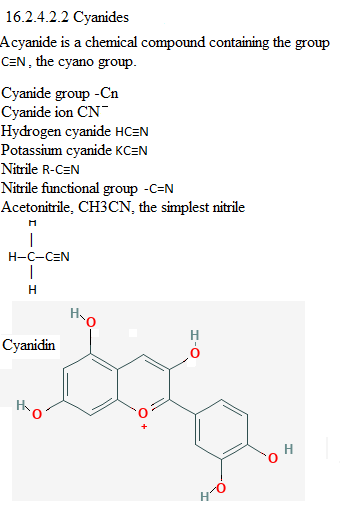
Acetonitrile, CH3CN, (acetonitrilo), cyanomethane, methyl cyanide, flammable, colourless liquid, sweet ether-like odour source
It is the simplest organic nitrile and it is toxic if ingested.
Acetonitrile, Solution < 3%, Not hazardous
Acronitrile is used in C3H3N acrylics (plastics), vinyl cyanide, cyanoethylene, synthetics, paint. source
Indole-3-acetonitrile C10H8N2 source
Acetosyringone
Acetosyringone, C10H12O4, is a phenol, irritant, non-steroidal anti-inflammatory, anti-asthmaticg, non-narcotic analgesic. source
It occurs in (Justicia adhatoda), (Polyporus umbellatus), and in (Saccharomyces cerevisiae).
It occurs in (Nicotiana tabacum) root cultures, exuded from roots, to cause infection by (Agrobacterium tumefaciens).
Acetoxychavicol acetate
Acetoxychavicol acetate, C13H14O4, is a galangal acetate, an acetate ester, a phenylpropanoid, and an antineoplastic agent. source
It occurs in Sweet flag, (Acorus calamus), Acoraceae, and in Snap ginger, (Alpinia calcarata), Zingiberaceae
Acetoxyeugenol acetate
Acetoxyeugenol acetate, C14H16O5, is a phenylpropanoid, a monomethoxybenzene. source
It occurs in Greater galangal, (Alpinia galanga), Zingiberaceae, and in Snap ginger, (Alpinia calcarata), Zingiberaceae
Acetylbrowniine
Acetylbrowniine, C27H43NO8, 14-O-Acetylbrowniine, is an acetate ester obtained by acetylation of browniine, C25H41NO7. source
Acetyl chloride
Acetyl chloride, C2H3ClO, CH3COCl, C2ClH3O, ethanoyl chloride, acyl chloride, acetic chloride, has low flash point. source
It is toxic colourless, fuming liquid, pungent odour, vapour heavier than air, irritates eyes and mucous membranes, corrodes metals.
Acetylcholine
Acetylcholine C7H16NO2+, neurotransmitter, stimulates muscle, acetyl ester of choline, is a major transmitter at neuromuscular junctions. source
It occurs in fruit and seed of breadfruit.
9.0, Fruit and seed, (See: 4. Acetylcholine)
Atropine C17H23NO3, alkaloid source
Nicotine C10H14N2, alkaloid source
Acetylharpagide
Acetylharpagide, C17H26O11, 8-O-Acetylharpagide, iridoid glucoside, ecdysteroid source
Chinese medicine, anti-inflammatory, vasoconstrictor, antibacterial, antiviral, acts on smooth. muscle, inhibits, Epstein-Barr virus (EBV).
It occurs in (Ajuga decumbens), and in (Ajuga reptans).
Acetylpyrrolidine
Acetylpyrrolidine, C6H11NO, 2-Acetylpyrrolidine source
Substituted pyrrolidine, CH3COC5H4N, occurs in malt, popcorn, and beer source
Acetylpyrroline
Acetylpyrroline, C6H9NO, 2-Acetyl-1-pyrroline (2AP), occurs in jasmati and basmati rice, wheat bread crust, sweet corn. source
It is the white bread smell in cereals, and hot popcorn.
It occurs in screwpine, Pandanus.
Achillin
Achillin, C15H18O3, santolin, sesquiterpene lactone, a guaianolide, plant growth inhibitor source
It occurs in Achillea, and in Artemisia.
Acids
7.4.1 Acids
19.1.1 Acid-base indicators in the home
topic 12E Acid-base neutralization
12.11.4.1 Acid-base neutralization
12.2.1 Acid-base reactions
16.1.5.7 Acid anhydrides
12.3.6 Acid dissociation constants
12.3.7 Acid dissociation constant at logarithmic scale, pKa
12.3.15 Acid dissociation constant at logarithmic scale
1.0.0 Acid fuchsin indicator
12.3.0 Acids, Chemical reactions
19.1.5 Acids in foods, Food acids
1.1 Acids, List of mineral acids
1.2 Acids, List of organic acids
19.1.2 Acidulated water for cooking
12.3.1Amphoteric substances
3.9.0 Carbonic acid, soda water
12.3.5 Concentrated acids, with a non-metal, carbon
12.3.10 Concentrated acids, with metals, H2SO4 + Cu source
12.3.12 Concentrated acids with metals, nitric acid with copper
12.3.11 Concentrated acids with a non-metals, carbon
12.3.0 Dilute acids with
12.3.5 Ionization reaction of carbonic acid
12.3.9 Nitric acid with metals
12.3.4 pH
12.3.2 Polyprotic acids
12.3.1 Properties of acids
12.16.5 Reactions of sulfuric acid
19.1.17 Solid acids, solubility
12.3.3 Strong acids and weak acids
12.11.2 Tests for acid radicals in solution
12.3.17 Taste of acids, solid acids in the home
12.3.8 Taste of acids
12.11.2 Tests for acid radicals in solution
Acidity
Acidity, definition, [degree of being an acid]
12.11.4.2 Acidity of vinegar and wine
19.1.1 Acidity regulators, food additives
16.1.5 Acidity test, (milk testing)
6.1.0 Soil acidity
Prepare acids
5.6.4 Prepare acid-base indicators
3.1 Prepare acid alcohol solution
11.0 Prepare acids and bases, dilution instruction
5.4.7 Prepare dilute acids
3.4.10 Prepare dilute acids and bases, (Safety)
Boric acid, Boracic acid, H3BO3 source
12.3.16, Hydroiodic acid, a strong acid
Hydrochloric acid, HCl
12.19.7.0, Hydrofluoric acid, HF
Nitric acid, HNO3 source
Nitrous acid, HNO2 source
Phosphoric acid, H3PO4 source
Acid rain
12.8.11 Acid rain and nitrogen oxides, NOx
12.6.0.1 Acid rain, SOx, from burning S or S compounds
18.6.0 Air pollution
12.19.5.0 CFCs, "Freons"
Acidic oxides
12.13.01, Acidic oxides
12.13.6, Carbon dioxide, acidic oxides, (non-metal oxides)
12.13.7, Carbon dioxide, with barium hydroxide solution
12.13.8, Carbon dioxide, with sodium hydroxide solution
12.13.0, Reactions of oxides
Acids with other substances
12.3.4 Acids with aluminiums
12.1.18 Acids with baking soda
12.1.25 Acids with sodium carbonate
12.1.40 Acids with sodium thiosulfate
12.14.18 Acids with zinc
12.3.10 Concentrated acids with metals, nitric acid with copper
12.3.11 Concentrated acids with a non-metals, carbon
12.4.0 Dilute acids with
Acridine
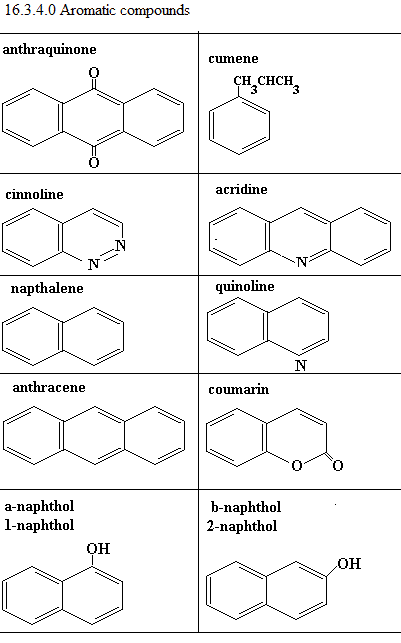
Acridine, C13H9N, toxic if ingested and skin contact, give First aid if ingested: Give water, and induce vomiting source
Acridine orange, C17H19N3, an aminoacridine, hydrochloride salt 'acridine orange', is used to stain cell nuclei, e.g. DNA. source
Acriflavine
Acriflavine, C14H14ClN3, orange-brown, dye and antiseptic source
It shows green fluorescence when diluted in water.
Acroleic acid
Acroleic acid, CH2CHCO2H, C3H4O2, acrylic acid, propenoic acid, prop-2-enoic acid, Toxic source
It is the simplest unsaturated carboxylic acid.
Acroleic acid, Solution < 5%, Not hazardous, Corrosive, colourless liquid with an acrid odour
It is used in polishes, paints, coatings, rug backings, adhesives, plastics, textiles, and paper.
Polyacrylic acid, cross-linked sodium salt
Polyacrylic acid, water-soluble polyelectrolyte, is used to increase building substances viscosity.
Polyacrylamide powder, superabsorbent, is used to make toy product "Instant Wet Expanding Snow".
Sodium polyacrylate, (C3H3NaO2)n, waterlock, is sold as toy product "Super Expanding Creatures". source
3.1.27 Sodium polyacrylate gels, ghost crystals
Acrolein
Acrolein, CH2CHCHO, CH2=CHCHO, C3H4O, acrylaldehyde, 2-Propenal, ethylene aldehyde, acrylic aldehyde source
It is the simplest unsaturated aldehyde, colourless or yellow liquid, and a toxic chemical.
It has a horrible odour like the smell of burnt fat when glycerol breaks down into acrolein.
Acrolein test for presence of fats: Heat sample with potassium bisulfate → acrolein released source
Acrolein, Solution < 0.1%, Not hazardous, clear, yellowish liquid, sweet, pungent burnt fat smell, highly flammable
It polymerizes in the presence of light or alkali, or strong acids, and is unstable.
It occurs in cigarette smoke and vehicle exhaust, aquatic herbicide, kill algae and waterweeds, and it is used as a pesticide.
Acrylates
Acrylates, CH2=CHCOO−, prop-2-enoates, salts or esters or bases of acrylic acid source
Esters of acrylic acid are commonly called acrylates, e.g. methyl acrylate, CH2=CHCOOCH3 source
Mixture of acrylates, acrylate polymer, is a viscous liquid, used as thickener in personal products.
Acrylonitrile
Acrylonitrile, CH2=CH-CN, flammable, low flashpoint, below 32 oC, poison, used to manufacture acrylic acid source
Acryl polymer, generic name for fibres > 85% acrylonitrile units
ABS mixed polymer, acrylonitrile, butadiene, styrene, thermoset plastics:
3.7.28 Polypropenonitrile
16.7.6 Nitriles
4.3.1 Acrylonitrile-butadiene-styrene, burning test for synthetic fibres
3.4.2 Chewing gum (Tg)
Actinium Ac
Actinium Table of Elements
Actinium, RSC
Actinium, Ac, (Greek actinray), refers to light causing chemical change, radioactive, no commercial use.
White radioactive metal, emits a pale blue light, forms coating of actinium oxide to prevent further chemcal reactions
Traces of isotope 227Ac are found in uranium and thorium ores.
12.3.0H Properties of acids
Acids are good electrolytes, react with active metals, turn blue litmus red, and have a sour taste.
Dilute acids contain hydrogen ions in aqueous solution.
Represent the hydrogen ion, a proton, in different ways to show how it is related to the water molecules in the solution.
Show it as the hydrated hydrogen ion, [proton, H+(aq)], or as the hydronium ion [oxonium ion, H3O+(aq)] source
However, for convenience, use H+(aq).
Concentrated sulfuric acid exists mainly as H2SO4 molecules. source
Hydrochloric acid and nitric acid dissociate into ions even in concentrated solution.
Weak acids, e.g. ethanoic acid, acetic acid, CH3COOH carbonic acid and sulfurous acid dissociate very little in aqueous solution. source
However, their salts, e.g. potassium acetate CH3COOK, are completely dissociated into ions. source
Use the Bronsted-Lowry definition of acids and bases:
An acid donates a proton (H+) to another substance and a base accepts a proton from another substance.
When sulfuric acid dissociates in water it donates a proton (H+) to the water molecule.
In this reaction the water molecule acts as a base.
H2SO4 + H2O → HSO4-+ H3O+ source
When ammonia dissolves in water, ammonia accepts a proton and so it is the base.
So in this reaction the water molecule acts as an acid
NH3 + H2O < → NH4++ OH- source
Adhesives
Polyurethane adhesives or surface coatings
Hexamethyl diisocyanate, HMDI, irritants
Toluene is a curing agent for epoxy resin adhesives, surface coating, irritant.
Triethylenetetramine, TET, curing agent for epoxy resin adhesive, surface coating, irritant
Xylene, C8H10, C6H4(C2H6, C6H4(CH3)2, curing agent for epoxy resin adhesives, surface coating, paint thinner, irritant source
3.4.3.1 Epoxy resin polymers, thermoset plastics
2.4.11 Hazard labels
1.3 List of adhesives
Gelatin, gelatine, gels
Prepare microscopy stains and adhesives
3.3.5 Prepare casein plastic from milk
7.8.8 Prepare gelatine gel
3.3.12 Prepare urea-formaldehyde resin
Ascorbyl palmitate
Ascorbyl palmitate, ester of ascorbic acid + palmitic acid, "fat-soluble vitamin C", "vitamin C ester"
An ester of palmitic acid and ascorbic acid, source ot dietary vitamin C, antioxidant food additive
E304 Ascorbyl palmitate
Amantadine
Amantadine, C10H17N, is a primary aliphatic amine, anti-viral and anti-Parkinsons medication, causes psychosis. source
Amantadine is an Influenza A M2 Protein Inhibitor.
Alcian blue
Alcian blue, C56H68Cl4CuN16S4, dye is used for staining of bacteria. source
Ambrein
Ambrein, C30H52O, a triterpene alcohol source
It is the main constituent of ambergris found in the sperm whales or floating on the sea as whale barf (vomit), whale spit.
It is separated from ambergris by heating ambergris in alcohol, and is supposed to be an aphrodisiac.
It breaks down to form the diterpenoid ambroxan, C156H28O, the main odour component of ambergris. source
Ambergris is supposed to protect the intestines of whales from the sharp beaks of cuttlefish.
It was used for food flavouring and in the perfume industry to prevent aroma from dissipating too quickly.
Since 1970, the perfume industry has turned to substitutes to protect whales.
Amoxycillin
Amoxycillin, C16H19N3O5S, "Amox", is a penicillin G derivative used as an antibacterial drug. source
It is used for the treatment of pneumonia, infections of the ear, nose and throat, genitourinary tract, the skin and respiratory tract.
It leads to higher serum concentrations than ampicillin.
9.6.0 Penicillium
Artecanin
Chrysartemin B, C15H18O5, is a sesquiterpene lactone, and insect antifeedant. source
It occurs in (Artemisia cana), and in (Chrysanthemum macropjyllum).
Silver sagebush, (Artemisia cana)
Aminoethylethanolamine
Aminoethylethanolamine, C₄H₁₂N₂O, AEEA, is a surfactant, fabric softener, fuel additive.
19.4.4 Surfactants
Aminophenol
Aminophenol, H2N(C6H4OHH, 4-hydroxyanaline, is a black-and-white film developer.
Amitriptyline
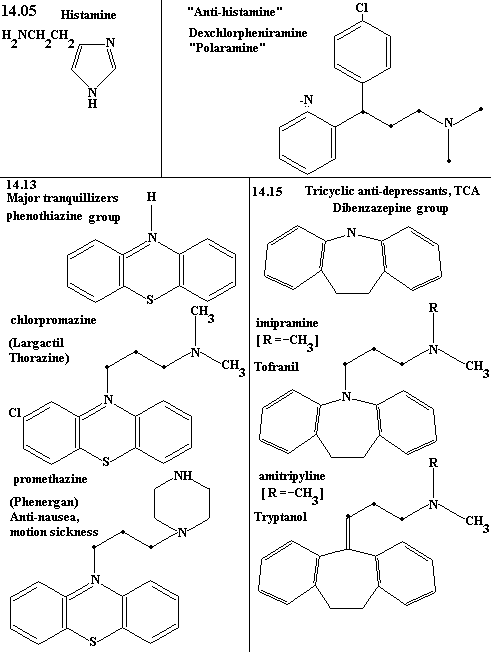
Amitriptyline, C20H23N, damitriptyline, triptanol, a tertiary amine, is a popular tricyclic antidepressant, (TCA), called 'ELAVIL'. source
Amyl alcohol
Amyl alcohol,, C5H12O, CH3(CH2)3CH2OH, isoamyl alcohol, has 8 isomers, but 1-pentanol is usually used in solvents. source
Isoamyl alcohol is a colourless liquid with a mild, choking alcohol odour, antifungal agent.
It occurs in (Ambrosiozyma monospora), and in (Humulus lupulus).
Anacardic acid
Anacardic acid, C22H30O3, (6-Pentadecylsalicylic acid), Ginkgolic acid. source
Hydroxybenzoic acid, C22H36O3, mixture of salicylic acid substitutes with alkyl chains source
Anacyclin
Anacyclin, C18H25NO, fatty amide, dynamide, insecticidal source
It occurs in (Anacyclis pyrethrum), and Achillea roots.
Anaesthetic ether
Anaesthetic ether, (C2H5)2O, C4H10O, CH3CH2OCH2CH3, diethyl ether, ethoxyethane, "ether" source
It is a colourless, sweet-smelling, flammable liquid
It was used as an anesthetic, but is now used as a solvent.
It occurs in (Basella alba) and in (Acca sellowiana).
Analar reagents
Analar reagents are sold as high purity chemical, 'Analar' Standards for Laboratory Chemicals, usually 99.99% pure.
Andrastin
Andrastin A, C28H38O7, a methyl carboxylate, occurs in Penicillium. source
Andrastin C, C28H40O6, a methyl carboxylate, occurs in Penicillium. source
Androne
Androne, magnesium perchlorate, Mg(ClO4)2, oxidizing agent, exothermic with water, Toxic, Corrosive source
Angle tube syringe
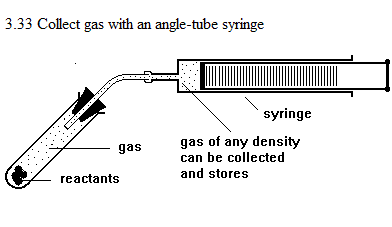
Angle tube syringe, Collect gas with an angle-tube syringe
Anodyne
Anodyne is a compound used to ease pain, e.g. Tetrahydropalmatine, (THP), C21H25NO4, from Corydalis. source
Anolyte water
Anolyte water, anolyte solution, hypochlorous acid, HOCl, destroys bacterial cell membranes, anthracnose
Anthracycline
Anthracycline antibiotics, Anthracyclines, anti-cancer drugs from some Streptomyces, cardiotoxic
Aquavit
Aquavit, "eau de vie", whisky, usquebaugh (Irish whisky), is popular in northern Europe.
It may contain caraway seed or dill seed oil
Arnicolide
Arnicolide, dihydrohenalanin acetate, C19H24O5, a methacrylate, cytotoxic, antitumour source
It occurs in (Arnica montana).
Aspecioside
Aspecioside, C29H42O10, cardenolide, cardenoside glycoside, steroidal toxins, in Asciepias source
Aspiration
Aspiration, transfer of liquids by sucking, using aspirator instrument or apparatus
-ate
The most common oxygen anion, e.g. nitrate NO3- and -ite suffix, one O fewer, e.g. nitrite NO2- source
Auriculoside
Auriculoside, C22H26O10, CNS depressant, flavon glycoside source
It occurs in (Acacia auriculiformis).
Avenasterol
Avenasterol, C29H48O, Ethylidenelathosterol, Dehydroavenasterol,, used in salad oils, e.g. canola oil source
It occurs in Amaranthus.
Adipic acid
Adipic acid, CH2)4(COOH)2, HOOC(CH2)4COOH, butanedicarboxylic acid, hexanedioic acid, pleasant, fruity flavour source
In juice of beetroot Beta vulgaris and many plants, irritates eyes and throat, used as gelling food acidulant
Adipic acid, colourless needles (used to make nylon 6, 6 (Bri nylon), polyester resin, urethane foam.
E355 Adipic acid, food acid E355, used as a gelling adhesive
9.1.4 Dicarboxylic acids
3.3.7 Prepare nylon polymer
Adjugarin
Adjugarin I, C24H34O7, diterpenoid, a butenolide, a clerodane, insect antifeedant, in Ajuga remota leaves source
Adjugarin II, C22H32O6, diterpenoid, insect antifeedant, in Ajuga remota leaves source
Aerobic
7.4.2 Aerobic
9.2.0 Aerobic Respiration
8.3.6 Gram-negative anaerobic cocci
8.3.3 Gram-negative aerobic rods and cocci
Aerogel
Porous synthetic substance, "frozen smoke", aerosol, (fogs), e.g. metal oxide aerogels
7.8.15 Prepare sunbeam mists
Agar
Agar, agar agar, agar powder, nutrient agar (beef broth + agar), tablets, powder, is a jelly-like substance from red seaweed.
Macassar gum, gelatinous substance, E406, from red algae, is a vegetable gum, thickener, and emulsifier.
It is sold as "Agar agar seaweed powder" for home cooking, and as "Agar, microbiology tested powder", for laboratory experiments.
16.1.12 Polysaccharide gums
Prepare agar media and nutrient solutions
7.8.11 Gels in the home kitchen
11.5.5 Movement of ions, sodium sulfate solution
9.1.1.6 Rotting banana and rotting grass
Agmatine
Agmatine, C5H14N4, primary amino compound, a guanidine source
It is used to treat neuropathy, diabetes, and decreased kidney function.
It occurs in ragweed pollen, ergot fungi, mammalian brain, soya bean, sesame seeds, barley, and in Indian pea, (Lathyrus sativus).
Sesame, (Sesamum indicum)
Ajugasterone C
Ajugasterone C, C27H44O7, a steroid, a phytosterol, in Vitex madiensis root bark, insect moulting hormone source
It occurs in Rough fingerleaf, (Vitex madiensis), Lamiaceae.
Ajugalactone
Ajugalactone, C29H40O8, phytosterol, steroid lactone, hydroxy steroid, phytoecdysteroid, insect moulting hormone, in Ajuga source
Bugle, (Ajuga reptans), Lamiaceae
Albumen, Albumin
Albumen, Albumin
Alcohol test (Milk testing): 16.1.3H
Luminol tests for blood, (serum albumin): 14.25
Fibrous proteins and globular proteins: 16.6.0 (See: 2. 3.)
Pasteurization of milk: 19.2.10
Tests for albumin and gelatine: 9.3.2
Tests for proteins: 9.4.1, albumin
1. Albumen is egg white, white of an egg, albumen flakes, albumen egg powder.
2. Albumin is any protein soluble in water and can be coagulated by heat.
3. Albumin soluble protein in blood serum, serum albumin in blood serum
Alphlactalbumin in milk, a globular protein
Albumin from bovine serum is sold as Bovine Serum Albumin, and Bovine Plasma Albumin (BSA).
Albumin from humans is sold as Albumin, Human, tested negative for HIV and HBSAG, [surface antigen of hepatitis B virus (HBV)].
"Alcohol"
Alcohol, ethanol, ethyl alcohol, "alcohol", grain alcohol, C2H6O, CH3CH2OH, is used for histology and cytology procedures. source
Ethanol is a clear colorless liquid with a characteristic odour and pungent taste.
Alcohols, absolute alcohol, 95% alcohol, hospital alcohol, denatured alcohol
Alcohols, List of alcohols: 1.4
23.8.0 Alcohol lamp, Spirit burner
16.1.3H Alcohol test, (milk testing)
16.1.4H Alcohol alizarin test, (milk testing)
16.6.0 Alcohols, phenols, thiols
"Alcohol", Ethanol, ethyl alcohol
15.2.11 Breath tests
4.3.15 Prepare alcohol using immobilized yeast cells
Aldehydes
Aldehydes, alkanals, -CHO, R-CH=O, Prefix, formyl-, Suffix, -al
16.3.0 Aldehydes, alkanals
3.8.5, Amino-plastics
Butyraldehyde, butanal
16.3.2.1, Chloral, chloral hydrate
16.3.2.2, Decanal
Acetaldehyde, Ethanal
Prepare glutaraldehyde solution
16.3.2.3, Nonanal
Aldehydes, alkanals: 16.3.2.0
Aldehydes, List of aldehydes, -CHO, suffix -al: 1.5
Oxidation of glucose, blue bottle experiment: 9.3.10a
Oxidation of methanol to methanal: 16.3.2.8
Prepare ethanal with potassium dichromate: 16.3.2.7
Prepare ethanal with potassium manganate (VII)16.3.2.6
Prepare formaldehyde-acetic acid alcohol, FAA, solution
Prepare formal saline solution
Prepare glutaraldehyde solution
Prepare urea-formaldehyde resin: 3.3.12
Tests for aldehydes with Fehling's solution: 9.5.2
Tests for aldehydes, Tollens' test: 9.3.3
Tests for oxidation of glucose: 9.3.7.2, blue bottle experiment
Tests for aldehydes with Fehling's solution: 9.142.2
Tests for aldehydes9.3.7.3, Tollens' test
Alditols
Alditols Alditols, polyhydric alcohols, mannitol, General formula, HOCH2[CH(OH)]nCH2OH source
Mannitol, C6H14O6, CH2OH(CHOH)4CH2OH, from mannose or fructose, sugar in fungi and brown algae, food sweetener source
Sold as D-Mannitol, Mannite, C6H14O6 source
Aliphatic
Aliphatic, unsaturated carbon compounds
Unlike aromatic compounds, aliphatic compounds have an open-chain structure which may be as follows:
1. Saturated (all single bonds, alkanes), CnH2n+2, e.g. methane (the simplest hydrocarbon), CH4 source
2. Unsaturated (double bonds, alkenes), CnH2n, e.g. ethene, C2H4, H2C=CH2 source
16.4.5 Ethene, (ethylene), C2H4 source
3. Unsaturated (triple bonds, alkynes), CnH2n-2, e.g. ethyne (acetylene), C2H2 source
16.4.6, Ethyne, (acetylene), C2H2 source
Alizarin
Dihydroxy anthraquinone, C14H8O4, (1,2-dihydroxyanthraquinone), alizarin, Toxic, aluminium ion indicator source
Alcohol alizarin test (Milk tests): 16.1.4
Alizarin yellow R, acid-base indicator
Prepare alizarin red S indicator solution
Alkali
Alkali (Arabic, al-kalī, calcined ashes)
An alkali is water-soluble base yielding a caustic solution, pH > 7.
In the later eighteenth century, the word "alkali" referred to any potash needed for glass and soap manufacture
The "alkali" needed for making soap was formerly produced by burning wood charcoal or dried seaweed
Alkali
12.1.0 Bases, alkalis
Acidity and alkalinity: 18.1.0.1
Alkali feldspars35.2.7, (See: Group 1.)
Alkaline iodide, 500 g NaOH, 135 g NaI, 10 g NaN3 in 1 L of water, Toxic source
Alkalis with zinc: 12.14.19
Alkaline battery: 33.6.13
Prepare alkalis: 5.4.3
Reactions of chlorine with alkalis, bleaching powder: 12.4.15
Storing alkalis, ammonia solution: 3.7.3
Tests for concrete alkalinity: 34.2.6
Alkannin
Alkannin, C16H16O5, napthoquinone derivative, E103 food colouring, but is no longer approved. source
It occurs in Dyer's alkanet, (Alkanna tinctoria), as alkanet root extract
Alkyd resin
Alkyd resin, is any synthetic polyester resin prepared from a dicarboxylic acid, used in paints and adhesives.
Adhesive and coating resins are made from glycerol and unsaturated organic acids.
Rigid cross-linked polymers are formed when there are more than two functional groups on linear chain monomers.
Alkyd resins: polybasic acid + polyhydric alcohol, e.g. phthalic anhydride + glycerol.
They are used in paint enamels and making dentures.
They are sold for temporary denture repair and teeth repair.
Alkyl group
Alkyl groups come from taking away a hydrogen atom from an alkane
For example, methane CH4 becomes the alkyl called methyl CH3-, the smallest alkyl group, and ethane, C2H6, become ethyl C2H5- source
If alkanes are shown R-H, then the R stands for an alkyl group, with name ending in -yl.
Alkyls are saturated hydrocarbons, because all carbon-carbon bonds are single bonds.
Alkylation
Alkylation is replacing a hydrogen on a cyclic compound with an alkyl, (CH3), or longer chain group. source
It is formed by heating isobutane with the lower boiling point alkenes, (C3-C6), under acid conditions.
Add the isobutane to the alkene to form a larger branched alkane, converting lower boiling gas fractions into high octane fractions.
Alkylation, Distil crude oil, collect fractions, composition of petroleum: 10.6.3
Alkyne group
Alkynes are unsaturated hydrocarbons containing a triple bond and with the general formula (R1-CCR2), (CnH2n-2), e.g. acetylene.
Prefix: alkynl-, Suffix: -yne, (no principal functional group)
Alkynes are also called "acetylenes".
Allotropes
Allotropes of the same element may have different bonding structure and crystal structure and so have different properties.
Sulfur has 3 allotropes, rhombic or α sulfur, monoclinic or β sulfur, and plastic sulfur
Carbon has different bonding and crystal structure in the allotropes graphite and diamond
Graphite is slippery, because weak van der Waals' forces between the flat layers allow them to slide over each other.
So graphite is used as a dry lubricant in machinery and in "lead" pencils.
Diamond has a very MP and is extremely hard, because strong chemical bonds hold carbon atoms into a rigid three-dimensional structure.
It is a network solid with a tetrahedral arrangement, making it chemically unreactive.br> However, diamond is a poor conductor of electricity, because the electrons are held in relatively fixed positions around the carbon atoms.
7.4.4 Allotropes, sulfur, carbon
7.2.1 Classify substances, pure substances, mixtures, solutions
7.2.2.1 Elements, Actinium to Zirconium
5.1.12 Eutectic mixture
11.2.9 Metallic bonds
Nichrome alloy, nichrome wire
5.5.15 Nitinol memory wire
29.1.2.8 Permalloy bar
7.5.0 Prepare forms of sulfur, allotropes of sulfur
34.8.7 Shape memory alloy, Nitinol
3.63 Shape memory alloy, Nitinol
Speculum metal, alloy of brass or copper with tin, polished to make telescope reflective surfaces or mirrors
Alizarin red
A dihydroxyanthraquinone, Alizarin red S, C14H8O7S, is a biological stain, and is used as a histological dye. source
It occurs as is a laxative in Buckthorn (Rhamnus cathartica), Rhubarb (Rheum rhabarbarum), and in Senna (Senna alexandrina)
Anthraquinone occurs in plant pigments, bird repellents, and causes the yellow colour of lichens.
Usually, "anthraquinone", refers to (9,10-anthraquinone), and is also called (9,10-dioxoanthracene).
Anthraquinone-2-sulfonate, sodium anthraquinone-2-sulfonate, harmful if ingested
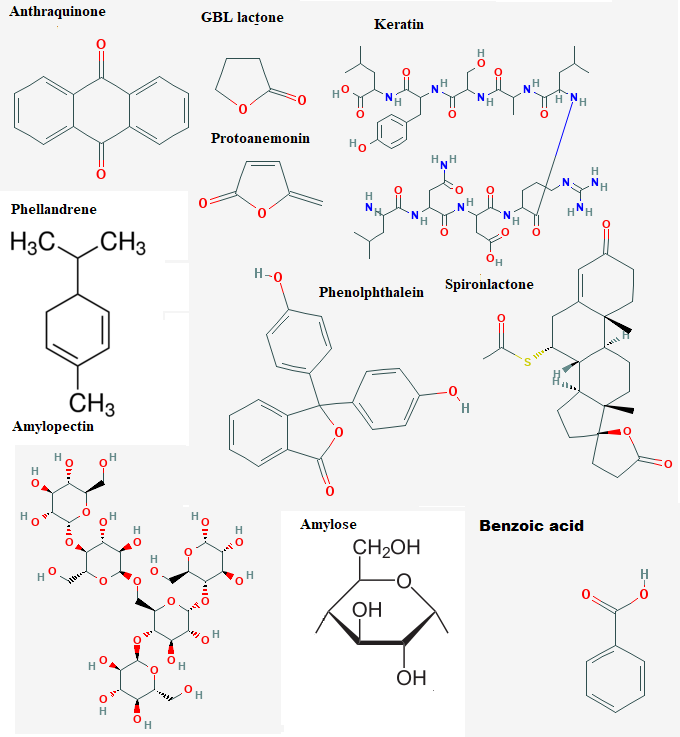
Anthraquinone derivatives occur in Barbados aloe (Aloe vera), Buckthorn, (Rhamnus cathartica), Rhubarb, (Rheum rhabarbarum), and Senna, (Senna alexandrina)
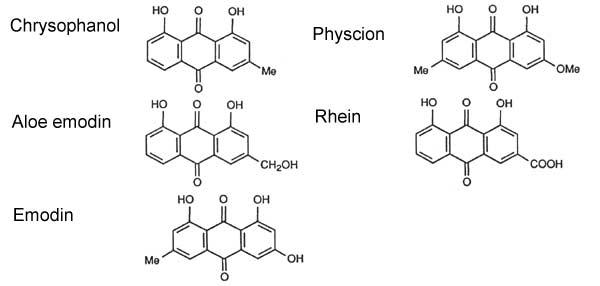
Chrysophanol, Aloe emodin, Emodin, Physcion, Rhein
Anthraqinone glycosides, (aglycone from anthraquinone)
Alizarin, C14H8O4 source
Hypericin, C30H16O8 source
Physcion, C16H12O5 source
Anthraquinone derivatives
(1.) 1-nitroanthraquinone, C14H7NO4, (1-nitroanthracene-9, 10-dione) source
(2.) 2-anthraquinone sulfonic acid, C14H8O5S source
(3.) 1-8-dinitroanthraquinone, C14H6N2O6, waxoline violet source
(4.) Natural pigment, Acid Blue 43, C14H9N2NaO7S source
(5) Alizarine Light Blue, (sodium amino hydroxy anthracene sulfonate), wool dye
(6) Vat Violet 1, C34H14Cl2O2, (many synonyms), gasoline blue colorant source
(7) Disperse Red 60, C20H13NO4, Samaron, Pink, deep red powder with white specks, fabric dye source
Anthraquinone laxatives
They act on the intestinal mucosa, increasing peristalsis of the colon, and reducing transit time in the colon.
1. Aloe, (Aloe barbadensis).
2. Senna, (Cassia).
3. Turkey rhubarb, (Rheum palmatum).
4. Cascara sagrada> (Rhamnus purshiana).
5. Yellow dock, (Rumex crispus).
Allyl
Allyl, CH2=CHCH2-, allyl resin source
Allyl alcohol, C3H6O, CH2=CHCH2OH, (2-propen-1-ol), Highly toxic by all routes source
Allyl alcohol, Solution < 3%, Not hazardous
Allyl bromide, CH2=CHCH2Br, 1-bromoprop-2-ene, 3-bromopropene, acrid smell, Toxic by all routes source
Allyl chloride, CH2, CHCH2Cl, 3-chloropropene, (plastics production), Toxic by all routes source
Allyl chloride, Solution < 0.1%, Not hazardous
Allyl disulfide, diallyl disulfide, C6H10S2, in distilled oil of garlic source
Allyl mercaptan: 16.9.1
Allyl isothiocyanate, C4H5NS, occurs in horseradish (Armoracia rusticana). source
Allyl methyl sulfide
Allyl methyl sulfide, CH2=CHCH2SCH3, methyl allyl sulfide, colourless liquid, strong odour source
Occurs in garden onion, and garlic.
Dimethyl allyl, Isohumulone, C21H30O5: 16.2.3 source
Aloesin
Aloesin, C19H22O9, aloesin, alocresin, glycoside, C-glycosylated chromone, inhibits tyrosinase, used as a skin lightener. source
Khellin, C14H12O5, visammin, amicardine, methafrone, is an organic heterotricyclic compound, herbal folk medicine, and vasodilator. source
It was also used as a bronchodilator, anti-asthmatic agent, cardiovascular, used to treat angina pectoris, and asthma.
It occurs in Barbados aloe, (Aloe vera), Asphodelaceae, and in (Ammi visnaga), Umbelliferae.
Alpha
Alpha hydroxy acids: 16.3.1
Alpha, α-naphthol tests for carbohydrates, Molisch's test: 9.3.7
Alpha, α-naphthol, Naphthol: 16.1.3.2.2
Alpha, α-carotene, vitamin A: Alpha-carotene
Alpha-Hederin, triterpenoid saponin
Alpha radiation , α radiation
Allantoin
Allantoin, C4H6N4O3, 5-Ureidohydantoin, glyoxyldiureide, an imidazolidine-2, 4-dione, vulnerary. source
It is a product of uric acid oxidation, marker of oxidative stress, used for healing wounds, soothing, anti-irritating, skin irritations, anti-acne, clarifying lotion.
It is used in toothpaste, mouthwash, oral hygiene products, shampoos, lipsticks, cosmetic lotions, face creams.
It occurs in urine of most mammals and humans, and in comfrey, (Symphytum officinale).
Aloe emodin
Aloe emodin, C15H10O5, has strong stimulant-laxative action, and is antitumour, genotoxic, mutagenic. source
It occurs in aloe latex resin exudate from Barbados aloe, (Aloe vera), Asphodelaceae and in bark of Buckthorn, (Rhamnus cathartica), Rhamnaceae, and in Rhubarb, (Rheum rhabarbarum), Polygonaceae.
It also occurs in bark. and in green vegetables.
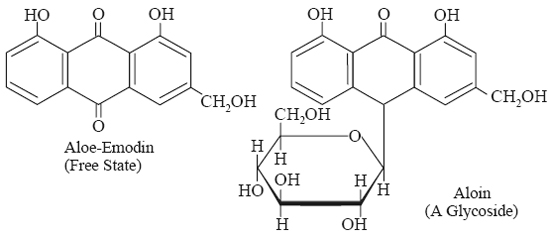
Aloin
Aloin, C21H22O9, anthaquinone glucoside, barbaloin, anthracycline, anthraquinone glycosyl, C-glucoside, bitter, yellow-brown. source
It protects against tumours, toxic anticancer drugs, blood vessel development in tumours, and supports pigment formation.
The leaves are used for wound healing, and inhibits blood vessel formation.
It occurs in Barbados aloe, (Aloe vera), Asphodelaceae.
Aloenin
Aloenin, C19H22O10, Aloearbonaside, is a bitter glucoside. source
It occurs in (Aloe arborescens), (A. africana), and in (A. camperi).
Alstonine
Alstonine, C21C20N2O3, neoplasm inhibitor, in Alstonia constricta, in Rauwolfia hirsuta, in Vinca rosea source
Amber
Amber, C12H20O, is a substance, a colour and a smell, (See: Ezekiel 1/27, King James Bible). source
Amber is a pure chroma colour, midway between yellow and orange colour, or gold and orange.
Copper feels colder than amber against the cheek, because copper is a better conductor of heat.
Droplet bottles, glass dropper with screw cap and plastic teat, 50 mL, amber, clear (amber colour).
Rosin is a solid amber residue made by the distillation of turpentine, using pine stumps.
Fog lamps may have an amber-coloured lens, but the beam does not give more visibility or penetration than a white beam.
Urine has a yellow-amber colour.
Amber, C12H20O, succinite source
35.3.8 Amber mineral
16.4.0 Oleoresins, balsams, "gums", Amber resin, (See: 4.)
17.2.2 Briggs-Rauscher oscillating reaction, clock reaction, (amber colour)
16.1.4 Butanedioic acid, spirit of amber
19.1.3 Perfumes and smells, Fragrances used in women's toiletries, (amber smell)
31.1.02 Triboelectric series, electrostatic series, ranking of insulators, (See: 21. Amber rod)
38.5.26 Traffic lights, (British traffic lights are red over amber over green).
Ambrettolic acid
Ambrettolic acid, C16H30O3, HO(CH2)8-CH=CH-(CH2)5COOH, in musk seed oil, cis and trans forms are used in the perfume industry. source
Americium, Am
Americium, Am
Americium, Table of the Elements
Americium, RSC
Americium, Am (America,) (said as: "amer-ee-sium"), radioactive actinide, Am 241 is an isotope in nuclear waste.
It is used in smoke detectors, because Americium ionizes atoms of air producing highly ionizing alpha particles.
32.3.4.4 Ionization by radioactivity, smoke alarms
Amylose
Amylose, C14H26O11, polysaccharide, alpha-D-glucose units bonded together by glycosidic bonds, about 20% of starch, resistant starch. source
The linear macromolecules are converted into maltose, branched chains are converted into dextrin.
Starches have different granular sizes and enzyme digestibility depending on the amylopectin and amylose and how they are arranged in the starch granule.
Tests for amylose and amylopectin: 9.3.4H
Amylopectin
Amylopectin, C30H52O26, highly branched polymer of glucose, about 80% of starch, insoluble in water, formed of 2, 000 to 200, 000 glucose units source
Tests for amylose and amylopectin: 9.3.4H
Aluminon
1. Aluminon, C22H23N3O9, triammomium aurine tricarboxylate, triammonium salt of aurintricarboxylic acid (dye detects Al3+), Toxic if ingested source
2. Organic reagent, "Aluminon", 0.1% aqueous solution
To 5 mL of slightly acidic solution add ammonium acetate solution, then reagent.
A red colour or precipitate indicates presence of aluminium.
Use Group III precipitate dissolved in dilute HCl Iron also gives positive test, so aluminium cannot be shown in its presence.
Chromium gives positive test, but may be removed by ammonia and ammonium.
3. Alizarin, 1,2-dihydroxyAnthraquinone, Toxic (aluminium ion indicator).
Amlodipine
Amlodipine, C20H25ClN2O5, is a synthetic dihydropyridine and a calcium channel blocker with antihypertensive and antianginal properties. source
It is a monochlorobenzene, an ethyl ester, a methyl ester and a primary amino compound.
Amlodipine inhibits the influx of extracellular calcium ions into myocardial and peripheral vascular smooth muscle cells.
It prevents vascular and myocardial contraction.
It has a role as an antihypertensive agent, a calcium channel blocker and a vasodilator agent.
Amlodipine besilate, C26H31ClN2O8S, Amlodipine benzenesulfonate, is a second generation calcium channel blocker. source
It is used to treat hypertension and angina pectoris.
Ammonia
Ammonia, NH3 source
Ammonia with sulfuric acid: 12.11.4.3
Ammonium minerals, (Geology)
Prepare sunbeam mists: 7.8.15, ammonium chloride
Storing alkalis: 3.7.3, ammonia solution
Tests for ammonia: 3.5.0
Prepare ammonia and ammonium compounds: 3.7.0
Prepare ammonia solution: 5.4.4
QAC: 18.1.15 (quaternary ammonium compounds:
Reduce nitrate to ammonia: 12.11.2.2
Reaction of ammonium carbonate with ethanoic acid: 14.4.4
Reaction of ammonium nitrate with water: 14.4.1
z Reaction of ammonium salts and potassium salts with water:
Anisaldehyde
Anisaldehyde, C8H8O2, 4-methoxybenzaldehyde, anisic aldehyde, irritant, insect repellent, in human urine. source
It occurs in (Brunneoporus juniperinus), and in (Decalepis hamiltonii).
Anisic acid
Anisic acid, C8H8O3, 4-methoxybenzoic acid, a phenolic acid, irritant. source
It occurs in Aniseed, (Pimpinella anisum), Apiaceae Rhododendron 'Mid winter', (Rhododendron dauricum), Ericaceae and (Aconitum forrestii), Ranunculaceae.
Aminopropane
- 1-aminopropane, n-propyl amine, propylamine, C2H5CH2NH2, weak base, colourless volatile liquid
- 2-aminopropane, isopropylamine, propan-2-amne CH3)2CHNH2, hygroscopic colourless liquid, smells like ammonia, used to prepare pesticides.
Amphoteric
7.4.5 Amphoteric
12.1.5 Alkalis with amphoteric oxides and hydroxides
13.1.10 Aluminium oxide
12.4.2 Dilute acids with amphoteric oxides
12.13.4 Oxides
16.6.0 Proteins are amphoteric, (See: 4.).
Amyrin
Amyrin, C30H50O, beta-amyrin, beta-amyrenol, pentacyclic triterpenoid, secondary alcohol source
It is the most commonly occurring triterpenoid in higher plants.
Andrographolide
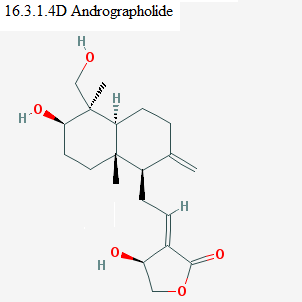
Andrographolide, C20H30O5, labdane diterpenoid, andrographolide lactone, extremly bitter, anti-inflammatory. source
It causes anti-platelet aggregation, decreased proliferation of tumor cells and increased immunocytotoxicity against them.
Andrographis paniculata Extract (HMPL-004) is used to treat bacillary dysentery, upper respiratory tract infections, inflammatory diseases.
Andrographolideoc occurs in King of bitters (Andrographis paniculata), Acanthaceae.
Antacids
Antacids increase pH in stomach contents as medicines for reflux, e.g. sodium hydrogen carbonate, magnesium oxide
Aluminium hydroxide (1-water), bauxite (antacids) 500 g, E173 (food additive)
E552 Calcium silicate (anti-caking agent) (Antacid)
E341 Calcium phosphate (mineral salt) (Antacid, enamel polishing agent)
E504 Magnesium carbonate (mineral salt, anti-caking agent) (Antacid, laxative)
9.2.2 Reflux and heartburn
Sodium hydrogen carbonate, used in antacids
Topics
Organic chemistry, Amines to Proteins
This page was generated automatically from the original page on John Elfick's School Science Lessons website. If something looks wrong, please check the original.